



Best Medical Fiction Books for Recovery
Updated: Sep 16
Table of Contents
Why Medical Fiction Matters for Recovery
Books About Addiction and Recovery
Medical Fiction That Explores Resilience and Healing
Cutting for Stone by Abraham Verghese
The Covenant of Water by Abraham Verghese
Still Alice by Lisa Genova
Books to Read While Recovering from Surgery
Bibliotherapy for Health Recovery
Medical Thrillers with Authentic Clinical Detail
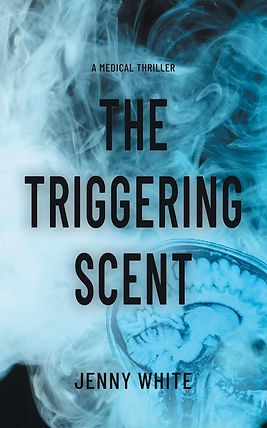
The Triggering Scent by Jenny White
The Silent Patient by Alex Michaelides
Doctors and Friends by Kimmery Martin
Canadian Medical Fiction and Historical Perspectives
What to Look For When Choosing Medical Fiction for Recovery
Last Updated: August 8, 2026
Why Medical Fiction Matters for Recovery
Medical fiction serves a unique purpose in recovery. For patients navigating surgery, illness, or addiction, reading about characters facing similar challenges normalizes the experience, reduces isolation, and offers hope through narrative. This is bibliotherapy, where carefully selected stories become tools for emotional healing and resilience.
The best medical fiction validates the complexity of what you're experiencing. A character struggling with memory loss, facing ethical dilemmas in a hospital, or rebuilding after trauma becomes a mirror. You see yourself reflected in their struggle, which paradoxically makes the struggle feel less lonely.
Jenny White, a Canadian author and retired registered nurse who survived a brain tumor, understands this intersection intimately. Her debut novel, The Triggering Scent, launches the Abbey Roberts RN series with authentic medical details and emotional depth that resonate with readers in recovery. By drawing on lived experience as both a healthcare professional and a survivor, White delivers credible, character-driven narrative that transforms how readers understand resilience.
The books selected below share this commitment to authenticity. They don't shy away from the hard parts of illness, addiction, or recovery, but they don't exploit trauma for shock value either. Instead, they offer what recovery requires: honest storytelling, complex characters, and the reminder that survival and healing are ongoing narratives.
Books About Addiction and Recovery
Addiction narratives in medical fiction depict clinical reality alongside human cost. The best books avoid moralizing and show dependency as a medical condition intertwined with psychology, circumstance, and choice.
When selecting books about addiction and recovery, look for authors who understand the healthcare system from the inside. Narratives portraying medical professionals struggling with substance use are particularly valuable because they challenge stereotypes and show how addiction crosses every professional boundary. These stories validate readers who may feel shame about their own or a loved one's addiction.
Clinical authenticity matters critically here. A book that misrepresents how addiction develops, how withdrawal works, or how recovery programs function can undermine trust in the recovery process itself. That's why physician-authored or nurse-authored fiction carries weight, the medical details aren't guesswork.
Recovery-focused addiction narratives also tend to emphasize relapse as part of the process, not failure. This reframing is therapeutic. Readers who have experienced setbacks see those setbacks normalized within the story, reducing the shame that often derails sustained recovery.
Medical Fiction That Explores Resilience and Healing
Resilience in medical fiction isn't about triumph over adversity in the Hollywood sense. Real resilience looks like small daily choices, accepting limitations, and finding meaning despite ongoing struggle. The best books capture this unglamorous, sustained version of healing.

Cutting for Stone by Abraham Verghese
Abraham Verghese's Cutting for Stone follows twin brothers born in Ethiopia who navigate complex family dynamics and their paths to becoming doctors. The novel explores guilt, obligation, and decision-making in a medical context with richly detailed narrative spanning continents and decades.
What makes this novel essential for recovery reading is its refusal to separate medical training from emotional maturation. The brothers' journey becomes a meditation on how we carry our histories into our professional lives. For readers in recovery, this resonates: healing isn't about compartmentalizing. It's about integrating your past into a coherent sense of self.
The novel's length and cultural depth demand sustained attention, which itself can be therapeutic. Readers report that immersion in the brothers' story provides respite from rumination.
The Covenant of Water by Abraham Verghese
The Covenant of Water spans generations across South India, exploring themes of family, medicine, and loss through interconnected stories. The novel interweaves family narratives with medical themes and the challenges of illness across generations.
What makes it valuable for recovery is its multi-generational perspective. You see how illness and healing ripple through families, how one person's recovery affects others, and how resilience is relational, not individual. By following multiple characters and timelines, The Covenant of Water gives readers permission to step outside their immediate crisis and see their illness as part of a larger human story.
Still Alice by Lisa Genova
Still Alice follows a Harvard professor losing her memories to early-onset Alzheimer's disease. The novel explores her journey of living and loving despite cognitive decline, focusing on identity, memory, and finding new ways to be present.
For readers in recovery from any condition affecting cognition, whether from brain injury, medication, or disease, Still Alice offers profound validation. The protagonist doesn't disappear when her memory does. She adapts, grieves, and continues to be present in relationships, even as her experience changes.
Genova's background in neuroscience ensures medical details are accurate without overwhelming readers. Those with neurological conditions report that this accuracy itself is healing.
Books to Read While Recovering from Surgery
Surgery recovery demands particular reading material. You're often physically limited, managing pain and restricted movement, so the book needs to hold your attention without requiring sustained mental effort during difficult days. Yet you also want substance.
Books for post-surgical recovery should balance accessibility with depth. Short chapters work well because you can read one and rest without losing narrative momentum. Stories that normalize the recovery experience, including setbacks and frustration, provide emotional support alongside entertainment.
Avoid books that glorify suffering or present recovery as linear. Post-surgical recovery is messy, with good days and setback days. Books acknowledging this reality reduce shame when your recovery doesn't follow the expected timeline.
Consider whether you want medical content during recovery. Some readers find medical fiction grounding; others find it triggering. If medical detail feels overwhelming while healing, choose character-driven narratives set outside healthcare.
Bibliotherapy for Health Recovery
Bibliotherapy is the intentional use of literature to support psychological and emotional healing. It's not a replacement for clinical treatment, but a powerful complement. When in recovery from surgery, addiction, illness, or trauma, reading engages different neural pathways than talk therapy alone.

The mechanism is straightforward: identification with a character normalizes your experience. When you read about someone navigating similar challenges, your brain registers it as evidence that survival is possible. This is why bibliotherapy works best with carefully curated selections.
For health recovery, bibliotherapy functions best when the book:
Features a protagonist navigating a recognizable challenge
Avoids graphic trauma exploitation or "inspiration porn"
Includes moments of struggle alongside resilience
Respects the complexity of recovery (no neat endings)
Healthcare professionals increasingly recognize bibliotherapy as legitimate. Nurses and therapists often recommend specific books during treatment planning because the right story, at the right moment, can shift how a patient understands their recovery. Jenny White's work, grounded in her experience as both a nurse and a brain tumor survivor, exemplifies how medical fiction can serve this therapeutic function.
Recovery Phase | Best Book Type | Why It Works |
Acute/early recovery | Character-driven, short chapters | Accessible during pain or fatigue; builds momentum |
Mid-recovery | Medical fiction with resilience themes | Validates ongoing struggle; models persistence |
Late recovery | Multi-generational or complex narratives | Helps integrate experience into larger life story |
Long-term recovery | Thrillers or absorbing fiction | Supports sustained engagement; reduces rumination |
Medical Thrillers with Authentic Clinical Detail
Medical thrillers occupy a unique space in recovery reading. They demand your attention, stakes are high, and you're too invested in what happens next to ruminate about your own situation. The best medical thrillers ground suspense in authentic clinical detail, so readers with medical knowledge don't feel patronized.
Authenticity matters because readers sense when a writer doesn't understand the world they're depicting. A poorly researched medical detail breaks immersion. But a thriller written by someone with genuine medical background, like Jenny White, carries credibility that makes suspense more effective.
Medical thrillers during recovery externalize threat. Instead of worrying about your own health, you worry about the fictional protagonist's crisis. This redirection of anxiety can be genuinely calming while still engaging with medical stakes at a safer remove.
The Triggering Scent by Jenny White
Jenny White's The Triggering Scent launches the Abbey Roberts RN series with a protagonist who is a registered nurse navigating high-stakes hospital drama. White draws on her background as a retired registered nurse and brain tumor survivor to deliver authentic clinical detail alongside psychological complexity.
What distinguishes The Triggering Scent is its refusal to separate the thriller plot from the emotional reality of working in healthcare. Abbey Roberts isn't a cardboard detective who happens to be a nurse. She's a nurse whose clinical knowledge, ethical commitments, and personal vulnerabilities drive the narrative.
For readers in recovery, this matters. You see a healthcare professional as a fully realized human with her own health struggles, doubts, and need for support. It challenges the common pattern in medical fiction where healthcare workers are portrayed as either infallible or irredeemably damaged.
White's novel delivers the suspenseful plot readers want while refusing to sacrifice character depth or clinical authenticity. The twists and ethical dilemmas keep readers engaged, which is exactly what recovery reading should do.
The Silent Patient by Alex Michaelides
The Silent Patient presents a psychological thriller centered on a famous painter who shoots her husband and then never speaks another word. A psychotherapist becomes obsessed with uncovering her motivation. The novel explores trauma, silence, and the pursuit of truth within a psychiatric setting.
The appeal for recovery readers is the exploration of how trauma locks people into silence, and how breaking that silence becomes the path to healing. The novel's twist challenges readers' assumptions about diagnosis, motivation, and recovery.
However, The Silent Patient leans heavily into psychological manipulation and dark themes. It's best suited for readers in stable recovery who want intellectual engagement with complex psychological material.
Doctors and Friends by Kimmery Martin
Kimmery Martin, a former emergency medicine physician, wrote Doctors and Friends to explore how a group of close friends, all medical professionals, navigate a devastating pandemic. The novel balances suspense with deep character work and explores friendship, grief, and resilience.
What makes this novel particularly relevant for recovery is its focus on how people support each other through shared trauma. Martin's medical background ensures clinical details ring true. Readers report that the portrayal of healthcare workers as vulnerable humans is refreshing and validating.
Canadian Medical Fiction and Historical Perspectives
Canadian medical fiction offers distinct perspectives shaped by Canada's healthcare system, history, and cultural context. These narratives often emphasize community, systemic challenges, and the intersection of personal and public health.
Bloodletting & Miraculous Cures by Vincent Lam is a collection of interconnected short stories following characters through medical school, residency, and the SARS outbreak in Toronto. Lam won the 2006 Scotiabank Giller Prize for this work, which explores the realities of medical training and practice in Canada with a diverse cast navigating personal and professional challenges.
The SARS outbreak storyline grounds the narrative in a real Canadian crisis, and the portrayal of medical training reflects the Canadian system. Readers in Canadian healthcare settings report that the accuracy feels validating.
The Birth House by Ami McKay is set in early 20th-century Nova Scotia and follows Dora Rare as she learns midwifery and faces challenges from modern medicine and societal change. The novel explores female empowerment and the clash between traditional and modern medicine within a Canadian historical context.
For readers interested in how medical practice has evolved in Canada and how women's health has been marginalized and reclaimed, The Birth House offers rich historical perspective alongside a powerful story about resilience and community support.
What to Look For When Choosing Medical Fiction for Recovery
Selecting the right medical fiction for recovery requires honest self-assessment. The same book that heals one reader might retraumatize another.
Trigger sensitivity. Be honest about what content might destabilize your recovery. If you're in early addiction recovery, a book graphically depicting drug use might be counterproductive. Preview reviews that mention content warnings.
Narrative pacing. During active recovery, slower-paced, character-driven narratives often work better than high-velocity thrillers. A book demanding less plot-tracking can feel more restorative.
Medical accuracy. If you have medical knowledge, you'll notice inaccuracy immediately. It's worth seeking out books written by authors with genuine medical background, like Jenny White, because authenticity supports rather than undermines your recovery.
Resilience representation. Look for books where resilience is messy, nonlinear, and ongoing, not a triumphant arc concluding with "happily ever after." Real recovery looks like learning to live with limitations, accepting setbacks, and finding meaning despite struggle.
Emotional safety. Some recovery requires escapism; some requires engagement with difficult material. Know which you need now. A book that's emotionally intense but ultimately hopeful can be deeply healing if you're ready for it.
Recovery is a narrative you're writing in real time. The books you read during this season become part of that narrative, evidence that others have survived what you're surviving, that resilience takes many forms, and that your story isn't finished. Jenny White's The Triggering Scent and the other medical fiction titles above offer authentic, character-driven storytelling that transforms reading from distraction into genuine support. Choose the book that meets you where you are now, and trust that the right story, at the right moment, can shift everything.
Frequently Asked Questions
Can reading medical fiction help with the recovery process?
Yes. Medical fiction provides narrative medicine, stories that help readers process their own health experiences. Reading about characters navigating diagnosis, treatment, and healing can normalize emotions during recovery, reduce isolation, and offer perspective on resilience. Books that authentically portray the patient experience and medical ethics create a form of bibliotherapy, allowing readers to see themselves reflected in stories of others who have endured similar challenges.
What makes Jenny White's medical fiction different from established authors in the genre?
Jenny White combines her lived experience as both a retired registered nurse and brain tumor survivor with her fiction writing. This dual perspective brings authentic clinical detail alongside genuine understanding of the patient experience. Her work, including The Triggering Scent, centers on ethical dilemmas and emotional resilience within realistic hospital settings, offering readers the accuracy of someone who has worked in healthcare and the empathy of someone who has faced serious illness.
Are there medical fiction books that handle recovery and trauma respectfully?
Several books in the medical fiction genre approach recovery with sensitivity and depth. Still Alice explores neurological change with dignity, The Covenant of Water examines multigenerational healing, and Doctors and Friends addresses grief and professional resilience. Look for books authored by healthcare professionals or those that center patient agency rather than sensationalizing illness. Many modern medical fiction authors prioritize authentic emotional journeys over trauma exploitation.
What is bibliotherapy and how does it support recovery?
Bibliotherapy uses reading as a therapeutic tool to support emotional and psychological healing. During physical recovery, medical fiction offers several benefits: it provides distraction during painful or boring recovery periods, normalizes the patient experience through character identification, builds hope through stories of resilience, and creates space to process difficult emotions. The narrative medicine approach, learning through stories, helps readers integrate their own health experiences and find meaning in recovery.
Buy now
This article was written using GrandRanker


Comments