



Accurate Medical Thrillers: Infectious Disease Outbreaks
Table of Contents
What Makes Accurate Medical Thrillers About Infectious Disease Stand Out
Realistic Medical Thriller Books That Portray Outbreaks Convincingly
Infectious Disease Outbreak Novels: Fiction Grounded in Scientific Reality
Fiction Versus Nonfiction: What Each Offers
How to Choose Between Fiction and Nonfiction
Fiction That Reflects Real Outbreak Dynamics
Distinguishing Accurate Fiction from Sensationalized Versions
The Value of Nursing-Centered Outbreak Fiction
Medical Thrillers With Nurses: Frontline Perspectives on Epidemics
Medical Accuracy in Fiction: How Authors Get the Science Right
A Framework for Assessing Outbreak Fiction Accuracy
Where Dramatic License Is Acceptable
Evaluating Specific Titles
How to Spot Authentic Outbreak Details in Medical Thrillers
Conclusion
Frequently Asked Questions
Last Updated: October 10, 2026
What Makes Accurate Medical Thrillers About Infectious Disease Stand Out
Medical thrillers about infectious disease outbreaks occupy a unique space in fiction. They demand both narrative tension and scientific credibility. When an author gets the microbiology wrong, the suspension of disbelief collapses.
Authentic medical thrillers infectious disease narratives differ from Hollywood fantasies in three ways: the author understands real epidemiology and ICU dynamics, characters behave like actual healthcare professionals, and ethical dilemmas feel genuine rather than invented for plot convenience.
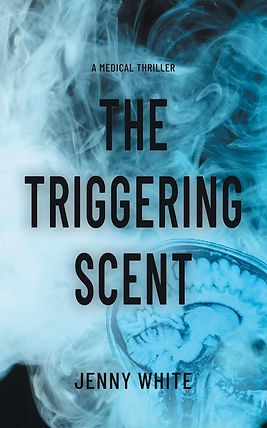
Jenny White's debut novel, The Triggering Scent, exemplifies this approach. As a retired registered nurse and brain tumor survivor, White brings lived experience to the hospital setting.
Realistic Medical Thriller Books That Portray Outbreaks Convincingly
The best outbreak fiction treats epidemiology as a character, not a plot device.
The Andromeda Strain by Michael Crichton remains the gold standard because Crichton researched actual viral transmission and containment protocols.
Contemporary outbreak fiction increasingly features nurses as protagonists, a shift that matters because nurses see outbreaks from a different vantage point than physicians.
Convincing outbreak novels acknowledge uncertainty: real epidemiologists work with incomplete data and false leads, and public health responses involve difficult tradeoffs between containment and economic impact.
Infectious Disease Outbreak Novels: Fiction Grounded in Scientific Reality
Readers seeking to understand infectious disease outbreaks face a choice: fiction that dramatizes outbreak response, or nonfiction accounts that document what actually happened. The best approach often combines both, but they serve different purposes and require different evaluation criteria.
Fiction Versus Nonfiction: What Each Offers
Medical Thrillers and Outbreak Novels (Fiction) Outbreak fiction immerses readers in the experience of crisis response, exploring ethical dilemmas and psychological weight of decisions made under pressure.
The best outbreak novels balance accuracy with readability, avoiding invented transmission mechanisms or diagnostic processes that contradict known biology. Jenny White's The Triggering Scent achieves this balance, centering on Abbey Roberts RN navigating hospital crisis through realistic epidemiological investigation and authentic clinical detail.
Nonfiction Outbreak Accounts (Historical and Contemporary) Nonfiction outbreak narratives document what actually happened with real names, timelines, and decisions. They provide political, economic, and social context, revealing what epidemiologists knew at each stage and what they got wrong.
Nonfiction also documents long-term consequences of outbreak response decisions and institutional changes. For readers seeking to understand real outbreak dynamics, nonfiction is essential.
How to Choose Between Fiction and Nonfiction
Read fiction if you want:
To experience outbreak response from an individual's perspective
To explore ethical dilemmas and moral complexity in narrative form
To understand what healthcare workers actually feel during crisis
To learn clinical and epidemiological concepts through character-driven storytelling
To experience suspense and narrative tension alongside accurate science
Read nonfiction if you want:
To understand how a specific real outbreak actually unfolded
To learn what epidemiologists knew at each stage and what they got wrong
To understand the political, economic, and social context of outbreak response
To see the long-term consequences of response decisions
To learn from historical patterns and how they apply to current threats
Fiction That Reflects Real Outbreak Dynamics
When evaluating medical thrillers about infectious disease, look for novels that ground outbreak response in authentic system dynamics. Real outbreaks don't unfold as linear problem-solving exercises. They involve:
Delayed recognition: Cases accumulate before anyone recognizes a pattern. Early cases may be misdiagnosed or attributed to other causes.
Incomplete information: Epidemiologists work with partial data. They revise hypotheses as new information arrives. Early assumptions often prove wrong.
Resource constraints: Hospitals have limited ICU beds, finite supplies of protective equipment, and staffing models that break under surge demand.
Jurisdictional friction: Multiple agencies (hospitals, local health departments, provincial health authorities, federal agencies) coordinate imperfectly. Disagreements about strategy are common.
Competing priorities: Containment measures have economic and social costs. Decision-makers balance outbreak control against other legitimate concerns.
Human error and moral injury: Healthcare workers make mistakes under pressure. They experience guilt, trauma, and burnout. Some prioritize self-protection over patient care.
Outbreak fiction that captures these dynamics feels authentic because it reflects how real systems actually function. Novels that present outbreak response as a series of individual heroic acts, or that show pathogens spreading through implausible mechanisms, lack this authenticity.
Distinguishing Accurate Fiction from Sensationalized Versions
Accurate outbreak fiction dramatizes real dynamics; sensationalized fiction invents them. A novel compressing a 10-day diagnostic timeline to 3 days for pacing is acceptable dramatic license. One showing a respiratory pathogen spreading through bloodborne transmission is inaccuracy.
Accurate medical thrillers acknowledge uncertainty: characters don't always know the answer, epidemiologists revise hypotheses, and officials make decisions with incomplete information. This uncertainty makes outbreak response genuinely difficult and fiction about it compelling.
The Value of Nursing-Centered Outbreak Fiction
Most outbreak fiction centers on physicians or epidemiologists. Nursing-centered narratives are rarer but offer unique insight. Nurses occupy the frontline during outbreaks in ways physicians often do not. They perform direct patient care, manage infection control, and catch system failures before they cascade.
Nursing-centered outbreak fiction reveals dynamics that physician-centered narratives miss. The Triggering Scent exemplifies this. Abbey Roberts navigates hospital crisis through a nurse's perspective: managing contamination, protecting herself and colleagues, maintaining care when resources collapse, and carrying the moral weight of impossible choices.
Key Takeaway The best outbreak fiction combines accurate science with compelling narrative. It dramatizes real system dynamics, delayed recognition, incomplete information, resource constraints, jurisdictional friction, rather than inventing implausible scenarios. Pair outbreak fiction with nonfiction accounts to understand both the experience of crisis response and the historical reality of how outbreaks actually unfold.
Medical Thrillers With Nurses: Frontline Perspectives on Epidemics
Nursing perspectives in medical thriller fiction have historically been underrepresented, with nurses often functioning as supporting characters rather than protagonists navigating clinical complexity. This is changing.

Nurses occupy the frontline during outbreaks, performing direct patient care, managing infection control, and catching system failures.
Jenny White's The Triggering Scent centers Abbey Roberts RN navigating hospital crisis. This perspective shifts the narrative from a doctor's brilliant insight to a nurse's clinical judgment, ethical reasoning, and resilience.
Authentic outbreak fiction featuring nurses addresses specific vulnerabilities: higher exposure risk, relentless emotional labor, and institutional pressure to function despite inadequate protection.
Key Takeaway The best medical thrillers with nurses ground outbreak response in clinical reality, showing how frontline workers navigate impossible choices when systems fail.
Medical Accuracy in Fiction: How Authors Get the Science Right
Medical accuracy in outbreak fiction is not binary. A novel can be accurate in pathogen biology but dramatize epidemiological response, or nail clinical detail while compressing timelines. Readers need a framework to evaluate accuracy across specific dimensions.
A Framework for Assessing Outbreak Fiction Accuracy
When evaluating medical thrillers about infectious disease, assess these five dimensions independently:
Pathogen Biology and Transmission Real transmission routes matter. A novel confusing respiratory droplet spread with aerosol transmission, or showing incorrect incubation periods, undermines credibility. Authentic outbreak fiction grounds transmission logic in epidemiological principles and explains why the disease spreads as it does.
Diagnostic and Laboratory Processes Real diagnostics involve time delays: blood cultures take 24-48 hours, PCR tests require specialized equipment, and serology may not detect infection in the first week.
Clinical Presentation and Patient Management Real severe infections progress in recognizable patterns: fever, respiratory distress, organ dysfunction. Real ICU care involves ventilators and supportive measures, not miracle drugs.
Epidemiological Investigation and Public Health Response Real epidemiology is slow, involving case identification, contact tracing, and coordination between agencies with jurisdictional friction.
Healthcare System Constraints and Human Factors Real hospitals have limited ICU beds, finite protective equipment, and staffing models that break under surge demand (COVID-19 pandemic guidance for the health care sector).
Where Dramatic License Is Acceptable
Accurate medical thrillers do not require perfect realism in every detail. Narrative pacing often requires compression of timelines. A novel might show a diagnosis emerging over days rather than weeks to maintain momentum. Character arcs may require individual heroism that real outbreaks distribute across teams.
The distinction: a novel that compresses a 10-day diagnostic timeline to 3 days for pacing is different from one that shows a pathogen spreading through mechanisms that contradict known biology. The first is dramatic license. The second is inaccuracy.
Evaluating Specific Titles
Jenny White's The Triggering Scent exemplifies accuracy across these dimensions. As a retired registered nurse, White grounds the novel in authentic clinical detail, how blood cultures are drawn, how infection control protocols function in practice, how nurses navigate resource constraints and ethical dilemmas. The outbreak unfolds through epidemiological investigation rather than manufactured chaos.
In contrast, novels that show pathogens spreading through implausible routes, diagnoses emerging with unrealistic speed, or outbreak response as a series of individual heroic acts, lack the authenticity that makes medical thrillers resonate. Readers with healthcare experience recognize these gaps immediately.
Pro Tip When choosing outbreak fiction, ask: Does the author explain clinical and epidemiological decisions through real constraints, time, incomplete information, resource limits, institutional friction, or does the narrative present medicine as a puzzle with a single correct answer?
How to Spot Authentic Outbreak Details in Medical Thrillers
Spotting authentic medical thrillers infectious disease fiction requires knowing what to look for. Examine diagnostic timelines: authentic fiction shows pathogen identification taking time, with initial cultures negative and diagnosis coming late. Look at public health response: real outbreaks show coordination friction and disagreements about strategy, not unified response. Examine character behavior: authentic fiction shows healthcare workers experiencing fear, fatigue, and moral injury, making mistakes under pressure. Check infection control details: real infection control is tedious and essential; novels getting these right feel grounded. Finally, consider whether the novel addresses aftermath, trauma, ethical questions, and systemic changes.
Conclusion
Accurate medical thrillers about infectious disease outbreaks deliver the chance to experience a healthcare crisis from inside, with details reflecting how systems actually function. Jenny White's The Triggering Scent, written by a retired registered nurse, brings authentic hospital dynamics, realistic clinical decision-making, and genuine ethical complexity to outbreak fiction. The Abbey Roberts RN series offers immersive storytelling grounded in lived healthcare experience. If you're seeking medical thriller fiction that respects both science and the human dimensions of epidemic response, this is where authentic outbreak narratives live.
Frequently Asked Questions
What makes accurate medical thrillers about infectious disease outbreaks different from generic thrillers?
Accurate medical thrillers ground outbreak scenarios in real epidemiology, transmission pathways, and public health response protocols. They distinguish between clinical realism and dramatization, portraying how disease spreads through populations, how epidemiologists investigate cases, and how healthcare systems respond under pressure. Authors with medical backgrounds, particularly those with nursing or clinical experience, can weave authentic diagnostic procedures, ICU protocols, and ethical dilemmas into the narrative without sacrificing suspense. This authenticity makes readers trust the stakes and feel the tension of a genuine outbreak scenario rather than Hollywood nonsense.
How can I tell if a medical thriller's infectious disease details are actually accurate?
Look for authors with verifiable medical credentials, particularly nurses, physicians, or epidemiologists who cite their background openly. Check whether the book addresses realistic disease transmission (respiratory droplets, contact, airborne), incubation periods, and symptom progression rather than inventing dramatic shortcuts. Accurate outbreak novels show the slow, methodical work of case investigation and surveillance alongside the human drama. Books that portray quarantine, contact tracing, and public health decision-making as complex and sometimes flawed are more credible than those that oversimplify containment. Reader reviews from healthcare professionals often flag whether clinical details feel authentic or invented.
Are there medical thrillers that balance scientific accuracy with genuine suspense and emotional depth?
Yes. The best medical thrillers featuring infectious disease outbreaks don't treat accuracy as the enemy of pacing. Authors like those with nursing backgrounds understand that real outbreak response, the ethical dilemmas, the exhaustion, the impossible choices, is inherently dramatic. These books weave authentic epidemiology and clinical detail into character-driven narratives where the stakes feel personal, not just statistical. The tension comes from realistic constraints: limited resources, incomplete information, time pressure, and the human cost of decisions. Readers seeking both gripping storytelling and medical realism should prioritize authors who emphasize their lived healthcare experience and commitment to portraying ICU dynamics and outbreak response truthfully.
What role do nurses play in medically accurate infectious disease outbreak thrillers?
Nurses are frontline responders in outbreak scenarios, and accurate thrillers center their expertise and perspective. They're the ones implementing infection control, monitoring critically ill patients, advocating for resources, and often first detecting unusual patterns. Thrillers written by or featuring nurse protagonists tend to portray the emotional and ethical weight of outbreak response more authentically, the exhaustion, the moral injury of rationing care, the clinical judgment required in real time. Nurse-centered narratives also naturally integrate realistic hospital procedures, ICU dynamics, and the tension between individual patient care and population health. This perspective adds credibility and emotional depth that generic outbreak plots lack.
Ready to experience outbreak fiction that captures the reality of hospital crisis? Explore Jenny White's medical thriller series and discover how realistic clinical detail and compelling character work transform suspense into something unforgettable.
Buy now


Comments