



Best Medical Thrillers for Nurses: 8 Must-Read Picks
Table of Contents
Why Nurses Love Medical Thrillers
How We Selected the Best Medical Thrillers for Nurses Our Selection Criteria
Our Selection Criteria
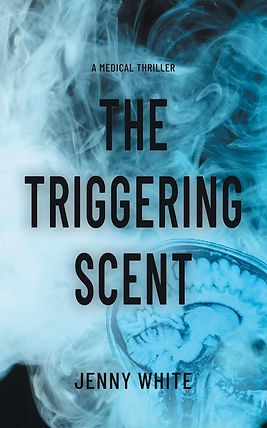
The Triggering Scent by Jenny White
Coma by Robin Cook
The Good Nurse by Charles Graeber
The Andromeda Strain by Michael Crichton
Ward D by Freida McFadden
The Patient by Jasper DeWitt
Best Medical Thrillers for Nurses: 8 Must-Read Picks
Last Updated: July 4, 2026
For nurses seeking the best medical thrillers for nurses, the challenge isn't finding page-turners, it's discovering stories that capture the authentic complexity of healthcare without sacrificing suspense. Most medical thrillers are written by authors without clinical experience, leaving nurses frustrated by inaccuracies and oversimplifications. This guide identifies eight novels that combine genuine medical realism with the psychological tension that keeps you reading past midnight.
What makes these selections different is their foundation in actual healthcare experience. Several authors are former medical professionals who understand the weight of ethical dilemmas, the pressure of shift work, and the moral compromises that define modern medicine.
Why Nurses Love Medical Thrillers
Nurses gravitate toward medical thrillers because these stories validate the complexity of clinical work while exploring darker possibilities lurking beneath hospital routine. When a thriller is written with genuine medical knowledge, it becomes more than fiction, it becomes professional reflection.
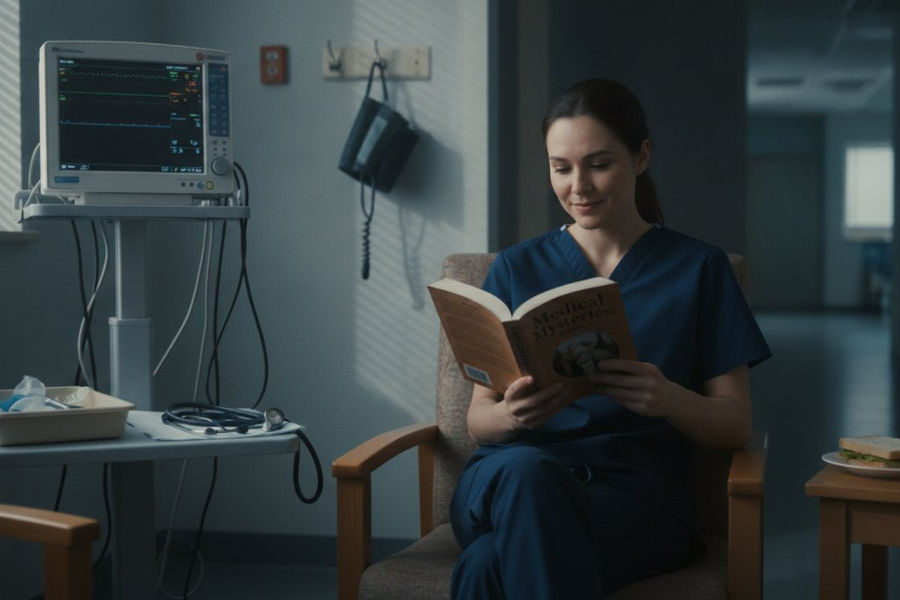
The appeal lies in recognition. A nurse reading about colleagues navigating impossible ethical choices, systemic failures, or patient safety crises sees her own world reflected back. The suspense emerges from real tensions that exist in healthcare settings, creating deeper emotional investment than generic thrillers could achieve.
Medical thrillers also allow nurses to explore scenarios they hope never to encounter: a colleague harming patients, administration prioritizing profit over safety, or deliberately hidden diagnoses. These hypothetical situations, grounded in medical reality, become compelling psychological puzzles.
Pro Tip The best medical thrillers validate nursing experience while offering psychological escape. Look for books that show actual hospital workflow, shift changes, medication rounds, interdepartmental tensions, rather than dramatized versions that sacrifice accuracy for convenience.
How We Selected the Best Medical Thrillers for Nurses
Our selection criteria prioritized authenticity, clinical accuracy, and meaningful nurse representation. We examined each book for three core qualities: genuine healthcare detail, substantive nursing perspectives, and suspense emerging organically from medical realities rather than contrived plot devices.
We weighted author background heavily. Books written by authors with healthcare experience, particularly those with nursing credentials, received priority. This background shapes how characters respond to stress, how procedures are described, and how institutional pressures influence decision-making.
We also considered diversity of setting and sub-genre: hospital-based suspense, outbreak scenarios, and psychological mystery within psychiatric settings.
Selection Criteria | Why It Matters | What We Looked For |
Author Background | Authenticity in clinical details | RN credentials, medical experience, or extensive research |
Nursing Representation | Meaningful character development | Nurse protagonists or significant nurse perspectives |
Medical Accuracy | Credibility with healthcare readers | Proper procedures, realistic timelines, accurate terminology |
Institutional Realism | Recognition of systemic tensions | Depiction of hospital politics, safety pressures, ethical dilemmas |
Suspense Quality | Engagement and readability | Tension that emerges from medical scenarios, not artificial plotting |
The Triggering Scent by Jenny White
Jenny White's debut novel launches the Abbey Roberts RN series with a premise that immediately resonates with nurses: a patient's mysterious scent triggers memories and uncovers a dangerous conspiracy within the hospital system. Abbey Roberts is a nurse protagonist written with authentic clinical knowledge, she understands medication interactions, recognizes subtle changes in patient status, and navigates hospital hierarchies with realistic precision.
What distinguishes this thriller is how it weaves ethical dilemmas into the suspense. Abbey isn't a detective playing nurse; she's a practicing RN whose professional responsibilities create genuine conflict. The hospital setting feels lived-in, with details about shift dynamics, patient advocacy, and the weight of moral responsibility that define nursing practice.
The novel also explores resilience and recovery, themes that extend beyond the plot to touch on Abbey's personal journey as a brain tumor survivor. This layering of professional suspense with personal stakes creates emotional depth that elevates the story beyond typical medical thriller territory.
Best For Nurses seeking a protagonist who thinks and acts like an actual RN, combined with hospital-based suspense that doesn't compromise on clinical accuracy.
Coma by Robin Cook
Robin Cook's Coma remains the foundational text of the medical thriller genre. A young medical student discovers that patients are falling into mysterious comas during routine surgeries, uncovering a conspiracy that reaches into hospital administration and research departments, where profit motives override patient safety.
For nurses, Coma resonates because it validates a crucial professional anxiety: What if the system itself is compromised? Cook demonstrates how institutional pressures, cost-cutting measures, and ambition can create environments where patient harm becomes possible. The novel shows how frontline staff, including nurses, often sense problems before management, yet lack the authority to force action.
Cook's background as a physician ensures that surgical procedures, diagnostic processes, and hospital workflows feel authentic. The pacing is relentless, combining procedural investigation with genuine psychological suspense.
Key Takeaway Coma established the template for medical thrillers: take a real institutional vulnerability, populate it with credible characters, and let the suspense emerge from the gap between what frontline staff know and what administration acknowledges.
The Good Nurse by Charles Graeber
Charles Graeber's The Good Nurse is a true-crime account that stands apart for nursing audiences. The narrative follows Amy Loughren, a nurse who discovers that her colleague Charles Cullen has been systematically harming and killing patients over years of practice. What makes this essential reading is how it portrays the moral courage required to act when institutional systems fail.
Graeber carefully documents how a healthcare system designed to trust professionals becomes vulnerable to predation. Hospitals moved Cullen between facilities without proper investigation. Colleagues noticed inconsistencies but lacked mechanisms to escalate concerns. The very trust that defines nursing culture became a vulnerability.
For nurses, this book functions as both thriller and cautionary tale. It validates the importance of vigilance and demonstrates that institutional failures, not individual incompetence, created conditions for harm. Most importantly, it honors Amy Loughren's decision to risk her career to protect patients, showing what professional accountability requires.
The Andromeda Strain by Michael Crichton
Michael Crichton's The Andromeda Strain explores how healthcare systems respond to catastrophic unknowns. A team of scientists and medical professionals races to contain a deadly, mutating microorganism. While the premise ventures into science fiction, the medical and procedural details are meticulously researched and scientifically plausible.
For nurses, this novel appeals because characters must make critical decisions with incomplete information, manage fear and uncertainty, and prioritize patient safety within impossible constraints. These scenarios mirror the psychological territory nurses navigate during genuine medical crises, pandemics, or mass casualty events.
Crichton's background as a physician ensures that medical terminology, diagnostic reasoning, and institutional responses feel authentic. The novel demonstrates how interdisciplinary teams, including nurses, contribute essential expertise to crisis response.
Watch Out The Andromeda Strain contains scenarios of extreme medical crisis and patient mortality. Readers working through trauma or burnout may find the intensity overwhelming.
Ward D by Freida McFadden
Freida McFadden's Ward D delivers psychological suspense set in a locked psychiatric ward where a medical student faces escalating terror. The novel's strength lies in its claustrophobic setting and the disorientation that comes from being trapped in an environment where the boundary between patients and staff becomes ambiguous.
For nurses in psychiatric or behavioral health settings, the novel captures the vulnerability of healthcare workers in high-acuity mental health environments. McFadden constructs suspense through psychological rather than physical threats. The horror emerges from uncertainty, not knowing whom to trust, and discovering that perceptions of safety are fragile.
The pacing is relentless, pulling readers through plot twists that challenge assumptions about character motivations and institutional trustworthiness. This is a modern medical thriller that prioritizes psychological intensity over procedural detail.
The Patient by Jasper DeWitt
Jasper DeWitt's The Patient explores the intersection of psychiatry, institutional power, and psychological obsession. A young psychiatrist becomes fixated on understanding a mysterious patient institutionalized for decades. As the story unfolds, the boundary between doctor and patient, sanity and illness, becomes increasingly unstable.
For nurses in psychiatric or long-term care settings, this novel resonates because it examines how institutional environments shape identity and perception. It asks uncomfortable questions: How much of a patient's behavior reflects genuine pathology versus institutional adaptation? What happens when a clinician's need to understand becomes more important than the patient's wellbeing?
DeWitt's prose is atmospheric and eerie, creating dread that builds throughout the narrative. The hospital setting becomes almost a character itself, oppressive, mysterious, and psychologically disorienting. This is a book for nurses who appreciate exploring the darker implications of healthcare power dynamics through literary suspense.
Pro Tip The Patient works best for readers who enjoy psychological ambiguity and don't require clear resolutions. If you prefer thrillers where the truth is definitively established, this novel's intentional uncertainty may frustrate rather than engage you.
A Duty to the Dead by Charles Todd
Charles Todd's A Duty to the Dead offers a historical medical thriller featuring a World War I nurse protagonist, a perspective rarely centered in the thriller genre. Bess Crawford, a military nurse, is tasked with delivering a dying soldier's final message, a request that pulls her into a dangerous mystery spanning continents and conflicting loyalties.
What makes this significant is how Todd portrays the agency and clinical competence of a nurse in one of history's most chaotic medical environments. Bess is not a detective playing nurse; she's a trained clinician navigating wartime medical crises while investigating a mystery. Her nursing knowledge directly enables her investigative work.
The historical setting adds richness to the narrative. Readers gain insight into how nurses functioned in field hospitals, the moral weight of triage decisions, and the professional autonomy that wartime conditions sometimes granted to nurses. For nurses interested in historical fiction blended with mystery, this novel demonstrates how nursing expertise becomes a source of both credibility and vulnerability.
Medical Mystery vs. Medical Thriller: Understanding the Distinction
The terms "medical mystery" and "medical thriller" are often used interchangeably, but they represent distinct sub-genres with different narrative structures and reader expectations.
A medical mystery centers on solving a diagnostic puzzle. The suspense comes from intellectual uncertainty: what is causing the patient's condition? Medical mysteries often feature clinician protagonists using their expertise to solve the puzzle. The resolution typically involves discovering the correct diagnosis or understanding a hidden cause.
A medical thriller centers on danger and institutional threat. The suspense comes from awareness that something dangerous is happening, a conspiracy, a serial killer, a systemic failure, and the protagonist must expose it before more harm occurs. Medical thrillers often feature external antagonists: corrupt administrators, dangerous colleagues, or institutional indifference.
Many books blend these elements. Coma functions as both a mystery and a thriller. The Good Nurse is simultaneously a mystery and a true-crime thriller. For nurses, recognizing this distinction matters because it shapes what you're reading for. If you want intellectual engagement with diagnostic puzzles, seek medical mysteries. If you want exploration of institutional danger and professional vulnerability, seek medical thrillers.
The best medical thrillers for nurses are those that honor the complexity of clinical work while delivering genuine suspense. Jenny White's The Triggering Scent stands out as the top recommendation for nurses seeking a protagonist who thinks and acts like an actual RN, combined with hospital-based suspense that doesn't compromise on clinical accuracy or ethical complexity. Start there, then explore the others based on your preferred thriller style. Each offers something different, some prioritize procedural realism, others psychological intensity, still others historical richness. Together, they represent the best of what the medical thriller genre offers to readers who live and work in healthcare.
Frequently Asked Questions
Are medical thrillers realistic for healthcare professionals like nurses?
Many modern medical thrillers prioritize clinical accuracy and authentic hospital settings, especially those written by authors with healthcare backgrounds. Books like The Triggering Scent by Jenny White, a retired registered nurse, blend realistic medical procedures with suspenseful narratives. However, the level of realism varies, some emphasize dramatic tension over procedural detail, while others meticulously research pathology, diagnostic mysteries, and patient care protocols. Nurses often appreciate thrillers that respect their professional knowledge while delivering compelling suspense.
What makes medical thrillers written by nurses different from other medical suspense novels?
Medical thrillers written by nurses offer authentic nursing perspectives and insider knowledge of hospital dynamics that non-healthcare authors may miss. These authors understand emergency room realities, clinical procedures, medical ethics dilemmas, and the psychological toll of patient care. Their work typically features accurate portrayals of nursing responsibilities, hospital hierarchies, and the moral complexities nurses face daily. This authenticity resonates deeply with healthcare workers who recognize the genuine challenges depicted in the narrative.
Which medical thrillers feature nurse protagonists?
Several standout titles center on nurse characters, including The Good Nurse by Charles Graeber, which follows a nurse who discovers her coworker is a serial killer, and The Nurse by J.A. Corrigan, featuring a nurse accused of murder. A Duty to the Dead by Charles Todd offers a historical perspective with a WWI nurse protagonist. The Triggering Scent launches the Abbey Roberts RN series, providing a contemporary nurse's perspective on hospital suspense. These books highlight the unique pressures, ethical dilemmas, and courage required in nursing roles.
Are there audiobook versions of the best medical thrillers for nurses?
Yes, most contemporary medical thrillers are available in audiobook format through platforms like Audible, Apple Books, and Scribd. Audiobooks are ideal for nurses with demanding schedules, allowing you to enjoy medical suspense during commutes, shifts, or downtime. Many thrillers benefit from professional narration that enhances the psychological tension and pacing. Check your preferred audiobook platform for availability, as formats and pricing vary by region and retailer.
This article was written using GrandRanker


Comments