



Brain Injury Novels: 10 Essential Reads for Recovery & Resilience
Table of Contents
Why Brain Injury Novels Matter: Understanding TBI Through Story How Fiction Bridges Clinical Knowledge and Patient Experience Fiction vs. Non-Fiction: What Each Format Offers
How Fiction Bridges Clinical Knowledge and Patient Experience
Fiction vs. Non-Fiction: What Each Format Offers
Top Brain Injury Novels: Clinical Accuracy Meets Compelling Narrative 1. Left Neglected by Lisa Genova 2. The Echo Maker by Richard Powers 3. Duma Key by Stephen King 4. Before I Go to Sleep by S.J. Watson 5. The Zero by Jess Walter
1. Left Neglected by Lisa Genova
2. The Echo Maker by Richard Powers
3. Duma Key by Stephen King
4. Before I Go to Sleep by S.J. Watson
5. The Zero by Jess Walter
Memoirs and Personal Narratives: Real Stories of Traumatic Brain Injury 6. The Diving Bell and the Butterfly by Jean-Dominique Bauby 7. Over My Head by Dr. Claudia Osborn 8. Where Is the Mango Princess? by Cathy Crimmins 9. But My Brain Had Other Ideas by Deb Brandon
6. The Diving Bell and the Butterfly by Jean-Dominique Bauby
7. Over My Head by Dr. Claudia Osborn
8. Where Is the Mango Princess? by Cathy Crimmins
9. But My Brain Had Other Ideas by Deb Brandon
How to Write a Character with a Brain Injury: Lessons from Published Authors Research-Driven Character Development Avoiding Stereotypes and Inspiration Porn Neuroplasticity and Long-Term Recovery Arcs
Research-Driven Character Development
Avoiding Stereotypes and Inspiration Porn
Neuroplasticity and Long-Term Recovery Arcs
Books About Traumatic Brain Injury: Audiobooks, Reviews, and Accessibility Audiobook Availability for Accessibility Reader Reviews and Rating Aggregation Neuro-Diversity and Mental Health Impact in Brain Injury Narratives
Audiobook Availability for Accessibility
Reader Reviews and Rating Aggregation
Neuro-Diversity and Mental Health Impact in Brain Injury Narratives
Medical Thrillers with Authentic Brain Injury Storylines: Jenny White's Approach
How Brain Injury Novels Support Caregivers and Families
Conclusion: Finding Your Next Brain Injury Novel
Brain Injury Novels: 10 Essential Reads for Recovery & Resilience
Last Updated: July 11, 2026
Brain Injury Novels offer readers a powerful gateway to understanding traumatic brain injury through compelling narratives that blend clinical accuracy with deeply human stories. Whether you're a survivor navigating recovery, a caregiver seeking perspective, or simply curious about the resilience of the human brain, these stories illuminate what neurological trauma actually feels like. At Jenny White, we've curated this guide to the most essential Brain Injury Novels available today.
Why Brain Injury Novels Matter: Understanding TBI Through Story
Fiction creates what medical educators call "narrative learning," where abstract neurological concepts become concrete human struggles. Research from the Journal of Medical Humanities demonstrates that narrative medicine improves clinical empathy and patient understanding of their own conditions. Readers of brain injury fiction report feeling less isolated in their recovery journeys and better equipped to advocate for their needs.
The invisible nature of many brain injuries makes fiction particularly valuable. Unlike a broken leg, traumatic brain injury leaves no visible cast. Brain Injury Novels make the invisible visible, translating neuroplasticity and neuropsychology into human narratives that resonate deeply.
Pro Tip The most impactful Brain Injury Novels are those written by authors with direct experience, either as survivors themselves or as healthcare professionals with deep clinical knowledge.
How Fiction Bridges Clinical Knowledge and Patient Experience
A neuroscientist can explain hemispatial neglect in technical terms. A novelist can show you what it's like to eat only the food on the right side of your plate, unaware that an entire world exists to your left. Authors who write Brain Injury Novels with medical backgrounds bring credibility that general fiction writers cannot, transforming clinical knowledge into embodied experience.
Fiction vs. Non-Fiction: What Each Format Offers
Both fiction and non-fiction play essential roles in understanding brain injury, but they serve different purposes. Non-fiction memoirs and clinical guides provide factual accuracy and practical strategies. Fiction explores the emotional and psychological dimensions of trauma.
Format | Best For | Strengths |
Fiction (Novels) | Understanding emotional impact and identity loss | Immersive, empathetic, explores psychological dimensions |
Memoirs | Real recovery stories and practical coping strategies | Authentic survivor perspective, specific tools |
Clinical Guides | Medical understanding and rehabilitation science | Comprehensive, evidence-based, professionally vetted |
Audiobooks | Accessibility during recovery or caregiving | Reduces cognitive load, enables passive engagement |
Top Brain Injury Novels: Clinical Accuracy Meets Compelling Narrative
The novels in this section represent the gold standard for Brain Injury Novels, combining rigorous medical accuracy with narratives that grip readers emotionally.

1. Left Neglected by Lisa Genova
Lisa Genova holds a PhD in neuroscience, which shows in every page of Left Neglected. The novel follows Sarah Chen, a high-powered executive who suffers a traumatic brain injury and develops left hemispatial neglect, a neurological condition where the brain literally ignores the left side of space. She eats only the food on the right side of her plate. She reads only the right half of words.
What makes this Brain Injury Novel exceptional is its precision. Genova recreates the experience for readers through Sarah's perspective, making the narrative itself disorienting and mirroring the protagonist's neurological reality. The story explores identity loss as Sarah must reconstruct who she is when her executive competence has been stripped away. For survivors and caregivers, Left Neglected validates the frustration of invisible disability.
Key Takeaway Left Neglected is the essential starting point for understanding how brain injury rewires not just cognition but identity itself.
2. The Echo Maker by Richard Powers
Richard Powers won the National Book Award for The Echo Maker, a novel about Mark Schloss, a young man who survives a near-fatal car accident and develops Capgras syndrome, a rare neurological condition where he becomes convinced that his sister has been replaced by an identical impostor. The narrative shifts between Mark's perspective, his sister's experience, and a neuroscientist studying Mark's condition, mirroring the fragmentation of consciousness after brain trauma.
Powers uses this condition as a gateway to deeper questions about memory, identity, and what makes us human. For those interested in the philosophical dimensions of brain injury, this novel offers unmatched depth.
3. Duma Key by Stephen King
Stephen King's Duma Key blends psychological realism with supernatural elements as protagonist Rimbauer suffers a severe brain injury and moves to a remote Florida island to recover. What's remarkable is King's detailed portrayal of the slow, painful rehabilitation process. Rimbauer struggles with basic tasks, holding a pencil, forming words, understanding spatial relationships. King doesn't rush recovery, showing instead the grinding frustration of incremental progress and the psychological toll of cognitive impairment.
4. Before I Go to Sleep by S.J. Watson
Before I Go to Sleep centers on anterograde amnesia, the inability to form new memories. The protagonist wakes each morning with no memory of the past decade. While not strictly a clinical portrayal, this Brain Injury Novel captures something profoundly true about memory loss: the terror of fragmentation and the way identity depends on narrative. The thriller structure makes philosophical questions about consciousness and selfhood feel urgent and visceral.
5. The Zero by Jess Walter
Jess Walter's The Zero follows Augustine "Augie" Marrantz, a detective who suffers a brain injury after 9/11 and struggles to navigate a post-traumatic world. What distinguishes this Brain Injury Novel is its refusal to separate personal neurological trauma from social and historical trauma. Augie's cognitive confusion mirrors the nation's confusion about identity and purpose in the post-9/11 era.
Watch Out The Zero is intentionally disorienting, mirroring the protagonist's perspective. This Brain Injury Novel rewards patience and rereading.
Memoirs and Personal Narratives: Real Stories of Traumatic Brain Injury
Memoirs offer the authentic voice of someone who actually lived through brain injury and recovery. For survivors and caregivers, memoirs often feel like finding a guide who has already walked the path ahead.
6. The Diving Bell and the Butterfly by Jean-Dominique Bauby
Jean-Dominique Bauby was a magazine editor when he suffered a massive stroke that left him with locked-in syndrome, a condition where the brain is fully conscious but the body is completely paralyzed. He dictated this entire memoir by blinking his left eyelid. His prose is poetic and often humorous, even as he describes the horror of being trapped in his own body.
What makes this memoir essential reading is Bauby's refusal to be pitied. He maintains his wit, perspective, and humanity despite circumstances that would seem to strip all of these away. This memoir demonstrates that severe neurological injury does not erase the person inside.
7. Over My Head: A Doctor's Own Story of Head Injury by Dr. Claudia Osborn
Dr. Claudia Osborn brings a unique dual perspective: she is both a physician and a survivor of traumatic brain injury. Her experience navigating the healthcare system from both sides gives her insights that other memoirs cannot provide. She articulates the frustration of cognitive impairment, the grief of losing competence, and the slow process of reconstructing identity after severe head injury.
For healthcare professionals seeking to understand their patients' experiences from the inside, this memoir provides honest, detailed answers.
8. Where Is the Mango Princess? by Cathy Crimmins
Cathy Crimmins wrote this memoir about her husband's severe traumatic brain injury from the perspective of a caregiver and spouse. Her husband suffered a devastating TBI that left him with significant cognitive and behavioral changes. What distinguishes this memoir is its unflinching honesty about caregiver burden and the ways brain injury affects entire family systems.
For families navigating the aftermath of severe brain injury, this memoir provides both validation and practical perspective. Crimmins shows that recovery is not linear and that adaptation requires patience, humor, and sustained commitment.
9. But My Brain Had Other Ideas by Deb Brandon
Deb Brandon survived a brain hemorrhage followed by emergency surgery. In this memoir, she documents her recovery journey with remarkable clarity and honesty, exploring the cognitive and emotional challenges of brain injury, the fatigue, cognitive fog, anxiety, and slow process of rebuilding confidence.
What makes this memoir particularly valuable is Brandon's focus on the invisible aspects of brain injury recovery. She describes what it's like to struggle with tasks that should be simple, to feel your own mind working against you.
Pro Tip Memoirs like Brandon's are most valuable when read during the acute phase of recovery or within the first year after injury, providing realistic timelines and normalizing the struggles survivors experience.
How to Write a Character with a Brain Injury: Lessons from Published Authors
For writers seeking to portray brain injury authentically, the novels and memoirs discussed above offer crucial lessons. The most credible Brain Injury Novels come from authors who have done extensive research or lived experience with neurological conditions.
If you're writing a character with brain injury, invest time in understanding the specific neurological condition you're portraying. Read clinical literature. Interview survivors. Understand not just the symptoms but the lived experience of those symptoms.
Avoid stereotypes and what disability advocates call "inspiration porn", the tendency to position disabled characters as sources of inspiration simply for existing. A character with brain injury is not inherently inspirational. They are a person navigating a changed life. Equally problematic is the stereotype of the person with brain injury as fundamentally diminished. The reality is far more complex.
Modern neuroscience has demonstrated that the brain possesses remarkable neuroplasticity, the ability to reorganize and form new neural connections throughout life. When writing long-term recovery arcs, understanding neuroplasticity allows for authentic portrayals of both recovery and adaptation. Recovery is often a process of the brain finding new pathways, developing new strategies, and rebuilding capabilities in ways that might look different from the original function.
Books About Traumatic Brain Injury: Audiobooks, Reviews, and Accessibility
Access to Brain Injury Novels takes many forms. For survivors managing cognitive fatigue, audiobooks offer a crucial alternative to reading. For families seeking recommendations, reader reviews provide valuable guidance.
Audiobook Availability for Accessibility
Many Brain Injury Novels are available in audiobook format through platforms like Audible, Apple Books, and Libro.fm. Audiobooks serve a crucial accessibility function for survivors managing cognitive fatigue, visual impairment, or other conditions that make traditional reading difficult. For caregivers and family members, audiobooks enable engagement during commutes, exercise, or other activities where reading would be impossible.
Reader Reviews and Rating Aggregation
Goodreads and similar platforms aggregate reader reviews of Brain Injury Novels, providing insight into how different audiences respond to these books. Look for reviews from readers who identify as survivors, caregivers, or healthcare professionals. Their perspectives often highlight different aspects of the same novel.
Medical Thrillers with Authentic Brain Injury Storylines: Jenny White's Approach
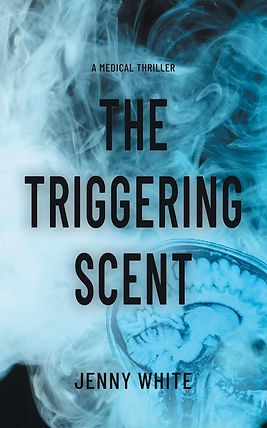
Jenny White, a Canadian author and retired registered nurse, brings unparalleled authenticity to medical narratives. Her debut novel, The Triggering Scent, launches the Abbey Roberts RN series with a protagonist navigating the high-stakes world of hospital medicine while drawing on White's lived experience as a brain tumor survivor.
What distinguishes Jenny White's approach is the integration of realistic clinical detail with emotional authenticity. As a retired RN, White understands the actual protocols, pressures, and ethical dilemmas that healthcare professionals face. As a brain tumor survivor, she writes from intimate knowledge of what it means to navigate the healthcare system from the patient perspective.
For readers seeking Brain Injury Novels that combine medical accuracy with compelling narrative tension, Jenny White's work represents the gold standard. Her characters face genuine ethical dilemmas rooted in realistic medical scenarios.
Best For Jenny White's medical thrillers are ideal for readers who want authentic hospital settings, realistic medical details, and protagonists navigating genuine ethical dilemmas.
How Brain Injury Novels Support Caregivers and Families
Caregiving for someone with brain injury is profoundly isolating. Brain Injury Novels serve a crucial function for caregivers by normalizing their experience and providing validation that what they're feeling is understandable. Reading memoirs like Where Is the Mango Princess? allows caregivers to see their own struggles reflected in another person's story.
Brain Injury Novels also serve an educational function for families. When a loved one has suffered traumatic brain injury, understanding what they're experiencing cognitively and emotionally becomes crucial. Fiction allows families to enter the subjective experience of brain injury in ways that clinical explanations cannot. Recommending a Brain Injury Novel to extended family members can be an efficient way of helping them understand what your loved one is experiencing.
Brain Injury Novels offer far more than entertainment. They provide survivors with validation that their experience is real and understandable. They offer caregivers and families a window into the subjective experience of neurological trauma. They teach healthcare professionals what their patients actually feel. Whether you're navigating your own recovery, supporting a loved one, or seeking to understand the human dimensions of brain injury, the novels and memoirs in this guide offer essential reading.
Frequently Asked Questions
Are there novels that accurately depict traumatic brain injury and TBI recovery?
Yes, several brain injury novels combine clinical accuracy with compelling storytelling. Left Neglected by neuroscientist Lisa Genova explores hemispatial neglect with scientific precision. The Echo Maker examines Capgras syndrome through a literary lens. Over My Head offers dual perspective as both a clinical guide and personal memoir. These novels balance neurological realism with emotional depth, making them valuable for both survivors and healthcare professionals seeking authentic TBI narratives.
What's the difference between fiction and non-fiction brain injury books?
Fiction brain injury novels like Duma Key and Before I Go to Sleep prioritize emotional journeys and character transformation, sometimes sacrificing medical precision for narrative impact. Non-fiction memoirs such as The Diving Bell and the Butterfly and But My Brain Had Other Ideas provide firsthand accounts of lived experience with traumatic brain injury. Memoirs offer caregiver resources and practical insights, while fiction explores the psychological and existential dimensions of recovery. Both formats serve different reader needs, fiction for inspiration and understanding, memoirs for validation and resilience strategies.
How can reading brain injury novels help families and caregivers understand TBI?
Brain injury novels provide empathetic entry points into the invisible disability experience. Where Is the Mango Princess? specifically addresses family adaptation and caregiver burden, offering validation for loved ones navigating recovery. These narratives normalize the emotional rollercoaster of post-concussion syndrome and cognitive impairment, reducing isolation. By reading authentic patient perspectives and caregiver journeys, families gain insight into neuroplasticity timelines, rehabilitation challenges, and the long-term identity shifts following brain trauma. Literary narratives often communicate what clinical guides cannot, the human resilience required during healing.
Which brain injury novels are available in audiobook format?
Most major brain injury novels have audiobook editions for accessibility. Left Neglected, The Echo Maker, Duma Key, Before I Go to Sleep, and The Diving Bell and the Butterfly are widely available on platforms like Audible and Apple Books. Audiobooks benefit survivors with cognitive impairment or visual processing challenges post-TBI. Memoirs like Where Is the Mango Princess? and But My Brain Had Other Ideas also offer audio versions. Check your local library's digital collection or major audiobook retailers for current availability and narrator quality, which significantly impacts the listening experience for emotionally intense brain injury narratives.
This article was written using GrandRanker


Comments