

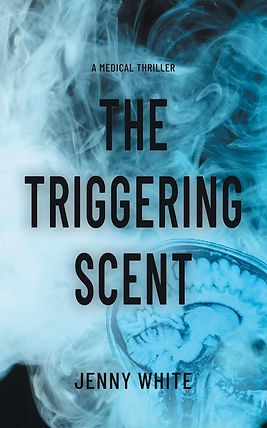


The Triggering Scent: A Medical Thriller That Redefines the Genre
Updated: Sep 16
Table of Contents
What Makes This Medical Thriller Different
Plot Overview and Central Conflict
Abbey Roberts: The Protagonist at the Heart of the Story
Dr. Mark Winston III: The Antagonist
Authentic Medical Details and Hospital Setting
Abbey Roberts Medical Thriller Series: What's Next
Canadian Thriller Authors and the Rise of Healthcare Fiction
Why Readers Choose The Triggering Scent Over Established Names
Conclusion
Last Updated: August 5, 2026
What Makes This Medical Thriller Different
The medical thriller genre has long relied on the same formula: brilliant protagonist, high-stakes hospital crisis, clinical jargon for authenticity. Jenny White's debut novel, The Triggering Scent, breaks that mold. What separates it from established names is straightforward: it's written by someone who actually worked in the ICU. White's background as a retired registered nurse shapes every scene, ethical dilemma, and clinical detail. When a character struggles with recovery, it reads like lived experience, not research filtered through imagination.
The novel launches the Abbey Roberts RN series with a protagonist who isn't a surgeon or administrator, she's a registered nurse, the person in the room when things fall apart. This perspective shift reframes how the story unfolds. Readers accustomed to doctor-centered narratives discover something rarer: the actual frontline experience of healthcare.
Key Takeaway Jenny White's background as a retired RN and brain tumor survivor brings clinical credibility and emotional depth that separates her work from formula-driven medical fiction.
Plot Overview and Central Conflict
The Triggering Scent centers on a surgical catastrophe in the intensive care unit and its aftermath, testing every character's ethics, competence, and survival instinct. Abbey Roberts finds herself navigating the fallout from a botched procedure, caught between professional obligation and personal survival.
The plot unfolds with ICU precision. The triggering scent itself, a sensory detail connected to Abbey's past trauma, blurs the line between professional responsibility and psychological vulnerability. It's the engine driving the story forward. What distinguishes the narrative is its refusal to simplify: the antagonist isn't purely evil, the hospital isn't mere backdrop, and ethical dilemmas don't resolve neatly because they don't in real life. This complexity keeps readers engaged through competing goods, not obvious wrongs.
Abbey Roberts: The Protagonist at the Heart of the Story
Abbey Roberts is a registered nurse navigating the intersection of clinical expertise and personal fragility. She's competent yet shaped by her own medical history, human in ways many thriller protagonists aren't. Her character development hinges on resilience without sentimentality. Abbey doesn't overcome trauma by willpower or plot convenience; instead, the novel explores how professional training and survival instinct interact under extreme pressure. For readers who've experienced medical trauma or worked in healthcare, this portrayal lands differently than typical thriller protagonists.
The Abbey Roberts series positions her as someone readers can follow across multiple stories, flawed, capable, and shaped by the environment she navigates.
Dr. Mark Winston III: The Antagonist
Dr. Mark Winston III represents institutional power: the surgeon who believes expertise absolves him of accountability. His motivation isn't simple malice but the intersection of professional reputation, institutional loyalty, and the psychological mechanisms people use to rationalize failure. This makes him a more dangerous adversary than a purely evil character. Abbey's conflict with him isn't about stopping a villain; it's about navigating a system designed to protect people like him.
Authentic Medical Details and Hospital Setting
The intensive care unit in The Triggering Scent functions as a fully realized environment. White's background as a registered nurse means clinical details aren't approximations. Equipment works as it actually works. Procedures follow real protocols. Language reflects how medical professionals actually communicate under pressure.

This accuracy matters profoundly. Healthcare professionals often abandon medical thrillers when clinical details feel wrong. The Triggering Scent makes no such compromises. The ICU environment feels real because it is real, filtered through someone who spent years in those spaces.
The hospital setting also reflects ethical complexity. Decisions aren't made in isolation. Institutional pressures, liability concerns, and professional hierarchies shape outcomes. This realism creates tension pure medical drama can't match. The threat isn't just the medical crisis; it's the system's response to it.
Watch Out Medical accuracy in thrillers isn't just detail, it's credibility. When clinical elements feel wrong, healthcare readers immediately disengage. White's RN background eliminates this risk entirely.
Abbey Roberts Medical Thriller Series: What's Next
Series Structure and Character Arc Development
The Abbey Roberts RN series launches with The Triggering Scent as the opening installment, positioning Abbey as a protagonist whose arc develops across multiple narratives. Unlike standalone medical thrillers, series structure allows character growth reflecting genuine recovery and professional evolution rather than reset-to-baseline between books.
Abbey's position as a registered nurse gives the series structural flexibility. A nurse protagonist navigates multiple clinical environments, patient populations, and institutional contexts. Each subsequent book can explore different aspects of healthcare without repeating scenarios. For readers invested in character-driven narratives, series development means Abbey's personal recovery, professional challenges, and relationships deepen across installments. Her trauma response, coping mechanisms, and professional identity evolve in ways that standalone novels compress or oversimplify.
Psychological Thriller Tropes and Subversion
The Triggering Scent operates within the psychological thriller genre while subverting established conventions. The traditional psychological thriller relies on unreliable narration, readers cannot trust the protagonist's perception. White's novel inverts this. Abbey's perception of clinical reality is reliable; her professional training makes her a trustworthy observer. Tension emerges not from questioning her accuracy but from institutional response to her accurate assessment. The threat isn't psychological distortion; it's institutional protection of powerful figures despite evidence of failure.
Another common trope involves the protagonist's isolation, they alone perceive danger while others dismiss them. The Triggering Scent subverts this by grounding Abbey's concerns in institutional reality. Other healthcare professionals recognize the same problems. The conflict isn't about convincing skeptics of invisible threat; it's about navigating a system where multiple people recognize the problem but institutional incentives protect the responsible party. This reflects actual healthcare dynamics more accurately than the isolated-protagonist model.
Planned Expansion and Thematic Development
While specific publication timelines for subsequent Abbey Roberts novels haven't been announced, the series framework suggests thematic expansion across multiple clinical scenarios. Healthcare offers diverse settings for character-driven suspense: emergency departments, surgical suites, psychiatric units, long-term care facilities. Each environment presents distinct ethical dilemmas and institutional pressures.
The scent motif introduced in the first novel provides narrative continuity. Subsequent installments can explore how this trigger manifests in different clinical contexts and how Abbey's coping mechanisms evolve. This psychological dimension distinguishes character-driven series from plot-driven franchises: the protagonist's internal landscape changes as much as external circumstances.
Canadian Thriller Authors and the Rise of Healthcare Fiction
Canadian thriller authors have increasingly turned to healthcare settings as the backdrop for suspense. This trend reflects both the universal tension inherent in medical environments and the specific expertise Canadian writers bring to the genre. Jenny White represents a particular strand of this development: authors with professional healthcare backgrounds bringing authentic clinical knowledge to narrative fiction.
Healthcare-focused thrillers appeal to readers seeking stories exploring modern institutional complexity. Medical settings offer natural tension and high stakes without requiring invented jeopardy. White's position as a Canadian author with nursing experience and personal medical history places her within a growing community of healthcare professionals writing fiction. Readers recognize this difference immediately.
Why Readers Choose The Triggering Scent Over Established Names
Established medical thriller authors have built massive readerships through decades of consistent output. Yet readers increasingly seek alternatives, and The Triggering Scent captures why: authenticity from lived experience rather than research, character depth reflecting genuine human complexity, and ethical nuance resisting simplification.
Established medical thriller writers bring narrative skill and commercial polish. White brings something different: credibility from actually working in the ICU, surviving brain tumor treatment, and understanding both clinical and emotional dimensions of healthcare crisis.

For healthcare professionals, accuracy matters differently than for general readers. A botched detail breaks immersion immediately. White's RN background eliminates this friction. For survivors of medical trauma, respectful handling of recovery and resilience matters. The emotional authenticity of Abbey Roberts' journey reflects genuine understanding, not narrative convenience.
The decision to choose The Triggering Scent often comes down to this: readers want stories that feel true to actual healthcare experience. Established names deliver suspense and narrative craft. White delivers something requiring lived experience: the specific texture of how medical systems actually work and how people actually survive them.
Pro Tip Healthcare professionals often cite clinical accuracy as the deciding factor between medical thrillers. White's RN background gives The Triggering Scent credibility that research alone can't replicate. For nurses and doctors seeking fiction reflecting their actual experience, this distinction is decisive.
Medical Themes and Realism in Healthcare Fiction
The medical thriller exists at the intersection of suspense and clinical accuracy. When those elements diverge, the narrative fails for readers with healthcare expertise. White's novel maintains their alignment by grounding fictional crises in authentic ICU protocols and decision-making structures.
Specific Medical Accuracy Elements
The novel depicts surgical complication and ICU aftermath with procedural specificity separating it from formula-driven medical fiction. Rather than inventing exotic diagnoses, White anchors tension in realistic complications: infection management, ventilator weaning protocols, medication interactions, and actual patient recovery timelines. These details reflect how ICU crises actually unfold, not as sudden plot twists but as cascading clinical decisions made under incomplete information.
The handling of post-operative monitoring reflects genuine ICU workflow: vital sign check frequency, nursing assessment's role in detecting early deterioration, and communication protocols between nursing and physicians. Readers with ICU experience recognize these rhythms immediately. The novel avoids the common thriller error of physicians discovering critical changes that bedside nursing staff would have caught hours earlier. This accuracy eliminates credibility friction that causes healthcare professionals to abandon medical thrillers mid-narrative.
The novel also addresses the gap between clinical guidelines and institutional practice, a reality research-based fiction often misses. Protocols exist on paper; actual implementation depends on staffing levels, institutional culture, and individual clinician judgment. White's depiction reflects lived understanding of how healthcare systems function under resource constraints.
Vulnerability, Trust, and Power Asymmetry
Themes of vulnerability and trust run through the novel's architecture. In healthcare settings, patients are literally vulnerable, dependent on medical professionals for survival while unable to fully assess their competence or ethics. This fundamental asymmetry creates natural, earned tension.
Abbey's position as a registered nurse gives insider perspective on this power dynamic. Unlike doctor-centered narratives where the protagonist holds institutional authority, Abbey navigates the system from a position where she witnesses institutional failures but lacks formal power to unilaterally correct them. This reflects actual experience of frontline healthcare workers who identify problems before escalation but must work through hierarchical channels. Tension emerges not from invented jeopardy but from realistic professional role constraints within institutional structures.
Addiction and Withdrawal in Healthcare Contexts
The novel engages with substance use and withdrawal in healthcare settings, a topic often handled superficially or reduced to character weakness. White's approach reflects understanding extending beyond narrative convenience. Healthcare professionals struggle with addiction at rates exceeding general population prevalence, rooted in occupational stress, medication access, and self-sufficiency culture that healthcare training reinforces.
The novel treats this reality with appropriate gravity rather than as plot device or moral failing. Characters struggling with addiction are portrayed as competent professionals navigating specific occupational hazard, not cautionary tales. This distinction matters to healthcare readers who recognize addiction as systemic issue rather than personal failure. The handling of withdrawal symptoms, medication interactions, and psychological recovery dimensions reflects clinical understanding rather than dramatized approximation.
Pro Tip Medical accuracy in thrillers isn't just detail, it's the difference between immersion and alienation for healthcare readers. White's RN background means the novel doesn't make common errors that cause nurses and doctors to abandon medical fiction: unrealistic protocols, impossible timelines, or clinical scenarios violating basic physiology. For healthcare professionals seeking fiction honoring actual work complexity, this accuracy is decisive.
Frequently Asked Questions
What makes Jenny White's medical thriller different from established authors like Robin Cook?
Jenny White brings lived experience as a retired registered nurse and brain tumor survivor to The Triggering Scent, grounding the medical thriller in authentic clinical detail and genuine emotional stakes. While established authors research hospital settings, White writes from direct knowledge of ICU dynamics, patient vulnerability, and healthcare ethics. The result is a medical thriller where the suspense emerges from realistic dilemmas rather than dramatized Hollywood scenarios. Her character-driven approach prioritizes emotional depth alongside the procedural tension, creating a narrative that resonates with both healthcare professionals and survivors seeking authentic representation.
Is The Triggering Scent part of the Abbey Roberts medical thriller series?
Yes. The Triggering Scent is the debut novel launching the Abbey Roberts RN series. Abbey Roberts is a registered nurse protagonist navigating high-stakes hospital drama, ethical conflicts, and personal recovery. As the series opener, it establishes Abbey's character, her professional world, and the tensions that will carry through subsequent books. Readers who connect with Abbey's journey and the intensive care unit setting will find ongoing stories within this medical thriller series, making it an ideal entry point for fans seeking character-driven healthcare fiction.
How accurate are the medical details in this medical thriller?
The medical details in The Triggering Scent are rigorously accurate because Jenny White authored the book as a retired registered nurse. The novel portrays realistic surgical procedures, withdrawal symptoms, brain surgery complications, and ICU protocols rather than dramatizing them for effect. This authenticity extends to healthcare ethics, patient safety concerns, and the psychological tension inherent in clinical settings. For healthcare professionals and survivors, this accuracy means the medical thriller reads as credible rather than sensationalized, grounding the suspense in genuine professional and ethical realities.
Does the book handle trauma and recovery respectfully, or does it exploit these themes?
The Triggering Scent treats resilience and recovery with genuine respect. While the novel explores serious themes including addiction, withdrawal, brain damage, and medical vulnerability, it does so through Abbey Roberts' perspective as a healthcare professional and survivor. The narrative emphasizes character agency, ethical dilemmas, and personal strength rather than trauma exploitation. Readers who are cancer survivors or brain injury survivors have noted that Abbey's resilience shines authentically throughout the story, making the medical thriller emotionally impactful without veering into gratuitous suffering.
Buy now
This article was written using GrandRanker


Comments