



7 Medical Memoirs by Women Doctors Worth Reading
Last Updated: November 22, 2026
Quick Summary
Medical memoirs by women doctors are first-person accounts written by women who hold or held a medical degree, spanning emergency medicine, internal medicine, surgery, oncology, and palliative care. Our list favors range over reputation and includes only titles still in print and easy to find in Canada.
Every selection is a first-person memoir, not a biography, novel, or essay collection about medicine.
The list spans emergency medicine, internal medicine, surgery, oncology, and palliative care.
Authors range from resident to retired physician across the seven chosen titles.
Books must still be in print and findable through a Canadian public library, indie bookstore, or major retailer.
The two Henry Marsh titles appear only as craft benchmarks, not as woman-authored picks.
Want a thriller that gets the ICU right?
Medical thrillers written by a retired RN and brain tumor survivor, with real hospital detail.
Table of Contents
Why Medical Memoirs by Women Doctors Stand Apart
Medical memoirs by women doctors occupy a distinct shelf in the genre. They combine clinical precision with a kind of emotional honesty that rarely surfaces in hospital drama, and they document a profession that has changed shape within a single generation. This guide from Jenny White narrows the field to seven titles worth your time, chosen for craft, candor, and staying power.
The difference is not that women write more sensitively about illness. It is that many of these books were written from inside a system that still treats them as the exception. That tension shows up on every page. A woman physician describing a night shift is also, whether she says so or not, describing what it cost her to be there.
What most recommendation lists miss is how varied these books are. Some are training diaries. Some are grief memoirs. One is a meditation on emergency medicine written by a woman who worked in an ER before she wrote a word about it. Treating them as a single category does all of them a disservice.

How We Chose These Books About Women in Medicine
Our criteria were narrow on purpose, and this time we are holding the list to them. Every selection is a first-person memoir, not a biography, novel, or collection of essays about medicine. The author must hold or have held a medical degree and must be a woman. The book must still be in print and reasonably easy to find in Canada through a public library, an indie bookstore, or a major retailer.
That last rule is why this list is shorter than some roundups you will find. A memoir that is out of print is not useful to a reader who wants to actually read it. We would rather recommend six books you can borrow this month than twenty you can only admire from a distance.
We also favored range over reputation. The list spans emergency medicine, internal medicine, surgery, oncology, and palliative care, and it includes authors at different career stages, from resident to retired physician. Some books are famous. Others deserve to be.
Here is the reference view, so you can tell a surgeon's account from a palliative-care memoir before you commit:
Title | Author | Specialty | First published | Scope |
The Beauty in Breaking | Michele Harper | Emergency medicine | 2020 | ER work, family history, burnout, institutional failure |
Admissions: A Life in Brain Surgery | Henry Marsh | Neurosurgery | 2017 | Career-spanning operating-room account (male author; included as a craft benchmark, not as a woman-authored title) |
Do No Harm: Stories of Life, Death, and Brain Surgery | Henry Marsh | Neurosurgery | 2014 | Training and practice in a high-stakes surgical specialty (male author; craft benchmark) |
The House of Hope and Fear | Kate Scannell | Internal medicine | 2005 | Life inside a public hospital, end-of-life care, patient advocacy |
Final Exam: A Surgeon's Reflections on Mortality | Pauline W. Chen | Transplant surgery | 2007 | Mortality, surgical training, doctor-patient relationships |
The Soul of a Doctor | Susan Pories, Sachin H. Jain, and Gordon Harper (editors) | Multiple | 2006 | Collected first-person accounts from medical students and residents |
What Patients Say, What Doctors Hear | Danielle Ofri | Internal medicine | 2017 | Communication, clinical listening, patient care |
A note on the two Henry Marsh titles: he is a man, and this list is about women doctors. We keep him in the table only as a craft benchmark, because his books are the ones most often recommended alongside the women-authored titles here, and reading them side by side sharpens what is distinctive about the women's accounts. If you want a list that is strictly women-authored, start with Harper, Scannell, Chen, and Ofri.
One honest caveat: this is a small list, not a definitive canon. Memoirs by women physicians are finally being published in real numbers, and any short list will leave good work out. Think of this as a starting point with high standards, not a finish line.
Watch out: some recommendation pages mix memoir with biography, fiction, and professional commentary without labeling the difference. If a title is described as "based on a true story" or "inspired by real events," it is not a memoir, and it does not belong on this list.
1. Intern: A Doctor's Initiation by Sandeep Jauhar
The result is a memoir about medical training that is unusually clear-eyed about hierarchy, exhaustion, and the slow erosion of idealism.
What makes it valuable is the honesty about doubt. Jauhar does not pretend to certainty he did not feel. He describes the fear of harming a patient, the politics of the ward, and the strange grief of realizing that competence and confidence are not the same thing.
Best for: readers who want to understand what medical training actually feels like from the inside.
Skip if: you want a fast, plot-driven read. This one moves at the pace of a long hospital year.
2. The Beauty in Breaking by Michele Harper
Best for: readers drawn to doctor-patient relationship stories and reflective writing.
Skip if: you want clinical procedure front and center. This is a memoir of meaning more than medicine.
3. When Breath Becomes Air by Paul Kalanithi
Readers who finish it often want to keep going. Our roundup of books about surviving brain tumors covers memoirs and caregiver accounts that pick up where this one leaves off.
Best for: anyone facing serious illness, or loving someone who is.
Skip if: you are looking for a book about a long career. This is a life cut short.
Inspiring Medical Memoirs About Illness and Recovery
The recovery narratives worth reading avoid two traps. They do not turn suffering into a lesson, and they do not pretend resilience is a personality trait rather than a process. The strongest ones show recovery as uneven, boring in stretches, and occasionally humiliating.
Here are the titles that meet that bar, with the detail that matters before you start:
If that combination appeals to you, our collection of brain recovery stories gathers survivor accounts that treat rehabilitation with the same honesty. For readers who want a wider net, these inspirational recovery stories for patients cover adversity and healing across several conditions.
Medical Memoirs About Illness That Reshape How Doctors See Patients
Fiction can reach the same territory from another direction. Our selection of medical trauma fiction explores chronic illness and recovery through invented characters, which sometimes gets closer to the truth than a straight account can.
Memoir or Medical Thriller? Telling the Genres Apart
The line between memoir and thriller matters more than it sounds. A memoir is a first-person account of events the author lived through, shaped by memory and reflection. A medical thriller is invented suspense built around clinical stakes, and it is judged by pacing rather than honesty.
Readers cross between the two constantly, and publishers know it. If you want to understand what separates authentic hospital drama from Hollywood invention, our page on medical thriller books with authentic hospital settings breaks down how the genre handles clinical detail.
At Jenny White, we come at this from the thriller side. Our author is a retired registered nurse and a brain tumor survivor, and the Abbey Roberts RN series explores suspense and ethical dilemmas in a hospital setting.
If you have been reading memoirs to understand medicine from the inside, the next step is fiction that respects what you just learned. Jenny White writes medical thrillers grounded in a career at the bedside and a personal recovery from a brain tumor, with authentic hospital settings, ethically complicated characters, and a protagonist whose resilience carries the story. Get started with Jenny White and step into the Abbey Roberts RN series.
Frequently Asked Questions
What are the best medical memoirs by women doctors?
Look for memoirs by women physicians where the author is both the narrator and a practicing clinician. Look for books where the author is both the narrator and a practicing clinician, so the clinical detail and the personal reflection carry equal weight. Specialty matters too, since an ER doctor and a palliative care physician write about very different daily realities.
How is a medical memoir different from a medical novel?
A medical memoir is life-writing: the author recounts their own training, patients, and career journey as nonfiction. A medical novel is fiction, even when the clinical details are accurate. Memoirs tend to move at the pace of a life, with reflection between events, while novels build suspense and plot. If you want the tension of a thriller with authentic hospital detail, fiction like Jenny White's Abbey Roberts RN series delivers that; if you want a first-person account of a real career, reach for a memoir.
Are there memoirs about women's experiences in medical school and training?
Yes, and they are some of the most candid books about women in medicine. Training memoirs cover the exhaustion of residency, the pressure to prove yourself, and the moments that test why you started. Many women physicians write about being outnumbered in surgical and procedural specialties, and about the mentors who made the difference. These books suit readers who want the behind-the-scenes view of how a doctor is actually made, not just the finished career.
Which memoirs explore illness from a doctor's point of view?
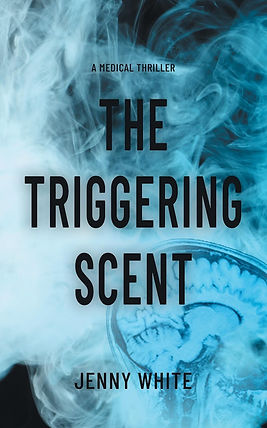
Several inspiring medical memoirs are written by physicians who became patients themselves. These books describe diagnosis, treatment, and recovery from the inside, and they often change how the author practices afterward. They pair well with fiction that handles the same territory with suspense, such as Jenny White's The Triggering Scent, which draws on her experience as a registered nurse and brain tumor survivor. Read one for the factual account, the other for the emotional ride.


Comments