



Medical Thriller Books: Authentic Hospital Drama
Updated: Sep 16
Table of Contents
What Makes Medical Thriller Books Stand Out
Best Medical Thriller Authors and Their Signature Approaches
The Nursing Perspective: Abbey Roberts RN Series
Infectious Disease and Global Health Crises
Genetic Engineering and Pharmaceutical Conspiracies
Medical Mystery Novels That Keep You Turning Pages
Hospital-Based Mysteries and Procedural Investigations
Epidemic and Pandemic Thrillers That Feel Disturbingly Real
Psychological Medical Suspense and Ethical Dilemmas
Why Authenticity Matters in Medical Thriller Books
Frequently Asked Questions
Last Updated: August 14, 2026
What Makes Medical Thriller Books Stand Out
Medical thriller books grip readers because they blend authentic clinical tension with deeply personal stakes. Unlike generic suspense novels, these stories pit characters against systems, corrupt institutions, deadly pathogens, and unethical experiments, where the stakes are literally life and death. The best ones feel disturbingly plausible because they're written by people who've lived inside hospitals, research labs, and emergency departments.
What separates a compelling medical thriller from a forgettable one is authenticity. Readers can sense when an author is faking the details. They know the difference between a writer who's researched a procedure and one who's performed it. That's why medical thriller books written by physicians, nurses, and epidemiologists command such devoted followings; the clinical accuracy becomes part of the suspense itself.
The genre has evolved considerably. Early medical thrillers relied on bioterrorism and exotic pathogens. Modern medical thriller books explore more nuanced territory: pharmaceutical conspiracies, genetic manipulation, AI-driven diagnostics gone wrong, and the everyday ethical compromises that happen inside hospital walls. Readers want stories that feel possible, even likely, in today's healthcare landscape.
Pro Tip The most gripping medical thriller books often feature a [protagonist with insider knowledge](/post/strong-female-protagonist-thriller-a-2026-guide), a nurse, doctor, or researcher who sees something wrong and must navigate institutional resistance to expose it. This creates authentic tension that external threats alone can't deliver.
Best Medical Thriller Authors and Their Signature Approaches

Medical thriller books owe much of their credibility to authors with genuine healthcare backgrounds. These writers don't just research procedures, they've lived through the politics, the exhaustion, the ethical dilemmas, and the moments when protocol collides with patient care.
The Nursing Perspective: Abbey Roberts RN Series
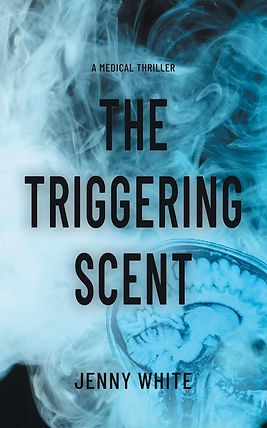
Jenny White's The Triggering Scent launches the Abbey Roberts RN series with a protagonist who sees patterns others miss. As a retired registered nurse, White brings authentic emergency department dynamics to her medical thriller books. Abbey Roberts works inside the system, which creates a different kind of tension than external investigators bring. She knows hospital politics, understands clinical decision-making under pressure, and recognizes when something is genuinely wrong versus when it's just the chaos of a busy shift.
What makes this approach distinctive is the focus on resilience and recovery. White's medical thriller books don't treat trauma as plot decoration; they explore how people rebuild after catastrophic events. Her background as a brain tumor survivor informs this perspective. The emotional depth in Abbey's journey mirrors the complex psychology of actual healthcare workers and patients navigating recovery.
The series prioritizes character over spectacle. Medical thriller books in this vein work because readers connect with Abbey as a person first, then become invested in the mystery she's unraveling. White's nursing expertise means the clinical details don't distract from the story; they enhance it, creating a seamless sense of authenticity.
Watch Out Medical thriller books featuring healthcare protagonists sometimes minimize the bureaucratic realities of reporting concerns. Jenny White's series doesn't shy away from this friction; Abbey must navigate institutional resistance, liability concerns, and professional relationships while pursuing the truth. This adds realistic complexity that many thrillers overlook.
Infectious Disease and Global Health Crises
Ross Pennie brings epidemiology expertise to medical thriller books exploring infectious disease outbreaks. His background as a jungle surgeon informs stories where pathogens become central characters. Bitter Paradise examines how disease investigation intersects with immigration, global politics, and the vulnerabilities of modern healthcare systems.
Medical thriller books in this category work best when they respect the science of epidemiology. Pennie's approach treats disease investigation like detective work, tracing transmission chains, identifying patient zero, understanding how a pathogen spreads. This procedural element gives medical thriller books about contagion a methodical tension that builds through investigation rather than sudden revelations.
The appeal of these medical thriller books lies in their relevance. Readers lived through pandemic uncertainty. Stories exploring how epidemiologists investigate outbreaks, how institutions respond to threats, and how individuals navigate systemic failures feel urgent and grounded in lived experience.
Genetic Engineering and Pharmaceutical Conspiracies
Elizabeth Reed Aden's The Goldilocks Genome represents a newer strain of medical thriller books: stories where genetic research becomes a weapon. An epidemiologist investigating strange deaths uncovers systematic genetic manipulation. These medical thriller books explore the tension between scientific advancement and corporate profit, between innovation and accountability.
Medical thriller books tackling genetic engineering work when they balance technical accuracy with accessibility. Readers don't need to understand CRISPR to follow the plot, but they should understand the stakes. Aden's approach avoids overwhelming technical jargon while maintaining credibility; readers trust they're learning something real about genetic research and its potential for misuse.
Medical Mystery Novels That Keep You Turning Pages
Medical mystery novels differ from medical thriller books by emphasizing puzzle-solving over action. The protagonist must piece together what happened, why it happened, and who's responsible. The tension comes from intellectual challenge as much as physical danger.
Melissa Yi's Human Remains exemplifies this approach. A Canadian physician investigates mysterious deaths at a stem cell research lab in Ottawa. The mystery unfolds through investigation, interviewing colleagues, reviewing research protocols, examining evidence. Yi's medical background means the procedural details feel authentic. Readers follow the investigator's reasoning, making connections alongside the protagonist.
Medical mystery novels work best when the investigation reveals something uncomfortable about the institution itself. The mystery isn't just "who did it?" but "how did the system allow this to happen?" This creates moral complexity alongside intellectual intrigue. Readers finish these medical mystery novels questioning not just the criminal, but the structures that enabled the crime.
Hospital-Based Mysteries and Procedural Investigations

Hospital settings create natural pressure cookers for medical thriller books. Hospitals operate 24/7 under resource constraints, with life-or-death decisions made constantly. Add a mystery to this environment and tension escalates rapidly.
The best hospital-based medical thriller books treat the institution as a character. Hierarchies matter. Information flows through specific channels. Some people have access to certain areas; others don't. Medical thriller books that respect these institutional realities feel more authentic than ones where protagonists move freely through restricted zones.
Daniel Kalla's The Deepest Fake explores how technology threatens hospital security. Electronic health records get hacked. Patient information becomes weaponized. Medical thriller books addressing data vulnerability feel particularly relevant now; hospitals depend entirely on digital systems, and those systems have real vulnerabilities. Kalla's ER physician background means he understands both the clinical reality and the systemic risks.
These medical thriller books often feature procedural investigation. A death occurs. Was it natural? Accidental? Deliberate? The investigation reveals institutional failures, staff conflicts, and the gap between what protocols say should happen and what actually happens under pressure.
Key Takeaway Hospital-based medical thriller books succeed when they acknowledge that institutions protect themselves first. Investigating a death inside a hospital means navigating not just the mystery itself, but institutional resistance to exposure. This creates realistic tension that external investigations can't match.
Epidemic and Pandemic Thrillers That Feel Disturbingly Real
Epidemic and pandemic medical thriller books explore collective threat rather than individual crime. The enemy is invisible, contagious, and spreading. These medical thriller books ask: How do systems respond to unknown threats? How do institutions balance transparency with panic prevention? What happens when the official narrative conflicts with ground-level reality?
The Vaccine by Joe Miller explores this tension directly. A vaccine trial unravels when corporate and political interests interfere with medical safety. Medical thriller books addressing vaccine development feel timely; readers have lived through global vaccination campaigns, institutional messaging, and competing claims about medical safety. These medical thriller books tap into real anxieties about whether institutions prioritize patient safety or profit.
The most effective epidemic medical thriller books balance scientific accuracy with human vulnerability. Readers understand epidemiology through character experience: how a healthcare worker feels when facing a novel pathogen, how researchers experience pressure to produce results, how patients navigate uncertainty. Medical thriller books that ground large-scale threats in individual experience create emotional resonance that statistics alone can't achieve.
Margaret Atwood's Oryx and Crake takes this further into speculative territory. It's less traditional medical thriller books and more dystopian biological thriller, but it explores similar territory: corporate control of genetic research, engineered pathogens, and the hubris of scientific advancement without ethical guardrails. These medical thriller books ask uncomfortable questions about where current trends might lead.
Psychological Medical Suspense and Ethical Dilemmas
The most psychologically complex medical thriller books explore not just what happened, but what it means. They examine ethical gray zones where right answers don't exist, situations where following protocol creates harm, where breaking rules might save lives, where institutional loyalty conflicts with patient safety.
Robert W.'s Killer Instinct explores how technology enables corruption. Electronic health records get hacked and manipulated. Medical thriller books addressing this vulnerability highlight how modern hospitals depend on systems they don't fully control. A breach in data integrity becomes a weapon. These medical thriller books feel especially relevant because the threat is plausible; hospitals have experienced ransomware attacks and data breaches.
The psychological dimension comes from watching characters navigate impossible choices. Do you follow protocol knowing it's wrong? Do you break rules to do what's right? Do you trust the institution or trust your own judgment? Medical thriller books exploring these questions create tension that persists after you finish reading.
The best psychological medical thriller books avoid easy answers. They don't present one character as clearly right and others as clearly wrong. Instead, they show how reasonable people, operating within institutional constraints and with incomplete information, make decisions that have serious consequences. This moral complexity distinguishes psychological medical thriller books from simpler action-oriented thrillers.
Why Authenticity Matters in Medical Thriller Books
Authenticity separates medical thriller books that linger in readers' minds from ones that fade immediately. When an author gets the clinical details right, readers trust the emotional truth. When procedures feel accurate, the stakes feel real. When institutional dynamics ring true, the moral dilemmas become genuinely difficult.
This is why medical thriller books written by healthcare professionals command such devoted readership. These authors have experienced the systems they describe. They know what it feels like to make life-or-death decisions under pressure. They understand the gap between what protocols say should happen and what actually happens when resources are limited and stakes are high.
Medical thriller books also serve a documentary function for readers. Healthcare professionals read them to see their world reflected accurately. Survivors read them to process trauma through narrative. People considering healthcare careers read them to understand what they might face. This means accuracy isn't just about suspension of disbelief; it's about respect for readers' lived experience.
The most effective medical thriller books balance technical accuracy with accessibility. Readers don't need medical training to follow the plot, but they should feel they're learning something real about how healthcare systems work, how research gets conducted, and how institutions respond to crisis.
Medical thriller books offer something increasingly rare: intelligent suspense grounded in authentic expertise. Whether you're drawn to hospital procedurals, epidemic investigations, genetic conspiracies, or psychological dilemmas, the genre delivers stories where stakes matter and details count. Jenny White's The Triggering Scent represents this commitment to authenticity, a debut novel written by a retired registered nurse that brings genuine emergency department experience to hospital drama. Her Abbey Roberts RN series prioritizes character resilience alongside clinical accuracy, creating medical thriller books that respect both the complexity of healthcare and the psychology of recovery. For readers seeking medical thriller books that feel disturbingly plausible, where institutional dynamics matter as much as plot twists, Jenny White's work offers the immersive, character-driven narrative that defines the genre at its best.
Frequently Asked Questions
What defines a medical thriller book?
Medical thriller books combine suspenseful narratives with authentic clinical settings, featuring medical professionals navigating high-stakes situations involving patient safety, diagnostic puzzles, or pharmaceutical conspiracies. These stories ground their tension in realistic hospital dynamics, medical ethics, and the consequences of medical error or malpractice. The genre blends procedural investigation with emotional depth, often exploring how healthcare professionals respond to crises that test their expertise and moral judgment.
Who writes the best medical thriller authors?
The strongest medical thriller authors bring genuine healthcare expertise to their work. Physician-authors like those with emergency medicine backgrounds provide clinical credibility, while retired nurses offer authentic perspectives on hospital dynamics and patient care. Authors such as those writing the Abbey Roberts RN series stand out because their professional backgrounds ensure medical details are accurate rather than sensationalized. Real clinical experience transforms procedural sequences from Hollywood fantasy into believable high-stakes drama that resonates with both healthcare professionals and general readers.
What are some good medical mystery novels?
Medical mystery novels range from forensic pathology investigations to pharmaceutical crime thrillers. Strong examples include stories featuring diagnostic puzzles where medical examiners uncover hidden patterns, hospital-based investigations where characters navigate institutional corruption, and outbreak narratives exploring epidemiology. The best medical mystery novels weave clinical accuracy with character-driven storytelling, forcing protagonists to solve puzzles where the stakes involve patient lives, corporate fraud, or bioterrorism. Look for books where the medical mystery itself drives the plot, not just the backdrop.
Are there medical thriller books based on real-life events?
Many medical thrillers draw inspiration from real medical crises, outbreaks, or ethical failures in healthcare systems. Stories exploring vaccine trials, infectious disease investigations, or hospital system vulnerabilities often reflect actual historical events or plausible scenarios grounded in documented medical malpractice cases. Authors research real clinical trials, epidemiological investigations, and institutional failures to create narratives that feel disturbingly authentic. However, most are fictionalized accounts that amplify tension and character drama beyond the historical record while maintaining the core realism that makes the threat feel immediate.
Buy now
This article was written using GrandRanker


Comments