



Medical Thriller Books With Accuracy: A Guide
Table of Contents
What Makes Medical Thriller Books With Accuracy Stand Out Medical Accuracy vs. Entertainment Value How to Identify Realistic Medical Thrillers
Medical Accuracy vs. Entertainment Value
How to Identify Realistic Medical Thrillers
Best Medical Thrillers Written by Doctors and Healthcare Professionals Physician-Authors and Their Clinical Insights Nurse-Written Medical Thrillers: Authentic Hospital Perspectives
Physician-Authors and Their Clinical Insights
Nurse-Written Medical Thrillers: Authentic Hospital Perspectives
Medical Thriller Authors With Medical Background: Why It Matters
Classic Medical Thriller Authors and Their Legacy Robin Cook and Michael Crichton: Setting the Standard Contemporary Authors Carrying the Torch
Robin Cook and Michael Crichton: Setting the Standard
Contemporary Authors Carrying the Torch
Science-Based Medical Suspense: Hospital Settings and Epidemiological Threats Outbreak Fiction and Biomedical Thrillers Surgical Thrillers and Medical Malpractice Narratives
Outbreak Fiction and Biomedical Thrillers
Surgical Thrillers and Medical Malpractice Narratives
Must-Read Medical Thriller Series and Standalone Novels Series That Build Medical Realism Over Multiple Books Standalone Medical Thrillers for Complete Immersion
Series That Build Medical Realism Over Multiple Books
Standalone Medical Thrillers for Complete Immersion
How to Evaluate Medical Thriller Books With Accuracy Fact-Checking Methodology: Verifying Clinical Procedures Sub-Genre Categorization: Finding Your Perfect Read
Fact-Checking Methodology: Verifying Clinical Procedures
Sub-Genre Categorization: Finding Your Perfect Read
Conclusion: Your Next Medical Thriller Awaits
Last Updated: July 1, 2026
When readers search for medical thriller books with accuracy, they're hunting for suspense paired with genuine clinical realism. Some prioritize plot over procedural authenticity, while others bog down narrative with excessive technical detail. The best medical thrillers grip you emotionally while respecting the actual science and hospital realities that make medical settings compelling.
This guide breaks down what separates truly accurate medical thrillers from the rest, profiles the physician-authors and healthcare professionals writing them, and recommends books that deliver genuine suspense without sacrificing scientific plausibility.
What Makes Medical Thriller Books With Accuracy Stand Out
The difference between a generic medical thriller and one grounded in real clinical practice comes down to the author's lived experience in healthcare. A writer who has never worked in an operating room or ICU will miss the smaller details: the rhythm of a shift change, the weight of a difficult diagnosis, the politics between departments. Medical thriller books with accuracy reflect intimate knowledge of how hospitals actually function.
Medical Accuracy vs. Entertainment Value
The best medical thrillers prove that accuracy and entertainment aren't opposing forces. A procedurally accurate scene, a realistic code blue, a genuine diagnostic dilemma, is inherently more suspenseful because readers sense the authenticity. When you know a character's medical decision is clinically sound, the stakes feel real. This is why physician-authors dominate the medical thriller space: they understand both realism and drama.
The challenge is that true accuracy requires restraint. A real surgeon won't describe every suture. The best medical thrillers find the balance: enough technical detail to convince, not so much that pacing stalls.
How to Identify Realistic Medical Thrillers
Three signals indicate genuine medical realism. First, check the author's credentials. Is this person trained in medicine, nursing, or a related field? Healthcare experience matters. Second, look for books addressing ethical dilemmas specific to medicine: end-of-life decisions, informed consent violations, pressure to cut corners under resource constraints. These only ring true if the author has lived them. Third, scan reader reviews for mentions of "realistic" or "authentic." If clinicians praise a book's realism, that's a strong signal.
Best Medical Thrillers Written by Doctors and Healthcare Professionals
The most reliable medical thriller books with accuracy come from authors with direct healthcare experience. These writers understand the stakes, the language, institutional pressures, and ethical gray zones that make medical settings compelling.

Physician-Authors and Their Clinical Insights
Monday Mornings by Sanjay Gupta stands as the gold standard for surgical realism. Gupta, a practicing neurosurgeon, structures the novel around the actual "Morbidity and Mortality" conference, where surgeons review complications and deaths. The book explores how surgeons process failure, justify difficult decisions, and how institutions protect themselves. There's no contrived murder mystery; instead, Gupta explores the psychological reality of surgical practice in ways no non-physician could achieve.
Cutting for Stone by Abraham Verghese takes a different approach. Verghese, a professor of medicine at Stanford, weaves medical detail into a sweeping family saga set in an Ethiopian mission hospital. His descriptions of bedside manner, diagnostic reasoning, and the human dimensions of medicine reflect decades of clinical practice. For readers wanting literary depth alongside medical authenticity, this is the choice.
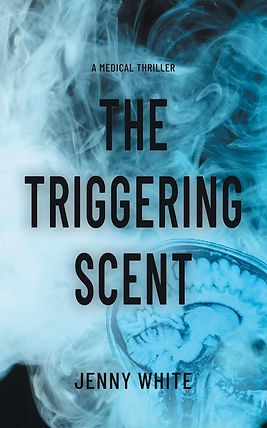
The Triggering Scent by Jenny White offers a contemporary take on the physician-authored medical thriller. White, a retired registered nurse and brain tumor survivor, brings dual expertise: clinical knowledge and lived patient experience. Her debut novel launches the Abbey Roberts RN series, featuring a nurse protagonist navigating hospital politics, ethical dilemmas, and genuine medical crises. What distinguishes White's work is the authentic hospital setting from a nurse's perspective. Most medical thrillers center doctors; White's protagonist is a registered nurse, which shifts the entire dynamic.
Nurse-Written Medical Thrillers: Authentic Hospital Perspectives
Nurses bring a distinct viewpoint to medical thrillers. They spend more continuous time with patients than doctors, navigate complex departmental politics, and often catch details that slip past others. Nurse-authored medical thriller books with accuracy reflect this insider knowledge.
Tess Gerritsen, while holding a degree in anthropology, worked as a nurse and brings that experience into her Rizzoli & Isles series. Nurse-authors tend to write thrillers emphasizing the human cost of medical decisions, exploring how systems fail patients and how healthcare workers process moral injury. This perspective adds emotional depth that purely procedural thrillers often lack.
Medical Thriller Authors With Medical Background: Why It Matters
An author with clinical experience doesn't have to research whether a procedure is possible; they know it intimately. They understand institutional culture, unwritten rules, and the pressure shaping decision-making. This matters because accuracy builds trust. Readers with medical knowledge immediately sense when an author is faking it. A single misplaced detail can shatter credibility.
Medical background also shapes narrative instinct. A physician-author knows which medical decisions are genuinely ambiguous and which are clear-cut. They understand which ethical dilemmas keep practitioners awake at night. This knowledge allows them to craft suspense that resonates with readers who understand medicine and convinces those who don't.
Author | Background | Notable Work | Focus |
Sanjay Gupta | Practicing neurosurgeon | Monday Mornings | Surgical ethics and institutional pressure |
Abraham Verghese | Professor of medicine, Stanford | Cutting for Stone | Medicine as human endeavor |
Jenny White | Retired registered nurse | The Triggering Scent | Hospital politics from nursing perspective |
Tess Gerritsen | Nurse, anthropology degree | Rizzoli & Isles series | Medical examiner investigations |
Lydia Kang | Practicing physician | The Impossible Girl | Historical medical practices |
Classic Medical Thriller Authors and Their Legacy
The medical thriller genre wouldn't exist without foundational authors who proved that clinical realism could coexist with compelling narrative.
Robin Cook and Michael Crichton: Setting the Standard
Robin Cook essentially invented the modern medical thriller. His 1977 novel Coma depicted a hospital where patients mysteriously lapse into irreversible comas during routine procedures. Cook, a physician himself, understood hospital systems deeply enough to imagine how they could be exploited. The book's power comes from readers believing it could happen because the medical details are authentic.
Michael Crichton approached medical thrillers differently. The Andromeda Strain (1969) reads like a technical report, structured as a government document with diagrams and procedural detail. Crichton, who held an MD from Harvard, understood how to make technical information suspenseful. The novel established a template: rigorous scientific plausibility combined with high stakes and ticking-clock urgency.
Both understood that readers don't need to be scientists to sense authenticity. If technical details are accurate and internally consistent, readers trust the narrative.
Contemporary Authors Carrying the Torch
Tess Gerritsen brings forensic and medical detail to her Rizzoli & Isles series. Her protagonist, Dr. Maura Isles, is a medical examiner, allowing Gerritsen to explore pathology and forensic science alongside criminal investigation. Lydia Kang, a practicing physician, writes medical thrillers incorporating historical elements. The Impossible Girl is set in the 1850s and explores the dark history of anatomical education and grave robbing.
Science-Based Medical Suspense: Hospital Settings and Epidemiological Threats
Some of the most gripping medical thrillers center on hospitals as settings and epidemiological crises as catalysts. These books use the inherent drama of medical institutions and amplify it through scenarios where lives hang in the balance.
Outbreak Fiction and Biomedical Thrillers
Hospital-setting thrillers gain power from the closed-system nature of medical institutions. When something goes wrong, disease spreads, a serial killer operates within walls, conspiracy unfolds, the hospital becomes a pressure cooker.
The Andromeda Strain established the template for outbreak fiction. Contemporary outbreak fiction has evolved to incorporate real epidemiological knowledge. Authors now understand disease transmission, containment protocols, and institutional responses that real outbreaks trigger, making modern medical thriller books with accuracy feel disturbingly plausible.
Biomedical thrillers often center on emerging technologies or pharmaceutical development, exploring the intersection of profit motive and patient safety. They're particularly resonant because they engage with real concerns about pharmaceutical industry practices.
Pro Tip When evaluating outbreak fiction or biomedical thrillers, check whether the author demonstrates understanding of epidemiological principles. Accurate depictions of how diseases spread and how institutions respond create more credible suspense.
Surgical Thrillers and Medical Malpractice Narratives
Surgical thrillers often center on a procedure gone wrong or a pattern of complications hinting at something sinister. The operating room is an ideal thriller setting because it's high-stakes and where a surgeon's decision can mean life or death.
Medical malpractice narratives explore the aftermath: how institutions protect themselves, how patients seek justice, and how the legal system intersects with medicine. What makes these thrillers credible is attention to actual decision-making. A realistic surgical thriller explores the surgeon's reasoning, constraints, and judgment calls made with incomplete information.
Must-Read Medical Thriller Series and Standalone Novels
Different readers prefer different formats: some want to invest in a character across multiple books, while others prefer complete arcs in standalones.
Series That Build Medical Realism Over Multiple Books
The Rizzoli & Isles series by Tess Gerritsen spans over twenty novels, deepening the relationship between medical examiner Maura Isles and homicide detective Jane Rizzoli. Gerritsen's background as a nurse and anthropologist gives the series consistent medical credibility. Each book stands alone while contributing to larger character arcs.
The Abbey Roberts RN series by Jenny White launches with The Triggering Scent and promises to develop the protagonist across multiple novels. As a retired nurse and brain tumor survivor, White brings authenticity to hospital settings and illness experience. The series centers a nurse protagonist, which is distinctive; most medical thriller series feature doctors.
Standalone Medical Thrillers for Complete Immersion
Monday Mornings by Sanjay Gupta works as a standalone despite its episodic structure. Each section focuses on a different surgeon and case, but the novel builds toward a unifying crisis. Gupta's medical accuracy and psychological insight satisfy readers unfamiliar with surgical practice.
Cutting for Stone by Abraham Verghese is an epic standalone spanning decades and continents. It's longer and more literary than typical medical thrillers, but delivers emotional and intellectual satisfaction.
The Impossible Girl by Lydia Kang stands alone as a historical medical thriller set in the 1850s. Kang's research into the actual history of anatomical education and grave robbing creates a narrative that educates while it entertains.
Key Takeaway The choice between series and standalones comes down to preference. Series allow deeper character development and the pleasure of returning to familiar protagonists. Standalones offer complete narrative arcs and the satisfaction of resolution.
How to Evaluate Medical Thriller Books With Accuracy
Not every medical thriller delivers genuine accuracy. Knowing how to evaluate a book before committing saves time and ensures you get what you're looking for.
Fact-Checking Methodology: Verifying Clinical Procedures
Start with the author's credentials. A medical degree, nursing license, or substantial healthcare experience is a strong signal. Read reviews from medical professionals. On platforms like Goodreads, look for reviews from readers identifying as doctors or nurses. If they're praising medical accuracy, that's meaningful validation.
Examine the author's note or acknowledgments. Authors who conducted research often mention it, citing medical texts or acknowledging consultants. This transparency suggests they took accuracy seriously.
Check whether the book addresses genuine medical dilemmas or only uses medicine as window dressing. Real medical thrillers engage with actual ethical tensions: end-of-life decisions, informed consent, resource allocation. Books using medicine only for plot mechanics often sacrifice accuracy for convenience.
Sub-Genre Categorization: Finding Your Perfect Read
Surgical thrillers focus on the operating room and procedures, appealing to readers interested in technical aspects and high-stakes drama. Diagnostic mysteries center on solving medical puzzles, appealing to problem-solvers. Outbreak and epidemiological fiction depicts disease spreading through populations. Institutional thrillers explore hospital politics and secrets. Medical malpractice narratives explore aftermath of medical errors. Historical medical fiction combines medical accuracy with historical settings.
Understanding these categories helps identify which sub-genres appeal to you and which authors specialize in them.
Conclusion: Your Next Medical Thriller Awaits
Finding medical thriller books with accuracy requires knowing what signals indicate genuine clinical knowledge. Author credentials matter; a physician, nurse, or healthcare professional brings authority that research alone cannot replicate. The most compelling medical thrillers use that authority to explore real ethical dilemmas, institutional pressures, and the human dimensions of medicine.
The medical thriller genre is thriving because readers crave both suspense and authenticity. Consider starting with The Triggering Scent by Jenny White. Written by a retired registered nurse and brain tumor survivor, it delivers authentic hospital settings, genuine medical detail, and emotional depth from lived experience. White's work offers exactly what discerning readers seek: suspenseful storytelling grounded in real clinical knowledge and human resilience.
Frequently Asked Questions
Are medical thriller books with accuracy really scientifically plausible?
Medical thriller books with accuracy vary in their scientific rigor. Authors with medical backgrounds, physicians, nurses, and researchers, typically embed genuine clinical procedures, pathology details, and epidemiological concepts into their narratives. However, even well-researched thrillers compress timelines or exaggerate medical drama for suspense. The best approach is to cross-reference plot points with medical literature when in doubt. Authors like Sanjay Gupta and Abraham Verghese prioritize authenticity, while others blend realism with creative liberty for entertainment value.
Which medical thriller authors have actual medical backgrounds?
Several prominent medical thriller authors are practicing or retired healthcare professionals. Robin Cook is a physician, Tess Gerritsen is a doctor, Sanjay Gupta is a practicing neurosurgeon, Kathy Reichs is a forensic anthropologist, and Lydia Kang is a practicing physician. Jenny White, a retired registered nurse and brain tumor survivor, brings authentic hospital perspectives to her Abbey Roberts RN series. These medical thriller authors with medical background infuse procedural detail, ethical dilemmas, and clinical realism that purely fictional authors cannot match.
What's the difference between medical mystery and medical thriller?
Medical mystery focuses on diagnosis and solving a puzzle, readers follow the investigative process of identifying an illness or condition. Medical thriller emphasizes suspense, high stakes, and danger, readers experience tension as characters race against time to prevent catastrophe. Medical mysteries reward intellectual engagement; medical thrillers deliver emotional adrenaline. Many books blend both elements, but thrillers typically feature biotech conspiracies, outbreak scenarios, or surgical disasters, while mysteries center on diagnostic challenges or forensic puzzles.
What makes medical thriller books with accuracy more compelling than generic thrillers?
Authenticity deepens immersion. When clinical procedures, pharmaceutical details, and hospital dynamics are accurate, readers trust the narrative and feel the stakes more acutely. Medical realism creates credibility, readers believe the threat because the procedural groundwork is sound. Authors with medical backgrounds weave genuine ethical dilemmas, professional pressures, and scientific plausibility into their plots. This combination of suspense and accuracy appeals to healthcare professionals and informed readers who appreciate both entertainment and intellectual substance.
This article was written using GrandRanker


Comments