



How to Read Classic Suspense Novels That Defined the Genre
Last Updated: November 5, 2026
Quick Summary
The classic suspense novels that defined the genre are The Woman in White, The Turn of the Screw, Rebecca, The Talented Mr. Ripley, The Silence of the Lambs, and The Secret History. Each passed three tests: tension builds from the first page, later writers copied its devices, and it survives rereading.
Judge each book by the tension test, the influence test, and the reread test.
Mystery withholds information, suspense withholds safety, and thriller withholds time.
Start with The Silence of the Lambs if you like fast plots.
The Turn of the Screw runs roughly 100 pages and suits readers wanting short and unsettling.
Save The Castle of Otranto for later because it is a hard first read.
Table of Contents
What Makes a Classic Suspense Novel Genre-Defining
A classic suspense novel that defines the genre does three things: it builds tension the reader can feel, it introduces a device or structure later writers copy, and it survives rereading decades later. This guide walks through the books that passed all three tests, and shows you how to pick your first one.
The Three Tests Every Classic Has to Pass
We judge every book here against three questions.
The tension test. Does the dread build from the first page, or only in the last fifty?
The influence test. Did later authors borrow its structure, its narrator, or its atmosphere?
The reread test. Does it still work when you already know the ending?
A book that fails the reread test was a trick. One that passes all three is a classic.
Suspense vs Mystery vs Thriller: How the Three Genres Split
The three genres split on one question: what does the reader know, and when? Mystery withholds information. Suspense withholds safety. Thriller withholds time.
Mystery asks who did it. The detective and the reader learn together. The pleasure is the solution.
Suspense asks will they get away with it, or will the hero survive. The reader often knows the danger before the hero does. The pleasure is the wait.
Thriller adds a clock. The stakes are physical, and the pace rarely slows. The pleasure is the acceleration.
The lines blur in practice. A Gothic suspense novel can hide a secret (mystery), threaten a heroine (suspense), and race toward a deadline (thriller) in the same chapter.
A Working Definition of Genre-Defining Suspense
For this guide, a novel qualifies as genre-defining suspense only if it meets four criteria:
Tension is the primary engine. The main pleasure is anticipation, not solution. Remove the dread and the plot collapses.
It introduced or perfected a convention. Later writers copy its structure, narrator, or atmosphere until the device becomes a genre default.
It survives rereading. Knowing the ending does not kill the book, because the tension was never only about the reveal.
It sits inside suspense, not adjacent to it. A pure detective puzzle or horror novel may be influential, but belongs on a different list unless suspense drives the reading experience.
That definition matters because the shelves are crowded with books that meet only the first criterion. A well-plotted mystery can be tense without changing how suspense is written. A horror novel can be frightening without teaching later suspense writers anything about withheld safety.
How the Conventions Moved Across Subgenres
Gothic suspense (1760s-1840s) supplied the isolated setting, the buried crime, and the atmosphere of restraint.
Sensation fiction (1860s) added legal machinery, double identity, and multiple limited narrators.
Psychological suspense (1890s onward) moved the threat inside the narrator's head.
Each move kept the core mechanism, the reader knows or fears something the protagonist cannot fully control, while changing the setting and the source of pressure.
If you are still unsure where your own taste sits, our guide on how to identify your favorite thriller subgenre breaks the categories down by reading preference.
The Gothic Suspense Novels That Started the Tradition
Gothic suspense novels built the blueprint: an isolated house, a secret from the past, and a heroine whose account may not be fully reliable.
The Castle of Otranto (1764) by Horace Walpole set the template: an old building, a buried crime, and dread instead of gore.
Frankenstein (1818) by Mary Shelley turned the threat inward, into creation and guilt.
Jane Eyre (1847) by Charlotte Brontë put a woman's voice at the center of a house full of secrets.
The British Library's overview of the Gothic novel traces how these conventions spread across Europe and later into film.
What the Gothic gave suspense was a lesson in restraint. The scariest thing in these books is usually the thing you are not shown.
Classic Psychological Thriller Books and the Inner Turn
Classic psychological thriller books moved the danger from the haunted house into the narrator's head.
The key device is the unreliable narrator: a storyteller whose account is incomplete, self-serving, or flatly wrong.
Henry James made the device respectable in The Turn of the Screw (1898). A governess describes ghosts.
That open question is the whole engine of the subgenre. For a modern reading list built around that device, see our roundup of psychological suspense novels with unreliable narrators.
Domestic suspense later applied the same trick to marriage and family life, where the person you cannot trust sleeps beside you.
Six Classic Suspense Novels That Redefined the Genre
These six books each changed what suspense could do. Read them in any order, but read them for what they invented, not just for the plot. They are arranged chronologically so you can see how the conventions stacked: Gothic atmosphere, then legal identity, then psychological interiority, then criminal sympathy, then procedural realism, then ordinary-life dread.

Novel | Year | What It Changed |
The Woman in White | 1859 | The sensation novel and the double identity |
The Turn of the Screw | 1898 | The unreliable narrator as engine |
Rebecca | 1938 | Atmosphere and the unseen threat |
The Talented Mr. Ripley | 1955 | Sympathy for the criminal |
The Silence of the Lambs | 1988 | The investigator and the monster |
The Secret History | 1992 | Dread inside ordinary friendship |
The Woman in White (1859)
Wilkie Collins built a suspense novel around identity theft and legal machinery. A woman in white appears on a road at night, and the plot turns on who she is and who has taken her place.
The book's influence is structural. Collins’s shift from Gothic spectacle to familiar legal and domestic dangers shows how much suspense depends on the threats a story makes plausible, a useful measure when you choose a thriller novel.
The Turn of the Screw (1898)
Henry James wrote a ghost story that refuses to confirm its own ghosts. A young governess takes a post at a country house and becomes convinced two dead servants are influencing the children.
The genius is the withholding. James gives you two readings, the supernatural and the psychological, and never closes the door on either. That ambiguity became the template for unreliable narrators in suspense: the reader's uncertainty about the teller becomes the source of dread, not just the plot.
Rebecca (1938)
Daphne du Maurier made an absent character the most frightening presence in the book. The second Mrs. de Winter arrives at Manderley to find the house still ruled by her husband's dead first wife.
The opening line alone, a dream of a lost estate, tells you the marriage did not end well. Du Maurier's control of atmosphere is the reason this novel is still taught as a model of tension without action.
The Talented Mr. Ripley (1955)
Patricia Highsmith asked readers to root for a killer, and it worked. Tom Ripley drifts into a wealthy friend's life, then takes it over.
Highsmith's influence runs through a huge amount of later psychological suspense. She proved that a sympathetic criminal is scarier than an unsympathetic one, because the reader keeps making excuses for him. The Ripley novels also established the long-running criminal protagonist as a viable suspense structure.
The Silence of the Lambs (1988)
Thomas Harris paired an investigator with a monster who helps her, and the formula has never been beaten. Clarice Starling trades pieces of her own past for information from Hannibal Lecter.
The book's real innovation is procedural realism. Harris made the FBI work feel researched, raising reader expectations for every crime novel after it. The mentor-antagonist dynamic also gave suspense a new engine: the helper is more dangerous than the case.
The Secret History (1992)
Donna Tartt opened with the murder and spent the rest of the book on the aftermath. A group of classics students at an elite college commit a killing, and the suspense comes from watching friendships rot under guilt.
Tartt's influence is tonal. She showed that dread could live inside ordinary student life, with no detective and no chase, opening space for literary suspense and campus novels that treat guilt, not pursuit, as the source of tension.
A Short Timeline of the Tradition
1764-1847: Gothic suspense establishes the isolated setting and the buried secret.
1859-1868: Sensation fiction adds legal identity and multiple narrators.
1898-1938: Psychological and atmospheric suspense refine interior dread.
If the twist is what you chase in a novel, our list of suspense novels with surprise endings is the natural next step.
Classic Suspense Books for Beginners: Where to Start by Taste
Classic suspense books for beginners should be chosen by what you already like, not by what critics rank highest.
You like fast plots. Start with The Silence of the Lambs. It moves like a thriller.
You like atmosphere and slow dread. Start with Rebecca.
You like puzzle structures. Start with The Woman in White.
Watch out: the biggest mistake beginners make is starting with the oldest, densest book on the list. The Castle of Otranto is historically important and a hard first read.
If slow pacing and deep character work appeal to you, our guide to slow burn mystery books with complex protagonists will help you choose within that style.
Why Medical Suspense Carries the Tradition Forward
Medical suspense carries the tradition forward because a hospital has everything classic suspense needs: high stakes, closed rooms, secrets, and people who cannot simply walk away.
The closed setting. An ICU works like a country house. Everyone is inside, and no one leaves easily.
The expert narrator. A nurse or doctor sees what others miss, which is the detective role in scrubs.
The ethical dilemma. Suspense comes from a decision, not just a threat. Who gets the last bed? Who is told the truth?
At Jenny White, we write in this space because it is where our own background sits.
Readers who want authentic hospital settings in their fiction can browse medical thriller books with real hospital drama for a starting list.
Choosing Your First Classic Suspense Novel This Week
You can pick your first classic suspense novel this week with one rule: choose the book that matches a feeling you already chase, not the one with the highest reputation.
Do this:
Pick one taste from the list above.
Read the first twenty pages only.
If the tension is not there by page twenty, set it aside and try the next.
That is not failure. That is how experienced readers work through a genre.
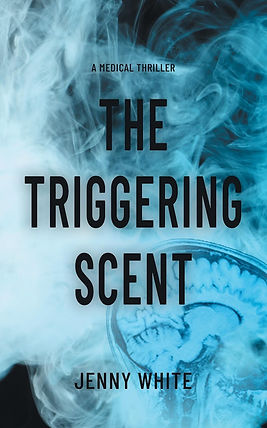
Then, when you have finished a classic and want the same pressure in a modern hospital, try The Triggering Scent.
Frequently Asked Questions
What is the difference between mystery, thriller, and suspense?
Mystery centers on a puzzle: a crime happens, and the detective works backward to solve it. Thriller puts the reader ahead of the danger, with a ticking clock and an active hero fighting back. Suspense is the emotional engine both rely on, the dread of not knowing what comes next. Plenty of classic suspense novels blend all three, which is why readers often use the labels interchangeably.
What is considered the first suspense novel?
Most historians point to Horace Walpole's The Castle of Otranto (1764) as the first Gothic novel, and Ann Radcliffe's The Mysteries of Udolpho (1794) as the book that made atmosphere and dread central to fiction. Wilkie Collins's The Woman in White (1859) is often named the first full suspense novel, because it builds tension across an entire investigation rather than a single revelation.
Which classic suspense books are best for beginners?
Start with Rebecca by Daphne du Maurier if you want atmosphere and a slow build, or The Silence of the Lambs if you prefer pace and a procedural spine. Readers who like puzzles should try The Woman in White, while anyone drawn to unreliable narrators will find The Turn of the Screw short and unsettling. Pick by the feeling you want, not by reputation.
What makes a classic suspense novel different from a modern thriller?
Classic suspense novels tend to build tension through atmosphere, withheld information, and character psychology rather than constant action. They often slow down to let dread accumulate. Modern thrillers lean harder on pace, short chapters, and plot reversals. Neither is better, but if you want the roots of the genre, the classics show where those techniques came from.
The test of a genre-defining novel is simple: it still works when you know the ending. If you want that same pressure in a hospital corridor, with characters who carry real weight, Jenny White writes it. Her debut, The Triggering Scent, brings an authentic ICU setting, a nurse's eye for detail, and the kind of ethical dilemmas that keep readers up late. Get started with Jenny White and read medical suspense built on lived clinical experience.



Comments