



What Are the Best Psychological Suspense Novels With Unreliable Narrators?
Last Updated: October 29, 2026
Quick Summary
The best psychological suspense novels with unreliable narrators match the type of doubt to your taste: pick Gone Girl for a deliberate liar, The Woman in Cabin 10 or The Triggering Scent for distorted perception, and Atonement or Never Let Me Go for a naïf. Check content notes and spoiler risk before you start.
Unreliable narrators fall into types: the liar, the madman, the naïf, the picaro and the clown.
Gone Girl splits narration between a husband and wife, and neither account holds up.
The Triggering Scent is book one of the Abbey Roberts RN series.
If a description tells you why a narrator is unreliable, it has likely spoiled the book.
Suspense level is not the same as content intensity, so check content notes first.
Table of Contents
Why Psychological Suspense Novels With Unreliable Narrators Hook Readers
10 Psychological Suspense Novels With Unreliable Narrators
Psychological Thriller Books With Plot Twists That Earn Their Endings
Unreliable Narrator Examples in Literature Beyond the Thriller Shelf
Where Medical Suspense Fits: The Triggering Scent and Abbey Roberts RN
Why Psychological Suspense Novels With Unreliable Narrators Hook Readers
Psychological suspense novels with unreliable narrators work because they turn reading into detective work.
A narrator who hides something is one of the fastest routes to a sleepless night.
Below, we break down how these narrators create suspense, then give you ten titles worth your time, with spoiler-safe descriptions and notes on each one's unreliability.
How Unreliable Narrators Create Suspense
An unreliable narrator is a storyteller whose account cannot be fully trusted, whether from deliberate deceit, distorted perception, or limited understanding. The reader senses the gap before the narrator admits it, and that gap is where suspense lives.
The Gap Between What's Told and What's True
The tension comes from misdirection. A narrator tells you one thing; the details quietly suggest another. You read the same scene twice in your head, once as presented and once as it might actually be.
Narrator Types: The Liar, the Madman, the Naïf and More
Critics sort unreliable narrators into recognizable types. Knowing the type helps you pick a book that matches your taste for deception.
The liar: conceals or invents facts on purpose, often to protect a motive.
The madman: perception is distorted by trauma, illness, or obsession.
The naïf: means well but misreads everything, so the reader sees more than the narrator does.
If deceptive domestic stories are your thing, our list of must-read domestic noir books with cliffhangers is a natural next stop.
10 Psychological Suspense Novels With Unreliable Narrators
Here are ten psychological suspense novels with unreliable narrators, chosen for how well the deception serves the story rather than shock value. Each entry is spoiler-safe, labels the narrator's type and source of unreliability, and notes intensity.

Pro Tip How to read this list: Every description avoids the central deception. The Narrator type and Source of unreliability labels tell you what kind of doubt to expect; the Content notes flag themes that may affect your reading experience. Suspense level is rated Low, Medium, or High based on pacing and threat density, not gore.
1. Gone Girl by Gillian Flynn
The modern benchmark. Flynn splits the narration between a husband and a wife, and neither account holds up under pressure. The misdirection targets the reader's own assumptions about marriage and victimhood.
Narrator type: The liar (dual narrators)
Source of unreliability: Deliberate deception and self-serving framing
Standalone or series: Standalone
2. The Silent Patient by Alex Michaelides
A therapist becomes obsessed with a patient who stopped speaking after a violent act. The calm, clinical narration makes the eventual revelation land harder.
Narrator type: The concealer
Source of unreliability: Withheld information and selective disclosure
Standalone or series: Standalone
3. The Woman in Cabin 10 by Ruth Ware
A travel journalist on a luxury cruise witnesses something she cannot prove. Ware uses exhaustion, alcohol, and isolation to make the narrator's perception the central question: is she in danger, or the danger?
Narrator type: Distorted witness
Source of unreliability: Exhaustion, alcohol, and isolation
Standalone or series: Standalone
4. The Fury by Alex Michaelides
A reclusive island, a glamorous circle of friends, and a narrator who admits up front that he is telling the story his way. The pleasure is watching the account bend around a motive you sense but cannot name.
Narrator type: The performer
Source of unreliability: Motive-driven account and theatrical framing
Standalone or series: Standalone
5. Dark Wood by Ruth Ware
Ware returns with a narrator whose memory and judgment are compromised by setting and circumstance. The book rewards readers who like ambiguity more than tidy answers.
Narrator type: Distorted witness
Source of unreliability: Compromised memory and environmental pressure
Standalone or series: Standalone
6. The It Girl by Ruth Ware
A decade-old death, a convicted man, and a narrator who starts doubting what she saw. Ware is especially good at the slow erosion of certainty.
Narrator type: Doubting witness
Source of unreliability: Eroding certainty and revisited memory
Standalone or series: Standalone
7. Never Let Me Go by Kazuo Ishiguro
A literary pick that belongs on any list of books with unreliable narrators. The narrator is not lying so much as accepting a world she cannot fully explain, and that quiet acceptance is devastating.
Narrator type: The naïf
Source of unreliability: Limited understanding and institutional conditioning
Standalone or series: Standalone
8. The Remains of the Day by Kazuo Ishiguro
A butler recounts his career with enormous restraint, and the reader reads the truth between his careful omissions. It is a masterclass in what a narrator will not say.
Narrator type: The concealer
Source of unreliability: Careful omission and self-protective restraint
Standalone or series: Standalone
9. Atonement by Ian McEwan
A child's misreading of an event drives the entire novel. McEwan shows how a limited perspective can do lasting damage, and the ending forces a reckoning with storytelling itself.
Narrator type: The naïf
Source of unreliability: Childhood misreading and imaginative reconstruction
Standalone or series: Standalone
10. The Triggering Scent by Jenny White
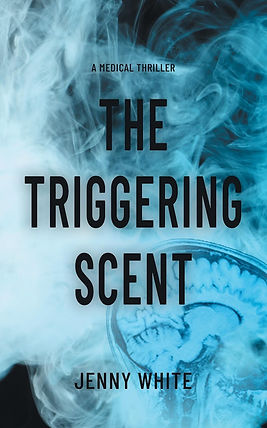
Our own entry in the genre. Abbey Roberts, an ICU nurse, narrates a hospital world where the ethical pressure is real. Her account is shaped by exhaustion, grief, and a mind still recovering, making her perspective as unreliable as it is sympathetic.
Narrator type: Distorted witness
Source of unreliability: Grief, recovery, and clinical stress
Standalone or series: Series, book 1 (Abbey Roberts RN)
Key Takeaway Quick picks by narrator type: If you want a deliberate liar, start with Gone Girl. If you want distorted perception, try The Woman in Cabin 10 or The Triggering Scent. If you want a naïf whose innocence does the damage, reach for Atonement or Never Let Me Go. If you want quiet omission, The Remains of the Day is the masterclass.
Title | Narrator Type | Source of Unreliability | Standalone or Series | Suspense Level |
Gone Girl | The liar | Deliberate deception | Standalone | High |
The Silent Patient | Concealer | Withheld information | Standalone | Medium |
The Woman in Cabin 10 | Distorted witness | Exhaustion and isolation | Standalone | High |
The Fury | The performer | Motive-driven account | Standalone | Medium |
Dark Wood | Distorted witness | Compromised memory | Standalone | Medium |
The It Girl | Doubting witness | Eroding certainty | Standalone | Medium |
Never Let Me Go | The naïf | Limited understanding | Standalone | Low |
The Remains of the Day | The concealer | Careful omission | Standalone | Low |
Atonement | The naïf | Childhood misreading | Standalone | Low |
The Triggering Scent | Distorted witness | Grief and recovery | Series, book 1 | Medium |
Psychological Thriller Books With Plot Twists That Earn Their Endings
The best plot twists feel inevitable in hindsight. A twist earns its ending when the clues were planted fairly and the revelation reorders the story rather than contradicting it.
That distinction matters most in psychological thriller books with plot twists, because the narrator is often the source of the misdirection. Mastering this delicate balance of deception requires a narrative precision that is equally essential when navigating the complex moral landscapes found in war thriller books.
If you finish this list and want more endings that hold up, our roundup of must-read suspense novels with surprise endings keeps the spoilers out and the recommendations coming.
Unreliable Narrator Examples in Literature Beyond the Thriller Shelf
Unreliable narration is not a thriller invention.
Classic cases include a narrator who withholds the truth through politeness, a child who misunderstands what she witnesses, and a speaker whose memory reshapes events to protect their self-image.
For more unreliable narrator examples in literature with a character-first focus, our list of character-focused crime fiction novels is worth your time.
How to Choose Your Next Books With Unreliable Narrators
Choose by the kind of doubt you enjoy, not by the twist alone. The most common mistake is buying on the promise of a twist and then discovering you dislike the kind of unreliability the book uses. Use this framework to match the book to your taste before you spend money.
Step 1: Decide What Kind of Unreliability You Want
Unreliable narrators are not interchangeable. The reading experience changes dramatically depending on whether the narrator is lying, misremembering, misunderstanding, or perceiving through a distorted lens.
Deliberate liar: You enjoy trying to catch someone in the act. The pleasure is active suspicion. Try Gone Girl.
Concealer: You enjoy reading between the lines and noticing what is not said. Try The Remains of the Day or The Silent Patient.
Distorted witness: You enjoy the tension of not knowing whether the threat is real or perceived. Try The Woman in Cabin 10 or The Triggering Scent.
Pro Tip Match the doubt to your mood. If you want active puzzle-solving, pick a liar or performer. If you want slow-burn unease, pick a distorted witness or concealer. If you want emotional devastation rather than a puzzle, pick a naïf.
Step 2: Gauge How Much Ambiguity You Can Tolerate
Some unreliable-narrator novels resolve everything by the final page; others leave you to decide what happened. Neither is better, but they suit different readers.
Full resolution: The reveal reorders the story and answers the central question. Good if you dislike open endings.
Partial resolution: The main question is answered, but a secondary ambiguity remains. A common pattern in literary suspense.
Open ambiguity: The book deliberately refuses a clean answer. Good if you enjoy discussing the ending with others.
If you are unsure, start with a full-resolution title and work toward ambiguity as your tolerance grows.
Step 3: Check Spoiler Risk Before You Read Reviews
Unreliable-narrator books are uniquely vulnerable to spoilers because the central deception is the reading experience. A single careless review can ruin the book.
Read only premise-level descriptions, not full plot summaries.
Avoid reader forums and comment sections until you finish.
If you must read reviews, look for ones labeled spoiler-free.
Watch Out Spoiler-safe rule of thumb: If a description tells you why the narrator is unreliable, it has likely spoiled the book. A good premise tells you that the narrator is unreliable, not how or why.
Step 4: Match Intensity and Content to Your Comfort Level
Psychological suspense covers a wide intensity range, and unreliable narration often accompanies difficult themes. Check content notes before you start, especially for:
Violence and threat: Some titles are tense but not graphic; others are more explicit.
Mental illness and institutional care: Common in the genre and handled with varying sensitivity.
Grief, loss, and trauma: Often the source of the narrator's unreliability.
Suspense level is not the same as content intensity. A book can be high-suspense with low graphic content, or low-suspense with heavy thematic material.
Step 5: Decide Standalone or Series
Standalones give a complete arc in one book. Series let a character's unreliability evolve across multiple titles, which can deepen the portrait but requires reading in order.
Standalone: Best if you want a self-contained experience.
Series: Best if you want to follow a narrator's psychology over time. Start with book one; later entries assume prior knowledge.
A Quick Decision Path
Want active suspicion? Choose a liar or performer.
Want slow unease? Choose a distorted witness or concealer.
Want emotional impact over puzzle? Choose a naïf.
Hate open endings? Choose full-resolution titles.
Sensitive to specific themes? Check content notes first.
Committing to a series? Start with book one.
For a deeper walkthrough on matching tone and protagonist complexity to your taste, see our guide on how to choose slow burn mystery books with complex protagonists.
Where Medical Suspense Fits: The Triggering Scent and Abbey Roberts RN
Medical settings are an underexploited home for unreliable narration.
The Triggering Scent introduces Abbey Roberts, an ICU nurse whose account is filtered through clinical stress, personal loss, and recovery.
You can explore The Triggering Scent, book one of the Abbey Roberts series to see whether the medical suspense angle fits what you are looking for.
Pick Your Next Read From the Abbey Roberts RN Series
Finding a psychological suspense novel that respects both your intelligence and your time is harder than it looks.
We built the Abbey Roberts RN series for readers who want suspense grounded in a world that feels real.
Get started with Jenny White and meet Abbey Roberts in The Triggering Scent.
Frequently Asked Questions
What makes a narrator unreliable in a psychological suspense novel?
A narrator is unreliable when their account of events cannot be fully trusted, whether because they lie, misremember, misunderstand, or see the world through a distorted lens. In psychological suspense, that gap between what the narrator reports and what actually happened is the engine of the story. Some narrators deceive on purpose, like the schemers in Gone Girl. Others, such as the institutionalized patient in The Silent Patient, are limited by trauma, memory or perception. The reader keeps reading to find out which parts of the account hold up.
Are unreliable narrators common in psychological thriller books with plot twists?
Very common. A narrator who withholds or distorts information lets an author deliver a twist that feels earned rather than arbitrary, because the clues were hidden in plain sight the whole time. Gillian Flynn's Gone Girl and Alex Michaelides's The Silent Patient both build their revelations on narration the reader took at face value. Not every twist needs an unreliable narrator, but the two pair naturally, since the reveal often reframes everything the narrator already told you.
Can a narrator be unreliable without lying?
Yes. Lying is only one route to unreliability. A narrator can be honest and still wrong: a child who misreads adult motives, a grieving spouse whose memory has softened the truth, or a character whose limited perspective leaves out what other people know. Kazuo Ishiguro's The Remains of the Day is a well-known example, where the narrator never consciously deceives anyone yet consistently avoids the emotional reality of his own life. The effect is quieter than a thriller twist but just as suspenseful.
What is the difference between an unreliable narrator and a plot twist?
A plot twist is a structural event, a revelation that changes how you understand the story. An unreliable narrator is a narrative device, a voice you cannot fully trust from page one. They often work together: the twist reveals the extent of the narrator's unreliability. But you can have unreliable narrator examples in literature with no dramatic twist at all, where the tension comes from watching the narrator's self-deception unfold slowly. The best psychological suspense uses both, so the final reveal reinterprets the entire book.
What should I read after a psychological suspense novel with a twist?
If you want more of the same tension, move to another title on this list that uses a different narrator type, such as Ruth Ware's The Woman in Cabin 10 after Gone Girl. If you want suspense grounded in a real, high-stakes workplace, try medical thrillers, where clinical detail and ethical pressure replace domestic deception. Jenny White's The Triggering Scent, the first Abbey Roberts RN novel, is written by a retired registered nurse and pairs hospital realism with a resilient protagonist, making it a natural next step for readers who like character-driven suspense.



Comments