



7 Steps to Identify Your Favorite Thriller Subgenre
Last Updated: November 3, 2026
Quick Summary
To identify your favorite thriller subgenre, name the emotional response you want from a book: a pulse-pounding race, broken trust, or a rearranged mind. Then score your last reads on pacing, intensity, and moral code to match your pattern to a subgenre.
Thriller subgenres split into inner-world types like psychological and domestic, and outer-world types like spy and procedural.
Mystery withholds the culprit, thriller withholds survival, and suspense withholds what happens next.
Score pacing, intensity, and moral code from 1 to 5 to translate your pattern into a shortlist.
Score the last three thrillers you finished and the last two you abandoned to spot mismatches.
Read the first chapter sample instead of the blurb, because openings sell voice.
Table of Contents
Start With the Emotional Response You Want
The fastest way to identify your favorite thriller subgenre is to name the feeling you chase. Do you want your pulse up, your trust broken, or your mind rearranged? That answer narrows the shelf before you read a single blurb.
Readers often finish a book and say "that was good, but it wasn't my kind of good." The fix is rarely a better book. It's a better match.
Think about the last thriller that kept you up past midnight. Ask three questions:
Did the tension come from danger, or from not knowing who to trust?
Did you want to solve the puzzle, or just survive the ride?
Did the ending leave you satisfied, or unsettled?
Your answers point to a pattern. Most readers have one dominant preference and a secondary one. Knowing both saves you from wasted downloads.
The Skokie Public Library's beginner's guide to thrillers notes that thriller subgenres are numerous and often overlap. That overlap is why feeling beats label.
Map the Main Types of Thriller Books
The main types of thriller books break into two loose families. One is built on psychology and relationships. The other is built on systems, secrets, and institutions. Here is the map we use.
Family | Subgenres | Core Pull |
Inner world | Psychological, domestic, legal | Trust, motive, moral pressure |
Outer world | Spy, conspiracy, police procedural | Stakes, scale, pursuit |
Psychological, Domestic, and Legal
These books put pressure on a person, not a city. A psychological thriller lives inside a character's head, often with an unreliable narrator and a slow reveal. Domestic suspense moves that pressure into a marriage or a family home. Legal thrillers trade the knife for a courtroom drama, where the weapon is testimony.
If you love a cliffhanger built on doubt rather than danger, start here. Readers who want a curated list can browse domestic noir books with cliffhangers to see the subgenre in action.
Spy, Conspiracy, and Police Procedural
These stories widen the frame. Espionage thrillers follow agents and double agents. Conspiracy thrillers pull the protagonist into a hidden structure with high-stakes reach. The police procedural follows the grind of detection: interviews, evidence, and a whodunit that resolves through method, not luck.
A quick test: do you want the hero to outsmart one person, or outlast a system?
Psychological Thriller vs Crime Thriller: What Actually Separates Them
A psychological thriller vs crime thriller comparison comes down to one question: is the central conflict inside the mind or inside the case? Crime fiction usually opens with a crime and asks who did it. A psychological thriller asks what the protagonist can trust, including their own memory.
Already Overbooked
That difference changes pacing and intensity. Crime fiction rewards patience and clue-tracking. Psychological suspense rewards discomfort and re-reading.
A common mistake is assuming the labels are exclusive. They aren't. Plenty of novels sit in both camps. What matters is which element carries the tension.
If unreliable narrators are your hook, our guide to psychological suspense novels with unreliable narrators is the natural next stop.
Mystery vs Thriller vs Suspense: Sorting the Overlap
Mystery vs thriller vs suspense is the trio that trips up most readers. The clean split is about what the story withholds and when it withholds it.
Mystery: withholds the identity of the culprit. The reader's reward is the solution.
Thriller: withholds whether the protagonist will survive or succeed. The reader's reward is the race.
Suspense: withholds what will happen next. The reader's reward is the dread.
As Almost An Author's breakdown of mystery, suspense, and thriller subgenres points out, these categories are related and often overlap. So a single label is an imperfect guide.
The conventions below are the practical difference. They are also the fastest way to tell which axis a book is actually built on.
Element | Mystery | Thriller | Suspense |
Central question | Who did it? | Will they stop it? | What happens next? |
Typical opening | A body or a crime | A threat already in motion | A situation that feels wrong |
Pacing pattern | Clue, interview, reveal | Escalation and set pieces | Slow build and withheld information |
Reader's job | Track and deduce | Brace and follow | Anticipate and doubt |
Common ending | Solution and explanation | Confrontation and resolution | Reveal that re-frames earlier scenes |
A quick test: read the first chapter and ask what the book wants you to do. If it wants you to take notes, it is a mystery.
Our advice: stop shopping by category and start shopping by experience. Do you want to solve, escape, or brace yourself? That question cuts through the overlap faster than any label.
A common mistake is treating suspense as a synonym for thriller. Suspense is a technique, and it appears in all three categories.
For readers who want to see the character-driven end of crime fiction, this list of character-focused crime fiction novels shows how mystery and suspense blend in practice.
Run a Diagnostic: Pacing, Intensity, and Moral Code
Run this three-part diagnostic to match a book to your reading pattern. Score each line from 1 to 5.

Pacing: 1 = slow burn, 5 = relentless
Intensity: 1 = cozy, 5 = brutal
Moral code: 1 = clear heroes, 5 = everyone compromised
Most readers score in patterns, not single numbers. The pattern is what points to a subgenre. Use the table below to translate your three scores into a shortlist, then test the shortlist against the trope cues underneath it.
Pacing | Intensity | Moral code | Likely fit |
4-5 | 3-5 | 1-3 | Spy, action, and pursuit-driven thrillers |
1-3 | 4-5 | 2-5 | Psychological and domestic suspense |
2-4 | 2-4 | 4-5 | Noir, hardboiled, and conspiracy |
3-4 | 2-4 | 1-3 | Police procedural and legal |
2-3 | 3-4 | 2-4 | Medical and clinical suspense |
Scores alone can mislead. The trope cues below are the tie-breakers, because tropes are what you actually remember after the last page.
If you scored high pacing and low moral code: look for a cat-and-mouse chase, a ticking clock, and a protagonist who is already in motion on page one. These books rarely spend chapters on setup.
If you scored low pacing and high intensity: look for an unreliable narrator, a closed setting (a house, a marriage, a small town), and a reveal that re-frames earlier scenes. The tension is cumulative, not constant.
If you scored high moral ambiguity: look for an compromised investigator, a system that punishes the honest character, and an ending that resolves the plot without resolving the ethics.
If you scored mid pacing and low intensity: look for a whodunit structure, a defined detective role, and a solution that arrives through method rather than coincidence.
If you scored mid pacing and mid intensity with a clinical setting: look for a protagonist with professional expertise, a decision that carries professional consequences, and a plot that turns on a procedure rather than a chase.
A common pattern is a reader who scores high on intensity but low on pacing and still picks up fast-paced spy novels, then abandons them at the midpoint.
Watch out: scoring yourself once and treating the result as fixed is the most common failure. Score the last three thrillers you finished and the last two you abandoned, then compare. The abandoned books usually reveal the axis you misjudged.
If you want a faster version, answer one question instead of three: after the final page, do you want to feel relieved, unsettled, or impressed by the solution?
How to Choose a Thriller Book That Fits Your Pattern
To choose a thriller book that fits, match your diagnostic scores to a subgenre before you read reviews. Reviews tell you if a book is good. They don't tell you if it's yours.
Use this checklist:
My pacing score is 1-2, so I avoid adrenaline-fueled plots
My intensity score is 4-5, so I skip cozy mystery
I want a moral code of 4-5, so I look for noir or hardboiled
I want a whodunit, so I check for police procedural tags
I want a cat-and-mouse chase, so I look for pursuit-driven plots
I check whether the book leans on supernatural elements or stays grounded
One insider tip: read the first chapter sample, not the blurb. Blurbs sell premise. Openings sell voice, and voice is what keeps you reading.
Where Medical Thrillers Fit the Map
Medical thrillers sit at the crossroads of psychological and procedural. They carry the clinical detail of a police procedural and the ethical pressure of a psychological thriller. The stakes are personal, the setting is controlled, and the tension comes from decisions, not car chases.
That combination suits readers who want realism with their suspense.
Jenny White writes in this space as a retired registered nurse and brain tumor survivor. Her Abbey Roberts RN series builds its tension from hospital dynamics and ethical dilemmas. One reader wrote, "The twists and ethical dilemmas kept me turning pages late into the night."
If that sounds like your pattern, browse our medical thriller picks to test the fit.
Pick Your Next Read and Start With Abbey Roberts
Your thriller subgenre is a reading habit, not a permanent label. Start with your diagnostic scores, pick one subgenre, and read two books in it. If the second one drags, your profile was off. Adjust and try again.
Here is our challenge: stop guessing and read with intent for your next three books. Track pacing, intensity, and moral code after each one. The pattern will surface fast.
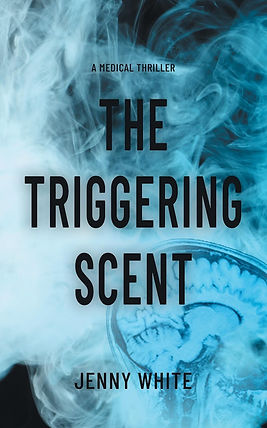
The Abbey Roberts series is written for readers who want suspense grounded in real clinical stakes. The Triggering Scent opens the series with a protagonist whose resilience carries the story.
The book draws on the hospital experience of a retired RN, with ethical dilemmas that drive the plot and a character readers describe as remarkable. Ready to start? Meet Abbey Roberts in The Triggering Scent. Browse the Abbey Roberts series to see all four books.
Frequently Asked Questions
What are the main thriller subgenres?
The main types of thriller books include psychological, domestic, legal and courtroom, spy and espionage, police procedural, conspiracy, action and adventure, and medical thrillers. Each follows different genre conventions: a spy novel leans on espionage and political stakes, a police procedural follows detection step by step, and a domestic suspense title keeps the tension inside a marriage or family. Many readers enjoy several at once because the categories overlap heavily.
How do I know which thriller subgenre I like?
Track your last five reads and note three things: how fast the pacing felt, how intense the tension was, and whether you cared more about the plot twists or the protagonist's inner life. If you gravitate to a cat-and-mouse chase and a flawed moral code, psychological thrillers fit. If you want a whodunit solved through evidence, police procedurals fit. Your pattern usually shows up within five books.
What is the difference between a mystery and a thriller?
A mystery centers on a puzzle, usually a whodunit, and the reader follows the detective toward an answer. A thriller centers on impending danger, with high-stakes tension and a protagonist under threat. Suspense sits between them, built on dread about what comes next. The categories overlap, so a single label is an imperfect guide, but the deciding question is simple: are you solving something, or bracing for something?
What makes a psychological thriller different from a crime thriller?
A psychological thriller works on the protagonist's mind, memory, and perception, so the tension comes from unreliable narration and internal conflict. A crime thriller focuses on the criminal act, the investigation, and the antagonist's pursuit, often with a cat-and-mouse chase. Both can include plot twists and a strong moral code, but the psychological subgenre asks what is real, while the crime subgenre asks who did it and whether they will be caught.
The right thriller subgenre is the one that matches how you want to feel at 11 p.m. with the lamp still on. Start with your scores, trust the pattern, and let the first chapter do the rest.



Comments