



How to Portray Medical Trauma in Young Adult Novels
Quick Summary
Portray medical trauma by choosing whether the story centers on the event or the recovery, then showing clinical detail through a teenager's eyes rather than as explanation. Ground chronic illness in daily routines and depict psychological aftermath as sensory intrusion and gradual, uneven healing. Sensitivity reading helps catch errors and avoid trauma spectacle.
Most strong YA novels lean toward recovery rather than the injury itself.
Use one precise clinical term per scene, embedded in action rather than explained.
Show chronic illness through routines like medication alarms and missed school.
Write traumatic intrusions as sensory fragments that arrive without narrative order.
Avoid breakthrough scenes; treatment usually progresses gradually with setbacks.
Table of Contents
Why Medical Trauma Needs a Different Approach in YA Fiction
Last Updated: November 2, 2026
Medical trauma in young adult fiction is not just a plot device. It shapes how a teenager sees their body, their future, and the adults who care for them. A 2023 thesis from Brigham Young University's thesis on traumatic memory in young adult fiction argues that accurate representations help young people interact with and learn about trauma.
That is a high bar. A hospital scene that feels fake breaks trust fast. Young readers notice when a character recovers too quickly or when a diagnosis is used for drama alone.
Jenny White, a retired registered nurse and brain tumor survivor, writes medical thrillers that draw on that background.
This guide walks through five steps. Each one helps you write medical trauma with care, honesty, and craft.
Step 1: Decide Whether the Event or the Recovery Is the Story
Every medical trauma story has to choose a center. Is it the moment something goes wrong, or the long road after?
Most strong YA novels lean toward recovery. The event happens, but the story lives in what follows. A 2021 study of six YA texts on recovery from cultural trauma by P. Rodriguez of the University of Texas at Arlington examines how characters negotiate recovery, not just injury.
Ask yourself these questions:
What does the character want after the event?
What does recovery cost them day to day?
Who in their life changes because of it?
Pick one center and commit. Mixing both often leaves readers confused about what the book is about.
Step 2: Research Clinical Details Without Drowning the Narrative
Accurate medical detail builds trust with young readers, but the wrong kind of accuracy can flatten a scene into a chart note. For a broader look at how this research fits into the full writing process, see complete guide to writing realistic medical fiction. The goal is not clinical completeness. It is clinical plausibility filtered through a teenager's point of view.

Start by building a source hierarchy. Peer-reviewed clinical references and condition-specific guidelines from recognized health bodies give you the facts. Practitioner interviews give you the texture, the sounds, smells, waiting-room rhythms, and small indignities that a textbook leaves out. Lived-account memoirs and patient forums give you the emotional register, though they should be treated as anecdote rather than evidence. When sources conflict, trust the clinical reference for mechanism and the practitioner for atmosphere.
Then translate. A character with a new diagnosis will not narrate their own pathophysiology. They will notice the IV line tugging when they roll over, the way a nurse checks the pump before answering a question, the specific phrase a doctor uses before sitting down. One precise term per scene, embedded in action, usually does more work than a paragraph of explanation. If a clinician reading the scene would wince at an error, fix it. If a general reader would skim, cut it.
Watch out: the most common failure is not inaccuracy but over-accuracy, a scene that reads like a discharge summary because the author researched thoroughly and could not bear to waste a single fact.
A second trap is the 'miracle detail.' Authors sometimes lean on one dramatic clinical fact, a rare complication, a dramatic scan result, to carry emotional weight the character work has not earned. Use rare details only when the story genuinely requires them, and show the ordinary clinical reality around them so the rare moment lands.
Finally, decide early what your character would and would not understand. A fifteen-year-old may mishear a diagnosis, misunderstand a prognosis, or fixate on the wrong detail. That gap between what the reader can infer and what the character grasps is one of the most powerful tools medical trauma fiction offers, and it only works if the underlying medicine is solid.
The article's advice on clinical detail comes down to a few source types and their roles, summarised below.
Source type | Provides | Use it for |
Peer-reviewed clinical references and guidelines | The facts | Mechanism and clinical accuracy |
Practitioner interviews | The texture | Sounds, smells, waiting-room rhythms |
Lived-account memoirs and patient forums | The emotional register | Tone, treated as anecdote not evidence |
One precise term per scene | Plausibility in action | Embedding terms in action, not explanation |
Step 3: Write Chronic Illness as Daily Life, Not a Plot Device
Chronic illness is not a twist. It is a routine: medication schedules, fatigue, missed school, and the small planning it takes to get through a day. For first-person survivor accounts and caregiver resources, see survivor memoirs and caregiver resources.
Show the ordinary moments:
Setting alarms for medication
Explaining a condition to a new friend
Feeling tired in the middle of a test
Deciding whether to go to a party
Research on mental illness representation in YA literature, including a 2021 qualitative content analysis of ten novels by A. Aberle of the University of Northern Iowa, shows how often these portrayals rely on narrow stereotypes. Avoid that trap by letting the illness shape choices without defining the whole person.
Step 4: Represent PTSD and Psychological Aftermath Accurately
Medical trauma often leaves psychological marks that outlast the physical ones. For a grounded look at how mood changes actually present after brain surgery, see how mood changes present after brain surgery. Flashbacks, anxiety around hospitals, sleep disruption, and a heightened startle response are common, but the craft problem is not listing symptoms. It is showing how trauma memory behaves differently from ordinary memory.
Ordinary memory is reconstructive and under the rememberer's control. Traumatic memory tends to be sensory, fragmented, and triggered by cues the character may not consciously recognize, a disinfectant smell, the particular pitch of a monitor alarm, the weight of a blanket. Write intrusion as sensory fragments arriving without narrative order, not as tidy flashback scenes with beginning, middle, and end. A character who smells antiseptic and is suddenly eight years old in a hallway is more accurate than a character who 'remembers everything that happened.'
Distinguish intrusion from rumination. Intrusion is involuntary and sensory. Rumination is voluntary and verbal, the character going over what they should have said, whether they caused it, what it means about them. Both belong on the page, but they do different narrative work. Intrusion creates disorientation; rumination creates self-blame. Mixing them without distinction makes the psychology feel generic. Keeping intrusion distinct from rumination also helps when balancing dark themes, because sensory disorientation and self-blame can each carry weight without overwhelming a young reader.
Non-linear storytelling can carry this well, but structure it with intent. A flashback that interrupts a conversation should change what the character does next in the present scene. If the memory does not alter present action, it is decoration. Too many undifferentiated flashbacks make the reader feel as scattered as the character, which is rarely the effect you want.
Treatment deserves the same care. Evidence-based trauma therapies are structured and often gradual, and they typically involve some form of guided exposure or cognitive processing rather than a single cathartic breakthrough. A therapist who says the perfect thing in one session and cures the protagonist is a fantasy. A more honest arc shows partial progress, setbacks, and the unglamorous work of building tolerance for the memory. Most practitioners find that recovery is not linear, and readers who have been through treatment recognize the difference immediately.
Watch out: the 'breakthrough scene' is the most common shortcut, a single confrontation with the trauma that resolves everything. It reads as catharsis but misrepresents how treatment actually works and can leave readers who are still in the middle of their own recovery feeling like they are doing it wrong.
Finally, let the aftermath touch relationships. Trauma changes how a character reads other people's faces, tolerates being touched, and trusts adults. Those shifts are where psychological accuracy becomes story rather than symptom checklist.
Step 5: Use Sensitivity Reading and Avoid Trauma Spectacle
Trauma spectacle means lingering on pain for shock value. For examples of fiction that handles trauma and recovery with care rather than spectacle, see fiction that treats trauma with care. It asks readers to watch suffering rather than understand it. Avoid it by keeping the focus on the character's inner life and choices.
Sensitivity reading helps catch problems you cannot see yourself. Ask readers who have lived the experience to review your draft. Their feedback can flag stereotypes, inaccurate details, and moments that feel exploitative.
Keep in mind the difference between triggering and therapeutic reading. A scene can be hard to read and still help a reader feel seen. The goal is care, not comfort at all costs.
Your Next Step: Drafting the First Scene With Care
Start small. Write one scene that centers a single moment of medical trauma and its aftermath. Keep the clinical detail light, the emotional truth heavy, and the character's choices clear.
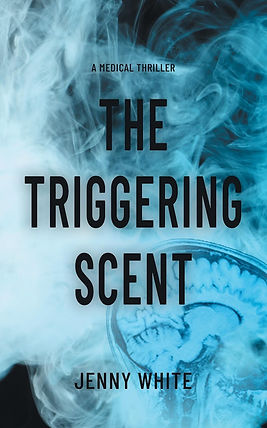
Jenny White's Abbey Roberts RN series launches with The Triggering Scent, a medical thriller built around a character who must face the emotional cost of what happened to her.
Frequently Asked Questions
How do you write about medical trauma without being exploitative?
Focus on the character's interior experience and the aftermath rather than graphic detail of the injury itself. Keep the clinical facts precise but restrained, let the character's emotional response carry the weight, and give recovery real page time. Ask a sensitivity reader with lived experience to review the draft before publication.
What are the common tropes to avoid when writing medical trauma in YA?
Avoid framing characters with mental illness or chronic conditions as defined only by deficit. Criticism in the field, including a 2023 article by E. L. Olan on the narrative of deficit, argues that these portrayals flatten characters. Also avoid miraculous cures, ICU scenes that exist only for shock value, and medical details that serve as decoration rather than consequence. A character's medical reality should shape their choices, relationships and daily routines throughout the story.
How can authors balance medical accuracy with narrative pacing?
Include only the clinical details a reader needs to understand stakes and choices. A nurse character who notices a monitor alarm or a medication schedule can convey accuracy through behaviour rather than lectures. Verify key facts, such as procedures, timelines and terminology, with a clinician, and accept that a fictional hospital can be simplified without becoming false. Pacing improves when medical detail moves the plot forward instead of pausing it.
Why is it important to represent chronic illness accurately in young adult literature?
Young readers often use fiction to understand conditions they live with or encounter in others. Inaccurate portrayals can teach misconceptions about symptoms, treatment and what a life with chronic illness looks like. Accurate representation, including fatigue, appointments, uncertainty and good days as well as bad ones, gives readers recognition and gives non-affected readers a more truthful understanding.



Comments