



How to Choose Slow Burn Mystery Books With Complex Protagonists
Last Updated: October 27, 2026
Quick Summary
Choose a slow burn mystery by screening the protagonist first: look for a lead who holds two contradictory beliefs, whose flaws cost something concrete, and who changes because of the plot. Then check pacing style and content notes before you buy, so the patient build actually pays off.
A slow burn mystery needs a flawed protagonist, a slow-building investigation, and atmosphere that acts as a character.
Run leads through four tests: contradiction, cost, pushback, and change; three or four passes is worth your time.
Read the first fifty pages and expect at least one real question you want answered by page 50.
Distinguish three payoff styles: late reveal, frequent small reveals, or emotional payoff.
Check content notes, because a slow burn is not a guarantee of a gentle read.
Table of Contents
What Makes a Slow Burn Mystery Work
A slow burn mystery is a novel that builds tension through character, atmosphere, and small revelations rather than fast action.

The appeal is simple. Fast thrillers give you a jolt. Slow-burn mystery novels give you a knot in your stomach that won't untie.
But the formula fails more often than it works. When the pacing drags, readers quit. When the protagonist is thin, the secrets feel empty.
A slow burn mystery works when three elements line up:
A flawed protagonist with something personal at stake
A slow-building investigation that reveals character as much as clues
Atmosphere that makes the setting feel like a character itself
Miss one, and the book sags. Nail all three, and you get the kind of story readers finish in one sitting, then think about for weeks.
Why Character-Driven Mystery Novels Reward Patient Readers
Character-driven mystery novels reward readers who care more about who solves the crime than how fast it's solved.
The genre has deep roots. Crime fiction and literary mystery have long blurred the line between plot and character. Think of the detective protagonist who carries personal scars into every case.
For readers who want morally complex, character-first suspense, our list of medical suspense novels with ethical dilemmas is a good place to see the range this genre covers.
The trade-off is real. A character-driven mystery asks more of you. You have to sit with uncertainty.
How to Spot Mystery Books With Flawed Protagonists
Mystery books with flawed protagonists are easy to spot once you know the signals. Look for a lead who makes mistakes, hides something, or carries guilt into the investigation. A flawed protagonist isn't weak. They're human, and that's what makes the story stick.
But "flawed" is the most overused word in mystery blurbs. The gap between a genuinely complex protagonist and a character with a tragic backstory stapled on is craft, and you can test for it before you buy. Here is a spoiler-free method that separates earned complexity from decorative damage.
The Four-Test Protagonist Screen
Run any lead through these four tests. A book that passes three or four is worth your time. A book that passes one is coasting on premise.
The contradiction test. A complex protagonist holds two beliefs that pull against each other. A detective who believes in the law but protects a family member from it. A nurse who trusts institutions but hides a mistake from one. If you can't name the contradiction from the first fifty pages, the character is probably consistent but flat.
The cost test. Flaws should cost the lead something concrete: a relationship, a job, a case. Backstory that never interferes with the present plot is decoration. Watch for whether the protagonist's weakness changes a decision, not just a mood.
The pushback test. Supporting characters should disagree with the lead for reasons of their own. If every secondary character exists to validate the protagonist, the complexity is cosmetic. A good supporting cast argues back.
The change test. By the final page, the protagonist should be different in a way the plot forced. A hard-luck lead who ends the book exactly as they started is a sad character, not a complex one.
Spoiler-Free Signals in the First Fifty Pages
You can assess complexity without spoiling the mystery. Read the first fifty pages and check for these markers:
A personal stake that connects to the case. The lead's history should raise the stakes of the investigation rather than sit beside it.
A hesitation in dialogue. Complex protagonists edit themselves. If the lead always says exactly what they mean, the inner life is thin.
A detail that doesn't fit. Slow-burn mysteries plant clues in character behavior, not just plot. A protagonist who notices the wrong detail is often the one worth following.
A relationship with friction. The best flawed leads have at least one relationship where both people are right and both are wrong.
What to Ignore
A common mistake is confusing "flawed" with "unlikable for no reason." Complexity should pull you in, not push you away. Another is mistaking darkness for depth. A protagonist who has suffered is not automatically complex; a protagonist who has suffered and made a choice because of it usually is.
Pro Tip If a blurb leans on the protagonist's trauma but says nothing about what the lead wants, the book is probably selling backstory rather than character. Look for a want and a contradiction in the description before you commit.
A Selection Framework for Slow-Burn Mystery Novels
Picking a slow-burn mystery novel gets easier with a clear filter. Use three passes: subgenre and setting first, then pacing and payoff, then content notes. This keeps you from buying a book that looks right but reads wrong for your mood.
Most recommendation lists stop at "if you like psychological thrillers, try this." That is not a framework; it is a shelf label. The method below is built to answer the question readers actually have: will this book reward my patience, or just test it?
Pass One: Subgenre, Tone, and Setting
Start with the kind of mystery you actually want. A dark mystery set in a hospital reads nothing like a cozy village puzzle. Tone and setting do most of the work, and they predict pacing better than any blurb.
Medical and hospital settings: high stakes, ethical tension, procedural detail. Pacing tends to be steady rather than explosive, because the tension comes from decisions rather than chases.
Psychological mystery: unreliable minds, blurred truth. These books often feel faster than they are because the uncertainty itself is the hook.
Literary mystery: slower prose, deeper character work. The payoff is usually emotional rather than a single twist.
Noir and international mystery: atmosphere-forward, morally gray leads. Pacing varies widely, so check the payoff pass before committing.
Cozy mystery: low violence, community stakes. Slow-burn pacing is common, but protagonist complexity is often lighter by design.
If hospital settings are your thing, our roundup of hospital setting mystery novels for 2026 gives you a shortlist to compare.
Pass Two: Pacing and Mystery Payoff
Pacing is where slow burns live or die. A good rule: the first 50 pages should plant at least one real question you want answered. If nothing hooks you by then, the payoff probably won't either.
Slow-burn pacing is not one thing. Distinguish between these three payoff styles before you buy:
Patient investigation with a late reveal. The book withholds one large answer until the final act. Best for readers who want a single, earned climax.
Steady accumulation with frequent small reveals. The book tightens every few chapters. Best for readers who want momentum without a fast plot.
Atmospheric build with an emotional payoff. The mystery resolves, but the ending lands on character rather than clue. Best for readers who read for the protagonist.
Before you buy, check:
Series order so you read books in sequence
Length and release date so you know what you're committing to
Reader reviews that mention pacing, not just plot
If you're starting a series, our medical thriller series reading order guide sorts out the sequence so the payoff makes sense.
Pass Three: Content Notes and Intensity
Slow-burn mysteries often carry heavier themes than their pacing suggests. Brief content notes help you match the book to your mood:
Violence: on-page vs. implied, and whether it involves medical or domestic settings
Grief and trauma: central to the plot or background texture
Institutional pressure: workplace, legal, or healthcare ethics
Substance use and mental health: handled with care or used as a plot device
Watch Out A slow burn is not a guarantee of a gentle read. Some of the most patient mysteries are also the most emotionally intense. Check content notes before you start if heavy themes are a concern.
The Selection Table
Filter | What to Check | Why It Matters |
Subgenre | Setting and tone | Matches your mood |
Protagonist | Flaws and personal stakes | Drives emotional pull |
Pacing style | Late reveal, small reveals, or emotional payoff | Confirms the build pays off |
Content notes | Violence, grief, institutional pressure | Prevents a mismatch |
Series order | Book sequence | Prevents confusion |
How We Apply the Framework
The Abbey Roberts RN series offers readers an authentic and suspenseful look into the high-stakes world of hospital drama.
Where Medical Thrillers Fit the Slow Burn Mold
Medical thrillers are natural slow burns. Hospitals run on pressure, secrecy, and ethical gray areas, which is exactly the fuel a slow-building investigation needs.
This is where authentic hospital settings matter. Accurate medical detail can build trust, and trust can let a writer slow the pace without losing you.
Jenny White writes in this space from lived experience.
That mix of suspense and emotional depth is what separates a memorable medical mystery from a forgettable one.
Common Mistakes When Picking Complex Protagonist Mysteries
The biggest mistake readers make is choosing on plot summary alone. A twisty premise means nothing if the lead character is flat. Look at the protagonist first, the plot second.
Watch out for these traps:
Buying mid-series and losing the character development that makes the lead work
Ignoring pacing reviews and ending up with a book that never tightens
Mistaking darkness for depth when the story has no emotional core
Skipping content notes and hitting themes heavier than expected
Another common error: assuming a slow burn means slow reading. Done well, a slow-burn mystery pulls you forward page by page. If it feels like homework, it's the book, not you.
Start the Abbey Roberts RN Series
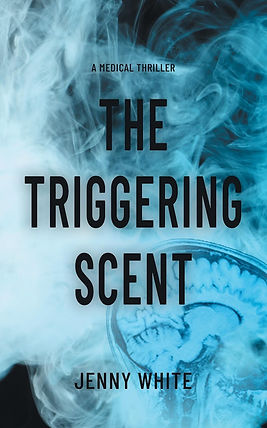
If you want medical thrillers with authentic hospital settings and ethical dilemmas, start with the Abbey Roberts RN series. The debut novel, The Triggering Scent, launches the series.
Here's how to begin:
You can explore The Triggering Scent, the debut novel that launches the Abbey Roberts RN series. For book clubs, there is a discussion guide for hosting an evening with Abbey Roberts.
Frequently Asked Questions
What makes a mystery novel a slow burn?
A slow burn mystery builds tension through character development, atmosphere, and layered secrets rather than constant action. Clues surface gradually, and revelations arrive late in the story. The pleasure comes from watching a detective protagonist and supporting characters change under pressure. If you want suspense that simmers instead of spikes on every page, slow burn mystery books with complex protagonists are the right shelf to browse.
Are slow-burn mysteries more focused on characters or clues?
Both matter, but the balance shifts. Character-driven mystery novels spend more page time on personal struggles, relationships, and psychological depth, with the investigation threading through those moments. The plot still resolves, and the mystery payoff should feel earned. When you evaluate a title, check whether reviews mention memorable characters alongside a satisfying ending. A book that nails one but drops the other usually disappoints.
Which mystery series have protagonists who change over time?
Series mysteries are where character development compounds. A lead character who carries injuries, ethical dilemmas, or grief from book one into book two feels different by book three. Look for series where the detective protagonist has an ongoing personal arc, not just a new case each installment. The Abbey Roberts RN series begins with Jenny White's debut novel, *The Triggering Scent*.
How do I know the medical details in a medical thriller are accurate?
Check the author's background before you buy. Jenny White is a retired registered nurse, and her work focuses on realistic medical details and ethical dilemmas in a hospital setting. Read sample pages to decide whether the portrayal works for you.
Choosing a mystery is really a bet on a character. The plot gets you in the door. The protagonist is why you stay. At Jenny White, we build our stories around leads worth following: flawed, resilient, and shaped by real clinical and ethical pressure. If that's the kind of read you're after, start with the Abbey Roberts RN series and meet a protagonist who earns the slow burn. Buy now and see where Abbey's story takes you.



Comments