



Medical Suspense Novels with Ethical Dilemmas: 10 Must-Read Thrillers
Table of Contents
Medical Suspense Novels with Ethical Dilemmas: What Sets Them Apart Why These Stories Matter to Modern Readers
Why These Stories Matter to Modern Readers
Best Medical Thriller Books of All Time That Explore Real Dilemmas Classic Foundations: Robin Cook and Michael Crichton Contemporary Voices: Physician-Authors Redefining the Genre
Classic Foundations: Robin Cook and Michael Crichton
Contemporary Voices: Physician-Authors Redefining the Genre
Medical Ethics in Fiction: How Novels Explore Real-World Dilemmas Patient Autonomy and Informed Consent in Narrative Institutional Corruption and the Medical Industrial Complex
Patient Autonomy and Informed Consent in Narrative
Institutional Corruption and the Medical Industrial Complex
10 Essential Medical Suspense Novels with Ethical Dilemmas 1. Coma by Robin Cook: Medical Malpractice and Institutional Negligence 2. Pandemic by Robin Cook: Public Health Ethics and Contagion Control 3. The Andromeda Strain by Michael Crichton: Biological Warfare and Scientific Responsibility 4. A Case of Need by Michael Crichton: Medical Error and Legal Accountability 5. Shutter Island by Dennis Lehane: Experimental Psychiatric Treatment and Moral Ambiguity 6. The Impossible Girl by Lydia Kang: Historical Medical Advancement and Patient Rights 7. The Serpent's Embrace by John Hands: Genetic Engineering Ethics and Scientific Ambition
1. Coma by Robin Cook: Medical Malpractice and Institutional Negligence
2. Pandemic by Robin Cook: Public Health Ethics and Contagion Control
3. The Andromeda Strain by Michael Crichton: Biological Warfare and Scientific Responsibility
4. A Case of Need by Michael Crichton: Medical Error and Legal Accountability
5. Shutter Island by Dennis Lehane: Experimental Psychiatric Treatment and Moral Ambiguity
6. The Impossible Girl by Lydia Kang: Historical Medical Advancement and Patient Rights
7. The Serpent's Embrace by John Hands: Genetic Engineering Ethics and Scientific Ambition
Beyond Traditional Medical Thrillers: Diverse Perspectives and Modern Themes Nurse-Led Narratives: Authentic Hospital Drama from Inside AI and Medical Ethics: The Next Frontier in Medical Suspense
Nurse-Led Narratives: Authentic Hospital Drama from Inside
AI and Medical Ethics: The Next Frontier in Medical Suspense
Real-World Bioethics vs. Fiction: What Medical Thrillers Get Right
How to Choose Your Next Medical Suspense Novel Sub-Genre Categories: From Pharmaceutical Conspiracy to Surgical Suspense
Sub-Genre Categories: From Pharmaceutical Conspiracy to Surgical Suspense
Conclusion: Why Medical Suspense Novels Matter
Medical Suspense Novels with Ethical Dilemmas: 10 Must-Read Thrillers
Last Updated: July 8, 2026
Medical Suspense Novels with Ethical Dilemmas: What Sets Them Apart
Medical suspense novels with ethical dilemmas explore the moral complexities that physicians, nurses, and patients face daily. They force readers to confront uncomfortable questions: When does medical advancement cross into exploitation? Who decides a patient's fate when institutions fail them? What happens when the system designed to heal becomes the threat itself?
These stories matter because they blur entertainment and genuine ethical inquiry. Unlike generic thrillers, medical suspense anchors tension in real-world dilemmas: pharmaceutical conspiracies mirroring actual corporate scandals, experimental treatments echoing historical abuses, and institutional corruption reflecting genuine systemic failures.
Key Takeaway Medical suspense novels explore real ethical conflicts through narrative, making abstract bioethics questions feel immediate and personal.
Why These Stories Matter to Modern Readers
The appetite for medical thrillers reflects genuine anxiety about healthcare institutions. Readers process real fears about medical errors, pharmaceutical manipulation, and power imbalances between patients and providers. A novel exploring informed consent becomes a way to think through your own medical decisions.
These narratives show consequences that clinical ethics textbooks cannot. Reading about a patient denied informed consent isn't abstract, you experience the betrayal, the doctor's moral collapse, the family's devastation. Modern medical suspense increasingly features diverse perspectives: nurse-led narratives exposing hospital realities, stories centered on patients rather than physicians, and thrillers interrogating the intersection of medical ethics with artificial intelligence.
Best Medical Thriller Books of All Time That Explore Real Dilemmas
Classic Foundations: Robin Cook and Michael Crichton
Robin Cook invented the modern medical thriller with Coma (1977). He established the template: take a real medical procedure, identify a genuine ethical vulnerability, and construct a conspiracy exploiting it. Cook's genius lies in plausibility, his plots require only belief that human greed and institutional negligence could align.
Michael Crichton brought a different approach. Where Cook focused on hospital conspiracies, Crichton explored the collision between scientific ambition and ethical responsibility. The Andromeda Strain asks not just "Can we contain a biological threat?" but "What protocols should govern research when stakes are extinction-level?" Both authors share a critical insight: the most terrifying medical scenarios are extrapolations of real institutional pressures.
Contemporary Voices: Physician-Authors Redefining the Genre
The most significant shift comes from physician-authors. When a clinician writes a medical thriller, authenticity cuts differently. Procedural details aren't researched, they're remembered. Ethical dilemmas aren't imagined, they're lived.
Lydia Kang's The Impossible Girl, written by a practicing physician, explores 19th-century medical advancement through a young woman whose body becomes a research subject. Kang documents historical abuses with clinical precision, making the horror more profound. This physician-author perspective creates credibility that generic research cannot match.
Medical Ethics in Fiction: How Novels Explore Real-World Dilemmas
Patient Autonomy and Informed Consent in Narrative
Patient autonomy appears in medical suspense not as abstract principle but as lived conflict. When a character signs a consent form without understanding what they're consenting to, readers experience the violation directly. When a doctor withholds information "for the patient's own good," we watch consequences unfold.
The most effective thrillers make informed consent visceral: a patient discovers enrollment in an experimental protocol without knowledge, a terminally ill person receives unproven treatment disguised as hope, a vulnerable population is targeted for research because they lack resources to refuse. These scenarios are based on documented historical abuses, Tuskegee, Nazi medical trials, exploitation of incarcerated populations.
Watch Out Medical thrillers exploring informed consent reveal how power imbalances between doctors and patients persist even in modern healthcare. This awareness can inform your own medical decision-making.
Institutional Corruption and the Medical Industrial Complex
Medical industrial complex emerges in suspense novels as something more sinister than simple greed, a system where profit incentives align with institutional inertia to produce harm. The best thrillers recognize that institutional corruption rarely requires a villain plotting in a boardroom. It emerges from countless small decisions by reasonable people operating within systems that reward certain outcomes. A doctor prescribes expensive drugs because the pharmaceutical rep is persuasive. An administrator cuts corners because budgets are tight. A researcher overlooks concerning data because the hypothesis is compelling.
10 Essential Medical Suspense Novels with Ethical Dilemmas
1. Coma by Robin Cook: Medical Malpractice and Institutional Negligence
Coma opens with a straightforward premise: a medical student notices healthy patients falling into comas during routine surgeries. The pattern shouldn't exist, yet it's happening with suspicious frequency.
The novel's genius transforms a procedural mystery into exploration of institutional negligence. The student discovers comas aren't accidents, they're profit. Healthy organs from comatose patients are being harvested and sold. Cook shows that medical malpractice doesn't require dramatic negligence, only absence of accountability.
2. Pandemic by Robin Cook: Public Health Ethics and Contagion Control
In Pandemic, Dr. Jack Stapleton investigates a mysterious death pointing toward dangerous contagion. The investigation raises immediate ethical questions: Who decides when to alert the public? How do you balance individual privacy against collective safety? When does disease surveillance become oppressive?
The novel explores tension between public health as collective good and individual rights. Contact tracing, quarantine, isolation, these tools are ethically justified by necessity but troubling in implications. Cook shows how pandemics create scenarios where every choice involves harm.
3. The Andromeda Strain by Michael Crichton: Biological Warfare and Scientific Responsibility
Crichton's The Andromeda Strain presents a scenario feeling almost documentary: a satellite returns from space carrying an unknown microorganism that kills with terrifying efficiency. Scientists must contain and understand the threat before it spreads.
The ethical core emerges from intersection of scientific discovery and national security. Scientists must conduct research on a pathogen that could become a weapon, share findings with military officials who may weaponize research, and balance understanding with knowledge that understanding enables catastrophe. Crichton shows how scientific responsibility becomes complicated when stakes are existential.
4. A Case of Need by Michael Crichton (as Jeffrey Hudson): Medical Error and Legal Accountability
Written under a pseudonym, A Case of Need follows a pathologist investigating death caused by medical negligence against 1960s social upheaval backdrop, where medical ethics questions intersect with justice and systemic bias.
The novel explores how medical error becomes legal culpability. A physician makes a mistake. A patient dies. Now: Was this tragic accident or criminal negligence? Legal systems demand clear answers, but medical reality is more ambiguous. The novel refuses easy answers about accountability, acknowledging that punishing individual physicians won't fix systemic problems.
5. Shutter Island by Dennis Lehane: Experimental Psychiatric Treatment and Moral Ambiguity
Lehane's Shutter Island is less traditional medical thriller than psychological exploration of psychiatric ethics. Set in a hospital for the criminally insane, it questions morality of experimental treatments, psychiatric diagnosis nature, and ethics of confining people deemed dangerous.
The central problem: How do you justify experimental psychiatric treatments on incarcerated populations? These patients cannot truly consent because confined. Lehane complicates narrative by making readers question reality itself. Psychiatric ethics resist simple categorization; harm and healing coexist in same treatment.
6. The Impossible Girl by Lydia Kang: Historical Medical Advancement and Patient Rights
Kang's novel explores 19th-century medical advancement through a young woman whose body becomes research subject. Written by a physician, the narrative captures the historical moment when medicine transitioned from art to science, requiring research subjects.
The ethical tension is historical but not distant. The novel shows how medical progress has always required someone to bear the cost. Research subjects, often from marginalized populations, became knowledge foundation benefiting everyone. Kang shows that historical abuses created ethical frameworks we now take for granted.
7. The Serpent's Embrace by John Hands: Genetic Engineering Ethics and Scientific Ambition
Hands' thriller explores genetic research through narrative blending laboratory science with cultural mystery. The central question: How far should scientists pursue genetic engineering when technology's implications remain uncertain?
The novel engages tension between scientific possibility and ethical prudence. Just because something can be done doesn't mean it should be. Yet scientists face pressure to push boundaries from funders seeking breakthroughs, competitors racing to publish, and genuine belief their research benefits humanity.
Beyond Traditional Medical Thrillers: Diverse Perspectives and Modern Themes
Nurse-Led Narratives: Authentic Hospital Drama from Inside
A significant evolution comes from narratives centered on nurses rather than physicians. Nurses occupy unique positions executing medical decisions while remaining subordinate to physicians, giving perspective on institutional hierarchies and consequences.
Nurse-led narratives reveal hospital realities physician-centered stories overlook. Nurses catch medical errors before harm. Nurses advocate for patients against institutional pressure. These narratives matter because they challenge assumptions that medical ethics is primarily physician concern.
AI and Medical Ethics: The Next Frontier in Medical Suspense
Contemporary medical thrillers increasingly explore artificial intelligence as ethical dilemma. Algorithms recommending treatments, AI systems diagnosing disease, machine learning models trained on biased data create new ethical questions traditional frameworks struggle to address.
The tension: AI systems can process more data than human physicians, potentially improving outcomes. Yet AI introduces new bias forms, removes human judgment from critical decisions, and creates accountability gaps. When an algorithm recommends treatment and patient is harmed, who bears responsibility?
Real-World Bioethics vs. Fiction: What Medical Thrillers Get Right
Medical suspense novels succeed by extrapolating from real institutional pressures. Pharmaceutical conspiracies mirror documented corporate misconduct. Institutional corruption reflects genuine healthcare administration patterns. The best thrillers understand institutional ethics matter more than individual morality.
However, medical thrillers sometimes oversimplify real medical decision-making complexity. They present scenarios where ethical answers seem obvious, when real medicine involves genuine uncertainty. The value lies in transforming abstract bioethical principles into immediate, emotional questions.
How to Choose Your Next Medical Suspense Novel
Sub-Genre Categories: From Pharmaceutical Conspiracy to Surgical Suspense
Medical suspense novels divide into recognizable categories, each exploring different healthcare ethics aspects.
Pharmaceutical conspiracies center on drug companies suppressing safety data. Institutional corruption thrillers examine how hospitals normalize harm through bureaucratic inertia. Experimental treatment thrillers explore whether scientific progress justifies risk. Surgical suspense novels focus on operating rooms as spaces where ethics become immediate. Historical medical abuse narratives examine past atrocities and their contemporary echoes.
Sub-Genre | Ethical Focus | Best For Readers Who | Example Themes |
Pharmaceutical conspiracy | Corporate profit vs. patient safety | Distrust institutional claims | Drug suppression, research manipulation |
Institutional corruption | Systemic harm through bureaucracy | Question authority structures | Hospital negligence, administrative cover-ups |
Experimental treatment | Scientific ambition vs. ethics | Explore research boundaries | Unproven protocols, consent violations |
Surgical suspense | Medical error and accountability | Understand operating room dynamics | Surgical mistakes, competence questions |
Historical abuse | Past atrocities informing present | Learn medical ethics history | Research violations, exploitation |
Choosing your next novel depends on which ethical questions most engage you. Pharmaceutical conspiracy thrillers resonate if concerned about drug companies. Institutional corruption narratives feel relevant if interested in how institutions enable harm.
Conclusion: Why Medical Suspense Novels Matter
Medical suspense novels serve a function clinical ethics textbooks cannot: they make abstract principles feel urgent and personal. They transform bioethical philosophy into emotional experience and force readers to confront uncomfortable truths about healthcare systems they depend on.
These narratives matter because medical ethics aren't settled questions with clear answers. They're ongoing tensions between competing goods: innovation versus safety, individual autonomy versus collective welfare, profit versus care. The best medical thrillers illuminate rather than resolve these tensions.
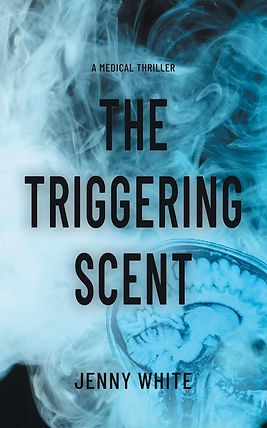
If seeking immersive narratives exploring genuine medical ethics, Jenny White's work exemplifies the genre's potential. As a retired registered nurse and brain tumor survivor, White brings authentic understanding of hospital systems to her medical thrillers. Her debut novel, The Triggering Scent, launches the Abbey Roberts RN series with realistic medical detail and ethical complexity distinguishing the best contemporary medical suspense.
Frequently Asked Questions
What are the best medical suspense novels with ethical dilemmas?
Top choices include Coma by Robin Cook (exploring institutional negligence), Shutter Island by Dennis Lehane (psychiatric ethics), and The Andromeda Strain by Michael Crichton (scientific responsibility). Each examines different ethical challenges: patient autonomy, informed consent, and the moral limits of medical advancement. For authentic hospital perspectives, novels by physician-authors and retired nurses offer realistic medical details grounded in real ethical conflicts within healthcare systems.
How do medical ethics in fiction compare to real-world bioethics?
Medical thrillers dramatize genuine ethical dilemmas, medical malpractice, pharmaceutical conspiracies, unethical experimentation, but compress timelines and heighten stakes for suspense. Real bioethics involves slower institutional processes, regulatory oversight, and committee review. However, novels like Being Mortal highlight authentic conflicts between patient autonomy and medical intervention. Fiction serves as a thought experiment, helping readers explore moral ambiguity and professional ethics in ways that resonate emotionally and intellectually with actual healthcare challenges.
Why should I read medical suspense novels by physician-authors?
Physician-authors and retired nurses bring credible medical knowledge, realistic hospital settings, and authentic ethical dilemmas grounded in professional experience. Their novels avoid oversimplification, accurately depicting clinical procedures, institutional hierarchies, and the psychological toll of medical decisions. Authors like Lydia Kang (physician) and Jenny White (retired RN) infuse narratives with genuine professional insights, making ethical conflicts feel urgent and believable rather than sensationalized, which deepens reader engagement and understanding of healthcare complexities.
What ethical themes appear most often in medical suspense novels?
Common themes include medical malpractice and negligence, pharmaceutical industry conspiracies, unethical human experimentation, doctor-patient confidentiality dilemmas, and institutional corruption. Many explore life-or-death decisions where characters must choose between professional ethics and personal survival. The medical industrial complex, profit-driven healthcare systems prioritizing revenue over patient welfare, appears frequently. Genetic engineering ethics, experimental treatments, and the Hippocratic Oath's limitations also feature prominently, reflecting real tensions between medical innovation and patient safety.
Ready to explore medical suspense that resonates with genuine healthcare ethics? Discover how Jenny White's authentic nurse perspective transforms medical thriller conventions. [EXTERNAL_LINK: Jenny White's medical thriller series | jennywhite.ca] offers the immersive, character-driven narratives that keep you questioning long after the final page.
This article was written using GrandRanker


Comments