



New Medical Thriller Authors With Healthcare Experience
Table of Contents
Why Healthcare Experience Changes Medical Thriller Fiction
What Clinical Detail Adds That Research Alone Cannot
Medical Thriller Books by Nurses: Bedside Knowledge in Print
Jenny White: Retired RN and Author of The Triggering Scent
Medical Thrillers Written by Doctors: Physicians Who Trade Charts for Chapters
How to Verify an Author's Medical Background Before You Buy
Step 1: Classify the Claim Before You Check It
Step 2: Check the Primary Sources, In Order
Step 3: Read the Sample for the Tell
A Worked Example of the Method
Realistic Medical Thriller Novels: What Accuracy Actually Looks Like on the Page
ICU Dynamics, Ethics, and the Details Healthcare Workers Notice
Medical Thriller Book Recommendations for Readers Who Work in Healthcare
Group 1: Clinician-Authors (Bedside and Ward Experience)
Group 2: Researcher and Laboratory Authors
Group 3: Healthcare-Adjacent Authors
Group 4: Medically Informed Non-Clinicians
A Simple Selection Table
How to Use This
Emerging Voices: New Medical Thriller Authors to Watch
Conclusion: Where to Start With New Medical Thriller Authors
Frequently Asked Questions
Last Updated: October 8, 2026
Why Healthcare Experience Changes Medical Thriller Fiction
Medical thriller fiction lives or dies on whether the hospital feels real.
Medical thriller fiction is a suspense genre built around medicine, disease, and life-or-death stakes in healthcare settings. The best examples come from writers who have worked inside those settings.
Here's the tension most reading lists ignore: a gripping plot can't rescue a scene where a nurse does something no nurse would ever do.
What Clinical Detail Adds That Research Alone Cannot
Research can tell a writer what a drug does, but not how a night shift feels at 4 a.m.
Writers with clinical experience bring small, true details:
The exact sound of a monitor alarm that means trouble
How consent forms get signed in a real emergency
What a family says when a diagnosis lands
Those details build trust with healthcare readers and raise the stakes, because the danger feels possible.
Key Takeaway The most convincing medical thrillers don't rely on rare diseases. They rely on ordinary hospital moments rendered accurately, which makes the extraordinary plot feel plausible.
Medical Thriller Books by Nurses: Bedside Knowledge in Print
Nurses write some of the most grounded medical thriller books by nurses because they spend their careers at the bedside.

A nurse notices the small changes that signal a patient is deteriorating, an instinct that translates directly into suspense.
Jenny White: Retired RN and Author of The Triggering Scent
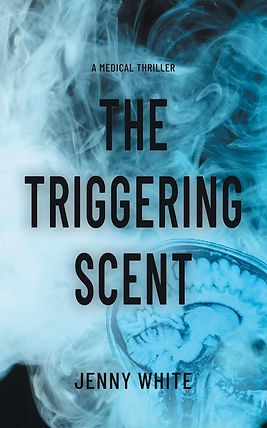
Jenny White is a retired registered nurse and brain tumor survivor whose debut novel, The Triggering Scent, opens the Abbey Roberts RN series, pairing authentic hospital detail with ethical dilemmas.
What sets her work apart: Abbey Roberts is an RN, so clinical and emotional pressure arrive together, something healthcare readers notice first.
White's nursing background and recovery shape the story in ways research alone can't replicate.
Medical Thrillers Written by Doctors: Physicians Who Trade Charts for Chapters
Medical thrillers written by doctors lean on diagnosis and treatment puzzles: physicians know how a case unfolds and how it can go wrong.
NEWS CENTER Maine
The trade-off: doctor-authors write from the top of the hierarchy, so the perspective stays clinical, while nurse-authors write from the middle of the action.
Both approaches work. Which one you prefer depends on what you want from a medical thriller book:
Want a diagnostic puzzle? Look for a physician-author.
Want the human cost up close? Look for a nurse-author.
Want both? Read across the two groups.
Pro Tip When you read a medical thriller, watch how the author handles a simple handoff between shifts. Writers with real hospital experience get the small friction right, and that's usually a sign the rest of the clinical detail will hold up.
How to Verify an Author's Medical Background Before You Buy
Most reading lists assert that an author "worked in healthcare" and move on. That phrase can mean a bedside clinician, a lab researcher, a hospital administrator, or someone who once volunteered in a clinic, and for readers who want clinical authenticity, the difference matters. Here is a repeatable method for separating those categories.
Step 1: Classify the Claim Before You Check It
Sort whatever the author or publisher says into one of four buckets, each carrying different weight for medical thriller accuracy:
Direct clinical work, registered nurse (RN), registered practical nurse (RPN), physician (MD), paramedic, respiratory therapist, pharmacist, or similar role with hands-on patient contact.
Research or laboratory work, bench science, clinical trials coordination, epidemiology, or graduate research. Strong on mechanism and data, thinner on ward workflow.
Healthcare-adjacent employment, hospital administration, health policy, medical device sales, health journalism, or insurance. Real exposure to the system, but often at a distance from the bedside.
A book can be excellent in any category, the point is knowing which one you are buying.
Step 2: Check the Primary Sources, In Order
Work from most reliable to least:
The author's own website bio. Look for a specific role and a named institution. "Worked for years as an ICU nurse at a tertiary hospital" is verifiable; "has always been fascinated by medicine" is not.
Professional association or licensing directories. Regulated health professions in most provinces maintain public registries. If an author claims a regulated title, that registry is the strongest single source.
Long-form interviews and podcasts. Credentials tend to be stated plainly and consistently when they are real.
The book's acknowledgments and author's note. Many writers thank a named clinical reader, consultant, or department. That is a transparency signal, not proof of the author's own background.
Publisher author pages and trade reviews. Useful for corroboration, but they usually repeat the author's own bio.
Step 3: Read the Sample for the Tell
A sample chapter is the fastest practical test. Look for unglamorous details that only come from repetition: how a shift handoff is structured, who signs an order, what a nurse does before calling a physician. Writers with clinical experience get the friction and hierarchy right without explaining it.
Pro Tip If a bio says "healthcare background" with no role, institution, or timeframe, treat it as unverified until you find a second source. That is not an accusation, it is just the same standard you would apply to any other expertise claim.
A Worked Example of the Method
For plain-language context on how health agencies describe clinical roles, public health work, and the settings these authors write about, the Public Health Agency of Canada publishes accessible material that helps readers understand the system behind the fiction.
One caution: a verified medical background signals authenticity but does not guarantee good writing, and its absence does not guarantee a bad book. Use it as one input among several.
Realistic Medical Thriller Novels: What Accuracy Actually Looks Like on the Page
Realistic medical thriller novels get the small things right: how staff talk to each other, how decisions get made under pressure, and how the system limits what any one person can do.
Healthcare readers notice when a book skips the system: no single clinician makes a life-or-death call alone, and protocols, approvals, and second opinions shape every step.
ICU Dynamics, Ethics, and the Details Healthcare Workers Notice
ICU dynamics are where accuracy is easiest to test. A realistic ICU scene shows a team, not a lone hero, a nurse noticing something a monitor hasn't flagged yet.
Ethics are the harder test. Real medical ethics rarely offer a clean right answer. A strong thriller sits in that gray space instead of resolving it too neatly.
Watch Out A common mistake in weaker medical thrillers is letting one character override hospital protocol to save the day. Healthcare workers spot it instantly, and it breaks the spell for the rest of the book.
Medical Thriller Book Recommendations for Readers Who Work in Healthcare
If you spend your days in a hospital, you do not want clinical work used as set dressing. The most useful way to choose a medical thriller is to organize authors by the healthcare background they actually have, then pick the category that matches what you want.
Group 1: Clinician-Authors (Bedside and Ward Experience)
These writers come from direct patient care, nurses, physicians, paramedics. Their strength is workflow, hierarchy, and the texture of a shift.
What they get right: handoffs, escalation, who signs what, how a deteriorating patient actually presents, the emotional register of a family conversation.
What to watch for: pacing can suffer when an author lingers on procedural detail, and some clinician-authors struggle to let a plot diverge from real protocol.
Best fit if: you want the hospital to feel like the hospital you know.
Group 2: Researcher and Laboratory Authors
These writers come from bench science, clinical trials, or epidemiology. Their strength is mechanism: how a disease works, how a trial is designed, how data can be manipulated.
What they get right: plausibility of the science, the logic of an outbreak, the slow reveal of a study gone wrong.
What to watch for: ward scenes can feel thin, and characters sometimes exist mainly to explain the science.
Best fit if: you want the puzzle and the biology to hold up under scrutiny.
Group 3: Healthcare-Adjacent Authors
Health policy, administration, medical journalism, device and pharmaceutical work. These writers often see the system from above rather than from the bedside.
What they get right: institutional pressure, regulatory and ethical conflict, the gap between what a hospital says and what it does.
What to watch for: less granular clinical detail; the drama tends to be organizational rather than physical.
Best fit if: you are interested in the system as the antagonist.
Group 4: Medically Informed Non-Clinicians
Writers with no clinical role who research deeply, often with named consultants. Quality varies.
What they get right: sometimes excellent structure and pacing, because they are not constrained by real protocol.
What to watch for: small errors that clinicians spot instantly, wrong titles, wrong sequence of care, a lone hero overriding a team.
Best fit if: you want a fast, plot-forward read and can tolerate occasional inaccuracy.
A Simple Selection Table
If you want... | Choose this background | Why it works |
Bedside realism and shift texture | Clinician-authors | Written from inside the workflow |
Diagnostic and scientific puzzles | Researcher-authors | Built around real mechanism |
Institutional and ethical conflict | Healthcare-adjacent authors | System-level vantage point |
Fast pacing with lighter clinical detail | Medically informed non-clinicians | Less bound by real protocol |
How to Use This
Pick the group that matches what you already love about the genre, then read one book from a different group. If you work in healthcare, start with Group 1 and test the author against the verification method above, a clinician-author who also gets the small details right is the strongest signal you can get.
Key Takeaway Organizing recommendations by healthcare background, not by bestseller rank, is the fastest way to find a medical thriller that respects your professional eye.
For readers who want a starting point in the clinician-author group, Jenny White's debut, The Triggering Scent, is written from a registered nurse's perspective and opens the Abbey Roberts RN series.
Emerging Voices: New Medical Thriller Authors to Watch
New medical thriller authors are worth your attention right now, because the genre is shifting toward lived experience.
Jenny White is one of those emerging voices. Her debut, The Triggering Scent, draws on her years as a registered nurse and her own recovery from a brain tumor.
A few reasons to start with a new author rather than a familiar name:
Debut novels often carry more of the writer's own background
New voices take risks that established series avoid
You get in early on a series before it grows
If you're a cancer survivor or you work in healthcare, how trauma is handled matters. White's approach leans on resilience and recovery rather than shock.
Conclusion: Where to Start With New Medical Thriller Authors
Finding a medical thriller that respects both the medicine and the reader is harder than it should be.
Her debut, The Triggering Scent, brings an authentic hospital setting, realistic medical detail, and a focus on the ethical dilemmas healthcare workers face every day.
Get started with Jenny White and read a medical thriller written by someone who has been there.
Frequently Asked Questions
Which medical thriller authors have actually worked in healthcare?
Several writers in the genre bring direct clinical backgrounds to their fiction. Nurses and physicians make up the largest group, drawing on years of hospital shifts, patient care, and ethical decision-making. Jenny White, a retired registered nurse and brain tumor survivor, writes the Abbey Roberts RN series, including The Triggering Scent. When you look for medical thriller authors, checking the author bio for a nursing or medical credential is the fastest way to separate writers who have lived the setting from those who have only researched it.
How does healthcare experience make medical thrillers more realistic?
Clinical experience shapes the small details that ring true to healthcare workers: how a code is called, how nurses talk to each other at 3 a.m., how consent and ethics reviews actually unfold. Writers with a medical background tend to get the pacing of a diagnosis, the hierarchy of a hospital unit, and the emotional weight of patient death right. That accuracy is what makes realistic medical thriller novels feel immersive rather than staged, and it is why nurses and doctors often spot the difference within a chapter.
Are there new medical thriller authors with nursing experience worth reading?
Yes. The genre has seen a wave of debut authors who came to writing after careers in nursing, emergency medicine, and allied health. Jenny White is one example: her debut, The Triggering Scent, opens the Abbey Roberts RN series and blends authentic hospital detail with suspense and ethical dilemmas. When browsing medical thriller book recommendations, look for debut authors whose bios mention a clinical role, since that background often shows up in how the hospital, the staff, and the patient interactions are written.
How can I tell if a medical thriller's clinical details are accurate?
Start with the author's credentials and any notes on their research process. Authors who worked in healthcare often mention specific units, procedures, or training in interviews and book notes. Reader reviews from nurses and physicians are another signal, since healthcare workers tend to call out errors quickly. If a book claims medical accuracy, check whether the author names a clinical background or a medical consultant rather than relying on generic praise.
Buy now


Comments