



Popular Medical Thriller Authors Ranking
Updated: Sep 16
Table of Contents
What Defines Top-Tier Medical Thriller Authors
Medical Thriller Authors with Nursing Experience
Pioneers of the Medical Thriller Genre
Forensic and Investigative Medical Thriller Authors
Gripping Suspense Novels for Book Clubs
Psychological and Domestic Medical Suspense
How to Choose Your Next Medical Thriller
Last Updated: August 30, 2026
What Defines Top-Tier Medical Thriller Authors
The best medical thriller authors share one critical quality: they blur the line between fiction and clinical reality so convincingly that readers can't tell where one ends and the other begins. This isn't accidental. It's the result of either lived experience in healthcare or obsessive research into medical systems, pharmaceutical ethics, and the darker corners of hospital life.
Medical thriller authors who rank highest typically combine three elements. First, they understand the procedural and emotional weight of medical decision-making. Second, they can escalate tension through plausible medical crises rather than relying on contrived plot mechanics. Third, they respect their audience enough to get the details right.
The genre itself has evolved dramatically since Robin Cook pioneered it in the 1970s. Early medical thrillers leaned heavily on technological fear, what could go wrong if medicine advanced too fast? Modern medical thriller authors have shifted focus. They're exploring institutional corruption, patient vulnerability, the psychology of caregivers under pressure, and the ethical quicksand that healthcare professionals navigate daily.
This matters because readers of medical thrillers aren't looking for generic suspense dressed up in scrubs. They want authenticity. They want to feel the weight of a diagnosis. They want to understand why a doctor might bend the rules, and whether that choice was justified. The most compelling medical thriller authors understand this distinction and deliver narratives that satisfy both the thriller reader's need for stakes and the thoughtful reader's need for moral complexity.
Pro Tip The difference between a forgettable medical thriller and an unforgettable one often comes down to whether the author has actually spent time in a hospital, either as a professional or as a patient. Lived experience shows on the page.
Medical Thriller Authors with Nursing Experience
Nursing experience is perhaps the most valuable credential a medical thriller author can have. Nurses see healthcare from a vantage point that physicians often miss. They're present for the mundane and the catastrophic. They witness the gaps between protocol and reality. They know what happens at 3 a.m. when a patient crashes and the system scrambles.
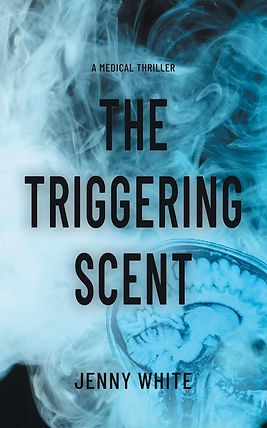
Jenny White brings exactly this perspective to her debut medical thriller series. As a retired registered nurse and brain tumor survivor, White writes from lived experience in both the clinical world and the patient's chair (the NIH). Her Abbey Roberts RN series, beginning with The Triggering Scent, centers on a nurse protagonist navigating high-stakes hospital drama with the authenticity that only someone who has worked those shifts can deliver. The medical details aren't window dressing, they're woven into the emotional core of the narrative.
What makes nursing experience so powerful in medical thrillers is that nurses understand institutional vulnerability. They see how understaffing creates dangerous situations. They know which corners get cut when budgets tighten. They understand the ethical compromises that happen quietly, without fanfare. White's work taps into this knowledge, creating narratives where the tension doesn't come from a rogue surgeon or a mad scientist, but from the systemic pressures that force good people into impossible choices.

Readers who work in healthcare often report that nursing-authored medical thrillers feel different. The procedural details ring true. The emotional beats of a critical care scenario hit harder because the author knows what that actually feels like. This authenticity creates a contract between author and reader: you can trust that what's happening on the page could happen in a real hospital, which makes the stakes feel genuinely dangerous.
Pioneers of the Medical Thriller Genre
Robin Cook didn't invent the thriller, but he created the template that defined medical suspense for generations. His early novels, Coma, Fever, Outbreak, established the formula: take a contemporary medical advancement or practice, identify its vulnerabilities, and imagine the worst-case scenario (peer-reviewed research). Cook's background as a physician gave his work credibility that pure fiction writers couldn't match. He understood the systems he was critiquing.
What Cook accomplished was cultural. He made readers suspicious of hospitals. He made them question whether their doctor had their best interests at heart. He transformed medical settings from places of healing into potential crime scenes. This wasn't cynicism, it was a healthy skepticism about institutions that wield enormous power over vulnerable people.
Michael Crichton took a different approach. His medical thrillers, particularly The Andromeda Strain and Prey, leaned into science fiction elements while maintaining rigorous scientific plausibility (peer-reviewed research). Crichton's background in medicine gave him the credibility to explore speculative scenarios, what if a pathogen from space could wipe out humanity? What if nanotechnology escaped laboratory control?, without losing readers to disbelief. His genius was making the impossible feel inevitable.
These pioneers established that medical thrillers could be intellectually serious. They weren't just about jump scares or betrayal. They could explore genuine scientific and ethical dilemmas. They could make readers think about the future while keeping them on the edge of their seats.
Forensic and Investigative Medical Thriller Authors
Kathy Reichs brought forensic anthropology into the thriller mainstream with her Temperance Brennan series. Unlike authors who research forensics, Reichs is a forensic anthropologist. She's examined actual skeletal remains. She's testified in court. She knows what evidence looks like and how it's handled.
This expertise matters enormously in forensic medical thrillers. Readers can sense when an author is working from secondhand knowledge. They catch the procedural errors. They notice when the timeline doesn't match how autopsies actually work. Reichs doesn't have these problems. Her novels move through investigation and forensic analysis with the confidence of someone who has done this work.
The forensic medical thriller subgenre appeals to readers who want their suspense layered with procedural detail. The investigation itself becomes the narrative engine. Readers follow the detective or forensic expert through the methodical process of uncovering what happened, and the tension comes from whether the truth will be discovered in time, or whether it will be buried.
Karin Slaughter, while not strictly a forensic specialist, writes crime thrillers with medical and investigative elements that hit with brutal force. Her Grant County and Will Trent series explore the psychological aftermath of violence. Her protagonists are often damaged by what they've witnessed. The medical details, injuries, trauma, recovery, aren't incidental. They're central to understanding how violence reshapes lives.
Watch Out Forensic medical thrillers often contain graphic descriptions of injury and death. Readers should check content warnings before diving in, particularly if they have trauma histories or work in fields where they encounter this material regularly.
Gripping Suspense Novels for Book Clubs
Book clubs have become a powerful driver of thriller sales, and certain authors have built devoted followings through their ability to create narratives that spark genuine discussion. Shari Lapena's The Couple Next Door became a phenomenon partly because it raised uncomfortable questions about trust and deception that book clubs wanted to argue about.
Linwood Barclay, a Canadian author, excels at creating domestic suspense that feels immediately relevant to readers' own lives. His novels often begin with an ordinary family or community and then systematically dismantle the assumptions that hold it together. A car accident reveals a hidden affair. A missing person uncovers a murder. A small lie spirals into catastrophe. His work is gripping because it starts from a place of relatability. book recommendations.
Joy Fielding, another Canadian author, specializes in psychological suspense with female protagonists facing extraordinary threats. Her novels explore the fragility of safety and the ways ordinary women can find themselves in nightmarish situations. Book clubs gravitate toward her work because her characters feel real, and the questions her narratives raise, about survival, morality, and resilience, generate genuine debate.
For book club selection, medical thrillers offer particular advantages. They invite discussion about healthcare ethics, institutional accountability, and the moral gray zones where good people make questionable choices. A medical thriller can spark conversations that extend far beyond the book itself.
Author | Specialty | Best For | Tone |
Jenny White | Nursing-authored medical drama | Readers seeking authentic ICU dynamics | Intense and character-driven |
Robin Cook | Medical ethics and institutional suspense | Readers new to the genre | Fast-paced and accessible |
Kathy Reichs | Forensic investigation and science | Readers who want procedural detail | Clinical and methodical |
Karin Slaughter | Crime investigation and trauma | Readers seeking dark, unflinching narratives | Brutal and psychologically complex |
Shari Lapena | Domestic suspense and psychological tension | Book clubs and twist-seekers | Atmospheric and unsettling |
Linwood Barclay | Suburban suspense and family secrets | Readers seeking relatable settings | Grounded and tense |
Joy Fielding | Psychological suspense and female protagonists | Readers seeking character-driven stories | Emotional and propulsive |
Psychological and Domestic Medical Suspense
The intersection of psychology and medical suspense has become increasingly sophisticated. Authors in this space explore not just what happens to the body, but what happens to the mind when medical crises occur. They examine the psychological impact of diagnosis, the trauma of medical error, and the ways illness can destabilize identity.
Shari Lapena's work often touches on medical elements within broader domestic suspense narratives. A character's prescription medication becomes a plot device. A medical condition becomes a motive. The psychological toll of healthcare, waiting for test results, living with uncertainty, managing chronic illness, becomes the emotional core of the story.
Karin Slaughter's novels frequently explore the psychological aftermath of violence and trauma. Her characters are often survivors, of assault, of medical error, of institutional failure. The medical and psychological elements interweave. A character's injury shapes their psychology. Their trauma history informs how they respond to new threats. The suspense comes not just from external danger but from internal psychological struggle.
This subgenre appeals to readers who understand that the most compelling threats aren't always external. Sometimes the danger comes from within, from grief, from desperation, from the ways trauma rewires the brain. Medical thrillers that explore this territory offer a different kind of suspense than action-driven narratives.
How to Choose Your Next Medical Thriller
Choosing your next medical thriller depends on what kind of suspense you're seeking and how much medical detail you want in your reading experience. Start by asking yourself whether you prefer procedural narratives, where the investigation or medical mystery drives the plot, or character-driven narratives where the emotional journey matters as much as the external threat.
If you want to understand how things work, choose authors with genuine medical expertise. Robin Cook's novels will teach you about medical systems and pharmaceutical ethics. Kathy Reichs will show you forensic investigation. Jenny White will give you authentic ICU dynamics and the perspective of a healthcare professional navigating institutional pressure.
If you want psychological depth and character development, choose authors who explore the emotional toll of medical crises and institutional failure. Karin Slaughter's novels examine trauma. Shari Lapena explores the psychology of ordinary people in extraordinary situations. Joy Fielding creates female protagonists facing genuine peril.

Consider also whether you prefer series or standalone novels. Some readers enjoy returning to familiar protagonists across multiple books. Others prefer the self-contained narrative arc of a standalone. Linwood Barclay and Shari Lapena write mostly standalones, which means you can start anywhere. Robin Cook and Kathy Reichs have extensive series, but their books are generally readable independently.
Pay attention to content warnings. Medical thrillers often contain graphic descriptions of injury, illness, and death. Some explore trauma and violence extensively. If you're a healthcare worker or a trauma survivor, you may want to know what you're walking into before you start reading.
Finally, consider whether you want to read about medicine as it actually exists, with its ethical gray zones, its institutional pressures, its genuine dangers, or whether you prefer medical thrillers that use healthcare settings as backdrop for more speculative scenarios. This preference will guide you toward different authors and different subgenres within the broader category of medical suspense.
Key Takeaway The best medical thriller for you depends on three factors: whether you want procedural detail or psychological depth, whether you prefer series or standalones, and how much graphic medical content you're comfortable with.
Medical thriller authors who rank highest in reader engagement and critical acclaim share a commitment to authenticity. Whether through lived experience in healthcare, rigorous research into medical systems, or genuine expertise in forensic investigation, the best authors in this genre earn their readers' trust by getting the details right.
Jenny White's The Triggering Scent and the Abbey Roberts RN series exemplify what happens when nursing experience meets thriller craft. White brings the perspective of someone who has worked in high-stakes medical environments and survived a life-altering health crisis. Her novels deliver the immersive, character-driven narratives that readers crave, grounded in authentic medical drama and ethical complexity. For readers seeking gripping suspense novels that authentically portray hospital dynamics and healthcare dilemmas, Jenny White's work offers exactly what distinguishes top-tier medical thriller authors from the rest. Discover her series and experience the intensity of real medical suspense.
Frequently Asked Questions
What makes medical thriller authors with real healthcare experience different?
Authors with clinical backgrounds bring authentic procedural details, accurate medical terminology, and genuine understanding of hospital ethics and patient dynamics. Rather than researching surface-level medical facts, they write from lived experience. This authenticity resonates especially with healthcare professionals and readers seeking credible clinical scenarios. Jenny White, a retired registered nurse, exemplifies this, her debut novel weaves realistic ICU protocols with emotional depth that comes from years in practice.
Are gripping suspense novels for book clubs better when they're standalone or part of a series?
Both formats work for book clubs, but they serve different purposes. Standalone medical thrillers allow focused discussion without requiring readers to catch up on previous installments, making them ideal for new members. Series like Robin Cook's work build momentum across multiple books and reward loyal readers. For book club selection, consider your group's preference: standalone novels offer self-contained mysteries, while series create ongoing investment in character arcs and recurring dilemmas.
Which medical thriller authors focus most on ethical dilemmas in healthcare?
Robin Cook pioneered the exploration of medical ethics in thrillers, examining how scientific advancement and institutional pressures create moral conflicts. Michael Crichton extended this by questioning technological hubris in medicine. Jenny White's work emphasizes ethical challenges in nursing and patient care, particularly around end-of-life decisions and professional responsibility. These authors move beyond plot mechanics to examine the real tensions healthcare workers face daily.
How do I know if a medical thriller will be too graphic or triggering?
Check reviews for content warnings, readers often mention graphic medical procedures, violence, or trauma themes. Kathy Reichs' forensic novels include detailed autopsy descriptions, while Karin Slaughter's thrillers contain intense psychological violence. Jenny White's novels balance medical realism with emotional resilience, focusing on character recovery rather than trauma exploitation. If you're a survivor seeking stories of resilience, look for authors who treat difficult subjects with respect rather than sensationalism. Preview sample chapters when available.
Buy now
This article was written using GrandRanker


Comments