

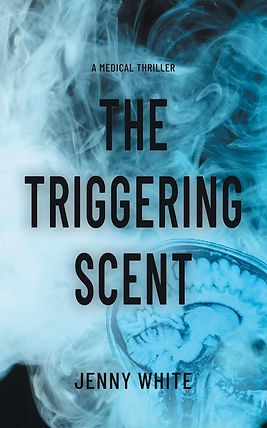


Why Nurses Love Medical Thrillers: Authenticity & Escape
Table of Contents
Why Nurses Love Medical Thrillers: The Core Appeal Validation Through Storytelling A Safe Space to Process Trauma
Validation Through Storytelling
A Safe Space to Process Trauma
The Psychology of Reading Thrillers for Healthcare Professionals Vicarious Processing of Clinical Stress Control and Narrative Resolution
Vicarious Processing of Clinical Stress
Control and Narrative Resolution
Nurses Who Write Medical Thrillers vs. Traditional Authors Authenticity and Clinical Accuracy Reception and Credibility Among Healthcare Readers
Authenticity and Clinical Accuracy
Reception and Credibility Among Healthcare Readers
Realistic Medical Dramas vs. Thrillers: What Nurses Crave Accuracy in Clinical Judgment and Medical Procedures Hospital Dynamics and Interprofessional Relationships
Accuracy in Clinical Judgment and Medical Procedures
Hospital Dynamics and Interprofessional Relationships
Medical Ethics in Fiction: Exploring Moral Dilemmas Life-or-Death Decisions and Professional Responsibility Patient Vulnerability and Trust in Healthcare Narratives
Life-or-Death Decisions and Professional Responsibility
Patient Vulnerability and Trust in Healthcare Narratives
Medical Thrillers as Advocacy: Raising Awareness of Healthcare Issues Burnout, Resilience, and System Failures Using Fiction to Highlight Real Healthcare Challenges
Burnout, Resilience, and System Failures
Using Fiction to Highlight Real Healthcare Challenges
What Makes a Great Medical Thriller for Nurses
Conclusion: The Enduring Appeal of Medical Thrillers to Nursing Professionals
Last Updated: July 30, 2026
Why Nurses Love Medical Thrillers: The Core Appeal
Nurses gravitate toward medical thrillers not as escapism, but as professional validation and psychological processing. The genre takes the clinical and ethical weight of healthcare seriously, treating it as the high-stakes drama it genuinely is. Medical thrillers written with authenticity, especially by authors with nursing backgrounds, provide a mirror reflecting the complexity of nurses' daily reality. When a character faces an ethical dilemma a nurse has actually confronted, or when a plot hinges on genuine clinical knowledge, it signals respect for the reader's expertise.
Beyond recognition, medical thrillers create a controlled space where nurses can confront the fears embedded in their profession without the weight of actual patient outcomes. A fictional hospital crisis allows them to process trauma, explore moral ambiguities, and witness resilience through narrative distance.
Validation Through Storytelling
Most fiction set in hospitals either sensationalizes the setting or flattens it into background scenery. Medical thrillers, when done well, treat the hospital as a character with its own logic, politics, and moral weight. When a nurse reads a scene depicting cascading failures leading to a patient safety incident, an author who understands clinical workflow won't produce Hollywood nonsense, they'll produce recognition. The nurse sees their own world reflected accurately: communication breakdowns between departments, pressure of understaffing, and how a small error compounds into something catastrophic.
Nurse-authored medical thrillers carry particular power. An author like Jenny White, who brings a retired registered nurse's background to the work, builds credibility through clinical detail that casual readers might not notice but nurses absolutely will. A genuine understanding of how ICU teams communicate, what clinical judgment looks like under pressure, and how ethical dilemmas unfold in real time creates a reading experience that feels less like fiction and more like testimony.
A Safe Space to Process Trauma
Nursing carries accumulated trauma that rarely surfaces in professional settings. Nurses witness patient suffering, navigate moral dilemmas with no perfect answer, and internalize the weight of decisions affecting human lives. The profession demands emotional regulation, yet these experiences leave psychological marks needing processing.
Medical thrillers provide a controlled environment for this. Reading about a fictional character navigating a medical crisis allows nurses to explore their own experiences at one remove. A nurse reading about a character's guilt over a medication error or their struggle with a patient's death can process similar experiences without the immediate triggering weight of their own cases. The genre also normalizes the emotional toll of healthcare work, validating that these responses are human and understandable, not personal failures.
The Psychology of Reading Thrillers for Healthcare Professionals
Reading thrillers engages specific cognitive mechanisms that healthcare professionals find valuable. Suspense in a well-constructed medical thriller activates the same neural pathways engaged during clinical decision-making: pattern recognition, risk assessment, and integration of incomplete information under pressure.
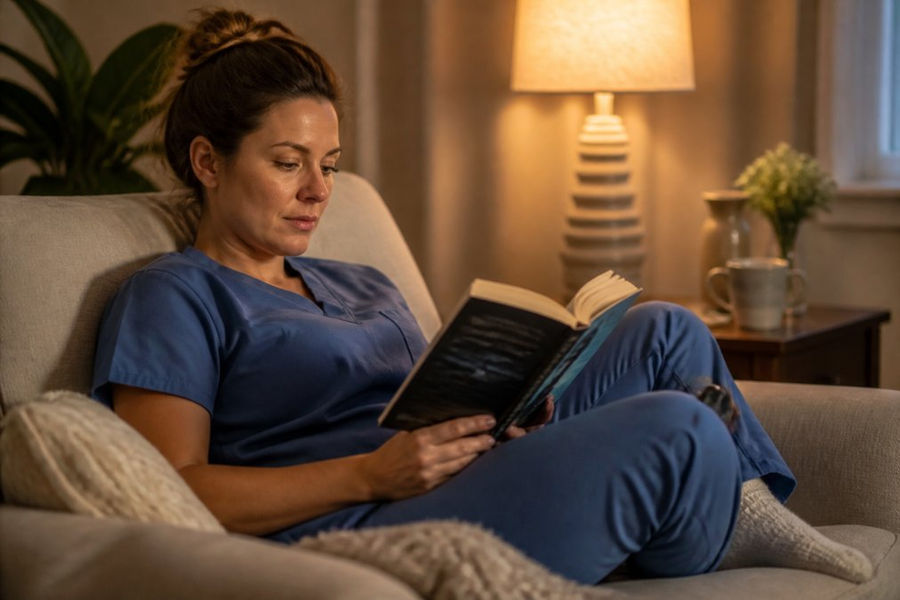
Vicarious Processing of Clinical Stress
Healthcare professionals live in managed stress where decisions carry real consequences. Medical thrillers engage this same neurological state within a fictional frame where the outcome doesn't matter. Reading about a physician uncovering a hospital conspiracy activates the problem-solving networks nurses use during work, but without actual stakes. The controlled activation of clinical thinking, combined with narrative resolution certainty, provides psychological closure that real clinical work rarely offers.
Control and Narrative Resolution
In actual practice, nurses navigate ambiguity constantly. Diagnoses remain uncertain. Treatments fail. Medical thrillers provide the opposite: total narrative control. Every clue matters. Every detail contributes to final resolution. The reader knows that by the book's end, the mystery will be solved and the crisis resolved. This certainty is psychologically restorative for professionals whose actual work offers no such guarantee. The thriller offers the fantasy that the healthcare system itself could be fully comprehended, that all its contradictions could be resolved.
Nurses Who Write Medical Thrillers vs. Traditional Authors
A significant divide exists between medical thrillers written by nurses and those written by authors without clinical backgrounds.
Authenticity and Clinical Accuracy
Authors with nursing backgrounds approach medical detail differently than those who research externally. The difference isn't just accuracy, it's embodied knowledge. A nurse-author doesn't just know what an ICU looks like; they know how it feels, how communication patterns function under stress, and what clinical judgment actually involves in real time. Jenny White's work as a retired registered nurse informs her medical thriller writing in ways extending beyond plot mechanics. Characters' clinical reasoning, interprofessional dynamics, and ethical weight all carry authenticity from lived experience.
This authenticity creates trust that traditional authors, no matter how thoroughly they research, struggle to establish. Nurse-readers can immediately tell whether an author understands clinical workflow or approximates it. These details accumulate into either credibility or distance.
Reception and Credibility Among Healthcare Readers
Nurse-authored medical thrillers receive different reception within healthcare communities. There's immediate sense of insider knowledge, of reading a story told by someone genuinely understanding the depicted world. When a nurse-author depicts a character making a morally ambiguous decision, healthcare professionals recognize it as informed portrayal of genuine complexity. The author isn't simplifying for dramatic effect; they're depicting real moral weight.
Nurse-authored thrillers also gain reception as advocacy. When these stories expose system failures, depict burnout, or highlight how healthcare structures affect patient outcomes, they're read as testimony. The author's nursing background gives the critique weight.
Realistic Medical Dramas vs. Thrillers: What Nurses Crave
Nurses engage with both genres for different reasons and evaluate them using different criteria.
Accuracy in Clinical Judgment and Medical Procedures
Nurses reading medical thrillers don't demand the same procedural accuracy they might want in realistic medical drama. A thriller can compress timelines or adjust clinical details for narrative pacing. What nurses require is that fundamental logic of clinical decision-making remains sound. A character's reasoning about a patient's condition must follow genuine diagnostic logic, even if the specific scenario is invented.
The difference between realistic drama and thriller becomes clear in how each handles the hospital environment. Realistic drama might show routine procedures and standard patient care. Thrillers compress these elements, focusing on complications, ethical dilemmas, and moments where standard practice breaks down. Nurses appreciate both approaches but require different things: realism demands procedural accuracy; thrillers demand logical consistency in how characters respond to crises.
Hospital Dynamics and Interprofessional Relationships
How a medical thriller portrays relationships between nurses, physicians, and other healthcare professionals matters significantly to nurse readers. Authentic hospital dynamics involve complex interprofessional relationships where nurses function as clinicians with independent judgment. A thriller depicting nurses as competent professionals making clinical decisions, advocating for patients, and sometimes disagreeing with physicians reflects actual healthcare team structure.
Additionally, nurses recognize the emotional labor embedded in healthcare relationships. Colleagues rely on each other under high-stress conditions. Conflicts have real consequences because teams must continue functioning together. A medical thriller depicting these relational complexities resonates deeply because it reflects actual professional experience.
Medical Ethics in Fiction: Exploring Moral Dilemmas
Medical thrillers offer unique space to explore ethical dilemmas that healthcare professionals encounter regularly but rarely have time to fully examine.
Life-or-Death Decisions and Professional Responsibility
Nurses face ethical dilemmas constantly: decisions about pain management, end-of-life care, resource allocation, and competing patient needs. These decisions carry real weight, yet clinical settings rarely allow time for extended moral reflection. A medical thriller can explore these dilemmas across hundreds of pages, examining reasoning, consequences, and emotional weight of choices.
A thriller centered on a nurse protagonist navigating a life-or-death decision allows readers to inhabit moral complexity of clinical practice. The fiction creates space for exploring competing values: loyalty to colleagues, patient advocacy, institutional constraints, and personal conscience. Reading about a character working through genuine ethical dilemma allows nurses to process similar situations they've faced while validating that these dilemmas are genuinely complex.
Patient Vulnerability and Trust in Healthcare Narratives
Medical thrillers explore fundamental vulnerability of patients and trust required in healthcare relationships. For nurses, who directly experience patients' vulnerability and bear responsibility for their safety, these narratives resonate deeply. A thriller depicting a patient harmed by system failure, clinical error, or professional misconduct explores something nurses confront regularly: the weight of being responsible for vulnerable people within imperfect systems.
The genre also validates nurses' advocacy for patients. A medical thriller depicting a nurse protecting a patient's interests, sometimes against institutional pressure, affirms that this advocacy is necessary. The fiction shows why nurses' clinical judgment and patient advocacy matter.
Medical Thrillers as Advocacy: Raising Awareness of Healthcare Issues
Beyond personal psychological value, medical thrillers function as advocacy. The genre allows exploration of systemic healthcare issues through narrative, making complex problems accessible and emotionally resonant.
Burnout, Resilience, and System Failures
A medical thriller centered on a nurse protagonist experiencing burnout documents real conditions within the healthcare system. When a character's exhaustion stems from understaffing and institutional indifference, readers understand burnout not as individual weakness but as rational response to unsustainable conditions. Thrillers depicting how system failures lead to patient harm serve advocacy functions, making these problems visible and emotionally compelling.
Resilience narratives within medical thrillers also serve advocacy purposes. When a nurse protagonist persists despite systemic obstacles, the fiction models resilience while acknowledging genuine difficulty of the work. This validates that healthcare professionals aren't simply tough enough to handle anything; they're navigating genuinely difficult conditions and choosing to persist anyway.
Using Fiction to Highlight Real Healthcare Challenges
Medical thrillers authored by healthcare professionals carry particular weight as advocacy tools. An author like Jenny White, writing from the perspective of a retired registered nurse and brain tumor survivor, brings credibility to explorations of healthcare system challenges. The fiction isn't speculation; it's informed critique from someone with professional knowledge.
This advocacy function extends beyond narrative itself. A medical thriller gaining attention within healthcare communities creates conversations about depicted issues. These conversations raise awareness and sometimes drive change.
What Makes a Great Medical Thriller for Nurses
Nurses bring particular criteria to evaluating medical thrillers. The strongest feature protagonists who think clinically. Whether the protagonist is a nurse or physician, their reasoning about medical situations must follow genuine clinical logic. Character resilience matters significantly, nurses appreciate protagonists who persist despite obstacles and maintain commitment to patient advocacy even when systems work against them.
The best medical thrillers for nurses balance suspense with genuine exploration of the issues they raise. A thriller using medical crises purely for plot mechanics feels hollow to healthcare professionals. When a medical thriller explores why a system failure happened and what it means, it gains depth resonating with nurses who understand these issues professionally.
Great medical thrillers for nurses often include moments of dark humor and camaraderie among healthcare professionals. Nurses recognize the particular gallows humor developing in high-stress healthcare settings and the bonds formed between colleagues navigating difficult situations together. Fiction capturing these elements feels authentically grounded in healthcare culture.
Medical thrillers matter to nurses because they take seriously what nurses know: that healthcare is genuinely high-stakes work involving real ethical complexity, that system failures have human consequences, and that professionals navigating these systems deserve recognition for their judgment and resilience. When a medical thriller achieves authenticity, it validates the professional experience of healthcare workers while exploring the moral and emotional dimensions of their work.
If you're drawn to medical thrillers that authentically capture the complexity of healthcare practice, Jenny White's work offers exactly this combination. Her background as a retired registered nurse and brain tumor survivor informs her medical thriller writing with credibility extending beyond plot mechanics to genuine exploration of clinical judgment, ethical dilemmas, and professional resilience. The Abbey Roberts RN series delivers the immersive, character-driven narratives that nurses crave, grounded in authentic hospital dynamics and realistic clinical detail. Discover how fiction that respects your professional knowledge can provide both entertainment and meaningful engagement with the issues you navigate daily.
Frequently Asked Questions
Why do nurses specifically gravitate toward medical thrillers more than other genres?
Nurses are drawn to medical thrillers because the genre validates their lived experiences in high-stress healthcare environments. These stories explore ethical dilemmas, life-or-death situations, and the psychological weight of clinical judgment that nurses face daily. Medical thrillers offer vicarious processing of trauma and stress, allowing nurses to confront fears and professional challenges in a controlled, narrative format. The genre also provides a rare space where nursing expertise is central to the plot, affirming the complexity and intelligence required in the profession.
How does the psychology of reading thrillers benefit healthcare professionals dealing with burnout?
Reading thrillers provides psychological relief through narrative control, unlike real clinical situations, the story has a resolution. This allows nurses to process workplace trauma safely and regain a sense of agency. Thrillers also normalize the stress and ethical conflicts inherent in healthcare, reducing isolation and validating that these challenges are worth exploring. The escapism combined with professional relevance creates a form of emotional catharsis that generic entertainment cannot provide, helping nurses decompress while remaining engaged with their professional identity.
What's the difference between nurse-authored and non-nurse-authored medical thrillers in terms of authenticity?
Nurse-authored medical thrillers typically feature superior clinical accuracy and realistic hospital dynamics because the authors have lived experience in healthcare settings. They understand interprofessional communication, the nuances of patient care protocols, and the emotional weight of specific scenarios. Non-nurse authors may excel at suspense and plot twists but often miss subtle details about nursing workflows and clinical judgment that healthcare professionals immediately recognize. Nurses often report higher satisfaction with nurse-authored thrillers because the professional portrayal feels genuine rather than dramatized for entertainment alone.
How do realistic medical dramas differ from thrillers in their appeal to nurses?
Medical dramas typically focus on interpersonal relationships and hospital politics, while thrillers center on suspense, conspiracies, and high-stakes plot twists. Nurses appreciate thrillers because they combine realistic clinical details with narrative tension that validates the inherent drama of healthcare without relying solely on workplace romance or procedural monotony. Thrillers allow exploration of darker ethical questions, medical errors, pharmaceutical corruption, patient exploitation, that resonate with nurses' awareness of systemic vulnerabilities in healthcare. This blend of authenticity and suspense makes thrillers more intellectually and emotionally engaging for nursing professionals.
External Sources Referenced
[EXTERNAL_LINK: American Nurses Association research on nurse burnout and resilience | nursingworld.org]
[EXTERNAL_LINK: Journal of Medical Humanities studies on narrative medicine and healthcare | muse.jhu.edu]
[EXTERNAL_LINK: Canadian Nurses Association guidelines on professional ethics and advocacy | cna-aiic.ca]
This article was written using GrandRanker


Comments