



Best Books About Nursing and Medicine in Canada
Table of Contents
Essential Nursing Textbooks and Clinical References in Canada Foundational Texts for Nursing Education Medical-Surgical Nursing Resources
Foundational Texts for Nursing Education
Medical-Surgical Nursing Resources
Medical Student Books and Professional Development Resources
Pharmacology Books for Nurses Canada: Drug Guides and Therapeutics
Canadian Healthcare Books: System Knowledge and Evidence-Based Practice
Medical Thrillers and Nursing Memoirs: Beyond the Textbook Authentic Medical Fiction with Real Clinical Details Nursing Memoirs and Resilience Stories
Authentic Medical Fiction with Real Clinical Details
Nursing Memoirs and Resilience Stories
Mental Health, Burnout Recovery, and Professional Wellness Resources
Nursing Informatics and Technology in Modern Healthcare
Financial Literacy and Career Planning for Nurses
Best Books About Nursing and Medicine in Canada
Last Updated: July 28, 2026
Finding the right books about nursing and medicine can transform your professional practice, support your studies, or deepen your understanding of healthcare. At Jenny White, we recognize that quality educational materials form the foundation of both professional competence and personal resilience in healthcare. This guide identifies the most valuable books about nursing and medicine that Canadian healthcare professionals actually use and recommend.
The challenge isn't finding books, it's finding the right ones. This guide focuses on foundational texts that build clinical judgment, practical references that survive a shift, and narratives that remind you why you chose healthcare.
Essential Nursing Textbooks and Clinical References in Canada
Foundational Texts for Nursing Education
Potter & Perry's Canadian Fundamentals of Nursing stands as the gold standard for Canadian nursing students. This comprehensive textbook provides over 50 nursing skills with step-by-step instructions and clinical rationales, directly reflecting Canadian standards and healthcare contexts. The 7th edition integrates real-life case studies and includes a dedicated chapter on practical nursing in Canada, acknowledging the unique regulatory landscape and cultural diversity Canadian nurses encounter.
The text excels at bridging theory and practice. Twenty concept maps guide care planning across multiple nursing diagnoses, while the Critical Thinking Model embedded in each clinical chapter teaches systematic application of the nursing process. Drug classifications reflect Health Canada's scheduling system, and health assessment techniques account for cultural considerations across diverse Canadian populations. The eTextbook version costs approximately C$161.99.
Pro TipUse the concept maps in Potter & Perry as study templates. Create your own concept maps for patients you encounter in clinical placements, this active learning strategy boosts retention by forcing you to synthesize information rather than passively review it.
Medical-Surgical Nursing Resources
Lewis's Medical-Surgical Nursing in Canada represents the most comprehensive guide for nurses specializing in acute and chronic disease management. This textbook covers pathophysiology, health promotion, acute intervention, and ambulatory care across more than 800 full-color illustrations. The Evolve website companion offers case studies designed for clinical judgment development and exam preparation for the NCLEX, CPNRE, and REx-PN.
The content reflects updated Canadian statistics and explicitly addresses the impact of the COVID-19 pandemic on nursing care delivery. Over 1,200 pages of clinically relevant material serve as both a learning resource during your program and a reference throughout your career. The eTextbook version (C$147.99) includes interactive features, video demonstrations, and case scenarios. Lewis's Canadian edition organizes content around patient problems rather than body systems alone, mirroring how nurses actually think during clinical shifts.
Medical Student Books and Professional Development Resources
Professional development books address the realities of nursing practice: burnout, ethical dilemmas, career transitions, and the integration of evidence into daily work. Unlike textbooks, these resources speak to the person behind the license, exploring why nurses leave the profession, how to build resilience, and how to advocate for yourself within healthcare systems that often undervalue nursing contributions.
Consider books that combine memoir with practical guidance, offering both inspiration and actionable strategies that distinguish them from clinical references.
Pharmacology Books for Nurses Canada: Drug Guides and Therapeutics
Pharmacology for Nurses: A Pathophysiological Approach, Canadian Edition, simplifies one of nursing's most challenging subjects by linking drug information directly to therapeutic goals. Rather than memorizing isolated drug facts, this Canadian edition organizes medications by body systems and diseases, connecting anatomy, physiology, pathology, and drug interventions into coherent narratives.
The 4th edition (C$79.99 for eTextbook with 6-month access) includes Canadian-specific drug regulations, schedules, and classifications. A drug classified as Schedule II in the United States may have different scheduling in Canada, affecting how nurses administer and document it. Understanding drug mechanisms transforms pharmacology from rote memorization into logical reasoning. The textbook also addresses alternative therapies and lifespan considerations, acknowledging how Canadian nursing practice increasingly incorporates Indigenous healing practices and culturally congruent care.
Watch OutNever rely solely on textbook drug information in clinical practice. Always cross-reference with current drug manuals and institutional protocols. Drug information updates constantly, and textbooks can lag behind the latest safety alerts or indication changes.
Canadian Healthcare Books: System Knowledge and Evidence-Based Practice
Understanding Canada's healthcare system, its structure, funding, regulatory bodies, and unique challenges is essential for nurses practicing in this country.
Polit & Beck: Canadian Essentials of Nursing Research provides a foundational text for understanding how evidence becomes practice. This resource teaches nurses to read research critically, understand study designs, and evaluate the quality of evidence before implementing it in clinical settings. Evidence-informed practice separates nurses who follow tradition from those who question whether current practices actually work.
Mosby's Canadian Textbook for the Support Worker serves a complementary role. Understanding the scope and preparation of support workers is essential for effective teamwork. This textbook covers skills necessary for safe and effective support work across community and institutional settings at C$79.95 for the eTextbook.
Medical Thrillers and Nursing Memoirs: Beyond the Textbook
Not every book about nursing and medicine needs to be a reference text. The most transformative reads blur the line between education and narrative, between clinical accuracy and human truth.
Authentic Medical Fiction with Real Clinical Details
Medical thrillers that authentically portray healthcare settings serve a unique function. The best medical fiction comes from authors with real clinical experience, people who understand not just the medicine but the culture, the shortcuts, the ethical gray zones, and the emotional weight of decisions made under pressure.
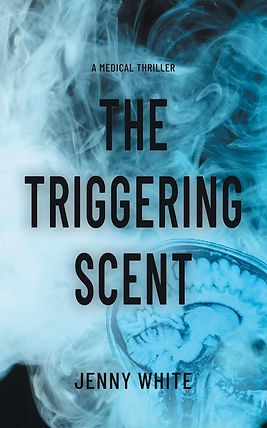
Jenny White's The Triggering Scent launches the Abbey Roberts RN series with gripping suspense rooted in authentic hospital drama. Written by a retired registered nurse and brain tumor survivor, the novel weaves realistic medical details into an emotionally intense narrative exploring resilience and ethical dilemmas. Abbey Roberts is a nurse protagonist navigating high-stakes situations with clinical competence and emotional complexity. For nurses reading this book, the appeal runs deeper than entertainment, Abbey's nursing knowledge and judgment drive the narrative forward.
The Triggering Scent also addresses what many nursing books avoid: the intersection of personal trauma and professional practice. The author's background as a brain tumor survivor infuses the narrative with authentic exploration of recovery, vulnerability, and the courage required to return to demanding work after facing mortality.
Nursing Memoirs and Resilience Stories
Nursing memoirs occupy essential territory in healthcare literature. They document what textbooks cannot: the emotional reality of nursing work, the moral injuries that accumulate across years of witnessing suffering, and the strategies that allow nurses to sustain their practice without burning out completely.
The best nursing memoirs combine brutal honesty with hope. They show readers that the struggle they experience is not personal failure but a predictable response to genuinely difficult work. This validation can be as therapeutic as any clinical intervention.
Mental Health, Burnout Recovery, and Professional Wellness Resources
The most important books about nursing and medicine in recent years address what the profession has long ignored: the psychological and emotional cost of nursing work. Burnout, moral injury, and compassion fatigue are not personal weaknesses; they're predictable outcomes of sustained exposure to suffering combined with systemic constraints on how much help nurses can actually provide.
Books addressing mental health and burnout recovery validate that struggling is normal. They explain the neurobiology and psychology of burnout so nurses understand what's happening to them. Critically, they offer evidence-informed strategies for recovery that go beyond generic self-care advice. The best resources combine personal narrative with practical tools.
Key TakeawayBurnout is not a sign that you're weak or unsuited for nursing. It's a sign that you're working in conditions that are genuinely difficult. Recovery requires both personal strategies and systemic change. Reading about others' recovery journeys reminds you that burnout is survivable and that your struggle has meaning.
Nursing Informatics and Technology in Modern Healthcare
The intersection of nursing and technology represents one of the profession's fastest-evolving frontiers. Books addressing nursing informatics prepare nurses for a healthcare landscape where technology increasingly mediates patient care. The best informatics resources don't assume technical expertise and address how nurses can influence technology design so that systems support rather than obstruct clinical work.
Canadian-specific informatics resources address how provincial health information systems connect, how privacy regulations shape data collection and sharing, and how telehealth fits into Canada's geographically dispersed healthcare landscape.
Financial Literacy and Career Planning for Nurses
Financial literacy, understanding compensation, benefits, tax implications, and long-term financial planning, rarely appears in nursing curricula despite its profound impact on nurses' lives. Books addressing financial literacy help nurses understand their compensation packages, negotiate salaries, plan for retirement, and make informed decisions about career moves.
Canadian-specific career resources address the unique opportunities and constraints of nursing in Canada. Provincial licensing variations, interprovincial mobility agreements, and regional nursing shortages or oversupply shape career decisions in ways that generic career planning books miss.
Book Category | Best For | Key Features |
Foundational Textbooks | Nursing students, new graduates | Comprehensive, Canadian-focused, clinical skills |
Medical-Surgical Nursing | Acute care nurses, clinical specialists | Evidence-based, detailed pathophysiology, case studies |
Pharmacology Guides | All nurses, medication administration | Drug mechanisms, Canadian drug scheduling, therapeutic goals |
Healthcare System Knowledge | Nurses seeking broader context | Evidence-informed practice, Canadian healthcare policy |
Medical Thrillers & Memoirs | All readers, especially nurses seeking narrative | Authentic clinical details, emotional depth, resilience |
Burnout & Wellness Resources | Struggling nurses, those in recovery | Validation, practical strategies, professional support |
Nursing Informatics | Nurses working with technology | EHR systems, clinical decision support, data literacy |
Financial Literacy & Career Planning | Nurses at career transitions | Compensation, benefits, long-term financial planning |

Building Your Personal Library: A Strategic Approach
The books you choose depend on your role, learning style, and what you're trying to accomplish. A nursing student needs different resources than an experienced ICU nurse. A nurse transitioning to management needs different guidance than one deepening clinical expertise.
Start with foundational texts if you're entering nursing education. Potter & Perry's Canadian Fundamentals provides the comprehensive foundation that supports everything else you'll learn. Add Lewis's Medical-Surgical Nursing if you're working in acute care settings. Add the pharmacology text if medication administration feels overwhelming.
As you progress, add resources addressing your specific practice area. Include at least one resource addressing wellness and resilience. These books aren't optional extras; they're essential infrastructure for sustaining a nursing career. Add narrative resources alongside clinical references. The clinical books teach you how to do nursing. The narrative books remind you why it matters.
According to research from the Canadian Nurses Association, continuing education and professional development significantly correlate with job satisfaction and retention.
The books you choose shape how you think about nursing and medicine. Textbooks teach clinical knowledge. Memoirs teach resilience. Thrillers teach you that nursing stories matter enough to be told. The most successful nurses build libraries that include all three.
Jenny White's medical thrillers, rooted in authentic nursing experience and brain tumor survival, offer the narrative perspective that clinical texts cannot provide. The Triggering Scent brings Abbey Roberts to life as a nurse protagonist whose clinical judgment and emotional complexity drive the narrative forward. For nurses seeking fiction that validates their experience while keeping them reading past midnight, this is the book that delivers both authenticity and suspense. Start with books matching your immediate needs, then expand into resources that deepen both your clinical knowledge and your understanding of why nursing work matters.
Frequently Asked Questions
What are the must-have nursing textbooks for Canadian healthcare professionals?
Potter & Perry's Canadian Fundamentals of Nursing and Lewis's Medical-Surgical Nursing in Canada are foundational texts for Canadian nurses. Potter & Perry covers over 50 nursing skills with step-by-step instructions and reflects Canadian standards and evidence-informed care. Lewis's focuses on assessment and management of clinical problems with over 800 full-colour illustrations. Both are available as eTextbooks and include online resources for exam preparation and clinical judgment development.
Are there pharmacology books specifically designed for Canadian nurses?
Yes. Pharmacology for Nurses: A Pathophysiological Approach, Canadian Edition, is tailored to Canadian drug regulations and healthcare context. This book links pharmacology to therapeutic goals and organizes drugs by body systems and diseases. It explores connections between anatomy, physiology, diseases, and drug interventions, making it ideal for understanding how medications work in clinical practice. The eTextbook version includes interactive features and practice questions.
How do I know if a medical thriller has accurate clinical details?
Look for author credentials, books written by healthcare professionals, especially retired nurses or physicians, typically reflect authentic hospital dynamics and medical terminology. Jenny White's The Triggering Scent, for example, is written by a retired registered nurse, ensuring realistic ICU settings and ethical dilemmas. Reader reviews often mention whether clinical details feel authentic or 'Hollywood.' Check testimonials specifically mentioning accurate medical information and realistic hospital procedures before purchasing.
What books about nursing and medicine support professional development beyond clinical skills?
Beyond textbooks, consider books on nursing research (Polit & Beck: Canadian Essentials of Nursing Research), nursing informatics, financial literacy for healthcare professionals, and mental health/burnout recovery resources. Nursing memoirs and professional development books address resilience, ethical dilemmas, and career planning. These resources help nurses grow as professionals and leaders, not just clinicians. Many are available through Canadian publishers and libraries.
This article was written using GrandRanker


Comments