



Real Life Medical Mysteries Behind Thrillers
Table of Contents
Why Real Medical Mysteries Make the Best Thrillers
Classic Medical Thrillers Rooted in Real Science
The Real Cases Behind the Classics
The Diagnostic Puzzle That Drives the Plot
Pandemics, Outbreaks, and the Contagion Blueprint
How to Write Authentic Medical Fiction
Medical Thriller Book Recommendations for Every Reader
Where to Find These Titles
The Evolution of Medical Technology in Thrillers
How Each Technology Rewrote the Mystery
Why Modern Tools Change the Plot, Not Just the Props
The Trade-Off Writers Have to Respect
Patient Perspective vs. Physician Perspective
Frequently Asked Questions
Last Updated: September 27, 2026
Why Real Medical Mysteries Make the Best Thrillers
Real medical mysteries work as thriller material because the human body already produces stakes that fiction struggles to match. A pathogen that spreads before symptoms appear, a diagnostic puzzle that defeats three specialists in a row, a clinical procedure that goes wrong in a way nobody anticipated: these are documented events, not screenwriter inventions. This guide from Jenny White examines the real-world medicine behind the genre and explains why authenticity separates a gripping medical thriller from a procedural drama that collapses under scrutiny.
The appeal comes down to two things readers rarely separate: fear and fascination. A contagion narrative frightens us because viral transmission is invisible. A misdiagnosis story fascinates us because we trust the system to catch what it misses.

Classic Medical Thrillers Rooted in Real Science
The best-known medical thrillers borrow their spines from genuine epidemiology and forensic pathology, not from imagination alone. Outbreak investigation, toxicology reports, and germ theory all appear in the genre's foundational works because authors lifted the mechanics directly from public health case files.
That borrowing is what gives these books their weight.
The Real Cases Behind the Classics
Most of the genre's landmark plots trace back to a documented event. The pattern is consistent enough that you can reverse-engineer the source material:
Contaminated water and cholera. John Snow's 1854 investigation of the Broad Street pump in London is the original outbreak-detection story: he mapped deaths street by street and traced them to a single water source before germ theory was accepted. Every "find the source before it spreads" plot descends from that map.
A disease that spreads before symptoms appear. Typhoid Mary, Mary Mallon, a cook who carried Salmonella typhi while feeling well, is the archetype of the asymptomatic carrier. She was quarantined on North Brother Island in New York for decades, and the ethical questions her case raised about liberty versus public protection still drive contagion fiction.
A pathogen that defeats treatment. The 1976 outbreak of a hemorrhagic fever in Zaire and Sudan, later named Ebola, produced fatality rates that terrified investigators and inspired a generation of viral thrillers. The clinical picture, rapid deterioration, bleeding, no proven cure at the time, is the template for the unstoppable-agent plot.
A drug that harms instead of heals. Thalidomide, prescribed in the late 1950s and early 1960s for morning sickness, caused severe limb defects in thousands of infants before it was withdrawn. The scandal reshaped drug regulation and gave medical fiction its most durable "the cure is the killer" premise.
A hospital as a vector. Legionnaires' disease was identified in 1976 after an outbreak at an American Legion convention in Philadelphia, traced to bacteria in the hotel's water system. It is the model for institutional-acquired infection plots.
A diagnostic puzzle with a hidden cause. The 1980s recognition of toxic shock syndrome, linked to high-absorbency tampons, showed how a common product could produce a rare and lethal syndrome, a favorite structure for medical mystery novels.
The Diagnostic Puzzle That Drives the Plot
A diagnostic puzzle is a clinical case in which symptoms point toward several possible conditions and the correct answer emerges only through systematic elimination. It is the engine of medical suspense fiction, and it mirrors how real physicians work through a differential diagnosis.
Key Takeaway Every classic medical thriller has a real-world ancestor. The strongest ones do not invent a pathogen or a syndrome; they borrow one, then change the names and raise the stakes.
Pandemics, Outbreaks, and the Contagion Blueprint
Contagion fiction follows a recognizable blueprint, and most of it traces back to real outbreak investigation. The sequence is consistent: an index case, a period of undetected transmission, a public health crisis, then the race to identify patient zero.
Real Responders
How to Write Authentic Medical Fiction
Writing authentic medical fiction starts with research, not vocabulary. Accurate terminology matters less than accurate behavior: how a nurse prioritizes, how a physician phrases uncertainty, how a hospital actually sounds at 3 a.m.
Read primary case studies rather than summaries of them
Ask a working clinician to read your draft for procedural errors
Let characters be wrong on purpose, then correct them the way real diagnosis works
Resist the urge to explain every term; let context carry the reader
Keep the ethical dilemma central, not decorative
Pro Tip The fastest credibility check is dialogue. Real clinicians hedge, interrupt, and use shorthand with each other. If every character speaks in complete, polished sentences, a healthcare reader will spot the seam immediately.
Medical Thriller Book Recommendations for Every Reader
Recommendations depend on what you want from the genre. Some readers come for biomedical ethics, others for forensic pathology, others for the slow burn of a medical mystery. A few titles cover the range well: Deepening the focus on clinical precision often leads to the gritty atmosphere found in noir mystery novels where the stakes of a diagnosis collide with the harsh realities of service.
Diagnosis by Lisa Sanders, for readers who want the physician's investigative process in detail
The Mystery of the Exploding Teeth, for historical medical oddities that double as plot fuel
Bellevue: Three Centuries of Medicine and Mayhem, for hospital history and institutional drama
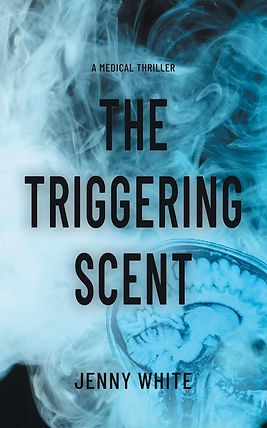
The Triggering Scent by Jenny White, for a fictionalized account grounded in real nursing experience
Where to Find These Titles
Access matters as much as selection. The Libby app from OverDrive connects a local library card to e-books and audiobooks at no cost, though availability depends on what each library carries. Audible's Canadian catalog suits listeners who prefer audio, with variable playback speeds that help with dense clinical passages.
The Evolution of Medical Technology in Thrillers
Medical technology has reshaped the genre more than most readers realize. Older thrillers leaned on what a single physician could observe with their own eyes. Modern ones lean on imaging, genomic sequencing, and electronic records, and that shift changed how plots work.
How Each Technology Rewrote the Mystery
Era | Dominant Tool | What It Solved | What It Broke for Writers |
Pre-1970s | Physical exam, X-ray, autopsy | Gross anatomy, fractures, obvious masses | Limited to what a doctor could see or feel |
1970s-1980s | CT scan, early ultrasound | Cross-sectional imaging of internal organs | Removed the "hidden tumor" reveal |
1990s-2000s | MRI, PCR, electronic records | Soft-tissue detail, rapid pathogen identification | Made the lone-genius diagnosis implausible |
2010s-present | Next-generation sequencing, AI-assisted imaging | Rare genetic causes, pattern detection at scale | Shifted suspense from detection to interpretation and consent |
Why Modern Tools Change the Plot, Not Just the Props
Genomic sequencing can identify a rare inherited disorder in days rather than years. In fiction, that compresses the diagnostic timeline, so the mystery has to move upstream, into questions of what to do with a result, who has a right to know it, and whether a finding should be disclosed to relatives who share the risk.
The Trade-Off Writers Have to Respect
Faster technology does not mean less mystery. It relocates the mystery. When the machine can answer what, the story has to ask whether we should have looked, who owns the answer, and what happens when the answer is wrong. That is where biomedical ethics becomes useful: questions about consent, resource allocation, and medical malpractice give a story conflict that no piece of equipment can resolve.
Pro Tip If your plot depends on a diagnosis being missed, check whether the technology of your story's era would actually have caught it. A 1990s setting can plausibly lose a result in a paper file; a 2020s setting cannot, unless you build the failure into the software, the workflow, or the human reading the screen.
Patient Perspective vs. Physician Perspective
Watch Out Writing only from the clinician's angle flattens the emotional stakes. A reader who has survived a serious illness will disengage if the patient exists purely as a case to be solved.
Jenny White's work sits deliberately in the overlap. Her protagonist, Abbey Roberts RN, navigates the ICU from inside it, and the resilience arc reflects a recovery journey the author has lived. Readers who want that balance can explore Jenny White's Abbey Roberts RN series and see how the two perspectives are handled together.
Perspective | What Drives Suspense | Common Pitfall |
Physician | Diagnostic uncertainty, time pressure | Cold, procedural tone |
Patient | Fear, loss of control, recovery | Melodrama over realism |
Both together | Ethical conflict between them | Unbalanced pacing |
Frequently Asked Questions
What is the biggest medical mystery of all time?
Historians often point to the 1918 influenza pandemic, which killed an estimated 50 million people before the virus was fully understood. Another contender is the mystery of Mary Mallon, known as Typhoid Mary, who spread typhoid fever while showing no symptoms. These cases became templates for medical suspense because they combine real pathogen behavior with the terrifying gap between what doctors knew and what they needed to know.
How do authors use real medical conditions to build suspense?
Writers borrow the structure of a diagnostic puzzle: symptoms appear, hypotheses fail, and the clock runs out. A real condition like toxicology poisoning or a rare disease gives the plot a believable spine. The suspense comes from the gap between the patient's experience and the physician's investigation. Authors who research clinical procedure and symptomatology can make every wrong diagnosis feel earned rather than contrived.
What makes a medical thriller feel authentic to readers?
Authenticity comes from small, specific details: how a nurse charts medication, the sound of a code blue, the way an ICU team communicates in shorthand. Readers who work in healthcare notice when hospital dynamics feel like Hollywood nonsense. Authors with clinical backgrounds, like retired RNs, tend to get the hierarchy, the fatigue, and the ethical gray areas right. That lived texture is what separates a procedural drama from a genuine medical thriller.
Are there real-life medical cases that sound like fiction?
Several. The 19th-century case of Phineas Gage, who survived a tamping iron through his skull, still shapes neuroscience. The 2012 outbreak of a rare fungal meningitis linked to contaminated steroid injections became a public health crisis that read like a procedural. Historical medical mysteries like these are documented in books such as The Mystery of the Exploding Teeth, which collects oddities that inspire fictionalized accounts.
Buy now


Comments