



How to Write a Medical Suspense Novel: 7-Step Guide
Table of Contents
Step 1: Build a Medical Thriller Framework That Hooks Readers
Step 2: How to Research Medical Procedures for Fiction Without a Medical Degree
Step 3: Generate Medical Thriller Plot Ideas Rooted in Real Clinical Dilemmas
Step 4: Writing Realistic Hospital Dialogue That Passes the Insider Test
Step 5: Control Information Disclosure to Build Suspense and Narrative Tension
Step 6: Weave Medical Ethics and Legal Dilemmas Into Your Plot
Step 7: Avoid Common Medical Thriller Tropes and Research Pitfalls
Frequently Asked Questions
Last Updated: September 26, 2026
Step 1: Build a Medical Thriller Framework That Hooks Readers
A medical suspense novel places believable characters inside clinical environments where the stakes are life and death, and where the science itself becomes a source of danger. The genre works best when readers trust the medicine enough to feel frightened by it.
The framework comes before the first chapter. Most writers who struggle with how to write a medical suspense novel have skipped this step: they have a great opening scene and no skeleton underneath it. Before you write a word, decide three things: the central medical threat (a pathogen, a misdiagnosis, a compromised drug trial), the protagonist and the personal wound that makes this crisis unbearable, and what the antagonist wants, and why the clinical setting gives them power.
That third question is where most drafts collapse.
Pro Tip Write your framework as a single-page document with three columns: threat, protagonist's wound, antagonist's use. If any column is empty, you do not have a novel yet. You have a premise.
Once the framework holds, every scene has a job: escalate the threat, deepen the wound, or tighten the antagonist's grip.
Step 2: How to Research Medical Procedures for Fiction Without a Medical Degree
Canadian Institute for Health Information, hospital care reports, wait times, and system-level data that show how departments actually operate under pressure.
Government of Canada health system resources, how care is organized, funded, and regulated, which matters when your plot involves transfers, consent, or mandatory reporting.
Provincial health ministry sites and their public reports, useful for regional differences in how care is delivered, which can become plot friction when a character moves between jurisdictions.
Publicly accessible clinical practice guidelines from national specialty bodies, these tell you what a competent clinician would actually do in a given scenario, which is the standard your characters should be held to.
Open-access journals and university medical library reading lists, nursing and residency program syllabi are often public and reveal the sequence in which clinicians learn procedures.
Load-bearing detail (a drug interaction, a dosage, a procedure step that drives the plot), verify against at least two independent sources, ideally one clinical guideline and one practitioner.
Atmospheric detail (equipment in a room, shift handover rhythm, the sound of a monitor), one credible source is enough, but flag it for a later read-through.
Unverifiable detail, write around it. "The nurse adjusted the line" is honest. Inventing a drug interaction you have not checked is not.
Lead with the scene, not the topic: "I have a character who is a night-shift ICU nurse and her patient deteriorates in under four minutes. What would she actually do first, and what would she say out loud?"
Ask about the boring parts. The most useful answers are about paperwork, hierarchy, and who has to sign off, that is where plot lives.
Offer to read the scene back and to credit them or not, their choice.
Never ask a clinician to design your plot. Ask them to fact-check a decision your character has already made.
Pro Tip Keep a "confidence log" alongside your manuscript. Every clinical claim gets a tag: verified, plausible, or invented-for-plot. When a beta reader with a clinical background flags something, you already know which pile it came from.
Know the limits of your research. You are not trying to pass a licensing exam. You are trying to write scenes a working clinician would not laugh at and a general reader would not get lost in. When those goals conflict, favor the reader, but never at the cost of a load-bearing detail. That is the line between authenticity and fantasy.

Step 3: Generate Medical Thriller Plot Ideas Rooted in Real Clinical Dilemmas
The strongest medical thriller plot ideas come from ethical pressure, not exotic diseases. A pathogen is only as frightening as the human decision it forces.
Triage conflict: two patients, one resource, a decision that haunts the protagonist
Record tampering: a chart altered to protect someone powerful
Trial pressure: a promising treatment rushed past proper review
Whistleblower isolation: a nurse who knows the truth and cannot prove it
Watch Out Avoid building your plot on a rare disease you found in a single article. If you cannot explain how the condition is diagnosed and treated in plain language, your plot will collapse the moment a knowledgeable reader asks a basic question.
Step 4: Writing Realistic Hospital Dialogue That Passes the Insider Test
Realistic hospital dialogue is short, clipped, and full of shorthand, and it almost never explains itself. That is exactly why it is hard to write.
A few practical rules:
Cut every line where a character explains something the other character already knows
Use interruptions during emergencies; people talk over each other under pressure
Let silence carry weight in bad-news conversations
Reserve full sentences for calm scenes and for characters who are deliberately formal
Step 5: Control Information Disclosure to Build Suspense and Narrative Tension
Controlling information disclosure means deciding, scene by scene, what the reader knows, what the protagonist knows, and when the gap between them closes. Suspense lives in that gap.
A simple structure to test your draft against:
Disclosure Stage | Reader Knows | Protagonist Knows | Effect |
Opening | Something is wrong | Symptoms only | Curiosity |
First third | A pattern exists | Isolated incident | Dread |
Midpoint | The pattern is deliberate | Suspects but cannot prove | Frustration |
Final third | Almost everything | Catches up under pressure | Urgency |
Step 6: Weave Medical Ethics and Legal Dilemmas Into Your Plot
Consent and capacity. When can a clinician treat without consent, and who decides when a patient lacks capacity? It depends on the province, the setting, and whether the situation is an emergency. A protagonist who overrides a refusal, even for good reasons, is exposed.
Confidentiality and disclosure. Exceptions are narrow and usually tied to imminent risk of serious harm or specific statutory reporting duties. A character who leaks a chart to a journalist is not a whistleblower in the legal sense, they are a privacy breach.
Mandatory reporting. Certain injuries, communicable diseases, and professional conduct must be reported. A character who delays a report to protect a colleague commits a distinct offense from the one they are hiding.
Professional accountability. Provincial colleges regulate physicians and nurses. A complaint can end a career even when no crime occurred, career death without criminal conviction is one of the genre's most underused stakes.
Institutional pressure. Hospital committees, ethics boards, and quality-review processes can bury a problem for months. A protagonist forcing a review fights a system designed to move slowly.
Framework | The choice | The cost if wrong |
Consent and capacity | Treat now or wait for a substitute decision-maker | Battery claim, college complaint, patient harm |
Confidentiality | Disclose to prevent harm or stay silent | Privacy breach, termination, loss of license |
Mandatory reporting | Report a colleague or protect them | Criminal exposure, professional discipline |
College complaint | Cooperate fully or retain counsel | Career-ending finding, even without charges |
Ethics board review | Escalate internally or go public | Institutional retaliation, loss of access |
Key Takeaway The best ethical dilemma in a medical thriller has no clean answer, and it is grounded in a rule the reader can look up. Specificity is what separates a plot from a sermon.
Avoid the two failure modes. The first is the cartoon villain who breaks every rule because they are evil; real misconduct is incremental, rationalized, and defended by people who believe they are protecting the system. The second is the noble protagonist who breaks every rule and is rewarded for it. In a regulated profession, rule-breaking has consequences, and a story that ignores them reads as fantasy. The middle ground, a character who breaks one rule for a defensible reason and then has to live inside the machinery that rule was holding up, is where the genre does its best work.
Step 7: Avoid Common Medical Thriller Tropes and Research Pitfalls
The lone genius doctor who solves everything while the entire hospital stands around uselessly
The evil corporation with no motive beyond profit and no internal logic
The miracle cure discovered in the final chapter that resolves every thread
The nurse as scenery, present only to hand the doctor a chart
The pathogen that behaves differently in every scene to suit the plot
Pro Tip Read your draft once with a single question in mind: could this scene happen in a hospital that runs on electronic records, staffing shortages, and committee approvals? If the answer is no, you are writing a fantasy with a stethoscope.
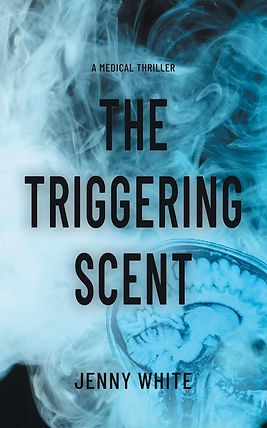
For readers who want to see the standard done well, Jenny White's The Triggering Scent pairs authentic clinical detail with the ethical pressure that makes the genre work.
Frequently Asked Questions
How do I balance medical accuracy with suspense in a medical suspense novel?
Use just enough clinical detail to make the scene believable, then pivot to the emotional stakes. A medication name or a vital sign reading grounds the reader, but the tension comes from what that information means for the character. Cut any explanation that does not change the character's decision or increase the danger.
What common mistakes should authors avoid when writing medical suspense?
The biggest mistakes are using medical jargon without context, letting a character recover unrealistically fast, and ignoring hospital hierarchy. Other traps include miracle cures, doctors who do every job themselves, and ethical dilemmas resolved too neatly. Each error pulls the reader out of the story and signals that the author did not do the work.
How can I make my hospital dialogue sound authentic?
Listen to how healthcare workers actually talk: clipped, task-focused, and full of shorthand. They rarely explain procedures to each other. Read memoirs by nurses and doctors, watch documentary footage, and have a clinician read your draft. The key is to keep the dialogue efficient and let subtext carry the emotion.
What are the essential elements of a medical thriller?
Every medical thriller needs a high-stakes medical crisis, a protagonist with clinical expertise, a ticking clock, and an ethical dilemma that forces hard choices. The setting should feel like a real hospital with its own rules, politics, and physical layout. Without those elements, the story becomes a generic thriller with a lab coat.
Buy now


Comments