



Gripping suspense novels for nurses: 9 must-read thrillers
Updated: Sep 16
Table of Contents
Why suspense novels for nurses resonate differently
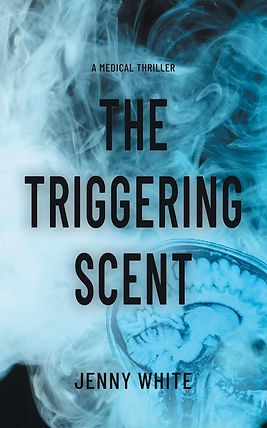
The Triggering Scent by Jenny White: A nurse's perspective on medical trauma
Medical thriller books for book clubs: Five standout picks
Human Remains by Melissa Yi
Ward D by Freida McFadden
The Deepest Fake by Daniel Kalla
Coma by Robin Cook
The Andromeda Strain by Michael Crichton
Books written by nurses for nurses: Authentic voices in the thriller genre
Realism versus fiction: What separates authentic medical thrillers from Hollywood drama
Trigger warnings and content notes for medical thriller readers
Finding your next gripping read: How to choose the right medical suspense novel
Conclusion
Last Updated: August 26, 2026
Why suspense novels for nurses resonate differently
Nurses live in a world most readers only see through Hollywood's distorted lens. When a nurse picks up a suspense novel, they're looking for someone who understands the weight of a shift, the impossible choices between protocol and compassion, and the quiet terror of knowing something is wrong but not being able to prove it.
This is where gripping suspense novels for nurses stand apart from generic medical thrillers. They're written by people who've held the IV, checked the monitors at 3 a.m., and watched patients slip away despite everything. Jenny White, a retired registered nurse and brain tumor survivor, brings that authenticity to her Abbey Roberts RN series (peer-reviewed research). Her debut, The Triggering Scent, doesn't just use medical details as window dressing, it builds the entire story on the ethical dilemmas and workplace realities that nurses face daily.
The best medical suspense for nurses balances clinical accuracy that doesn't feel like a textbook with emotional depth that doesn't slide into melodrama. A nurse reading fiction wants to recognize themselves in the protagonist's frustration, not roll their eyes at inaccuracies.

The Triggering Scent by Jenny White: A nurse's perspective on medical trauma
The Triggering Scent follows Abbey Roberts, a registered nurse grappling with the aftermath of a botched brain surgery. This isn't a simple revenge narrative, it's a psychological unraveling told from the perspective of someone who understands hospital hierarchies, medical liability, and the particular powerlessness of being a nurse in a system designed by doctors.
What makes this novel distinctive is its commitment to realism. White draws from her own experience as an RN to show how medical trauma actually works. Abbey's struggle isn't just physical recovery. It's the cognitive dissonance of knowing the surgeon made a mistake, understanding the legal and professional implications, and being trapped in a healthcare system that protects its own. Nurses recognize this dynamic instantly.
The psychological suspense builds quietly through Abbey's deteriorating mental state and her desperate search for answers. The ethical dimensions are woven throughout: questions about accountability, informed consent, and whether justice in medicine even exists. For nurses, these aren't abstract concerns, they're the tensions that define daily work.
The Abbey Roberts RN series positions Jenny White as a significant voice in medical suspense fiction. For nurses seeking suspense novels that don't insult their intelligence, White's work delivers authentic storytelling that keeps readers engaged.
Medical thriller books for book clubs: Five standout picks
Book clubs focused on medical thrillers face a particular challenge: finding novels that sustain discussion beyond plot mechanics. The best picks raise questions about ethics, institutional power, and the human cost of modern medicine.
Human Remains by Melissa Yi
Melissa Yi, a Canadian physician, brings forensic precision to medical mystery. Human Remains follows Dr. Hope Sze, a physician and medical investigator, as she uncovers suspicious deaths at a stem cell research lab in Ottawa. The procedural elements are grounded in real scientific methodology, giving readers genuine insight rather than Hollywood shortcuts.
What makes this novel work for book clubs is its dual structure: the investigation unfolds alongside deeper questions about research ethics, corporate pressure, and the moral compromises scientists face. Yi doesn't present easy answers. The tension between advancing medicine and protecting human subjects runs throughout, making it ideal for groups willing to dig into implications.
Ward D by Freida McFadden
Ward D takes psychological suspense into a locked psychiatric ward, where a medical student faces escalating terror as patients and staff mysteriously vanish. McFadden excels at building claustrophobic dread. The confined setting becomes a character itself, a place where normal rules don't apply and paranoia feels rational.
For book clubs, Ward D raises uncomfortable questions about psychiatric care, institutional vulnerability, and power dynamics between caregivers and patients. The psychological elements are layered enough to sustain discussion about unreliable narration, mental health stigma, and how systems designed to help can become systems that harm.
The Deepest Fake by Daniel Kalla
Daniel Kalla, an emergency room physician based in Vancouver, writes medical thrillers that integrate current technology with human vulnerabilities. The Deepest Fake explores artificial intelligence as a tool for crime, but the real tension comes from how healthcare professionals navigate systems they don't fully understand.
Kalla's background as an ER doctor means his pacing reflects actual emergency medicine. Book clubs appreciate his ability to make technical concepts accessible without oversimplifying. The novel raises legitimate questions about AI in healthcare: how do we verify authenticity when deepfakes become indistinguishable from reality?
Coma by Robin Cook
Robin Cook's Coma, published in 1977, remains remarkably prescient about institutional corruption and patient safety (loc.gov). A young medical student uncovers a conspiracy of patients falling into mysterious comas during routine surgeries, leading her into conflict with powerful forces determined to keep her quiet.
For book clubs, Coma offers a masterclass in building institutional suspense. Cook shows how systems designed to protect patients can become mechanisms of exploitation. The novel raises questions that remain urgent: Who benefits when patients are harmed? How do whistleblowers survive in hierarchical institutions?
The Andromeda Strain by Michael Crichton
Michael Crichton's The Andromeda Strain is science fiction structured like a technical manual, giving it unsettling plausibility. A team of scientists and medical professionals races to contain a deadly, mutating extraterrestrial microorganism.
What makes this work for book clubs is its focus on decision-making under incomplete information. The characters must act despite uncertainty, knowing every choice carries consequences. This resonates with healthcare professionals who face similar pressures in real time. The suspense comes from watching competent people navigate impossible situations.
Books written by nurses for nurses: Authentic voices in the thriller genre
The rise of nurse-authored medical thrillers represents a significant shift in how healthcare is portrayed in popular fiction. When nurses write about hospitals, the details ring true because they come from lived experience rather than research.
Jenny White exemplifies this authenticity. As a retired registered nurse, she understands the rhythms of hospital work, the night shifts, the impossible patient loads, and the constant navigation between what's medically necessary and what's administratively possible (bls.gov). Her Abbey Roberts RN series puts a nurse protagonist at the center, which fundamentally changes how the story unfolds. Abbey doesn't defer to doctors or accept institutional explanations. She questions, investigates, and pushes back because that's what nurses do when something doesn't add up.
This perspective matters because it challenges the traditional medical thriller hierarchy where doctors are protagonists and nurses are supporting characters. Nurse-authored suspense novels flip that dynamic. The nurse becomes the investigator, the person with moral clarity, and the character readers root for. This reflects how healthcare actually works: nurses are often the first to notice problems, spend the most time with patients, and know when something is wrong. art for book lovers.
For healthcare professionals reading fiction, this distinction is crucial. Nurse-authored thrillers validate the complexity of nursing work and show that the tensions, frustrations, and moral questions nurses navigate daily are worth exploring at length.
Realism versus fiction: What separates authentic medical thrillers from Hollywood drama
The gap between how medicine actually works and how it appears in fiction is enormous. Real hospitals don't have dramatic code blue scenes with orchestral music. They have quiet, coordinated chaos where people follow protocols and communicate in shorthand. Real ethical dilemmas don't have clear answers, they involve competing goods and impossible choices.
Authentic medical thrillers respect this complexity. Jenny White's The Triggering Scent demonstrates this approach. The suspense comes not from invented medical procedures but from Abbey's genuine struggle to understand what happened to her and navigate a system designed to protect the surgeon rather than the patient.
Compare this to Hollywood medical thrillers, which often invent procedures, exaggerate timelines, and simplify institutional dynamics for narrative convenience. A real nurse reading these novels will notice inaccuracies immediately. The medical details become obstacles to suspension of disbelief rather than supports for it.
The best medical suspense novels for nurses distinguish themselves by getting the details right and using those details to deepen the story. Daniel Kalla's background as an ER physician means his emergency medicine scenes feel authentic. Melissa Yi's forensic knowledge informs her procedural plotting. These writers use medical expertise as the foundation for their narratives, not as decoration.
Trigger warnings and content notes for medical thriller readers
Medical thrillers often explore trauma, injury, and the aftermath of medical failure. For survivors of medical trauma, brain injuries, or cancer, these narratives can trigger genuine distress.
Jenny White's The Triggering Scent includes content related to brain surgery, medical trauma, and the psychological aftermath of medical error. The novel explores these themes with emotional depth, but that doesn't mean the content is easy to read.
Ward D contains psychiatric themes and descriptions of mental health crises. For readers with lived experience of psychiatric hospitalization, the novel's claustrophobic atmosphere may be distressing.
The Andromeda Strain includes descriptions of biological contamination and the physical effects of unknown pathogens. For readers with health anxiety, the procedural descriptions may trigger significant distress.
Coma explores patient vulnerability and institutional corruption. The novel's central premise, patients being harmed within a hospital, can be triggering for people who've experienced medical malpractice.
When selecting medical thrillers, consider your own relationship to medical trauma. Many of these novels explore recovery and resilience alongside darker elements, which can be meaningful for survivors. But meaningful doesn't mean easy. Don't hesitate to put a book down if it's not serving you.
Finding your next gripping read: How to choose the right medical suspense novel
Selecting a medical thriller that matches your interests requires understanding what you actually want from the experience. Are you seeking pure plot-driven suspense? Character-driven psychological exploration? Procedural accuracy? Different novels deliver different things.

Start by considering your tolerance for medical detail. Some readers want novels where every procedure is accurately described. Others find excessive technical detail distracting. Jenny White's work leans toward emotional authenticity over procedural exhaustiveness. Robin Cook's novels include more technical detail.
Next, think about what kind of protagonist engages you. Do you want a nurse at the center of the story? Nurse protagonists offer perspectives on institutional hierarchies and patient care that other characters can't provide.
Consider the setting. Hospital-based thrillers create claustrophobic tension. Community-based or research-focused novels offer different dynamics. Choose settings that align with what interests you.
Evaluate how the novel handles trauma. Some medical thrillers treat trauma as plot device. Others explore recovery with genuine emotional depth. Read reviews or sample chapters to understand the emotional tone before committing.
Finally, consider your reading goals. Are you looking for an escape, or are you seeking stories that challenge you intellectually? Book club selections benefit from novels that sustain discussion. Solo reading might prioritize pure narrative satisfaction.
Finding your next gripping suspense novel for nurses doesn't require endless browsing. Start with Jenny White's The Triggering Scent if you want a nurse-authored medical thriller that combines authentic hospital dynamics with genuine emotional depth. Her background as a retired registered nurse and brain tumor survivor means the novel respects both the clinical realities and the human cost of medical trauma. From there, explore the recommendations above based on what aspects of medical suspense most engage you.
=== FAQ ANSWERS (audit these too, same rules) ===
[1] Q: What makes gripping suspense novels for nurses different from other medical thrillers? A: Novels featuring nurse protagonists and written by healthcare professionals offer authentic clinical details and realistic workplace dynamics that ring true to those in the profession. They explore ethical dilemmas, patient safety concerns, and the emotional toll of nursing work in ways that generic medical thrillers often miss. Readers, especially nurses themselves, appreciate the accuracy of hospital settings, night shift realities, and the complex relationships between healthcare providers. This authenticity creates a deeper emotional connection and a more credible sense of suspense.
[2] Q: Are there medical thriller books for book clubs that work well for healthcare professionals? A: Yes. Books like Human Remains by Melissa Yi, Ward D by Freida McFadden, and The Deepest Fake by Daniel Kalla are excellent choices for healthcare professional book clubs because they balance gripping narratives with genuine medical accuracy. These novels spark meaningful discussions about ethical dilemmas, institutional failures, and the human cost of medical practice. They're substantial enough to sustain group conversation and specific enough in their clinical details that nurses and doctors find them credible. Many nursing associations and hospital staff groups use medical thriller books for book clubs as a way to explore professional challenges through fiction.
[3] Q: How do I know if a medical suspense novel will be triggering for a cancer survivor or someone with trauma history? A: Check the content warnings and author's notes before purchasing. Books written by nurses for nurses often include trigger warnings about medical trauma, surgical procedures, or specific diagnoses. The Triggering Scent, for example, deals with brain surgery complications and recovery; the author's nursing background and personal experience as a brain tumor survivor inform how sensitively these themes are handled. Read reviews from readers with similar backgrounds, and don't hesitate to contact the publisher or author directly if you need clarification. Many authors are transparent about whether their work focuses on resilience and recovery versus trauma exploitation.
[4] Q: What should I look for when choosing a gripping suspense novel if I work in healthcare? A: Look for books where the author has genuine medical credentials or nursing experience, as this ensures clinical accuracy and authentic workplace dynamics. Check whether the hospital settings, patient care protocols, and professional relationships feel realistic rather than dramatized. Read the synopsis carefully to understand whether the suspense stems from procedural investigation, psychological tension, or institutional corruption, each creates a different reading experience. Consider the protagonist's role: nurse-led stories often feel more grounded than those centered on brilliant surgeons or detectives. Finally, read reviews from other healthcare professionals to gauge whether the book respects the profession or relies on tired stereotypes.
Frequently Asked Questions
Q: What makes gripping suspense novels for nurses different from other medical thrillers?
A: Novels featuring nurse protagonists and written by healthcare professionals offer authentic clinical details and realistic workplace dynamics that ring true to those in the profession. They explore ethical dilemmas, patient safety concerns, and the emotional toll of nursing work in ways that generic medical thrillers often miss. Readers, especially nurses themselves, appreciate the accuracy of hospital settings, night shift realities, and the complex relationships between healthcare providers. This authenticity creates a deeper emotional connection and a more credible sense of suspense.
Q: Are there medical thriller books for book clubs that work well for healthcare professionals?
A: Yes. Books like Human Remains by Melissa Yi, Ward D by Freida McFadden, and The Deepest Fake by Daniel Kalla are excellent choices for healthcare professional book clubs because they balance gripping narratives with genuine medical accuracy. These novels spark meaningful discussions about ethical dilemmas, institutional failures, and the human cost of medical practice. They're substantial enough to sustain group conversation and specific enough in their clinical details that nurses and doctors find them credible. Many nursing associations and hospital staff groups use medical thriller books for book clubs as a way to explore professional challenges through fiction.
Q: How do I know if a medical suspense novel will be triggering for a cancer survivor or someone with trauma history?
A: Check the content warnings and author's notes before purchasing. Books written by nurses for nurses often include trigger warnings about medical trauma, surgical procedures, or specific diagnoses. The Triggering Scent, for example, deals with brain surgery complications and recovery; the author's nursing background and personal experience as a brain tumor survivor inform how sensitively these themes are handled. Read reviews from readers with similar backgrounds, and don't hesitate to contact the publisher or author directly if you need clarification. Many authors are transparent about whether their work focuses on resilience and recovery versus trauma exploitation.
Q: What should I look for when choosing a gripping suspense novel if I work in healthcare?
A: Look for books where the author has genuine medical credentials or nursing experience, as this ensures clinical accuracy and authentic workplace dynamics. Check whether the hospital settings, patient care protocols, and professional relationships feel realistic rather than dramatized. Read the synopsis carefully to understand whether the suspense stems from procedural investigation, psychological tension, or institutional corruption, each creates a different reading experience. Consider the protagonist's role: nurse-led stories often feel more grounded than those centered on brilliant surgeons or detectives. Finally, read reviews from other healthcare professionals to gauge whether the book respects the profession or relies on tired stereotypes.
Buy now
This article was written using GrandRanker


Comments