



Common Medical Thriller Tropes to Avoid: A Writer's Guide
Table of Contents
Why Medical Thriller Tropes Wear Thin
The Most Overused Medical Thriller Tropes to Avoid
The Dead Girl and Dead Girlfriend Tropes
The Brilliant But Unhinged Doctor
Medical Thriller Plot Holes to Avoid
Where Plot Holes Cluster by Setting
A Quick Accuracy Pass
How to Write a Medical Thriller That Holds Up
Character Motivation and Consistency
Villain Identity and Reveal Timing
Building Realistic Medical Scenes in Fiction
A Research Workflow That Scales
Consulting Clinicians Without Wasting Their Time
Ethical Representation of Patients and Clinicians
Medical Thriller Examples That Get It Right
Frequently Asked Questions
Last Updated: October 20, 2026
Why Medical Thriller Tropes Wear Thin
Readers pick up a medical thriller to feel the floor tilt. When a familiar trope does the tilting, the floor stays flat.
Medical thrillers borrow the authority of real hospitals, clinicians, and consequences. When the medicine is wrong, the suspense collapses with it.
Below, we break down the common medical thriller tropes to avoid, why each feels stale, and a working alternative, plus a checklist to run against your draft.
Key Takeaway The trope is not the problem. The problem is the trope used as a shortcut instead of a decision. Every cliché on this list can work if you earn it.
The Most Overused Medical Thriller Tropes to Avoid
Some tropes are so worn down that readers spot them from the blurb. Here are the ones flagged most often, and what to put in their place.
Reedsy
The Dead Girl and Dead Girlfriend Tropes
A woman dies in the opening act to give the male lead something to feel.
This is the dead girl trope, the most criticized pattern in modern suspense.
The fix is not to remove the death. It is to give the dead person a life first.
Give her a decision she made that the plot cannot undo
Let her death create a problem, not just a mood
Show at least one scene where she wants something for herself
If the story only works because she is gone, she was never a character.
The Brilliant But Unhinged Doctor
The genius surgeon with a God complex is a staple running on fumes.
The unhinged doctor trope also creates a logic problem. If the lead is unstable from chapter one, every mistake is expected. There is no tension in watching someone predictable fall apart.
Try a different pressure source:
A competent clinician forced into an ethical corner by a supervisor
A doctor whose judgment is sound but whose evidence is not believed
A team that is right for the wrong reasons
Competence under pressure is more interesting than chaos under pressure. It also gives your reveal somewhere to land.
Watch Out If your only source of conflict is a doctor behaving badly, you have written a character flaw, not a plot. Readers will finish the book but they will not recommend it.
Medical Thriller Plot Holes to Avoid
Medical thriller plot holes to avoid are the errors that pull readers out of the story and make them stop trusting the author. They are rarely about obscure science. Most are about time, authority, and consequence, and they cluster in predictable places.
Four show up again and again:
The impossible timeline. A patient has major surgery and is walking the ward the next morning. Recovery takes time, and readers who have been through it know exactly how much. Build the constraint into the plot: a discharge that comes too early, a return to work that is medically premature, a wound that reopens because someone pushed.
The silent hospital. A critical event happens and no one escalates it. In practice, a deteriorating patient triggers a chain of calls, notes, and handovers. Show the chain, or show exactly why it broke, a pager left on a desk, a handover that dropped a detail, a nurse who was right and overruled.
The solo investigator. A nurse or resident runs a private investigation across three departments with no one noticing. Hospitals are dense with people, someone always notices. If your lead must go it alone, give a credible reason the system looks the other way: a conflict of interest, a supervisor protecting a colleague, an altered record.
The missing consequence. A clinician makes an error and nothing follows. No incident report, no review, no colleague who saw it. In a real care setting, errors leave a trail. Use that trail as plot: the review meeting, the colleague who remembers differently, the note that does not match the chart.
There is a fifth, subtler one: the missing authority. A character performs a procedure, orders a test, or discloses a record they would not be permitted to touch.
Where Plot Holes Cluster by Setting
A systematic accuracy pass beats a general one. Check your draft against the failure modes specific to your setting:
Emergency and trauma. Triage order, who leads the resuscitation, and how a patient moves from ambulance to bay to scanner to operating room. The common error is compression: everything happens in one room with one team.
Intensive care. Ventilation, sedation, and family communication. The common error is a patient stable enough to talk at length but sick enough to be in intensive care.
Ward and surgical recovery. Handovers, medication rounds, and discharge planning. The common error is a clinician with unlimited time and no other patients.
Pro Tip Write a one-page timeline of your story in hours, not chapters. Most medical plot holes are calendar errors wearing a lab coat. Then write a second page listing who has authority over each decision your lead makes. The gaps between the two pages are your rewrite list. ::: Refining these logistical constraints often reveals that more robust plot structuring techniques are essential to maintaining the tension required for a compelling medical mystery. A Quick Accuracy Pass Before you send the draft anywhere, run these checks: Time. Does every recovery, test result, and shift change fit a plausible clock? Authority. Could this character legally and professionally do this thing? Witnesses. Who else is in the room, and what do they do about it? If a scene fails two or more of these, it is not a detail problem. It is a plot problem, and it will read that way to the clinicians in your audience. How to Write a Medical Thriller That Holds Up How to write a medical thriller that holds up comes down to one habit: decide the medicine before the suspense. Start with the constraint: a drug interaction, a shift handover, a consent requirement, a supply delay. Then build the pressure on top of it. Buy now → A practical workflow: Choose the care setting first. Emergency, intensive care, and a small clinic each carry different rules and different failure modes. Name the decision your lead must make. Not the crime. The clinical call. List who has authority. Who can say yes, who can say no, and who can override. This order matters. Writers who build the plot first and check the medicine later almost always end up with an implausible scene. Character Motivation and Consistency A villain who is evil because the plot needs one is a plot hole with a pulse. Readers accept a killer if they understand what the killer wants and why this is the only way to get it. Give your antagonist a goal that makes sense from the inside. Then let the method be the disturbing part. That is where suspense lives. Villain Identity and Reveal Timing Reveal timing is a craft decision, not a twist decision. A reveal lands when the reader has enough information to feel foolish for missing it, and not a page sooner. Test your reveal with this question: could a careful reader have guessed it from clues you planted honestly? If yes, the reveal rewards attention. If no, it feels like a trick. Building Realistic Medical Scenes in Fiction Realistic medical scenes in fiction come from small, specific details, not jargon. Readers don't need a full clinical explanation; they need to believe the room. The strongest opportunity in this genre is a repeatable research and consultation workflow, most writing advice stops at "do your research" and never says how. A writer at a desk covered with medical reference books and a laptop, cross-checking notes against a printed hospital protocol, warm lamp light A Research Workflow That Scales Start with the scene's job, not the medicine. Decide what it must accomplish for the plot, then find the smallest true detail that makes it credible. Name the setting and the role. A rural clinic, a teaching hospital, and a public health unit each carry different rules, different equipment, and different failure modes. Pick one and stay inside its logic. Identify the decision. Every medical scene turns on a call: treat or wait, report or conceal, escalate or handle it quietly. The call is the scene. Check the constraint. Find the real limit, a drug interaction, a consent requirement, a supply delay, a shift handover, and build the pressure on top of it. Verify the sequence. Write the steps in order, then check the order against a credible source. Most implausibility lives in sequence, not in vocabulary. Cut the lecture. Clinicians under pressure speak in short, clipped phrases. They do not explain their own specialty to each other. Consulting Clinicians Without Wasting Their Time A short, specific request gets a useful answer. A vague one gets a polite no. Ask about one scene at a time. "Would a charge nurse be allowed to do X in this situation?" beats "Can you check my medical accuracy?" Bring your draft, not your premise. Clinicians correct text faster than they imagine plots. Ask what would go wrong. Practitioners are generous with failure modes, and failure modes are where your suspense lives. Ethical Representation of Patients and Clinicians Accuracy is not only technical. How you represent people matters as much as how you represent procedures. Consent and confidentiality. Characters should handle patient information the way real clinicians must. A record left open, a name spoken in a corridor, a case discussed in an elevator, these are real breaches, and readers who work in care will notice. Disability and mental illness. Avoid using a diagnosis as a shorthand for danger or instability. If a character has a condition, give them a life beyond it. Power imbalances. The supervisor who overrules, the patient who cannot refuse, the trainee who cannot speak up, these are rich sources of tension and easy places to slip into stereotype. Specificity beats accuracy in the reader's mind. A single correct detail about a handover does more work than a paragraph of correct terminology, and a single ethical misstep does more damage than a dozen technical ones.
Get the small things right and readers will forgive the big set pieces. Get the small things wrong and no amount of action will save the scene.
Medical Thriller Examples That Get It Right
The best medical thriller examples share one quality: the medicine and the mystery are the same problem.
Look at what separates a strong medical thriller from a weak one:
Element | Weak Version | Strong Version |
The diagnosis | Arrives to save the hero | Creates a new conflict |
The clinician | Brilliant and unstable | Competent and cornered |
The timeline | Compressed to fit the plot | Drives the tension |
The error | Forgotten by chapter end | Leaves a trail |
The reveal | Surprises the reader | Rewards attention |
Abbey Roberts is a registered nurse, and the clinical detail comes from a career spent in it, not a search engine.
That is the difference readers notice.
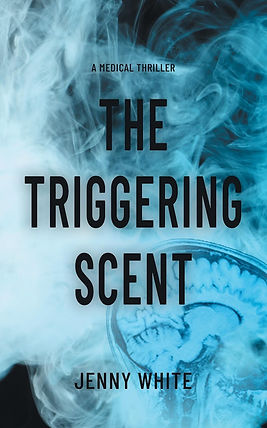
Start the Abbey Roberts RN series with The Triggering Scent and see what a medical thriller feels like when the medicine is right.
Frequently Asked Questions
What are the most overused tropes in medical thrillers?
The dead girlfriend trope, the lone genius doctor who ignores every protocol, the villain in a lab coat, and the amnesia-driven reveal all show up again and again. Each one signals to readers that the medicine is decoration rather than plot. The fix is usually to swap the trope for a system failure: a medication error, a handoff that drops critical information, or a staffing gap. Those feel fresher because they come from how hospitals actually break down.
How do you write realistic medical scenes in a thriller?
Anchor every scene in a specific care setting, then name the people in the room and what each one is responsible for. A trauma bay, an ICU step-down unit, and a rural clinic run on different timelines and different authority. Get the sequence right: who assesses first, who calls the code, who documents. Small details like a medication double-check or a nurse escalating to a charge nurse do more for credibility than dramatic jargon.
What are common plot holes to avoid in a medical thriller?
Watch for characters who recover from lethal injuries on a convenient timeline, diagnoses made without tests, and hospital security that appears only when the plot needs it. A patient who codes and is back on their feet in a day breaks trust fast. So does an investigator who walks into a restricted ward with no badge. Track your timeline on a calendar and your character's access on a simple list before you draft.
How can a writer portray doctors and nurses realistically?
Show them as people with shifts, fatigue, and competing loyalties rather than saints or villains. Nurses notice changes first and escalate; doctors carry liability and often make decisions with incomplete information. Let a clinician be wrong for a human reason, like rushing a handoff at shift change. Readers who work in healthcare will spot authenticity in those small moments, and readers who don't will still feel the stakes.
Buy now


Comments