



Gripping Medical Thrillers With Female Leads: 7 Must-Reads
Table of Contents
Why Medical Thrillers With Female Leads Are So Gripping
1. The Triggering Scent by Jenny White: An RN's Debut
2. Medical Suspense Novels With Female Leads Beyond the ER
3. Medical Psychological Thriller Books That Get Inside Your Head
4. Nurse Protagonist Thriller Novels: A Different Kind of Hero
5. Hospital Mystery Novels: When the Setting Is the Suspect
6. How to Choose Your Next Medical Thriller
Conclusion: Finding Your Next Gripping Medical Thriller
Frequently Asked Questions
Last Updated: October 4, 2026
Why Medical Thrillers With Female Leads Are So Gripping
Medical thrillers with female leads combine two of fiction's most reliable engines: the pressure of clinical decision-making and a protagonist who has been underestimated. This guide from Jenny White offers practical advice on choosing the right medical thriller for your mood.
The genre's core appeal is simple. Medicine gives a writer stakes that feel real, because they are. A wrong dosage, a missed diagnosis, a chart that does not add up: these are everyday dangers dressed in ordinary paperwork.
Female leads change how those stakes land. A woman doctor, an anesthesiologist, a nurse, or a medical researcher often has to fight for credibility before she can fight for a patient. That double burden is what makes the suspense feel personal rather than procedural.
Below, we break down what separates a good medical suspense novel from a forgettable one.
1. The Triggering Scent by Jenny White: An RN's Debut
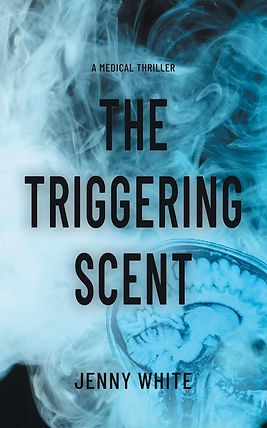
Our top pick is The Triggering Scent, the debut novel from Jenny White and the first book in the Abbey Roberts RN series.
Jenny White is a retired registered nurse and a brain tumor survivor. That background shows on every page.
What sets it apart from most medical thrillers is the protagonist's profession. Abbey is a nurse, not a surgeon. That shift matters.
Readers who want the emotional side of recovery handled with care will find it here. The book explores resilience without turning trauma into spectacle, which is a harder balance than it sounds.

Pro Tip If you read medical thrillers for the clinical details, pay attention to how a nurse protagonist notices things a doctor would miss: medication timing, family behavior at shift change, the patient who is quieter than yesterday. That observational layer is where nurse-led medical suspense novels do their best work.
2. Medical Suspense Novels With Female Leads Beyond the ER
Not every female lead in this genre wears a white coat, and that is a feature, not a bug. Medical suspense novels with female leads have expanded well past the surgeon-as-hero template, and the range is worth exploring.
Consider the different professional lenses available:
Forensic pathologists, who work with the dead and read a body like a document
Medical examiners and coroners, who sit at the intersection of medicine and law
Epidemiologists and researchers, who chase a pathogen instead of a patient
Pharmacists and toxicologists, who understand exactly how a substance behaves
Nurses and paramedics, who see the whole system from the ground floor
Each role changes what the protagonist can plausibly know and do. A researcher cannot perform surgery, but she can notice a pattern across cases that no single clinician would see. A pathologist cannot save the patient in front of her, but she can prove what happened to the one on her table.
That variety is also why the subgenre keeps producing fresh stories. The setting does not have to be a hospital ward. It can be a lab, a morgue, a rural clinic, or a research facility where the science itself is the danger.
3. Medical Psychological Thriller Books That Get Inside Your Head
Medical psychological thriller books trade the chase for the slow burn. Instead of a killer in the corridor, the tension comes from memory, perception, and the question of whether the narrator can trust her own mind.
This is where the genre overlaps most with psychological suspense. A protagonist recovering from illness or injury may doubt what she remembers. A clinician with a personal stake in a case may not be objective.
The best of these books use medical science honestly. Memory is not a recording (pubmed.ncbi.nlm.nih.gov). Pain changes attention (pubmed.ncbi.nlm.nih.gov). Medication can blur the edges of an ordinary day. When a writer gets those details right, the unease feels earned rather than manufactured.
If you like your suspense to build through doubt rather than action, start here. If you want a faster pulse, the hospital mystery novels in the next section will suit you better.
4. Nurse Protagonist Thriller Novels: A Different Kind of Hero
Nurse protagonist thriller novels work because nurses occupy a position no other medical professional does. They are present for nearly everything and in charge of very little, which is a fascinating place to put a hero.
Think about what a nurse actually has access to:
The medication log, where a discrepancy is a clue
The handoff report, where stories change between shifts
The family in the waiting room, who knows more than they say
The patient who talks freely at 3 a.m. and not at noon
A nurse protagonist cannot simply order a test or demand an autopsy. She has to work through channels, persuade people with more authority, and sometimes break the rules to protect a patient. That constraint creates better suspense than unlimited power ever could.
To make this concrete, here are nurse-led and nurse-adjacent medical thrillers worth verifying against your own reading preferences:
The Nurse by Claire Allan, a psychological suspense novel built around a nurse's private knowledge of a patient's family; strong on unreliable perception and domestic tension rather than hospital procedure.
The Good Nurse by Charles Graeber, narrative nonfiction about nurse Charles Cullen, useful as a reality check on how quietly a hospital can absorb harm; read it as context, not as a female-led novel.
The Shift by Loretta Nyhan and other recent nurse-authored suspense, check the protagonist's role before buying, since some nurse-led titles lean romance or women's fiction rather than thriller.
The Triggering Scent by Jenny White, the Abbey Roberts RN series opener, covered in Section 1, remains the strongest verified example of a nurse protagonist carrying a full medical thriller plot.
A practical warning: nurse-led thrillers are a small slice of the market, and some titles marketed as "nurse thrillers" actually feature a doctor or detective as the lead. Before you buy, check the publisher's description for the protagonist's job title, not just the cover copy.
Watch Out A common mistake in nurse-led thrillers is making the protagonist a doctor in disguise, giving her authority she would not realistically hold. When a nurse suddenly runs the investigation with no institutional friction, the story loses the very tension that made the premise interesting.
If you want to broaden beyond nurses entirely, the next section looks at how hospitals themselves function as the suspect.
5. Hospital Mystery Novels: When the Setting Is the Suspect
Hospital mystery novels treat the institution itself as a character, and often as the prime suspect. That is the smartest move the subgenre makes, because a large hospital is genuinely unsettling when you look at it closely. Mastering the architecture of these sterile corridors requires a deep understanding of mystery novel craft that transforms mere setting into a source of genuine dread.
A hospital is a place where:
Access is controlled by badges, codes, and shift schedules
Records can be altered by anyone with the right login
Strangers are trusted with intimate care within minutes
Exhaustion is normal and mistakes are quietly absorbed
Those conditions are perfect for a crime investigation. A suspicious death in a hospital does not require a locked room, because the whole building is already a maze of restricted areas and plausible explanations.
The strongest hospital mystery novels also ask an uncomfortable question: what does the institution protect first, its patients or its reputation? That tension drives plots far better than a generic villain, and it is where medical suspense novels with female leads often do their sharpest work.
6. How to Choose Your Next Medical Thriller
Choosing well comes down to matching the book to what you actually want from it. Medical thrillers vary widely in pace, intensity, and how much clinical detail they carry, so a little self-knowledge saves a lot of abandoned reading.
Use this quick framework:
If you want... | Look for... | Best fit from this list |
A nurse's-eye view of hospital life | A lead who works the floor, not the OR | The Triggering Scent |
A lead outside medicine entirely | Researchers, pathologists, examiners | Section 2 picks |
Slow-burn psychological tension | Unreliable memory, personal stakes | Medical psychological thrillers |
A fast, procedural investigation | Crime and detective elements | Hospital mystery novels |
Emotional weight with the suspense | Resilience handled with care | The Triggering Scent |
Label each candidate before you commit. Four labels do most of the work:
Pace: slow-burn, steady, or fast. Psychological medical thrillers tend to be slow-burn; hospital mysteries and outbreak novels tend to be fast.
Suspense type: crime-driven (a death to solve), psychological (a mind to doubt), or science-driven (a pathogen or technology to contain).
Medical-science detail: light (setting only), moderate (procedures and terminology), or heavy (clinical accuracy is part of the appeal).
Intensity: note themes such as medical harm, surgery, illness, child patients, and violence before you start.
Content notes matter more here than in most genres. Medical thrillers routinely include hospital deaths, graphic procedures, terminal illness, and harm to patients.
Check series and publication context. Some titles are standalones; others are mid-series and assume you know the recurring cast. The Triggering Scent is the first book in the Abbey Roberts RN series, so it is a safe entry point.
Match the lead's profession to your interest. If you want the operating theater, look for surgeon or anesthesiologist leads. If you want the morgue, look for pathologists and medical examiners. If you want the ward, look for nurses and paramedics.
Key Takeaway The single fastest way to pick well is to decide which role you want to follow, nurse, doctor, researcher, or detective, and then check pace, suspense type, and content notes before you buy. That combination tells you more than any bestseller list.
If you are weighing a debut against a familiar name, consider what you are actually paying for. Established authors deliver consistency. A debut from a retired RN who has stood at the bedside delivers authenticity, and The Triggering Scent is a good example of that trade.
Conclusion: Finding Your Next Gripping Medical Thriller
The hardest part of this genre is not finding a book. It is finding one where the medicine rings true and the protagonist feels like someone who has actually clocked a night shift. That is the gap Jenny White writes into.
Her background as a retired registered nurse and brain tumor survivor shapes every page of The Triggering Scent, the first entry in the Abbey Roberts RN series. You get an authentic hospital setting, ethical dilemmas with no easy answer, and a lead whose resilience carries the story rather than decorating it.
If you want gripping medical thrillers with female leads that respect both the science and the reader, start with Abbey Roberts. Buy now and meet a nurse protagonist worth following.
Frequently Asked Questions
What makes a medical thriller gripping?
A gripping medical thriller combines authentic clinical detail with high-stakes personal danger. The best ones put a competent professional in a situation where their expertise matters but also makes them a target. Suspicious deaths, ethical dilemmas, and the closed world of a hospital raise tension because readers know the stakes are real. When the lead is a woman navigating both medicine and a personal crisis, the emotional weight doubles.
Are there medical thrillers featuring nurses as the main character?
Yes, though they are less common than physician-led stories. Nurse protagonist thriller novels offer a ground-level view of hospital life that doctors often miss. Jenny White's Abbey Roberts RN series is one example, drawing on the author's own nursing background. Nurses see patient care from a different angle than surgeons, which changes how investigations unfold and who the protagonist can trust inside the hospital hierarchy.
What should I read after a medical thriller with a female lead?
If you enjoyed a fast-paced medical suspense novel, look for books that blend hospital settings with psychological depth. For something more contemporary, try nurse-led or researcher-led stories. Series are a good next step because you already know the protagonist and can focus on the new investigation.
Are medical thrillers based on real medical experiences?
Some are. Authors with clinical backgrounds often draw on their training to make hospital scenes feel accurate. Jenny White is a retired registered nurse, and her debut novel reflects that firsthand knowledge of ICU dynamics and ethical pressure. That said, plots are fictional. The value of an author's medical experience is in the details: how staff talk to each other, how decisions get made, and what a code blue actually feels like.
Buy now


Comments