



Common Tropes in Medical Suspense Fiction: A 2026 Guide
Table of Contents
Why Medical Settings Create Unmatched Narrative Tension
The Core Medical Suspense Tropes That Still Work
The Evil Doctor and the Mad Scientist Archetype
The Morgue, the Autopsy, and Forensic Evidence
Medical Accuracy in Fiction: Where Artistic License Crosses the Line
Where License Is Fine and Where It Is Not
The Mechanisms Readers Actually Notice
Subverting the Accuracy Trope
Ethical Dilemmas in Medical Thrillers: The Genre's Real Engine
Medical Thriller Writing Tips for Subverting Overused Tropes
The Patient-Protagonist: A Shift in Perspective
How Technology Is Reshaping Medical Suspense Fiction
Conclusion: Writing Suspense That Feels Real
Frequently Asked Questions
Last Updated: September 30, 2026
Why Medical Settings Create Unmatched Narrative Tension
A hospital at 3 a.m. is a pressure cooker, and it explains why common tropes in medical suspense fiction land so hard. The lights stay on, the stakes never drop, and every decision carries weight. That is why common tropes in medical suspense fiction hit so hard: the setting itself supplies the ticking clock, the high stakes, and the sense that a single mistake is lethal.
This guide from Jenny White examines the recurring devices that define the genre, where artistic license crosses into nonsense, and how contemporary authors are subverting the archetypes readers know by heart.
The clinical setting is a closed world with a rigid hospital hierarchy. A consultant outranks a resident, a resident outranks a nurse, and a patient sits at the bottom with almost no power. Drop a crisis into that structure and you get instant narrative tension without inventing a single external threat. A pathogen, a diagnostic error, a surgeon who should not be operating: each one turns an ordinary shift into a countdown.

The Core Medical Suspense Tropes That Still Work
The genre runs on a handful of reliable devices, and readers return to them because they deliver. Below are the ones that still earn their place, plus the plot devices that have worn thin.
The Evil Doctor and the Mad Scientist Archetype
The evil doctor is the genre's most durable character archetype. A trusted physician weaponizes medical research, pharmaceutical access, or surgical skill for personal gain. The trope works because it inverts the one thing patients are taught to believe: that the person in the white coat is on their side.
The mad scientist is its cousin, less clinical and more obsessed. Where the evil doctor wants money or revenge, the mad scientist wants proof. Both rely on the same uncomfortable truth: medical knowledge is power, and power corrupts quietly.
The weakness is predictability. When the villain is obvious by chapter three, suspense collapses into waiting.
The Morgue, the Autopsy, and Forensic Evidence
The morgue is the genre's second act in physical form. An autopsy turns a body into evidence, and forensic evidence turns a hunch into a case. This is where a medical mystery becomes a procedural, and where the reader learns what actually killed someone.
What most guides miss is that the morgue scene is really a scene about the living. The pathologist's calm, the detective's impatience, the family waiting outside: the tension comes from the contrast, not the corpse.
Trope | What It Delivers | Where It Fails |
Evil doctor | Betrayal of trust | Villain is obvious early |
Autopsy scene | Forensic evidence, reveals | Becomes pure exposition |
Missing patient | High stakes, urgency | Resolved too neatly |
Miracle recovery | Emotional payoff | Breaks credibility |
Medical Accuracy in Fiction: Where Artistic License Crosses the Line
Artistic license is legitimate. A story is not a textbook, and rigid realism can strangle pacing. The line sits at the point where inaccuracy stops serving the story and starts insulting the reader.
A patient flatlines and is shocked back to life with no lasting effects. A character wakes from a coma and speaks in full sentences. Someone recovers from major surgery in a day. Readers who work in healthcare spot these instantly, and so do survivors. Once trust breaks, it does not come back.
Medical accuracy in fiction does not mean dumping medical jargon into dialogue. It means getting the consequences right. Recovery time, diagnostic error, and the slow grind of a real clinical setting are where authenticity lives.
Where License Is Fine and Where It Is Not
The useful distinction is not 'accurate versus inaccurate.' It is 'consequence-bearing versus consequence-free.'
Fine: compressing a diagnostic workup into a single scene, inventing a fictional drug, letting a character survive an injury that would be survivable with prompt care.
Not fine: a defibrillator restarting a heart that has stopped, a coma patient waking lucid and mobile, a transplant patient back at work within days, a character who ignores a clearly life-threatening symptom with no reason.
A defibrillator is the single most misused device in the genre. It does not restart a stopped heart. It corrects a chaotic rhythm, ventricular fibrillation or pulseless ventricular tachycardia, in a heart that still has electrical activity. A flatline is treated with CPR and drugs, not a shock. Getting this one detail right signals to every clinician in the audience that the writer did the work.
The Mechanisms Readers Actually Notice
Recovery time. Major abdominal surgery means weeks, not days. A broken femur means months of rehabilitation. A character who is jogging in the next chapter has broken the contract.
Diagnostic error. Real medicine is a process of elimination. A missed diagnosis is not a plot hole, it is a realistic, common, and deeply human failure that makes an excellent engine for suspense.
Consent and capacity. A patient who is confused, sedated, or a minor cannot simply agree to a procedure. That constraint creates conflict rather than removing it.
The hierarchy. A nurse cannot order a scan. A resident cannot overrule a consultant without consequences. Respecting the chain of command gives you conflict for free.
Watch Out The most common accuracy failure is the instant cure. A character survives a lethal injury and is back at work within days. Healthcare professionals notice immediately, and many will stop reading.
Subverting the Accuracy Trope
Most guides tell writers to 'do your research.' The more interesting move is to make accuracy itself the source of tension. Let a character be right for the wrong reasons. Let a correct diagnosis be ignored because the person who made it lacks authority. Let the reader know the medicine before the characters do, and let the dread build from there. Accuracy is not a constraint on suspense, it is a second clock ticking underneath the first.
Pro Tip When in doubt, ask what the consequence would be in a real clinical setting, then let that consequence take up space on the page. The delay, the doubt, and the paperwork are all story.
Ethical Dilemmas in Medical Thrillers: The Genre's Real Engine
Ethical dilemmas in medical thrillers are what separate a good book from a forgettable one. A plot can survive a shaky procedure. It cannot survive characters who have no reason to struggle.
Medical Thriller Writing Tips for Subverting Overused Tropes
Medical thriller writing tips usually stop at "do your research." Useful, but incomplete. The bigger opportunity is subversion, and it starts with the archetypes readers expect.
Flip the authority figure. Make the senior consultant the one who is frightened, and the junior nurse the one who acts.
Let the villain be right about something. A character with a valid argument is harder to dismiss than a cartoon.
Kill the miracle recovery. Let a wound take the time it actually takes.
Give the morgue scene a living cost. Show who is waiting outside.
Make the conspiracy small. One ward, one cover-up, one person protecting their pension.
The Patient-Protagonist: A Shift in Perspective
The patient-protagonist is the genre's most underused angle. Instead of following the doctor, follow the person on the gurney. They have no authority, no jargon, and no way to confirm what is true.
How Technology Is Reshaping Medical Suspense Fiction
Modern medical technology has rewritten the genre's possibilities. Electronic records, remote monitoring, and biotech research all create new ways for a plot to turn.
Conclusion: Writing Suspense That Feels Real
The tropes in medical suspense fiction are not the problem. Lazy use of them is. The evil doctor, the autopsy, the ethical dilemma: each one still works when the writer respects the clinical reality underneath it.
Frequently Asked Questions
What are the most overused tropes in medical suspense fiction?
The most overused tropes include the evil doctor or mad scientist, the amnesiac patient, the hospital conspiracy, and the ticking clock during a surgical procedure. The morgue scene where a body goes missing and the brilliant but troubled surgeon are also common. These tropes persist because they reliably create high stakes, but they feel fresh only when authors give them a new angle, such as making the patient the protagonist rather than the doctor.
How do authors balance medical accuracy in fiction with narrative tension?
Authors balance accuracy and tension by getting the clinical details right where they matter most: the hierarchy of a hospital, how an emergency room actually flows, and what a diagnostic error looks like in practice. Then they compress timelines and raise stakes through character decisions rather than inventing impossible procedures. A retired nurse or doctor writing medical suspense fiction often knows which details readers in healthcare will notice, so they keep those precise while allowing artistic license elsewhere.
What makes ethical dilemmas in medical thrillers so effective?
Ethical dilemmas in medical thrillers work because they force characters to choose between competing goods: patient autonomy versus saving a life, loyalty to a colleague versus reporting a mistake, or research progress versus informed consent. These dilemmas create psychological suspense without relying on car chases or explosions. Readers who work in healthcare recognize the pressure of those choices, and readers who do not still understand the human cost. The best medical suspense fiction makes the ethical question the engine of the plot.
How has medical technology changed the tropes in modern medical suspense fiction?
Medical technology has shifted tropes from paper charts and missed pages to electronic health records, telemedicine, and biotech research. A diagnostic error can now happen through an algorithm or a misread scan. The pathogen or epidemic trope has evolved with gain-of-function research debates. Authors can create tension through data breaches, hacked medical devices, or pharmaceutical trials with hidden agendas. The clinical setting remains the same, but the tools of suspense have updated to match what happens in real hospitals today.
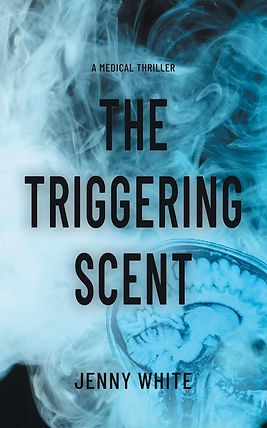
Medical suspense only works when the clinical details ring true, and that is exactly where Jenny White's background as a retired registered nurse makes the difference. Her Abbey Roberts RN series delivers authentic hospital settings, realistic medical detail, and the ethical dilemmas that drive the genre. Get started with Jenny White and read The Triggering Scent today.
Buy now


Comments