



Thriller Novels with Medical Accuracy: A Guide
Updated: Sep 16
Table of Contents
Why Hospital Dramas Feel So Unrealistic
What Makes Thriller Novels with Medical Accuracy Stand Out
The Role of Physician-Authors and Nurse Writers
Clinical Realism vs. Dramatic Tension
Medical Thriller Writing Tips for Authentic Storytelling
Common Medical Tropes to Avoid in Thrillers
Books Written by Practicing Physicians and Healthcare Professionals
The Triggering Scent: A Nurse's Perspective on Hospital Suspense
The Deepest Fake and Contemporary Medical Thrillers
Investigative Medical Mysteries by Physician-Authors
Fact-Checking and Verifying Medical Details in Fiction
Conclusion
Last Updated: August 17, 2026
Why Hospital Dramas Feel So Unrealistic
Most hospital dramas feel written by people who've never worked in an ICU. Machines beep at impossible intervals. Doctors have philosophical conversations mid-surgery. Patients wake from induced comas with perfect clarity.
Real clinical work involves waiting, protocol, and mundane decision-making that doesn't translate to dramatic tension. A real code blue is chaos and procedure in equal measure. On screen, it's usually just chaos with someone yelling "Clear!"
This is where thriller novels with medical accuracy gain their edge. When a writer understands hospital mechanics, hierarchies, ethical weight, and real consequences, the suspense becomes credible. Readers in healthcare recognize authenticity immediately. Others feel the difference without naming it.
The problem isn't that hospitals are boring. Most storytellers don't know what they're depicting. They know the visual language of medicine from other shows. They don't know how residents actually talk at 3 a.m., how nurses prioritize during crises, or what happens when clinical judgment conflicts with hospital politics.
Pro Tip The most effective [medical thrillers](/post/must-read-hospital-suspense-books-8-gripping-medical-thrillers) get the procedures right and the human dynamics right, the hierarchy, fatigue, and ethical compromises that happen quietly in hallways.
What Makes Thriller Novels with Medical Accuracy Stand Out
Medical thrillers with accuracy work on two levels: the plot mystery and the clinical reality that makes every choice matter.
When a character is a registered nurse or physician, the author brings lived experience to the page. They understand the weight of responsibility in ways research alone cannot replicate.

The difference appears in small details. A writer who has worked in healthcare knows that patient deterioration comes as a series of small vital sign changes only trained professionals notice. They know doctors don't always have time to explain what they're doing. They know the specific language of clinical communication.
This authenticity creates different tension. Readers trust what's happening is possible. There's no moment of thinking, "Would that actually work?" The plot focuses on mystery and emotional stakes rather than suspension of disbelief.
The Role of Physician-Authors and Nurse Writers
Authors with medical backgrounds bring irreplaceable credibility to medical thrillers. They're not researching procedures, they're remembering them. They've lived through hospital politics, not imagined them.
A physician-author understands diagnostics in ways that shape how mysteries unfold. A nurse-author brings the perspective of someone who spends the most time with patients, noticing changes others miss.
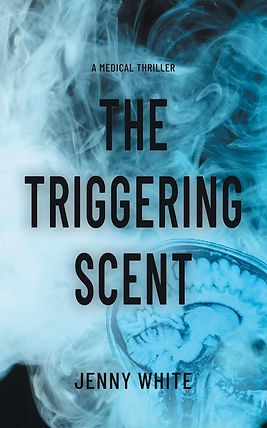
Jenny White, a retired registered nurse and brain tumor survivor, brings this authenticity to her debut novel, The Triggering Scent. The Abbey Roberts RN series features a protagonist who is herself a nurse navigating high-stakes hospital drama. This is a story told from inside, with clinical and emotional detail only someone with lived experience can provide.
Clinical Realism vs. Dramatic Tension
The tension between clinical accuracy and dramatic storytelling determines whether medical thrillers succeed or fail. Perfect accuracy can be boring. Gripping plots that ignore clinical reality feel hollow to anyone who knows better.
The best thrillers find the intersection. They don't slow narrative to explain every protocol. They use clinical reality as the foundation that makes stakes feel real. When a character makes a decision based on clinical knowledge, that decision carries weight because readers trust it's correct.
This requires restraint. A writer must know when to show procedures and when to move past them. A code blue doesn't need exhaustive detail, but the aftermath does, the weight of loss, documentation, how it affects the next decision.
Clinical realism also means acknowledging medicine's limitations. Not every diagnosis is clear. Not every patient survives. This uncertainty translates into compelling fiction.
Medical Thriller Writing Tips for Authentic Storytelling
Writing authentic medical thrillers requires understanding why details matter to the story.
Start with the clinical question, not the plot twist. What medical scenario interests you? Build the plot around that question. The story strengthens when rooted in something real.
Research should be targeted. You don't need to understand every aspect of neurosurgery, only the specific procedure your plot hinges on. Talk to people in that field. Ask about actual processes, common mistakes, and ethical weight. Ask what gets portrayed wrong in media.
Use clinical language precisely but sparingly. Readers don't need a medical dictionary. Use real terminology when it matters, when it tells readers something about how your character thinks. Don't use jargon just to sound authoritative.
Build tension through clinical uncertainty. What makes diagnosis hard? What tests conflict? What happens when the clinical picture doesn't match symptoms? These real sources of suspense translate directly into compelling fiction.
Make ethical dilemmas real. Medical thrillers often hinge on questions about what characters should do when right clinical choices conflict with other pressures, patient safety versus hospital liability, protocol versus saving a life. These tensions exist in real hospitals.
Key Takeaway The most authentic medical thrillers use clinical reality as the foundation, not decoration. Procedures and ethics matter because they shape what characters can and cannot do.
Common Medical Tropes to Avoid in Thrillers
Certain medical tropes appear so often that readers, especially healthcare professionals, spot them instantly.
The "miraculous recovery" is most common. A comatose patient wakes fully conscious, remembers everything, and provides crucial information. Real recoveries are slower, messier, and often involve cognitive changes. Acknowledge the real challenges if your plot needs a patient to wake and communicate.
The "one dramatic procedure saves everything" oversimplifies medicine. Most conditions require ongoing management, multiple interventions, and time. Tension comes from complexity, not from a single heroic moment.
Misrepresenting hospital hierarchy creates friction with knowledgeable readers. Nurses don't take orders from every doctor without question. Residents don't have autonomous decision-making authority. Attending physicians aren't always right. Actual dynamics are more nuanced and interesting.
Oversimplifying diagnosis makes plots feel contrived. Real diagnosis involves ruling things out, running conflicting tests, and reaching conclusions through elimination. A mystery mirroring this process feels more authentic.
Ignoring the emotional toll of healthcare creates one-dimensional characters. People in medicine carry the weight of their decisions. They see suffering and death. A character who doesn't show this weight feels unrealistic.
Books Written by Practicing Physicians and Healthcare Professionals
The most credible medical thrillers come from writers who have lived the clinical world.
The Triggering Scent by Jenny White sets the standard for authentic nursing perspective in medical thrillers. White's debut launches the Abbey Roberts RN series with a protagonist who is herself a registered nurse. As a retired RN and brain tumor survivor, White brings lived experience to every clinical detail and emotional complexity. The novel combines realistic medical details with intense emotional journeys, exploring resilience, ethical dilemmas, and clinical decision-making complexities.

The Deepest Fake by Daniel Kalla brings emergency room physician perspective to medical thriller territory. Kalla grounds exploration of artificial intelligence, corporate fraud, and terminal illness in authentic clinical knowledge. The novel addresses how AI intersects with medicine and how corporate interests shape healthcare decisions with credibility from someone working in emergency medicine.
Human Remains by Melissa Yi features Dr. Hope Sze investigating mysterious deaths at a stem cell research lab. Yi's physician background informs both procedural investigation and clinical mysteries. The novel combines medical mystery with investigative procedure, offering institutional knowledge only someone understanding medical research can provide.
Bitter Paradise by Ross Pennie draws on his background as an infectious diseases specialist and global health worker. His experience as a "jungle surgeon" gives his work perspective on disease, epidemiology, and medical ethics extending beyond typical hospital settings.
The Triggering Scent: A Nurse's Perspective on Hospital Suspense
The Triggering Scent exemplifies how nursing perspective transforms medical thriller fiction. The protagonist, Abbey Roberts, is a registered nurse working in high-stakes clinical environments. This is a story told from someone who makes clinical observations and ethical decisions daily.
White's nursing background shapes hospital dynamics authentically. The hierarchy isn't inverted for drama. Ethical dilemmas aren't invented, they're real conflicts when patient safety, hospital liability, and clinical judgment collide. The emotional toll of patient care isn't glossed over.
For healthcare professionals, this authenticity creates different engagement. There's no moment of disbelief. Clinical details are credible because they come from lived experience. Emotional weight feels earned because it's grounded in real practice.
For general readers, authenticity creates different value. They feel the difference even if they can't articulate it. The story moves with confidence of someone who knows what they're describing. Tension builds through clinical uncertainty and emotional stakes rather than implausible plot devices.
The Deepest Fake and Contemporary Medical Thrillers
Contemporary medical thrillers increasingly explore how emerging technology intersects with healthcare. The Deepest Fake by Daniel Kalla exemplifies this shift. Written by an emergency room physician, the novel explores artificial intelligence, corporate fraud, and terminal illness reflecting current healthcare realities.
Credibility comes from understanding how these technologies actually affect medical practice. Kalla knows how AI integrates into diagnostics and how corporate interests shape healthcare decisions. The thriller explores real tensions in modern medicine rather than relying on procedural accuracy alone.
This approach uses the thriller format to explore contemporary medical ethics and technology. What happens when AI recommends something conflicting with clinical judgment? How do corporate interests shape treatment decisions? These contemporary medical thrillers offer both suspense and substantive engagement with real issues.
Investigative Medical Mysteries by Physician-Authors
Physician-authors often bring investigative rigor to thrillers. They understand not just clinical procedure but how medical knowledge is verified, evidence evaluated, and diagnostic reasoning works.
Human Remains by Melissa Yi exemplifies this approach. The novel centers on Dr. Hope Sze investigating mysterious deaths at a stem cell research lab. Yi's physician background informs the investigative process, how you determine cause of death, what evidence matters, how scientific reasoning intersects with criminal investigation.
This type of medical mystery appeals to readers wanting intellectual engagement alongside suspense. The mystery unfolds through clinical and scientific reasoning rather than plot convenience.
Fact-Checking and Verifying Medical Details in Fiction
Understanding how to fact-check medical details matters for writers and readers evaluating accuracy. The goal is credibility, not perfection.
Start with primary sources. Medical textbooks, clinical guidelines, and peer-reviewed research provide the foundation. Don't rely on other fiction or popular summaries, go to clinical sources.
Talk to people in the field. Conversations with those performing procedures or treating conditions teach things no textbook can. They'll explain what's commonly misunderstood and what details matter most.
Verify timelines and logistics. How long do procedures actually take? What's the realistic timeline for test results? How many people are typically present? Readers notice when these details are wrong.
Acknowledge uncertainty. Not every diagnosis is clear. Not every procedure works identically in every patient. If your plot hinges on a specific outcome, acknowledge the scenario is plausible.
For authors seeking professional support, resources like Laconic Medical Writing Inc., a Canadian medical communications firm offer expert consultation on medical accuracy. Emily Latimer's fact-checking services for Canadian authors provide comprehensive verification of medical and scientific details. For film or television, On-Set Medical Consulting in Toronto ensures medical authenticity while maintaining dramatic impact.
Consider hiring a medical consultant if accuracy is central to your project. This investment pays dividends in credibility. Healthcare professionals will notice, as will general readers who feel the difference.
Watch Out A single glaring medical error can undermine reader trust in an entire novel. One moment where a character does something clinically impossible undermines credibility. Verify the details that matter most to your plot.
Medical thrillers earn authenticity through genuine engagement with clinical reality. They're written by people who understand hospitals as complex institutions where real decisions affect real lives. For readers seeking thriller novels with medical accuracy, this foundation makes all the difference.
Jenny White's The Triggering Scent represents this standard. Written by a retired registered nurse and brain tumor survivor, the novel brings lived experience that transforms medical fiction from procedurally accurate to genuinely credible. The Abbey Roberts RN series offers immersive, suspenseful storytelling grounded in authentic clinical and emotional realities of healthcare. Discover why this debut has resonated with both healthcare professionals and thriller enthusiasts seeking narratives that honor medicine's complexity and the resilience of those working within it.
Frequently Asked Questions
What makes a medical thriller feel authentic to healthcare professionals?
Healthcare professionals notice when surgical procedures, diagnostic protocols, and clinical decision-making align with real-world practice. Authentic medical thrillers avoid shorthand like 'the patient coded' without explaining why, show realistic timelines for test results, and depict the ethical dilemmas doctors and nurses actually face. Authors with clinical backgrounds, whether as physicians, nurses, or epidemiologists, ground their narratives in procedural accuracy and the human dynamics of hospital teams. This credibility transforms suspense into something readers with medical experience recognize as plausible.
Are there medical thrillers written by actual nurses or doctors?
Yes. Many acclaimed medical thrillers are written by practicing or retired healthcare professionals. Jenny White, a retired registered nurse and brain tumor survivor, brings authentic ICU dynamics and ethical dilemmas to her Abbey Roberts RN series. Daniel Kalla, an emergency room physician, writes psychological thrillers grounded in medical reality. Melissa Yi, a Canadian physician, crafts investigative mysteries featuring a physician-protagonist. Ross Pennie, an infectious diseases specialist, brings global health expertise to outbreak narratives. These author-practitioners ensure that pathology, clinical trials, patient safety, and bioethical conflicts feel genuine rather than invented for plot convenience.
How do authors balance medical jargon with suspenseful storytelling?
Effective medical thrillers use jargon sparingly and only when it serves the plot or character voice. A surgeon protagonist might naturally use technical language, while a nurse protagonist might translate medical concepts for clarity. The best approach is to explain medical details through dialogue or character thought rather than exposition. For example, showing a character's reaction to a diagnostic result creates tension without requiring readers to understand the underlying pathology. Balancing authenticity with accessibility means trusting readers to follow clinical logic without stopping the narrative to define every term. This technique keeps both healthcare professionals and general readers engaged.
What are the hallmarks of a well-researched medical thriller with real accuracy?
Well-researched medical thrillers demonstrate knowledge of hospital hierarchy, regulatory constraints, and the actual pace of medical investigation. They show realistic diagnostic mysteries where symptoms don't resolve in a single scene. Characters follow institutional protocols and face consequences for violations. Bioethical conflicts, informed consent, experimental treatments, patient confidentiality, drive plot tension rather than serving as background. The author has consulted primary sources: medical journals, case studies, or direct interviews with professionals. Most importantly, the science supports the suspense; readers with medical training don't spot logical inconsistencies that undermine credibility. This rigor is what separates immersive medical thrillers from formulaic hospital dramas.
Buy now
This article was written using GrandRanker


Comments