



Best Nurse Characters in Thriller Literature: Top 10 Picks
Table of Contents
Quick Comparison: Best Nurse Characters in Thriller Literature
How We Evaluated These Nurse Characters
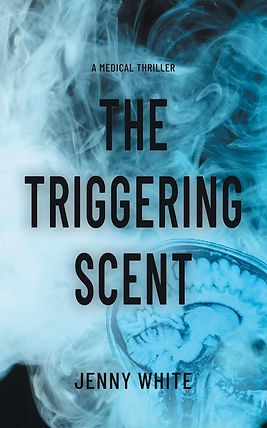
1. Abbey Roberts (The Triggering Scent) - The Nurse Who Faces Ethical Dilemmas Head-On
2. Meghan Michaels (She's Not Sorry) - The ICU Nurse With a Double Life
3. The Nurse (The Nurse) - The Protagonist With Dangerous Secrets
4. The Perfect Nurse - The Unreliable Narrator in Psychological Suspense
5. The Night Nurse - The Isolated Heroine of the Night Shift
6. The OB Nurse in Rebirth - The High-Stakes World of Childbirth
7. The NICU Nurse in Murder by Proxy
8. The Nurse in The Turquoise Cross
9. The Nurse in Play It In Reverse
10. The Forensic Nurse Archetype
What a forensic nurse actually does
Why the role fits crime fiction so well
Where the archetype is underused
What Makes a Nurse Character Work in a Medical Thriller
The ethics gap between fiction and practice
The evolution of the nurse character
Categorizing by specialty, not just 'medical thriller'
The recurring archetypes, and why they still work
Frequently Asked Questions
Last Updated: October 1, 2026
Quick Comparison: Best Nurse Characters in Thriller Literature
The best nurse characters in thriller literature share one trait: clinical competence paired with moral compromise. This guide from Jenny White ranks ten standouts, from Abbey Roberts in *The Triggering Scent* to the NICU nurses of Murder by Proxy.
Character | Book | Setting | Standout Strength |
Abbey Roberts | The Triggering Scent | Hospital ward | Ethical dilemmas |
Meghan Michaels | She's Not Sorry | ICU | Double life |
The Nurse | The Nurse | Domestic | Hidden secrets |
The Perfect Nurse | The Perfect Nurse | Suburban care | Unreliable narrator |
The Night Nurse | The Night Nurse | Night shift | Isolation and dread |
The OB Nurse | Rebirth | OB/GYN | Life-or-death stakes |
How We Evaluated These Nurse Characters
Selection rested on four tests: clinical realism, moral complexity, narrative tension, and how fully the nurse functions as a protagonist rather than a prop. A nurse who only discovers a body fails the fourth test; one whose medical decisions drive the plot passes it. Realistic medical details matter more than most readers realize, the strongest entries get triage priorities, handoff reports, and the quiet politics of a nursing station at 3 a.m. right. Jenny White brings a retired RN's eye to this list, shaping how we weigh authenticity against entertainment.
Key Takeaway The best nurse protagonists are defined by the decisions they make under pressure, not by the danger around them. Clinical accuracy is what makes those decisions believable.
1. Abbey Roberts (The Triggering Scent) - The Nurse Who Faces Ethical Dilemmas Head-On
Abbey Roberts tops this list because her ethical conflicts drive the entire plot. A registered nurse in a high-stakes hospital, she confronts choices where every option carries a cost. Her creator, Jenny White, spent years as a registered nurse before writing fiction, and it shows in how Abbey moves through a ward: checking medication interactions, reading a patient's chart the way a clinician would.

Best For Readers who want a medical thriller where the nurse's judgment, not a chase scene, creates the tension.
2. Meghan Michaels (She's Not Sorry) - The ICU Nurse With a Double Life
Meghan Michaels works the ICU, and the book uses that setting well. An ICU nurse operates inside a controlled crisis every shift, so a protagonist hiding a second life behind that competence creates natural psychological suspense. The ICU functions as a pressure cooker for secrets: nurses see patients at their most vulnerable, and Meghan's story exploits that access honestly.
3. The Nurse (The Nurse) - The Protagonist With Dangerous Secrets
This one strips the premise to its bones: a nurse with secrets, a domestic setting, and suspense built from character rather than procedure. The protagonist's development carries the book, though the pacing stays conventional.
4. The Perfect Nurse - The Unreliable Narrator in Psychological Suspense
The Perfect Nurse belongs in psychological suspense more than medical thriller. The book examines professional boundaries through an unreliable narrator, so the reader cannot fully trust the clinical observations on the page.
Watch Out Do not expect detailed medical procedure here. Readers who pick this up wanting hospital realism will be disappointed; the suspense is psychological, not clinical.
5. The Night Nurse - The Isolated Heroine of the Night Shift
Night shift changes everything: fewer staff, dimmer corridors, longer gaps between checks. This novel builds its atmosphere from that isolation, and the setting does most of the heavy lifting.
6. The OB Nurse in Rebirth - The High-Stakes World of Childbirth
Obstetrics gives a thriller built-in stakes. Rebirth places its nurse protagonist inside an OB department where every shift can turn in seconds, using medical ethics and malpractice as its engine rather than shock value.
7. The NICU Nurse in Murder by Proxy
The NICU raises the emotional stakes to their ceiling. Murder by Proxy centers on the most fragile patients in any hospital and the nurses who guard them, building a suspenseful investigation around incidents that should never happen.
8. The Nurse in The Turquoise Cross
The Turquoise Cross blends medical themes with a broader mystery framework. The nursing characters are well developed and the mystery moves cleanly, though technical detail takes a back seat to the puzzle.
9. The Nurse in Play It In Reverse
This one leans on character dynamics and professional conflict. The nurses face high-stakes situations that test their judgment and relationships, and the plot structure rewards attention, though pacing varies.
10. The Forensic Nurse Archetype
Forensic nursing is the sub-genre's most underused angle. A forensic nurse is a registered nurse with specialized training at the intersection of healthcare and the legal system, a natural fit for crime fiction, sitting exactly where clinical observation becomes evidence.
What a forensic nurse actually does
The work is more procedural than most readers expect, which is precisely what makes it good thriller material:
Evidence collection. After a sexual assault or a suspicious injury, a forensic nurse performs the examination, documents findings, and collects samples using a chain-of-custody protocol that can be challenged in court.
Injury documentation. Bruising patterns, wound measurements, and photographs taken to a legal standard. A nurse who documents poorly can undermine a case; one who documents well can carry it.
Court testimony. Forensic nurses frequently testify as expert witnesses, translating clinical findings into language a jury can follow, a built-in dramatic scene.
Death investigation support. In some settings, forensic nurses assist with postmortem documentation and review of medical records for signs of neglect or abuse.
Care for the living victim. Unlike a coroner or a pathologist, the forensic nurse treats a patient who is still alive, often in crisis. The dual role, clinician and evidence-gatherer, is the ethical tension at the heart of the job.
Why the role fits crime fiction so well
The forensic nurse archetype solves a structural problem that plagues medical thrillers: how to get a clinical professional into a criminal investigation without straining credibility. A regular staff nurse has no reason to be involved in a police case; a forensic nurse is supposed to be there.
That access creates several story engines:
The chain-of-custody problem. Evidence that is mishandled or contaminated can be excluded, and a nurse who makes that mistake faces professional consequences. A plot can turn on a single documentation error.
The dual-loyalty conflict. The patient's clinical needs and the legal process do not always align. A victim who does not want to press charges, a family that wants answers, a prosecutor who wants a conviction, the nurse is caught between all of them.
The credibility trap. A forensic nurse's testimony can be attacked on the stand. A character whose professional judgment is publicly challenged is under pressure, which is exactly what suspense needs.
Where the archetype is underused
Most medical thrillers still reach for the emergency room or ICU when they want a nurse protagonist. Forensic nursing appears far less often, partly because the procedural detail is harder to research and the role less familiar to general readers. Expanding the scope of these narratives beyond the hospital ward reveals a wealth of more crime thrillers that challenge our perceptions of justice and professional duty.
Key Takeaway If you are writing in this space, the forensic nurse is the character type most likely to surprise readers, and the one most likely to earn their trust, because the role itself is built on the discipline of getting the details right.
What Makes a Nurse Character Work in a Medical Thriller
A nurse protagonist works when her professional judgment creates the plot rather than reacting to it. The writer must understand what a nurse actually does: assess, prioritize, advocate, and document. The strongest entries here pass that test; the weakest use the uniform as a costume.
The ethics gap between fiction and practice
Most thrillers get the drama of nursing ethics right and the substance wrong. In practice, a registered nurse works inside a formal code of ethics and professional standards enforced by provincial and territorial regulators, bodies that can suspend a license for a boundary violation or documentation failure. That structure makes fictional nurses interesting, because the stakes are not abstract.
Consider the recurring scenarios:
Duty to report. A nurse who suspects a colleague is impaired, or that a patient is being harmed, has a professional obligation that can collide directly with loyalty, fear of retaliation, or institutional pressure to stay quiet. Thrillers love this conflict because there is no clean answer.
Informed consent and capacity. A nurse often sits between a physician's recommendation and a patient's refusal. Fiction rarely shows how much of that work is communication, not procedure.
Scope of practice. A nurse cannot simply do whatever the plot needs. Knowing where the line sits, and what happens when a character crosses it, separates a credible thriller from a hospital-shaped soap opera.
Confidentiality. Patient privacy rules are strict, and a nurse who leaks information to solve a mystery is committing a real professional violation, not a harmless plot device.
The evolution of the nurse character
The portrayal of nurses in thriller fiction has shifted substantially over four decades. In older crime and medical fiction, the nurse was a background figure, a source of information, a romantic subplot, or a witness who found the body, rarely driving the investigation or carrying the story's moral weight.
Categorizing by specialty, not just 'medical thriller'
One reason so many nurse thrillers blur together is that reviewers lump them under a single label. In reality, the specialty changes everything:
Emergency and trauma. Fast decisions, triage priorities, and the constant risk of missing something. Tension comes from speed and volume.
Intensive care. Sustained vigilance, family conflict, and the slow burn of a patient who is not improving. Tension comes from attrition.
Obstetrics. Life-or-death stakes on a predictable timeline, plus the heaviest ethical and malpractice territory in the hospital. Tension comes from consequence.
Neonatal intensive care. The most fragile patients and the most protective staff. Tension comes from helplessness and vigilance.
Hospice and palliative care. End-of-life ethics, family dynamics, and the quiet question of what a good death looks like. Tension comes from moral ambiguity, not action.
Psychiatric and mental health nursing. Assessment of risk, involuntary care, and the unreliability of perception. Tension comes from uncertainty.
Forensic nursing. Evidence collection, documentation, and court testimony. Tension comes from the gap between what a nurse sees and what can be proven.
The recurring archetypes, and why they still work
The Angel of Death, the twisted physician, the unreliable narrator, and the night shift setting all recur because they place a trusted figure under suspicion. Nurses hold a specific kind of trust, intimate, sustained, often invisible outside the room, and breaking it is what makes these stories land.
Pro Tip When you read a medical thriller, watch how the nurse character handles a handoff report. Writers who get that scene right almost always get the rest of the hospital right too, the priorities, the hierarchy, and the small omissions that carry real consequences.
Frequently Asked Questions
Who are some popular fictional nurse characters?
Popular fictional nurse characters include Abbey Roberts from Jenny White's The Triggering Scent, Meghan Michaels from She's Not Sorry, and the protagonists in The Nurse and The Perfect Nurse. These characters often appear in medical thriller books with nurse protagonists, facing ethical dilemmas, night shifts, and psychological suspense. They offer a fresh perspective compared to traditional detective or doctor leads, bringing clinical realism and emotional depth to the genre.
What makes a nurse character compelling in psychological suspense?
A compelling nurse character in psychological suspense combines professional expertise with personal vulnerability. They navigate high-stakes environments like the ICU or NICU, where patient safety and ethical dilemmas are constant. Their insider knowledge of medical procedures and hospital dynamics creates authentic tension. When authors incorporate realistic medical details in fiction, the nurse becomes a believable hero or unreliable narrator, driving suspense through their unique access to vulnerable patients and confidential information.
Are there popular medical thriller books with nurse protagonists?
Yes, medical thriller books with nurse protagonists are increasingly popular. Examples include The Triggering Scent by Jenny White, She's Not Sorry by Mary Kubica, and The Night Nurse. These books feature nurses as lead characters, often in high-pressure settings like the ICU, NICU, or OB/GYN wards. They blend clinical realism with gripping narratives, exploring themes of medical malpractice, ethical dilemmas, and personal resilience, appealing to readers who want authentic healthcare environments in their suspense novels.
Why are medical settings so effective for thriller novels?
Medical settings like hospitals, ICUs, and NICUs are effective for thrillers because they are inherently high-stakes environments where life and death decisions happen daily. The closed-off nature of a ward, the hierarchy of a nursing station, and the vulnerability of patients create natural tension. Authors can use realistic medical details, such as medication interactions or triage protocols, to build suspense. The night shift adds isolation, while the angel of death archetype introduces twisted medical professionals, making the hospital a perfect backdrop for psychological suspense and crime fiction.
Buy now


Comments