



Why Nurses Love Medical Fiction: Escapism, Authenticity & Identity
Table of Contents
The Psychology of Escapism: Why Nurses Love Medical Fiction Controlled Storytelling vs. Unpredictable Clinical Reality Compassion Fatigue and the Need for Narrative Relief
Controlled Storytelling vs. Unpredictable Clinical Reality
Compassion Fatigue and the Need for Narrative Relief
Medical Dramas vs. Reality Nursing: The Authenticity Factor What Hollywood Gets Wrong, And What Resonates Medical Accuracy as a Trust Signal
What Hollywood Gets Wrong, And What Resonates
Medical Accuracy as a Trust Signal
Nursing Stereotypes in Fiction: Breaking and Reinforcing Misconceptions The Evolution of the Nurse Archetype in Media
The Evolution of the Nurse Archetype in Media
Nurse Authors and Medical Fiction: From Clinical Practice to Writing Why Retired Nurses Write the Most Authentic Medical Thrillers
Why Retired Nurses Write the Most Authentic Medical Thrillers
Benefits of Medical Fiction for Healthcare Workers Bibliotherapy, Professional Identity, and Work-Life Balance
Bibliotherapy, Professional Identity, and Work-Life Balance
Why Nurses Gravitate Toward Medical Fiction: Recognition and Resilience Patient Advocacy and Ethical Dilemmas on the Page Character Development That Mirrors Real Nursing Journeys
Patient Advocacy and Ethical Dilemmas on the Page
Character Development That Mirrors Real Nursing Journeys
Recommended Medical Fiction for Nurses: Stories That Resonate Thrillers Grounded in Clinical Reality Nursing Memoirs and True Clinical Stories
Thrillers Grounded in Clinical Reality
Nursing Memoirs and True Clinical Stories
Building Community: Interactive Reader Engagement in Nursing Fiction
Last Updated: July 21, 2026
Understanding why nurses love medical fiction requires looking at the intersection of professional identity, escapism, and the hunger for authentic representation. This guide from Jenny White explores the psychological and professional reasons why healthcare workers gravitate toward medical thrillers and clinical narratives. Medical fiction offers something that real nursing practice often cannot: controlled storytelling where ethical dilemmas resolve, patients recover, and the protagonist survives to the next chapter. For nurses navigating compassion fatigue, understaffing, and moral injury, these stories provide both relief and recognition.
The Psychology of Escapism: Why Nurses Love Medical Fiction
Escapism is not avoidance, it's psychological recovery. When nurses engage with why nurses love medical fiction, they're seeking a space where the chaos of clinical practice becomes narrative tension rather than trauma. A nurse working a 12-hour shift in an understaffed ICU faces unpredictable emergencies, incomplete information, and outcomes beyond their control. Medical fiction inverts this: readers know the protagonist will face challenges, but they also know the story has structure, causation, and resolution.
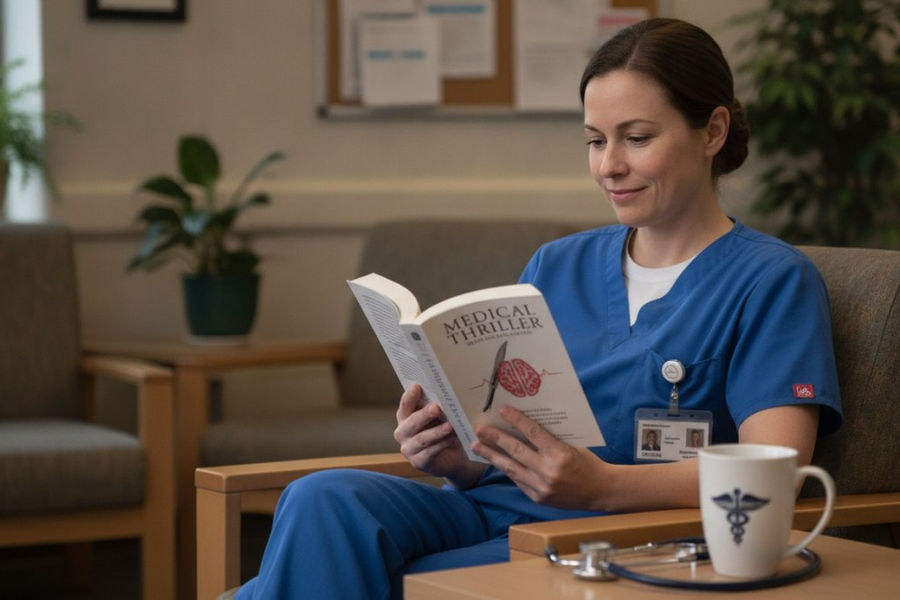
The appeal runs deeper than simple distraction. Nurses experience what researchers recognize as compassion fatigue, the emotional exhaustion that comes from caring for suffering patients without adequate time, resources, or autonomy. According to research from the American Nurses Association, many nurses report feeling emotionally drained after shifts where they couldn't provide the level of care they knew patients deserved. Medical fiction allows nurses to experience clinical scenarios where their knowledge is valued, their decisions matter, and the outcome reflects their competence rather than systemic failures.
Many nurses describe this as "controlled storytelling versus unpredictable clinical reality." In a medical thriller, the protagonist diagnoses the rare disease, saves the patient, or uncovers the conspiracy. The narrative respects both the complexity of medicine and the agency of the healthcare worker. This stands in sharp contrast to real practice, where a nurse's expertise may be overridden by administrative decisions, where patients die despite excellent care, and where the most critical moment of a shift might be interrupted by a non-urgent phone call.
Pro Tip The most compelling medical fiction for nurses isn't the most medically accurate, it's the fiction that acknowledges what nurses actually know and feel. Stories that skip past the medical details to focus on emotional realism resonate more than those that get every drug name right but miss the human experience entirely.
Medical Dramas vs. Reality Nursing: The Authenticity Factor
Television medical dramas have shaped public perception of nursing for decades, but they rarely capture what nurses actually do. Shows like Grey's Anatomy and The Good Doctor compress hours of monitoring, documentation, and coordination into dramatic moments where a single decision saves a life. Nurses watch these shows with a particular frustration: they see their work either invisible or misrepresented.
What Hollywood consistently gets wrong includes the ratio of administrative work to direct patient care (typically 60-70% of a nurse's time is documentation and communication, not bedside intervention), the autonomy of nurses in decision-making (physicians make final calls, but nurses often catch errors and advocate for changes), and the emotional labor of caring for patients who don't recover. What resonates, however, is when fiction acknowledges the moral weight of these decisions and the relationships that form between healthcare workers during crises.
Medical accuracy functions as a trust signal for nurse readers. When an author demonstrates knowledge of how a medication works, what a code blue actually looks like, or the specific protocols of an ICU, nurses recognize that the writer understands their world. This credibility extends beyond medical details to the portrayal of professional relationships, the hierarchy of the hospital, and the realistic constraints on what any individual nurse can accomplish.
Jenny White's approach to medical authenticity exemplifies this principle. As a retired registered nurse, White brings lived experience to her medical thrillers, embedding clinical details that resonate because they're not gratuitous, they serve the story and reflect how healthcare actually functions. Nurses recognize this authenticity immediately and trust the narrative as a result.
Nursing Stereotypes in Fiction: Breaking and Reinforcing Misconceptions
The evolution of the nurse archetype in media reveals how fiction shapes professional identity. Early portrayals positioned nurses as physicians' helpers, passive, supportive, and often defined by their appearance rather than their competence. This archetype persists in some contemporary media, but medical fiction increasingly challenges it.
Modern nursing fiction explores the nurse as diagnostician, advocate, and moral authority. Characters like those in clinical thrillers make autonomous decisions, question physician orders when patient safety is at risk, and carry the narrative weight of their professional judgment. These portrayals reinforce what nurses know to be true: they are highly trained professionals with specialized knowledge, not ancillary staff.
However, fiction also risks reinforcing certain stereotypes, the self-sacrificing nurse who prioritizes patient care over personal boundaries, the nurse who leaves the profession burned out and traumatized, or the nurse who falls into romantic relationships with physicians as a plot device. Nurses reading these stories are simultaneously validated (yes, the emotional labor is real) and cautious (no, we don't all need rescuing by a charismatic doctor).
Key Takeaway The most impactful nursing fiction acknowledges both the profound meaning of the work and the legitimate reasons nurses leave the profession. It validates without romanticizing.
Nurse Authors and Medical Fiction: From Clinical Practice to Writing
Why retired nurses write the most authentic medical thrillers comes down to accumulated experience and the freedom that retirement provides. A nurse with 20 years of practice has witnessed patterns that novelists without clinical backgrounds simply cannot invent. They know which details matter, which feel false, and which emotional truths underlie the clinical surface.
Nurse authors bring specificity that elevates their work. They understand the sensory details, the smell of a hospital at 3 a.m., the particular exhaustion of a 12-hour shift, the way conversations happen in hallways between patients, the sound of a monitor alarming in an empty room. They also understand the professional culture: the dark humor that sustains healthcare workers, the unspoken hierarchies, the ways that experienced nurses mentor newer staff, and the specific ways that burnout manifests.
The career transition from clinical practice to writing often happens after nurses have experienced something that demands narrative exploration, a patient death that raised ethical questions, a system failure that revealed institutional problems, or a personal health crisis that reframed their understanding of vulnerability. For Jenny White, the combination of her nursing background and her experience as a brain tumor survivor created the foundation for Abbey Roberts RN series, where clinical authenticity merges with genuine emotional stakes.
Benefits of Medical Fiction for Healthcare Workers
Bibliotherapy, using literature as a tool for emotional processing, has documented benefits for healthcare workers. Reading stories that mirror professional experiences can validate feelings, normalize stress responses, and provide a sense of community with others who understand the work.
Medical fiction serves several psychological functions for nurses. First, it provides professional identity affirmation. Nurses see their knowledge, skills, and moral reasoning portrayed as central to the narrative. Second, it offers emotional catharsis. Stories about ethical dilemmas, patient outcomes, and professional conflicts allow nurses to process their own experiences in a contained way. Third, it creates work-life balance by providing genuine escape during off-hours, the reader is engaged but not responsible, invested but not accountable.
For nurses managing the psychological impact of the profession, medical fiction can also normalize resilience. Stories that show nurses facing trauma, making difficult decisions, and continuing to show up for patients model a form of strength that doesn't require leaving the profession or denying the difficulty.
Watch Out Medical fiction should not replace professional mental health support for nurses experiencing burnout or trauma. While reading can provide relief, persistent symptoms of compassion fatigue, moral injury, or PTSD require intervention from mental health professionals who understand healthcare contexts.
Why Nurses Gravitate Toward Medical Fiction: Recognition and Resilience
Patient advocacy and ethical dilemmas on the page resonate because they mirror what nurses navigate in practice. Medical fiction often centers on moments where a nurse or physician must choose between competing obligations, following protocol versus patient welfare, protecting a colleague versus reporting misconduct, prioritizing one patient when resources are limited. These dilemmas feel real because they are real.
Character development that mirrors real nursing journeys also draws readers in. A protagonist who enters nursing with idealism, encounters systemic obstacles, questions their choice, but ultimately finds meaning in the work reflects many nurses' actual career trajectories. Fiction that acknowledges this journey, without requiring the character to leave the profession or sacrifice personal relationships to succeed, validates the complexity of staying.
Nurses also gravitate toward medical fiction because it offers recognition of what the profession demands. The emotional labor of nursing, the work of being present with suffering, managing families' expectations, advocating for patients who cannot advocate for themselves, is invisible in most workplace settings. Fiction makes this labor visible and central. When a character's skill at reading a patient's unspoken fear is portrayed as a form of expertise, or when a nurse's decision to push back against a physician's plan is shown as professional courage rather than insubordination, it affirms what nurses know about their work.
Recommended Medical Fiction for Nurses: Stories That Resonate
Thrillers grounded in clinical reality appeal to nurses who want suspense without sacrificing authenticity. These stories typically feature healthcare professionals as protagonists, embed medical details into the plot rather than using them as decoration, and explore the professional environment as a character itself.
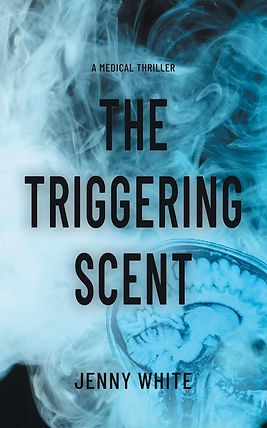
Jenny White's The Triggering Scent, the debut of the Abbey Roberts RN series, exemplifies this category. The novel centers Abbey, a registered nurse navigating a high-stakes hospital environment while processing her own recovery from a brain tumor. The medical details are woven throughout, not to show off knowledge, but because they're central to how Abbey understands her world. The ethical dilemmas that drive the plot are ones that nurses recognize: questions about patient welfare, professional responsibility, and the limits of individual agency within institutional constraints. Readers consistently note that "the emotional impact of Abbey's struggles made this book stand out" and that "the twists and ethical dilemmas kept me turning pages late into the night."
Nursing memoirs and true clinical stories offer a different appeal. These narratives provide the authenticity of real experience without the fictional framework. Memoirs by nurses often explore why they entered the profession, what kept them in it, and what nearly drove them out. They document systemic problems through the lens of individual experience and frequently model resilience in the face of institutional obstacles.
The distinction between memoir and thriller matters: memoirs provide validation and community, while thrillers provide narrative satisfaction. Many nurses read both, memoirs for recognition of their reality, thrillers for the experience of resolution and agency.
Building Community: Interactive Reader Engagement in Nursing Fiction
The community around medical fiction extends beyond individual reading. Online book clubs, nursing-specific reading groups, and social media discussions create spaces where nurses can process the stories together and connect their reading to their professional experiences.
Platforms like Goodreads host strong discussions where nurse readers analyze medical accuracy, debate character decisions, and share how specific scenes resonated with their own experiences. These conversations transform reading from solitary escape into collective meaning-making. A nurse who felt isolated by her experience of a particular ethical dilemma might read a novel that explores that same dilemma and then find a community of healthcare workers discussing it online.
Authors who engage directly with nursing audiences, through book clubs, speaking engagements at nursing conferences, or online Q&A sessions, deepen this community connection. Readers value the opportunity to ask questions about how the author researched medical details or what inspired specific plot points. For nurse authors particularly, this engagement affirms that their writing comes from genuine understanding rather than external imagination.
Medical fiction serves nurses because it acknowledges what the profession demands while providing the psychological relief that real practice often cannot. Whether through thrillers that model professional agency, memoirs that validate difficult experiences, or community discussions that transform individual reading into collective processing, medical fiction addresses a specific need in the nursing profession. If you're looking for medical thrillers written by someone who understands the clinical reality, not just the drama, Jenny White's Abbey Roberts RN series delivers authentic hospital settings, realistic ethical dilemmas, and character resilience grounded in genuine professional experience. Start with The Triggering Scent and join the growing community of nurses who recognize their world in the pages.
Frequently Asked Questions
What makes medical fiction appealing to nurses specifically?
Nurses love medical fiction because it combines escapism with professional validation. Unlike general fiction, medical fiction acknowledges the emotional labor, clinical realities, and ethical dilemmas nurses face daily. When a story portrays nursing with authenticity, showing patient advocacy, autonomy, and resilience, it validates their professional identity in ways mainstream entertainment rarely does. The appeal is both psychological (relief from compassion fatigue) and intellectual (recognition of their expertise).
How accurate do medical details need to be in fiction for nurses to enjoy it?
Medical accuracy is critical for nurse readers. When clinical details are wrong, it breaks immersion and signals disrespect for the profession. Nurses gravitate toward authors, particularly nurse authors and medical professionals, who understand hospital dynamics, pharmaceutical protocols, and patient care workflows. Accuracy doesn't mean every detail must be textbook-perfect; it means the author demonstrates genuine knowledge of nursing practice. This authenticity is what separates credible medical thrillers from Hollywood dramatization.
Can medical fiction actually help nurses cope with burnout and compassion fatigue?
Yes. Medical fiction functions as bibliotherapy for healthcare workers. Reading stories that explore resilience, ethical dilemmas, and the behind-the-scenes realities of nursing helps normalize the emotional toll of the profession. When characters navigate patient welfare decisions, work-life balance struggles, and professional identity crises, nurses see their own experiences reflected and validated. This cathartic effect, combined with the escapism of a compelling narrative, provides genuine psychological relief from the stress of clinical practice.
Why do nurses prefer books by nurse authors over established thriller writers?
Nurse authors bring unmatched credibility to medical fiction. A retired registered nurse writing a thriller understands NICU nurse rotations, ICU protocols, and the true emotional weight of patient advocacy in ways non-medical authors cannot replicate. Nurses recognize when an author has lived the profession, the details feel authentic, the character development mirrors real nursing journeys, and the ethical dilemmas reflect actual workplace conflicts. This authenticity creates deeper engagement than even bestselling medical thriller writers can achieve without that clinical background.
This article was written using GrandRanker


Comments