



Medical Thriller Books With Realistic Scenes
Updated: Sep 16
Table of Contents
What Readers Actually Want From Medical Thriller Books
Common Medical Inaccuracies in Fiction
Medical Thriller Books Written by Nurses and Physicians
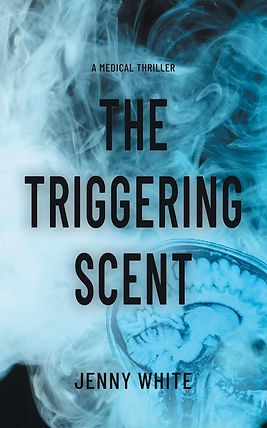
The Triggering Scent: A Nurse's Perspective on Hospital Drama
Human Remains: Medical Investigation From a Physician's Lens
Surgical Realism and Procedural Accuracy in Medical Thrillers
How to Write Authentic Hospital Scenes
Epidemic and Outbreak-Focused Medical Thrillers
The Realism Checklist: What Sets Credible Medical Thrillers Apart
Conclusion
Last Updated: August 18, 2026
What Readers Actually Want From Medical Thriller Books
Readers seeking medical thrillers want authenticity that makes them feel inside an operating room or ICU. The difference between a forgettable medical thriller and one that endures comes down to credibility: does the clinical detail feel earned, or borrowed from Wikipedia?
Jenny White's approach stands apart. As a retired registered nurse and brain tumor survivor, she brings firsthand knowledge of hospital dynamics, nursing ethics, and the psychological weight of high-pressure medical environments. Her debut novel, The Triggering Scent, is a window into what actually happens in an ICU, written by someone who's lived it.
The best medical thrillers don't sacrifice accuracy for drama. Instead, they use medical detail as the engine of suspense. When readers understand the real stakes of a botched procedure, missed diagnosis, or institutional corruption, the tension becomes unbearable.
Pro Tip Readers of medical thrillers often have professional medical backgrounds. They'll spot inconsistencies immediately. A nurse reading a hospital scene will know if IV protocols are wrong, if monitor readings don't match the diagnosis, or if surgeon behavior violates standards of care. Authenticity is the foundation of reader trust.
Common Medical Inaccuracies in Fiction
Most medical thrillers fail at fundamentals. Writers over-dramatize procedures or flatten complex clinical scenarios into one-dimensional plot devices.
The most common mistake is treating medical terminology as window dressing. Writers throw in terms like "septic shock" or "anaphylaxis" without understanding actual timelines or clinical presentation. Septic shock develops over hours, not minutes. Anaphylaxis progresses quickly, but without understanding the physiology, you can't write authentic tension.
Hospital hierarchy is another persistent error. Thrillers depict doctors acting unilaterally, but real hospitals operate through protocols, committees, and oversight. A doctor ignoring these systems faces licensing investigations and malpractice suits. Authentic tension comes from navigating constraints, not ignoring them.
Medication errors frequently diverge from reality. Thrillers show drugs working instantaneously, but most medications require time to metabolize. Understanding realistic drug timelines changes how you structure suspense.
Medical investigations also tend to be inaccurate. Thrillers show pathologists discovering critical evidence through intuition, but real forensic medicine involves systematic protocols, chain-of-custody procedures, and peer review. The actual process is slower but more compelling when written authentically.
Watch Out Adding jargon doesn't equal authenticity. Misused terminology signals you haven't done your homework. A single incorrect detail about how a ventilator works or what an EKG measures can destroy reader trust in an entire scene.
Medical Thriller Books Written by Nurses and Physicians
The most credible medical thrillers come from authors with direct clinical experience. These writers understand not just medicine's mechanics, but the culture, politics, and human dynamics of healthcare.
Jenny White's The Triggering Scent exemplifies this approach. Written by a retired registered nurse who survived a brain tumor, the novel centers on Abbey Roberts, an RN navigating the aftermath of a botched brain surgery and her return to the ICU. White understands ethical dilemmas nurses face, dynamics between nurses and physicians, and the psychological toll of critical care. She knows what it feels like to be a patient and to face the medical system from both sides. This dual perspective makes medical detail integral to character development rather than decorative.

Nurse-authored thrillers see hospitals from the bedside, understanding continuity of care, patient advocacy, and systems that keep patients safe or fail them. Physician-authored thrillers offer different perspectives and pressures. Both produce authentic fiction when the author takes craft seriously.
The Triggering Scent: A Nurse's Perspective on Hospital Drama
The Triggering Scent launches the Abbey Roberts RN series with a protagonist embodying nursing complexity in crisis. Abbey is a skilled ICU nurse who survives a brain tumor and the surgery meant to remove it, but the surgery goes wrong. Her recovery becomes a journey through medical trauma, institutional accountability, and whether she can return to the work she loves.
What makes this realistic is the focus on nursing ethics and decision-making. Abbey doesn't passively accept what happens. She questions protocols, advocates for patients, and confronts gaps between what hospitals claim and what they do. Medical detail isn't backdrop; it's the substance of her moral struggle. Healthcare workers recognize Abbey's dilemmas because they're real: What do you do when a physician's order seems wrong? How do you protect patients when institutional pressure pushes toward shortcuts?
The emotional intensity comes from authenticity. Abbey's recovery is psychological and professional, not just physical. She's processing trauma, rebuilding her sense of self, and deciding whether she can trust the institution she served. This character depth, grounded in realistic medical and nursing detail, separates this novel from formulaic thrillers.
Key Takeaway Medical thrillers written by healthcare professionals succeed because they understand hospitals as systems with their own logic, culture, and consequences. Drama emerges from how characters navigate these systems, not from melodrama imposed on them.
Human Remains: Medical Investigation From a Physician's Lens
Melissa Yi's Human Remains follows Dr. Hope Sze, a Canadian physician and medical investigator, as she uncovers suspicious deaths at a stem cell research lab. The novel combines medical mystery with procedural investigation, grounded in Yi's medical background. What distinguishes this realistic approach is focus on research protocols and scientific methodology. Yi understands stem cell science, laboratory ethics, and regulatory frameworks governing biomedical research. These elements are the mystery's foundation. Readers follow Hope through investigation, learning how medical investigations actually work: autopsy's role, chain-of-custody importance, collaboration between pathologists, toxicologists, and law enforcement.
Surgical Realism and Procedural Accuracy in Medical Thrillers
Surgical scenes are where many medical thrillers lose credibility. Writers either over-simplify procedures or invent steps that don't exist. Authentic surgical realism requires understanding that surgery is procedural, systematic, and governed by safety protocols.
A realistic surgical scene includes pre-operative phases: anesthesiologist assessment, team briefing, patient identity verification. These steps aren't dramatic but provide tension opportunities. What if someone notices something wrong during briefing?
The operative phase requires accurate anatomy, instruments, and step sequences. A neurosurgeon doesn't simply "open the skull and remove the tumor." The procedure involves locating the tumor using imaging, navigating around critical structures, and managing bleeding. Each step carries risks that create earned tension.
Post-operative phases are often overlooked. Recovery involves monitoring, pain management, infection prevention, and possible complications. A character doesn't wake from surgery and resume life immediately. Realistic recovery timelines create character development opportunities and genuine suspense.

Medical thrillers realistic in surgical detail often consult surgeons or use surgical textbooks. This investment pays off in credibility. Readers with surgical experience recognize authenticity and trust the writer.
How to Write Authentic Hospital Scenes
Writing authentic hospital scenes requires research and understanding what details matter for your story. Not every scene needs exhaustive accuracy. Emphasize details that matter to plot and character.
Start by understanding the physical environment. Hospitals have specific layouts, workflows, and rhythms. An ICU differs from an emergency department, which differs from a surgical suite. Spend time in these environments if possible. If not, read healthcare worker accounts, watch documented footage, and study architectural layouts. Sensory details, monitor sounds, antiseptic smells, lighting, temperature, create immersion.
Second, understand different team members' roles and responsibilities. Nurses, physicians, respiratory therapists, and specialists have distinct roles governed by hierarchy, protocol, and professional norms. A scene where a nurse confronts a physician requires understanding power dynamics, stakes, and professional consequences.
Third, research specific medical conditions and procedures relevant to your story. If your character has a brain tumor, understand tumor types, diagnostic processes, treatment options, and prognosis. If your character requires intubation, understand when it's necessary, how it's performed, what patients experience, and possible complications. This knowledge allows inevitable rather than contrived scenes.
Fourth, respect timing. Medical processes take time. Diagnostic tests require hours or days. Medications take time to work. Recovery takes time. Realistic pacing creates better narrative tension than compressed timelines.
Element | Consideration | Impact on Authenticity |
Physical environment | Sensory details, layout, workflow | Immersion and credibility |
Team dynamics | Roles, hierarchy, communication | Realism and tension |
Medical knowledge | Conditions, procedures, timelines | Plausibility and trust |
Ethical frameworks | Professional standards, patient safety | Character motivation and conflict |
Pro Tip Talk to healthcare professionals if possible. Even brief conversations reveal details textbooks miss: how people actually communicate in emergencies, what they worry about, what they notice first. These human details make scenes feel lived-in rather than researched.
Epidemic and Outbreak-Focused Medical Thrillers
Medical thrillers realistic in epidemic portrayal require understanding epidemiology, public health response, and outbreak chaos. These narratives resonate in the post-pandemic world, where readers have witnessed real outbreak response.
Epidemic thrillers typically follow an arc: unusual disease patterns emerge, epidemiologists investigate, outbreak scope becomes clear, and the race to contain and treat intensifies. Tension comes from racing time, disease uncertainty, and public health decisions with massive consequences.
Authentic epidemic thrillers ground themselves in epidemiological methodology: case investigation, contact tracing, laboratory confirmation, and risk assessment. These processes are methodical and often frustratingly slow, but they're how outbreaks are actually controlled. Writers understanding this methodology create tension from the process itself, waiting for lab results, tracking contacts, communicating risk.
Michael Crichton's The Andromeda Strain remains a touchstone because it treats scientific investigation as the story. Readers follow investigation, learning methodology alongside characters. This approach creates authenticity that survives even speculative premises.
Modern epidemic thrillers benefit from readers' pandemic experience. Audiences understand quarantine, isolation, contact tracing, and tensions between public health and individual liberty. However, this means readers notice inaccuracies readily. Epidemic thrillers require particular epidemiological accuracy.
The Realism Checklist: What Sets Credible Medical Thrillers Apart
Before finalizing a medical thriller, evaluate your manuscript:
Medical Accuracy: Every significant medical detail should be verifiable. If a character receives medication, dosage, route, and effects should match pharmacology. If a procedure is described, steps should match actual protocol. Err toward understatement rather than invention.
Professional Terminology: Use medical terminology correctly. Misused jargon signals you haven't done homework. Describe procedures in plain language rather than misusing technical terms.
Institutional Reality: Hospitals operate through systems, protocols, and hierarchies. Characters can't act unilaterally without consequences. Authentic tension comes from navigating constraints.
Character Knowledge: Characters should demonstrate appropriate medical knowledge based on background. A nurse knows things a layperson doesn't. This differentiation creates authenticity.
Timing and Pacing: Medical processes take time. Respect these timelines. Realistic pacing creates better tension than compressed timelines.
Ethical Complexity: Medicine involves ethical dilemmas without clean answers. Authentic thrillers acknowledge this complexity. Characters face genuine conflicts between competing goods.
Sensory Detail: Hospitals have specific sounds, smells, and visual characteristics. Authentic sensory detail creates immersion.
Emotional Realism: Medical trauma, recovery, and institutional failure carry genuine emotional weight. Characters should respond authentically to these experiences.
Medical thriller books with realistic medical scenes succeed because they respect both medical detail and human stakes. Jenny White's The Triggering Scent demonstrates this balance: grounded in authentic nursing practice, surgical reality, and psychological complexity of medical trauma. For readers seeking medical thrillers that don't compromise on accuracy, this novel offers the immersive, character-driven experience that keeps pages turning.
Discover authentic medical thrillers that blend suspense with clinical credibility. Explore Jenny White's Abbey Roberts RN series and experience hospital drama written by a retired registered nurse. Get The Triggering Scent and enter a world where medical detail becomes the engine of suspense, and resilience shines through every page.
Frequently Asked Questions
What makes medical thriller books feel authentic to healthcare professionals?
Healthcare professionals notice procedural accuracy, realistic hospital protocols, and ethical dilemmas that reflect actual clinical practice. Medical thriller books written by nurses or physicians naturally capture these details because the authors have lived them. Accurate terminology, correct medication interactions, realistic timelines for diagnoses, and genuine hospital politics separate credible thrillers from those that prioritize drama over realism. Readers working in healthcare also respond to authentic portrayals of the emotional and moral weight clinicians carry, not just the technical aspects.
Are there medical thriller books written by actual nurses or doctors?
Yes. Authors like Jenny White, a retired registered nurse and brain tumor survivor, bring firsthand clinical experience to medical thrillers. Her novel, The Triggering Scent, follows RN Abbey Roberts and reflects authentic ICU dynamics and nursing ethics. Similarly, Melissa Yi, a physician, wrote Human Remains, a medical mystery featuring Dr. Hope Sze investigating suspicious deaths at a research lab. These physician-author and nurse-author thrillers carry credibility that layman-authored fiction cannot match, because the clinical details and hospital politics are grounded in real experience, not research alone.
How do authors balance medical accuracy with fast-paced suspense?
The best medical thriller books use accurate clinical details to build tension rather than slow the plot. Instead of explaining every procedure in depth, skilled authors weave realism into dialogue, decision-making, and ethical conflicts. A surgeon's internal debate about malpractice liability, a nurse noticing a subtle sign others miss, or the pressure of diagnostic uncertainty all create suspense rooted in medical reality. Authors who understand hospital environments know which details matter to readers and which would bog down pacing. This balance is easier for physician-author and nurse-author writers because they instinctively know what feels authentic without over-explaining.
What are the biggest differences between medical thriller books written by healthcare professionals versus layman authors?
Healthcare professionals embed authenticity into character behavior, decision-making, and institutional dynamics that readers working in medicine immediately recognize as true. Nurse-authored and physician-authored thrillers capture the exhaustion, ethical weight, and interpersonal complexity of clinical work. Layman-authored medical thrillers often rely on research and consultants, which can work well, but may miss the lived texture of hospital life, how clinicians actually communicate, what they worry about, how they navigate moral ambiguity. The most credible medical thriller books combine a healthcare professional's insight with strong narrative craft.
Buy now
This article was written using GrandRanker


Comments