



Books About Brain Injury Recovery: A Guide for Survivors and Caregivers
Updated: Sep 16
Table of Contents
Why Books About Brain Injury Recovery Matter
Understanding the Stages of Brain Injury Recovery Through Reading
Personal Memoirs: Survivor Stories of Resilience and Healing
How I Got Better From A Traumatic Brain Injury by Madeleine Welton
I'll Carry the Fork! by Kara Swanson
Forget Regret by Kamya Rilling
Scientific and Practical Guides to Brain Injury Recovery
The Brain's Way of Healing by Norman Doidge
Living with Brain Injury: A Guide for Families by Richard Senelick and Karla Doughtery
The Memory Book by Paul Whitby
How to Support a Loved One With TBI: Caregiver Resources and Guides
To Root & To Rise by Carole Starr
Brain Injury, Trauma, and Grief by Shireen Jeejeebhoy
Brain Injury Canada Support Resources and Free Tools
Audiobooks and Digital Accessibility for Brain Injury Recovery Reading
Finding the Right Book for Your Recovery Journey
Last Updated: August 9, 2026
Why Books About Brain Injury Recovery Matter
When someone sustains a traumatic brain injury, recovery is rarely linear. The physical rehabilitation, cognitive challenges, and emotional upheaval can overwhelm survivors, families, and caregivers alike. Books about brain injury recovery serve as lifelines, they normalize the experience, offer practical strategies, and remind readers they're not alone.
At Jenny White, we understand how storytelling illuminates human experience, especially trauma and resilience. As a retired registered nurse and brain tumor survivor, Jenny White knows how authentic narratives anchor hope during dark moments. Books about brain injury recovery bridge clinical information and lived experience, offering both knowledge and emotional validation.
This guide compiles impactful books organized by reader need: survivors seeking inspiration, caregivers looking for practical guidance, or anyone trying to understand the neurological and emotional dimensions of acquired brain injury.
Key Takeaway The best books about brain injury recovery combine personal narrative with practical strategies, helping readers navigate both the clinical and emotional aspects of healing.
Understanding the Stages of Brain Injury Recovery Through Reading
Recovery unfolds across distinct phases, each with its own challenges. Understanding these stages helps readers select books matching where they are in their journey: acute phase, early rehabilitation, long-term adaptation, or finding meaning after injury.
The acute phase spans the first weeks and months when medical intervention is critical and uncertainty dominates. Families seek books explaining neurological changes and immediate expectations. The rehabilitation phase brings new challenges: relearning skills, managing cognitive deficits, and confronting permanent changes. Finally, long-term adaptation requires resources addressing identity reconstruction, grief, and building a new life.
Many readers benefit from books addressing emotional and psychological dimensions alongside medical ones. A book resonating during month three may feel irrelevant by month eighteen. Having access to diverse resources, memoirs, practical guides, workbooks, matters significantly.
Pro Tip Select books based on your current recovery stage, not just injury type. A survivor in acute rehabilitation has different needs than one navigating long-term adaptation.
Personal Memoirs: Survivor Stories of Resilience and Healing
Survivor memoirs answer the question haunting every survivor: "Will I get better? What does recovery actually look like?" Personal accounts provide what clinical guides cannot, the raw truth of rebuilding life after trauma.
(/product-page/the-triggering-scent) Healing]
How I Got Better From A Traumatic Brain Injury by Madeleine Welton
Madeleine Welton's memoir documents nearly two decades of recovery following a 1993 traumatic brain injury. Rather than offering a neat injury-to-recovery narrative, Welton traces the painstaking process of relearning to walk, talk, and swallow while wrestling with permanent neurological change. Her Canadian perspective authentically captures navigating the medical system, accessing rehabilitation services, and confronting barriers survivors face.
This memoir suits survivors seeking validation that recovery is possible despite slow progress. Caregivers benefit from Welton's candid exploration of how family members experience injury alongside the survivor.
I'll Carry the Fork! by Kara Swanson
Kara Swanson's I'll Carry the Fork! has anchored the brain injury community for over two decades through its blend of honesty and humor. The title references a small independence Swanson reclaimed during recovery, encapsulating the book's philosophy: recovery is built on small victories, and humor is a survival tool.
Swanson demonstrates how survivors can hold both realities simultaneously: life is harder now, and life is still worth living. This balance makes the book enduring in the brain injury community. Her accessible, conversational tone feels like advice from a trusted friend rather than clinical guidance.
Forget Regret by Kamya Rilling
Kamya Rilling's Forget Regret captures raw recovery from traumatic brain injury with partial paralysis. Particularly valuable for younger survivors or those early in recovery, it explores not just physical rehabilitation but the identity crisis accompanying acquired brain injury.
Rilling positions recovery as reinvention rather than restoration to pre-injury self. Her exploration of how community and inner strength became anchors offers readers a framework for understanding recovery as transformation. The book emphasizes support systems' role in healing, making it valuable for both survivors and caregivers.
Key Takeaway Survivor memoirs offer proof that recovery is possible, even when slow, nonlinear, and incomplete. They normalize emotional and psychological dimensions often overlooked in medical literature.
Scientific and Practical Guides to Brain Injury Recovery
While memoirs provide emotional validation, scientific guides offer neurological frameworks explaining why recovery happens as it does. These resources combine neuroplasticity research with practical strategies survivors and caregivers can implement immediately.
The Brain's Way of Healing by Norman Doidge
Norman Doidge, a Canadian psychiatrist, popularizes neuroplasticity, the brain's ability to reorganize and form new neural connections throughout life. The Brain's Way of Healing explores harnessing neuroplasticity to treat brain injury, stroke, and other neurological conditions.
Doidge's case studies of individuals recovering from injuries deemed permanent are grounded in neuroscientific research. Readers learn not just that recovery happened, but how, what specific therapeutic approaches activated the brain's rehabilitation capacity. For survivors and caregivers seeking to understand recovery science, this book is invaluable.
Living with Brain Injury: A Guide for Families by Richard Senelick and Karla Doughtery
Senelick and Doughtery's guide is essential for families navigating brain injury recovery's practical and emotional terrain. It addresses physical, mental, and emotional changes while providing concrete strategies for family members to support recovery without becoming overwhelmed.
The guide recognizes brain injury affects the entire family system, acknowledging caregiver burden, relationship strain, and the need for families to maintain their own wellbeing. It includes modern neuroplasticity research and experimental rehabilitation approaches, ensuring readers access current best practices.
The Memory Book by Paul Whitby
Memory problems are among the most persistent post-brain injury challenges. Paul Whitby, a clinical psychologist, offers practical, evidence-based strategies in The Memory Book.
Unlike books focusing solely on emotional aspects, Whitby's guide is intensely practical, providing concrete techniques survivors and caregivers can implement immediately: memory aids, organizational systems, and cognitive strategies. The book acknowledges memory recovery is rarely complete but demonstrates how survivors work around deficits and rebuild functional independence.
How to Support a Loved One With TBI: Caregiver Resources and Guides
Caregiving after traumatic brain injury is emotionally demanding. While survivor needs are often visible and urgent, the caregiver's emotional burden, grief, stress, isolation, loss of the relationship as it was, is frequently overlooked. Caregiver-focused books acknowledge this hidden struggle and provide practical support and emotional validation.
To Root & To Rise by Carole Starr
Carole Starr's To Root & To Rise is an interactive workbook for survivors and caregivers grappling with grief and loss accompanying brain injury. Unlike purely instructional guides, it acknowledges accepting a new life after brain injury is a profound psychological and spiritual process.
The workbook format provides structured self-reflection through guided prompts helping survivors and caregivers process grief, identify remaining strengths, and envision meaningful life after injury. Starr's approach emphasizes acceptance rather than cure, helping readers accept permanent changes while building a life worth living.
Brain Injury, Trauma, and Grief by Shireen Jeejeebhoy
Shireen Jeejeebhoy's Brain Injury, Trauma, and Grief addresses the intersection of neurological trauma and emotional grief. Jeejeebhoy, herself a brain injury survivor, draws on personal experience and research to create a healing roadmap.
The book is particularly valuable for survivors feeling isolated by emotional aftermath. Many experience post-traumatic stress disorder alongside neurological deficits, which standard guides often don't adequately address. Jeejeebhoy's step-by-step action plans help process trauma while managing cognitive and physical recovery. For caregivers, this resource provides insight into why survivors struggle with emotional regulation, enabling more empathetic responses.
Pro Tip Caregiver burnout is real and often invisible. Books specifically designed for caregivers validate your struggle, reduce isolation, and provide practical strategies for maintaining your own wellbeing.
Brain Injury Canada Support Resources and Free Tools
Beyond published books, Brain Injury Canada, the national nonprofit organization supporting people affected by brain injury, offers free tools and educational materials.
Brain Injury Canada's website provides evidence-based information about acquired brain injury, neurological rehabilitation, and recovery strategies. The organization offers support groups, in-person and virtual, connecting survivors and caregivers with others navigating similar challenges. These peer connections are often as valuable as any book.
The Acquired Brain Injury Journaling Workbook, available as a free PDF from Brain Injury Canada, offers structured self-reflection and mental health support through guided journaling prompts. For many readers, journaling becomes crucial to emotional healing. These free resources make that tool accessible to everyone, particularly important for families facing significant financial strain.
Audiobooks and Digital Accessibility for Brain Injury Recovery Reading
For survivors with cognitive deficits or visual impairments, traditional reading becomes difficult. Audiobooks and digital formats offer alternative pathways to the same content, ensuring brain injury literature remains accessible.
Many books discussed here are available as audiobooks on Audible.ca, accessible to survivors struggling with reading comprehension, visual processing, or sustained attention. Audiobooks allow engagement while doing other activities: physical therapy, walks, or quiet moments.
Digital formats offer additional advantages. E-books allow adjusting font size, helpful for visual sensitivity or cognitive fatigue. They enable easy searching and highlighting for later review or discussion.
Many Canadian libraries offer free audiobook and e-book access through apps like Libby and Hoopla, removing barriers to education and support at a time when caregivers are stretched thin.
Finding the Right Book for Your Recovery Journey
The most valuable books match your specific needs and recovery stage. A survivor in acute rehabilitation needs different support than one navigating long-term adaptation. A caregiver in crisis mode needs different resources than one years into caregiving.
When selecting a book, consider your primary goal: scientific understanding, emotional validation, practical strategies, or emotional processing? Are you reading as a survivor or caregiver? Where are you in the recovery timeline? Matching the book to your actual needs ensures reading becomes part of healing.
The books outlined here represent the most valuable resources in brain injury recovery. Survivor memoirs offer proof recovery is possible. Scientific guides explain neurological mechanisms underlying healing. Caregiver resources validate the hidden struggle of supporting a loved one. Together, they create a comprehensive library for anyone navigating brain injury recovery.
Start with one book resonating with your situation, and let it guide you toward the next resource you need. Recovery is a journey, and books can be trusted companions along the way.
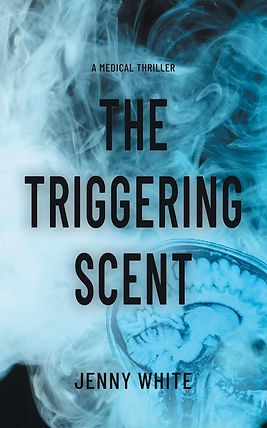
If you're navigating brain injury recovery as a survivor or caregiver, authentic storytelling is crucial. Jenny White's debut novel, The Triggering Scent, explores resilience and recovery through a retired nurse confronting trauma and ethical complexity in a high-stakes medical setting. Written by someone with lived experience as both a healthcare professional and brain tumor survivor, Jenny White's work brings the same authenticity and emotional depth that makes the books in this guide so powerful.
Frequently Asked Questions
What are the best books for understanding traumatic brain injury?
The best books combine personal experience with practical insight. For scientific understanding, The Brain's Way of Healing by Norman Doidge explores neuroplasticity and recovery mechanisms. For survivor perspectives, How I Got Better From A Traumatic Brain Injury by Madeleine Welton and I'll Carry the Fork! by Kara Swanson offer authentic accounts of long-term recovery. For families, Living with Brain Injury: A Guide for Families provides comprehensive guidance on navigating the physical, mental, and emotional changes that follow brain injury.
Are there specific books for caregivers of brain injury survivors?
Yes. To Root & To Rise by Carole Starr is an interactive workbook designed specifically for survivors and caregivers, addressing grief and helping find strengths. Brain Injury, Trauma, and Grief by Shireen Jeejeebhoy focuses on the emotional toll often overlooked in recovery and offers step-by-step healing roadmaps. Living with Brain Injury: A Guide for Families is also essential for caregivers, covering rehabilitation strategies and how to support loved ones through physical and emotional changes.
What resources does Brain Injury Canada provide for survivors?
Brain Injury Canada offers the Acquired Brain Injury Journaling Workbook, a free downloadable PDF designed to support mental health and self-reflection for individuals with acquired brain injury. The workbook includes guided prompts and journaling activities specifically created for the brain injury community. This resource complements books about brain injury recovery by providing structured tools for processing emotions and tracking progress throughout the healing journey.
How can reading help in the brain injury recovery process?
Reading about brain injury recovery serves multiple purposes: it normalizes the survivor's experience by connecting them to others' stories, provides scientific understanding of neuroplasticity and healing mechanisms, offers practical strategies for managing cognitive and emotional challenges, and builds hope through accounts of resilience. Whether through memoirs, guides, or interactive workbooks, reading creates a sense of community and validates the long, complex recovery journey that survivors and caregivers navigate.
Buy now
This article was written using GrandRanker


Comments