



Reading List for ICU Nurses: Essential Resources
Updated: Sep 16
Table of Contents
Why a Curated Reading List for ICU Nurses Matters
Clinical References and Evidence-Based Practice Resources
Standards for Critical Care Nursing Practice
Canadian Journal of Critical Care Nursing
Critical Care Nursing Certification Canada: Exam Preparation
Micro-Credentials and Online Learning Pathways
ICU Nursing Orientation Checklist and Practical Guides
Visual Guides for New-to-ICU Nurses
Quick-Reference Survival Tools
Critical Care Pharmacology for Nurses: Drug Knowledge Resources
Medical Thrillers That Reflect ICU Reality and Resilience
Authentic Hospital Drama from a Retired RN
Stories of Resilience and Ethical Complexity
Building Your Personal Learning Plan
Conclusion
Last Updated: August 10, 2026
Why a Curated Reading List for ICU Nurses Matters
The intensive care unit demands more than clinical competence, it demands continuous learning in an environment where every decision carries weight. A curated reading list for ICU nurses serves as both a professional anchor and a survival tool, bridging the gap between formal education and the realities of bedside practice. Whether you're a new graduate stepping into your first shift or an experienced nurse navigating a career transition, the right resources transform how you approach patient care, certification, and your own resilience in one of healthcare's most demanding settings.
This guide from Jenny White, a retired registered nurse and author of gripping medical thrillers that authentically portray ICU dynamics, compiles essential resources that combine evidence-based practice, practical skill-building, and the kind of honest storytelling that reminds you why this work matters. The resources below span clinical references, certification pathways, quick-reference guides, and narratives that speak to the emotional and ethical complexities of critical care nursing.
Clinical References and Evidence-Based Practice Resources
Evidence-based practice is the foundation of critical care. Without access to current clinical guidance, even experienced nurses operate with incomplete information. The resources in this section establish the Canadian standards and peer-reviewed literature that shape how critical care nursing is practiced across the country.
Standards for Critical Care Nursing Practice
The Standards for Critical Care Nursing Practice (6th Edition, 2024) published by the Canadian Association of Critical Care Nurses (CACCN) defines the national expectations for how critical care nurses practice in Canada. These standards set the legal and professional framework for safe, patient- and family-centered care. Available as a free electronic download or included with CACCN membership, the standards cover role clarity, scope of practice, and accountability, essentials that every Canadian ICU nurse needs to reference.
What makes these standards invaluable is that they're not theoretical. They're built on a modified Delphi protocol with critical care experts and directly address the complexity of modern ICU environments. Units often provide downloadable and printable posters for easy bedside reference, making these standards accessible during shifts when you need quick clarification on your scope or responsibilities.
The 2024 edition reflects current Canadian healthcare landscapes, including challenges around workload, staffing ratios, and ethical decision-making in resource-constrained settings. For nurses preparing for the Canadian Nurses Association (CNA) Critical Care Nursing Certification exam, these standards form the backbone of what you'll be tested on.
Canadian Journal of Critical Care Nursing
The Canadian Journal of Critical Care Nursing (CJCCN) is the only peer-reviewed, open-access critical care nursing journal in Canada. Published by CACCN, it covers clinical care, evidence-based practice, education, management, research, and professional issues directly relevant to Canadian practice.
Access is free for all articles published from 2010 to present, and the journal maintains a searchable catalogue of articles dating back to 1984. This means you can track how critical care practice has evolved over decades, seeing firsthand how evidence shapes clinical decisions. Articles cover topics ranging from hemodynamic monitoring protocols to ethical dilemmas in end-of-life care, exactly the kinds of real-world scenarios you'll encounter in the ICU.
The peer-review process ensures that what you're reading has been vetted by experts in the field. For nurses building a personal learning plan or researching a specific clinical problem, CJCCN offers Canadian-authored, Canadian-focused evidence that's directly applicable to your practice.
Critical Care Nursing Certification Canada: Exam Preparation
The CNA Critical Care Nursing Certification exam represents a significant milestone in your career. It validates your expertise, opens doors to leadership roles, and deepens your clinical confidence. Preparation requires both comprehensive knowledge and strategic study resources.
Micro-Credentials and Online Learning Pathways
For nurses who need flexibility, micro-credentials offer a modular approach to critical care education without requiring enrollment in a full graduate program. Two Canadian institutions lead this space:
Laurentian University's Critical Care Micro-Credential comprises two 30-hour online asynchronous courses (Critical Care: Part 1 and Part 2) totaling approximately $998 CAD. The program focuses on the special needs of clients with multiple and critical health conditions, and upon completion, you'll receive a micro-credential recognized in Canadian healthcare settings. The asynchronous format means you study around your shift schedule, and the content directly aligns with CNA certification exam requirements.
Durham College's Critical Care Nursing Program offers a more comprehensive option: an online graduate certificate with in-person simulation and preceptored clinical experience. Built to the specifications of Critical Care Services Ontario (CCSO), this program covers advanced pathophysiology, hemodynamic monitoring, respiratory care, cardiac management, and multisystem dysfunction. It's ideal for new critical care nurses or those transitioning from other specialties. While pricing requires direct inquiry with the college, the program delivers both theoretical depth and hands-on clinical experience, a combination that accelerates competency development.
Both pathways prepare you for the CNA certification exam, but they serve different needs. Micro-credentials work best if you're already working in an ICU and need targeted knowledge gaps filled. Graduate certificates suit nurses seeking a more structured, comprehensive transition into critical care.

ICU Nursing Orientation Checklist and Practical Guides
Your first year in the ICU is a marathon of learning. Orientation checklists and visual guides accelerate competency by organizing the overwhelming volume of information into scannable, actionable formats.
Visual Guides for New-to-ICU Nurses
New to ICU® 2.0: A Visual Guide to Critical Care Nursing is designed specifically for nurses in their first year or transitioning into the unit. The guide covers ICU protocols and procedures, management of critical care equipment (ventilators, monitors, IV pumps), interpretation of vital signs and arterial blood gas (ABG) values, and practical checklists for assessments and procedures. Real-life ICU scenarios and quick-reference tables make this guide invaluable during shifts when you need fast answers.
The visual format, combining text, diagrams, and tables, matches how busy nurses actually learn on the job. Rather than reading dense paragraphs, you scan the relevant section, find your answer, and move on. Available in spiral-bound format for approximately $50 CAD, it's designed to sit in your pocket or stay at the bedside.
Quick-Reference Survival Tools
The Critical Care Survival Guide by Nicole Kupchik Consulting is praised by both new and experienced ICU nurses for its practicality. It provides relevant information at your fingertips, exactly what you need when you're managing multiple patients and need quick, reliable reference material. Compact and designed for bedside use, this guide complements other study materials and serves as your go-to for rapid information retrieval during shifts.
These quick-reference tools aren't replacements for comprehensive textbooks. They're the resources you actually use during your shift when you need an immediate answer without diving into a 500-page reference manual.
Critical Care Pharmacology for Nurses: Drug Knowledge Resources
Pharmacology is where theory meets bedside reality. High-alert medications, drip rate calculations, and understanding drug interactions are non-negotiable skills in the ICU. The resources below build this knowledge systematically.
AACN Essentials of Critical Care Nursing (5th Edition) is an evidence-based comprehensive guide endorsed by the American Association of Critical-Care Nurses. While American-focused, the pharmacology content is widely applicable. The textbook is organized into four sections, The Essentials, Body Systems, Multisystem Problems, and Advanced Concepts, with helpful tables, algorithms, and a building-block structure that makes complex concepts accessible. It's particularly strong on drug monographs and high-alert medication protocols.
Critical Care Nursing: Monitoring and Treatment for Advanced Nursing Practice includes Canadian authors and perspectives, making it directly relevant to Canadian practice. Available in paperback ($96.95 CAD) and Kobo eBook ($77.99 CAD) formats through Chapters Indigo, this textbook focuses on advanced monitoring and treatment concepts. While published in 2015, the foundational pharmacology and pathophysiology content remains current.
For nurses preparing for certification, pharmacology sections in these texts should be supplemented with the CNA certification exam review materials and the clinical practice guidelines available through CACCN. Combining textbook knowledge with real-world clinical experience, and with mentorship from experienced nurses, builds the intuitive understanding of drug therapy that separates competent practitioners from exceptional ones.

Medical Thrillers That Reflect ICU Reality and Resilience
The ICU tests not just your clinical skills but your emotional resilience. Medical thrillers that authentically portray hospital environments and the ethical dilemmas nurses face offer something clinical textbooks cannot: permission to acknowledge the psychological weight of this work, and stories of people who survive it.
Authentic Hospital Drama from a Retired RN
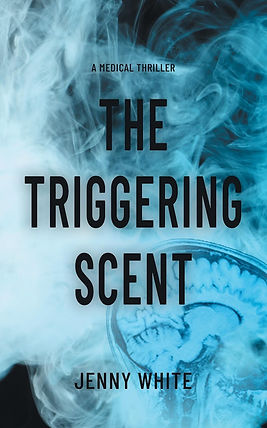
The Triggering Scent by Jenny White launches the Abbey Roberts RN series with a gripping medical thriller written by a retired registered nurse and brain tumor survivor. The novel blends realistic medical details with intense emotional journeys, exploring ethical dilemmas and the complexities of recovery in a high-stakes hospital setting. Because White writes from lived experience, both as a clinician and as someone who has navigated serious illness, the clinical accuracy is uncompromising. The ICU dynamics, the moral weight of patient decisions, and the human cost of healthcare work all ring true in ways that generic hospital dramas miss.
For nurses, reading fiction written by someone who has actually worked in healthcare offers validation. The stress you feel is real. The ethical conflicts you encounter are not aberrations, they're inherent to the work. Stories like these normalize the psychological complexity of critical care nursing and remind you that resilience isn't about being unaffected; it's about moving forward despite the weight.
Stories of Resilience and Ethical Complexity
Medical thrillers that authentically portray the ICU serve a dual purpose: they're engaging narratives and they're mirrors. They reflect back the realities of your work in ways that help you process the emotional and ethical dimensions of critical care nursing. A character struggling with end-of-life decisions, navigating professional boundaries, or managing the aftermath of a patient death becomes a way to explore your own experiences through fiction.
The best medical thrillers don't sensationalize healthcare. They acknowledge that hospitals are places where people face their most vulnerable moments, where nurses hold tremendous power and responsibility, and where ethical clarity is often impossible. Reading stories that honor this complexity, rather than reducing it to melodrama, provides a form of professional and emotional sustenance that clinical education alone cannot offer.
Building Your Personal Learning Plan
A reading list is only useful if it's integrated into a deliberate learning strategy. Your personal learning plan should balance immediate clinical needs, certification preparation, and longer-term professional development.
Start by assessing where you are. If you're new to the ICU, prioritize the visual guides and quick-reference tools first. You need immediate, practical support more than you need comprehensive textbooks. Pair these with one comprehensive reference text, either AACN Essentials or the Canadian text by Booker, depending on your learning style and access.
If you're preparing for CNA certification, structure your study around the exam blueprint. Use the Standards for Critical Care Nursing Practice and the Canadian Journal of Critical Care Nursing as your foundation. Supplement with a micro-credential or online course if you need structured guidance. Schedule regular study sessions, consistency matters more than marathon cram sessions.
For ongoing professional development, commit to reading one article per month from CJCCN. Choose articles relevant to your current clinical interests or challenges. This habit keeps you connected to evidence-based practice and exposes you to new research that might change how you approach patient care.
Finally, make space for the narratives. Read The Triggering Scent or similar medical thrillers not as a break from professional development, but as part of it. The emotional and ethical dimensions of critical care nursing are as important as the clinical ones. Stories that honor this complexity contribute to your resilience and your ability to sustain a long career in intensive care.
Building a strong reading list for ICU nurses requires balancing clinical depth, practical tools, and emotional resilience. The resources outlined here, from the Canadian standards that define your practice to the visual guides that support your first shifts to the narratives that help you process the weight of this work, create a foundation for both immediate competency and long-term professional growth. Start with what you need most urgently, then expand systematically. Your commitment to continuous learning is what separates nurses who survive in critical care from those who thrive in it. Explore Jenny White's medical thrillers to see how authentic hospital storytelling can deepen your understanding of the ethical and human dimensions of ICU nursing, and visit her website to discover how her work as a retired RN and brain tumor survivor brings uncompromising realism to medical drama.
Frequently Asked Questions
What makes a reading list for ICU nurses different from general nursing resources?
A curated reading list for ICU nurses combines three critical elements: evidence-based clinical references specific to acute and critical care, certification preparation materials aligned with Canadian standards, and practical orientation guides designed for high-acuity environments. General nursing resources lack the depth in hemodynamic monitoring, ventilator management, and the specialized pharmacology that ICU practice demands. The best reading lists also include materials addressing the emotional and mental health dimensions of critical care work, burnout resilience and ethical dilemmas that ICU nurses face daily.
How do I prepare for critical care nursing certification Canada?
Canadian critical care certification is governed by the Canadian Nurses Association (CNA) Critical Care Nursing Certification Examination. Preparation requires study of pathophysiology, ventilator management, hemodynamic monitoring, and pharmacology. The Laurentian University Critical Care Micro-Credential ($499 CAD per course) and Durham College's Critical Care Nursing E-Learning Graduate Certificate are specifically designed to prepare Canadian nurses for this exam. Pair these with the AACN Essentials of Critical Care Nursing textbook and the Canadian Journal of Critical Care Nursing for current evidence-based practice. Many nurses also benefit from quick-reference guides alongside formal study.
Are medical thrillers by healthcare professionals actually accurate about ICU dynamics?
Medical thrillers written by retired nurses or physicians often include authentic clinical details that general thriller authors cannot replicate. Jenny White, a retired registered nurse and brain tumor survivor, grounds her Abbey Roberts RN series in genuine ICU protocols, ethical dilemmas, and the emotional realities of critical care work. Readers with healthcare backgrounds report that her portrayal of nursing decision-making, patient assessment, and the multidisciplinary dynamics of hospital care feels credible, not Hollywood dramatization. The combination of accurate medical detail with compelling narrative makes these stories valuable for both healthcare professionals seeking relatable fiction and general readers wanting authentic hospital settings.
What should an ICU nursing orientation checklist include?
A comprehensive ICU nursing orientation checklist covers unit-specific protocols, equipment competency (ventilators, hemodynamic monitors, IV pumps), vital sign interpretation, ABG and lab value analysis, medication administration in critical care, and assessment frameworks for acute patient changes. The New to ICU 2.0 visual guide provides practical checklists for these areas. Beyond clinical skills, orientation should address communication protocols with the multidisciplinary team, infection control procedures specific to your unit, and mental health resources. Many Canadian ICUs also reference the Standards for Critical Care Nursing Practice (6th Edition 2024) published by the Canadian Association of Critical Care Nurses (CACCN) to ensure consistency with national expectations.
Buy now
This article was written using GrandRanker



Comments