



How to Write Realistic Hospital Dramas: A Writer's Guide
Table of Contents
Understanding Clinical Accuracy vs. Dramatic Tension
How to Write Realistic Hospital Dramas: The Foundation The Role of Medical Consultants in Your Research Building Authentic Hospital Hierarchy and Dynamics
The Role of Medical Consultants in Your Research
Building Authentic Hospital Hierarchy and Dynamics
Mastering Medical Drama Tropes to Avoid
Hospital Setting Details for Writers: Protocol and Workflow ER Workflow and Triage Procedures Surgical Procedures and Operating Room Realism
ER Workflow and Triage Procedures
Surgical Procedures and Operating Room Realism
Medical Accuracy in TV Shows: Balancing Detail with Pacing When to Use Medical Jargon and When to Simplify Handling Medical Terminology Without Confusing Readers
When to Use Medical Jargon and When to Simplify
Handling Medical Terminology Without Confusing Readers
Medical Ethics in Storytelling and Patient-Doctor Interactions Patient Privacy and Confidentiality in Narrative Depicting Realistic Bedside Manner and Patient Care
Patient Privacy and Confidentiality in Narrative
Depicting Realistic Bedside Manner and Patient Care
The Emotional and Mental Health Reality of Hospital Staff
Writing Realistic Hospital Dramas: A Scene Audit Checklist
Last Updated: July 26, 2026
Understanding Clinical Accuracy vs. Dramatic Tension
The fundamental challenge in writing realistic hospital dramas lies in balancing authentic details with narrative momentum. According to research on medical drama viewership, audiences abandon shows when medical scenes feel either too simplified or too clinically dense. The sweet spot exists where clinical accuracy serves the story rather than derailing it.
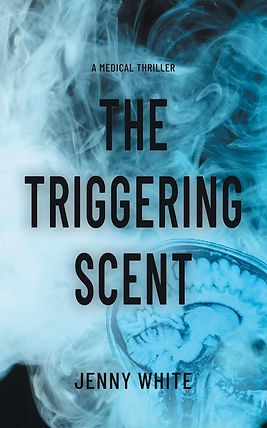
Jenny White, a retired registered nurse and author of the Abbey Roberts RN series, understands this balance intimately. Her debut novel The Triggering Scent demonstrates how authentic hospital protocol and medical jargon can enhance narrative pacing. The real skill isn't choosing between accuracy and drama, it's using accuracy to create drama.
Most writers treat medical realism as decoration, while those obsessing over every clinical detail often lose the plot entirely. The solution requires understanding what accuracy actually serves: a realistic hospital hierarchy creates natural conflict, authentic triage procedures establish stakes, and real patient-doctor dynamics generate emotional weight. These aren't details, they're story engines.
Pro TipMedical accuracy becomes a storytelling asset when it reveals character motivation or raises stakes. A surgeon's knowledge that a particular complication occurs in 3% of cases creates tension differently than a surgeon who simply "hopes for the best." The specificity makes the risk real.
How to Write Realistic Hospital Dramas: The Foundation
Building authentic hospital dramas requires understanding that hospitals operate as complex systems with hierarchies, protocols, and workflows most outside observers never see.
The Role of Medical Consultants in Your Research
Medical consultants serve as your bridge between narrative and clinical reality. A good consultant helps you understand why a procedure takes 45 minutes instead of 15, why a resident might question an attending physician's decision, and how fatigue affects decision-making in a 24-hour shift.
Finding the right consultant matters. Academic medical centers often have public relations departments willing to connect writers with physicians interested in storytelling. The best consultants are current practitioners, not retired physicians.
When working with consultants, ask specific questions: "What happens when a patient arrives via ambulance with a stab wound?" yields far more useful information than "Tell me about emergency medicine." Request walkthroughs of actual workflows and ask what surprised you most when you started training.
Watch OutMedical consultants can slow your writing if you treat them as gatekeepers rather than collaborators. Write your scene first, then fact-check it. Don't let accuracy concerns prevent you from drafting.
Building Authentic Hospital Hierarchy and Dynamics
Hospital hierarchies are rigid in some ways and surprisingly fluid in others. The attending physician holds ultimate responsibility but may not be present during critical moments. Residents and fellows do much of the actual patient care under attending supervision. Nurses coordinate care, often catching errors before they become catastrophic.
Conflicts arise naturally from these structures. A resident might know something the attending doesn't. A nurse might recognize a medication error. A specialist might recommend treatment conflicting with the primary team's plan. These are how medicine actually works.
The emotional toll of hierarchy matters too. A resident exhausted after a 28-hour shift must still defer to an attending. A nurse who has cared for a patient for weeks watches a new team take over. A physician must deliver devastating news while maintaining professional composure.
Role | Primary Responsibility | Authority Level | Typical Shift |
Attending Physician | Final clinical decisions, patient outcomes | Highest | 8-12 hours |
Resident/Fellow | Direct patient care, procedures under supervision | Medium | 24-28 hours (in training) |
Registered Nurse | Continuous patient monitoring, medication administration | Medium | 12 hours |
Specialist (Cardiology, etc.) | Consultation on specific conditions | Medium | Variable |
Pharmacist | Medication safety, drug interactions | Lower | 8-12 hours |
Mastering Medical Drama Tropes to Avoid
Certain medical drama clichés have calcified into predictable patterns. The "miracle cure discovered in the last moment" oversimplifies how medicine works. Real medicine involves uncertainty and decisions made with incomplete information. Show the physician weighing treatment options when evidence supports multiple paths, or depicting a patient's slow recovery with setbacks and small victories.
The "incompetent hospital staff" trope exists to make the protagonist look smarter. Real hospitals employ highly trained people who make mistakes under pressure. More interesting narratives show competent professionals facing impossible situations or making ethically complex decisions where reasonable people disagree.
The "patient wakes up and is fine" trope ignores recovery reality. Serious illness leaves marks. Patients wake confused, in pain, dependent on others. Their psychological recovery often outlasts physical healing.
The "doctors have no personal lives" trope creates one-dimensional characters. Real physicians have families, financial pressures, substance abuse issues, relationship problems, and moral injuries from their work.
Key TakeawayThe most compelling medical drama comes from showing how competent, well-intentioned people navigate systems that sometimes fail, make decisions with incomplete information, and carry the emotional weight of their work into their personal lives.
Hospital Setting Details for Writers: Protocol and Workflow
Authentic hospital settings require understanding that different departments operate under different protocols, that time moves differently depending on the situation, and that physical spaces reflect the work done within them.

ER Workflow and Triage Procedures
The emergency department operates as controlled chaos where triage determines everything. A patient arrives, a nurse performs rapid assessment, and that assessment determines whether the patient waits hours or goes straight to a resuscitation bay.
Triage uses a standardized system: immediate life threat (red), urgent (yellow), non-urgent (green), and expectant/deceased (black). This system creates natural narrative structure. A character triaged as yellow might wait while someone triaged red receives immediate intervention. This isn't negligence, it's how medicine prioritizes limited resources.
ER workflow involves constant reassessment. A patient triaged as green might deteriorate and move to yellow. This dynamic element creates realistic tension because conditions change.
Surgical Procedures and Operating Room Realism
Operating rooms maintain strict protocols for infection control, communication, and safety. A surgical procedure involves preparation: the patient is marked, anesthesia is induced, the surgical site is prepped with antiseptic solutions.
Communication in the OR follows specific patterns. The surgeon announces major steps: "Incision," "Retractors in," "Beginning dissection." This is safety protocol ensuring everyone knows what's happening. Unexpected findings get communicated immediately.
Recovery from surgery isn't instantaneous. Patients wake slowly from anesthesia, often confused. Pain management is ongoing. Complications can emerge hours or days later. This realistic timeline prevents the "patient wakes up and goes home" trope.
Medical Accuracy in TV Shows: Balancing Detail with Pacing
The challenge becomes acute when deciding how much medical detail to include. Too much and the narrative stalls. Too little and readers who work in healthcare feel patronized.
Include specific information when it serves character, plot, or emotional impact. Skip technical minutiae that doesn't. A reader doesn't need to understand medication pharmacokinetics, but they should understand that it takes 20 minutes to work, which creates tension if a patient is deteriorating now.
When to Use Medical Jargon and When to Simplify
Medical jargon establishes authenticity, creates insider/outsider dynamics, and reflects how healthcare professionals actually communicate.
Use jargon when characters speak to each other professionally. Physicians discussing a patient's condition use medical terminology. Readers understand that "the patient is hypotensive" means blood pressure is dangerously low.
Simplify when explaining to a patient or family member. Healthcare professionals modify their language for non-medical audiences. A physician might tell a family, "Your mother's heart isn't pumping efficiently," rather than "She has systolic dysfunction."
Pro TipWhen a character uses medical jargon, let their tone and body language convey severity. A physician calmly saying "We've got a pneumothorax" creates different tension than a physician urgently saying the same thing. The jargon stays consistent; the emotional weight shifts.
Handling Medical Terminology Without Confusing Readers
Readers tolerate medical terminology they don't fully understand if context makes the stakes clear. A character's vital signs can be described as "dropping" without explaining the physiological mechanism. The reader understands danger.
Avoid explaining medical terms as if your reader is ignorant. Instead, show the consequence: "Sepsis was spreading through her bloodstream. They had hours, maybe less."
When a specific medical term is essential to the plot, introduce it naturally and move forward. "The biopsy showed carcinoma. Stage three." The reader understands it's serious.
Medical Ethics in Storytelling and Patient-Doctor Interactions
Hospital dramas gain depth when they explore the ethical dilemmas physicians face regularly. These aren't abstract philosophical questions, they're decisions made under pressure with incomplete information.
Patient Privacy and Confidentiality in Narrative
Patient privacy and confidentiality in Canada's healthcare system are governed by federal and provincial legislation. The Personal Information Protection and Electronic Documents Act (PIPEDA) is a federal law that applies to private organizations, including many healthcare providers, that collect, use, or disclose personal information. Additionally, provinces have their own specific health privacy laws, such as Ontario's Personal Health Information Protection Act (PHIPA), which governs how personal health information may be collected, used, and disclosed within the health sector. Healthcare professionals cannot discuss patient information with family members without explicit consent, except in specific circumstances, as consent is generally required for the collection, use, and disclosure of personal health information.
A compelling scene might involve a family member demanding information while the physician must refuse, creating conflict rooted in actual law. A character might struggle with knowing something they cannot ethically share. A secret revealed through a breach of confidentiality carries weight because readers understand the violation.
Depicting Realistic Bedside Manner and Patient Care
Bedside manner varies dramatically based on personality, training, and circumstances. Some physicians are warm and communicative. Others are clinical and brief. This variation is realistic and creates character differentiation.
Patient care extends beyond medical intervention. A nurse who remembers a patient's name and takes time to explain procedures is providing care. A physician who listens to a patient's concerns is practicing good medicine.
Realistic patient-doctor interactions involve negotiation. A patient might refuse recommended treatment. A physician might disagree with a patient's choice but respect their autonomy. These conversations generate dramatic tension rooted in genuine ethical complexity.
The Emotional and Mental Health Reality of Hospital Staff
Hospital work extracts a cost extending far beyond the shift. Physicians, nurses, and other healthcare professionals experience burnout, moral injury, substance abuse, and mental health crises at rates significantly higher than the general population.
The emotional toll manifests differently. A physician might become emotionally detached as a coping mechanism. A nurse might carry home the weight of a patient's suffering. A resident might struggle with perfectionism and self-doubt.
Moral injury, the psychological impact of perpetrating, witnessing, or failing to prevent actions that violate one's core values, shapes healthcare professionals in ways traditional trauma frameworks don't capture. A physician forced to discharge a patient who cannot afford medication, a nurse witnessing inadequate staffing endangering patients, a surgeon who loses a patient despite doing everything correctly, these experiences accumulate and change people.
Burnout in healthcare isn't simply exhaustion. It's the erosion of meaning, the sense that the system is broken and individual effort cannot fix it. Substance abuse among healthcare professionals often stems from easy access and the need to self-medicate pain.
Writing Realistic Hospital Dramas: A Scene Audit Checklist
Before finalizing any hospital scene, use this checklist to verify authenticity and identify gaps.
Clinical Details:
Are medications, procedures, or diagnoses accurate?
Does the timeline make sense?
Are vital signs and physical descriptions consistent with the condition?
Does the equipment mentioned actually exist and function as described?
Hierarchy and Roles:
Are characters operating within their scope of practice?
Do interactions reflect actual hospital hierarchy?
Would the attending physician actually be present in this situation?
Are communication patterns realistic for the scenario?
Emotional Authenticity:
Do characters respond emotionally in ways that match their experience level?
Is the tone appropriate for the situation?
Do characters acknowledge the weight of what's happening?
Are reactions realistic for someone in this profession?
Workflow and Logistics:
Does the physical space match the described setting?
Are characters in the right location for this interaction?
Does the pacing match actual hospital workflow?
Are interruptions realistic for the setting?
Dialogue and Language:
Does medical terminology appear in appropriate contexts?
Is jargon used authentically, not as decoration?
Do explanations to patients differ from professional discussions?
Are communication patterns realistic for the relationship?
Ethical Considerations:
Are confidentiality and privacy respected appropriately?
Do characters make decisions consistent with medical ethics?
Are conflicts rooted in genuine ethical dilemmas?
Writing realistic hospital dramas requires balancing authenticity with narrative momentum. The writers who succeed understand that clinical accuracy serves character and plot, not the reverse. They know hospital hierarchies, workflows, and the emotional reality of healthcare work. They use medical consultants as collaborators, not gatekeepers.
Jenny White's The Triggering Scent demonstrates how a retired nurse's authentic experience transforms medical drama. Her knowledge of hospital protocol, patient care, and the psychological weight of healthcare work infuses every scene with credibility.
Start your hospital drama with research, consult with active practitioners, and write scenes that serve your story while honoring the complexity of the world you're depicting. The result will be narratives that resonate with both medical professionals and general readers, the hallmark of truly compelling medical fiction.
Frequently Asked Questions
What makes a medical drama realistic when writing hospital dramas?
Realistic hospital dramas balance clinical accuracy with narrative pacing. Key elements include authentic hospital hierarchy, accurate ER workflow and triage procedures, realistic surgical protocols, and genuine interdisciplinary team dynamics. Medical jargon should reflect actual usage by physicians and nurses, and patient-doctor interactions must show real bedside manner rather than Hollywood dramatization. The most compelling dramas ground emotional conflict in actual medical crises, code blue scenarios, diagnostic dilemmas, and ethical tensions that healthcare professionals genuinely face daily.
How can I ensure medical accuracy in TV shows and fiction without sacrificing drama?
Work with medical consultants, preferably practicing healthcare professionals, to vet your hospital protocols, surgical procedures, and diagnostic processes. Research actual hospital workflows, including ER triage systems and interdisciplinary team dynamics. Use medical terminology accurately but selectively; avoid jargon overload that confuses readers. The tension comes from character conflict and ethical dilemmas, not from medical inaccuracy. Many readers, especially healthcare workers, will immediately spot fake details. Authenticity builds credibility and deepens emotional investment in your narrative.
What are the most common medical drama tropes writers should avoid?
Avoid instant diagnoses, unrealistic surgical timelines, and exaggerated medical crises resolved in minutes. Don't depict hospitals as chaotic free-for-alls; they operate under strict protocols. Avoid portraying attending physicians as always available for bedside drama, or showing residents making major decisions without supervision. Skip the 'miracle cure' trope and medical errors that go unaddressed. Don't ignore patient privacy and confidentiality in dialogue or narrative. Realistic hospital dramas show the grinding complexity of medicine: multiple specialists, bureaucracy, insurance barriers, and the business of healthcare alongside the human stakes.
How should I handle medical jargon and hospital setting details in my narrative?
Use medical terminology authentically, characters should speak as their roles demand. Residents use different language than attending physicians; nurses have their own vocabulary. Define jargon through context or character dialogue rather than exposition. Show hospital setting details through action: describe the ER triage process as it unfolds, not as a lecture. Include realistic elements like electronic health records (EHR) navigation, shift handoffs, and interdisciplinary rounds. These details ground readers in authentic hospital protocol without halting narrative momentum. The goal is immersion, not a medical textbook.
This article was written using GrandRanker


Comments