



Books About Resilience After Brain Injury
Updated: Sep 16
Table of Contents
Why Books Matter in Brain Injury Recovery
Memoirs of Recovery: Stories of Resilience After Brain Injury
I'll Carry the Fork!: Recovering a Life After Brain Injury
Over My Head: A Doctor's Own Story of Head Injury
Where Is the Mango Princess?: A Journey Back from Brain Injury
Understanding Brain Injury Recovery Strategies Through Science
The Brain That Changes Itself: Neuroplasticity in Action
The Brain's Way of Healing: Natural Approaches to Recovery
Coping With Traumatic Brain Injury: Emotional and Practical Guides
To Root & To Rise: Accepting Brain Injury
Brain Injury, Trauma, and Grief: Healing the Emotional Toll
Caregiver Resources for Brain Injury Support and Wellness
Living with Brain Injury: A Guide for Families
Professional Resources for Cognitive Rehabilitation
Building Your Recovery Library: How to Choose What Fits Your Journey
Conclusion
Last Updated: August 11, 2026
Why Books Matter in Brain Injury Recovery
Reading becomes a lifeline after traumatic brain injury. When cognitive function feels fractured, a well-chosen book can anchor you to possibility. Books about resilience after brain injury validate the experience of survivors and caregivers navigating a landscape few outside this community understand.
The recovery journey is isolating. Survivors face cognitive changes, emotional upheaval, and identity shifts rarely discussed in mainstream literature. Books addressing these realities offer something clinical settings often cannot: witness testimony from people who've walked this path. They normalize the struggle and illuminate pathways forward.
This guide from Jenny White explores the most impactful books for brain injury recovery, from personal memoirs capturing raw emotional reality to scientific texts explaining neuroplasticity, from caregiver guides to professional resources on cognitive rehabilitation.

Key Takeaway Books about resilience after brain injury serve as both mirror and map, reflecting your experience while charting a path toward healing and adaptation.
Memoirs of Recovery: Stories of Resilience After Brain Injury
Memoirs cut through clinical distance. They show what recovery actually looks like in a kitchen, a workplace, a marriage. When a survivor describes personality shifts or a caregiver captures the grief of losing someone still physically present, you're witnessing transformation, not reading data.
I'll Carry the Fork!: Recovering a Life After Brain Injury
Kara Swanson's memoir has become an industry standard in the traumatic brain injury community. The title, drawn from a moment of stubborn determination, captures her recovery: small victories matter, persistence defines healing, and reclaiming ordinary life is extraordinary.
Swanson writes with unflinching honesty about cognitive and emotional toll. She doesn't minimize struggle or rush toward inspirational conclusions. Instead, she walks readers through the messy middle, when progress stalls and frustration peaks, when you grieve the person you were while becoming someone new.
The book resonates because it validates experience. It speaks to executive function deficits, fatigue that doesn't match any clock, social awkwardness that emerges when your brain doesn't process as it used to.
Pro Tip This memoir works best for survivors 6-18 months into recovery, when initial shock has settled but the long road ahead feels daunting.
Over My Head: A Doctor's Own Story of Head Injury from the Inside Looking Out
Claudia Osborn, a doctor when she sustained her brain injury, understood the neurology. She knew what her scans meant. None of that prepared her for lived experience.
Her memoir bridges medical knowledge and human reality. Osborn writes with clinician precision and patient vulnerability, exploring identity loss when your professional identity becomes inaccessible. A doctor who can no longer practice must rebuild her sense of self from the ground up.
What makes this distinctive is its dual perspective. Osborn doesn't just describe symptoms; she explains them medically, then shows how that knowledge failed to protect her from emotional and cognitive chaos. For healthcare professionals who've experienced brain injury, this validates particular grief. For others, it offers insight into how expertise doesn't insulate you from trauma.
Where Is the Mango Princess?: A Journey Back from Brain Injury
Cathy Crimmins wrote this memoir from the caregiver's perspective, documenting her husband Mark's traumatic brain injury. The title refers to a moment of profound disconnection: Mark, post-injury, asks repeatedly where the mango princess is, a reference that makes no sense, representing the gulf between them.
This book centers the caregiver's experience. Crimmins captures disorientation of loving someone fundamentally changed. She writes about small losses, conversations that go nowhere, personality shifts that feel like grief, alongside larger logistical challenges of managing recovery.
The book balances heartbreak with humor. For caregivers, this memoir is essential. It validates exhaustion, resentment, and the love that persists despite everything changing.
Watch Out This memoir is emotionally demanding. Readers should approach it when they have emotional bandwidth to process raw honesty.
Understanding Brain Injury Recovery Strategies Through Science
Science explains why recovery is possible. Neuroplasticity, the brain's ability to reorganize and form new neural connections, fundamentally changed how we understand brain injury. These books translate that science into hope without oversimplifying the work recovery requires.
The Brain That Changes Itself: Stories of Personal Triumph from the Frontiers of Brain Science
Norman Doidge's The Brain That Changes Itself introduced neuroplasticity to mainstream audiences. The book combines rigorous neuroscience with compelling case studies of individuals who rewired their brains after injury, stroke, or illness.
Doidge explains how the brain isn't fixed after injury but plastic, capable of reorganization and healing. He walks through mechanisms: how repeated practice strengthens new neural pathways, how sensory input triggers healing, how the brain's adaptability offers genuine hope for recovery.
Case studies ground the science. You read about a woman who regained movement after stroke through constraint-induced therapy, a man who recovered from traumatic brain injury through persistent cognitive work. These aren't miraculous recoveries but stories of deliberate, sustained practice leveraging the brain's plasticity.
For survivors and caregivers, this book reframes recovery. It's not about hoping for spontaneous healing but understanding that your brain can change through deliberate engagement.
The Brain's Way of Healing: Remarkable Discoveries and Recoveries from the Frontiers of Neuroplasticity
Doidge's follow-up deepens exploration of how the brain heals. The Brain's Way of Healing moves beyond neuroplasticity theory into practical applications: light therapy, sound, vibration, movement, and other non-invasive approaches that awaken the brain's healing capacities.
This book addresses what happens when traditional rehabilitation reaches a plateau. Doidge documents cases where alternative approaches, some rooted in neuroscience, others in traditional practices, have unlocked healing that conventional therapy alone didn't achieve.
The book is more practical than its predecessor. Readers come away with specific techniques, breathing patterns, movement practices, and sensory approaches they can explore.
Coping With Traumatic Brain Injury: Emotional and Practical Guides
The emotional aftermath of traumatic brain injury is often overlooked in clinical settings. These books address psychological dimensions: grief, trauma, identity loss, and the path toward acceptance and wellness.
To Root & To Rise: Accepting Brain Injury
Carole Starr, a brain injury survivor, created an interactive workbook for the emotional work of recovery. To Root & To Rise acknowledges that accepting brain injury is a process, not a destination.
The book addresses grief and loss directly, helping survivors identify what they've lost and what remains. It guides readers toward finding strengths that persist or emerge post-injury. The workbook format requires active engagement, writing, reflecting, processing on the page.
Acceptance doesn't mean happiness about the injury. It means coming to terms with changed reality and building a life within that new framework. This book gives permission to grieve while moving forward.
Brain Injury, Trauma, and Grief: Healing the Emotional Toll
Shireen Jeejeebhoy's Brain Injury, Trauma, and Grief fills a critical gap in brain injury literature. While many books address cognitive rehabilitation or practical recovery, this centers emotional and psychological dimensions often overlooked.
Jeejeebhoy provides step-by-step roadmaps for processing grief, managing trauma responses, and pursuing healing. She acknowledges that brain injury is trauma, a psychological rupture requiring specific healing. She addresses how survivors can move from survival mode toward genuine healing.
Key Takeaway These emotional guides recognize that resilience after brain injury isn't about "bouncing back" but integrating the injury into your identity and building meaningful life within your new reality.
Caregiver Resources for Brain Injury Support and Wellness
Caregivers carry invisible weight. They manage medical appointments, household logistics, emotional support, and their own grief, often simultaneously. These books recognize that caregiver wellness is essential to sustainable support.
Living with Brain Injury: A Guide for Families
This guide approaches brain injury as a family system challenge. It recognizes that brain injury affects everyone: the survivor, primary caregiver, siblings, children, extended family.
The book covers physical, cognitive, and emotional changes following brain injury, then translates those into practical family strategies. How do you communicate with someone whose processing speed has changed? How do you manage behavioral shifts? How do you maintain your own identity while supporting someone else's recovery?
It addresses caregiver burden directly, exhaustion, resentment, guilt about feeling resentful. It validates these as normal rather than shameful and provides concrete strategies for self-care, boundary-setting, and maintaining relationships under strain.
Pro Tip If you're a caregiver, read this book early. It normalizes your experience and provides practical tools before burnout deepens.
Professional Resources for Cognitive Rehabilitation
For clinicians, researchers, and deeply engaged caregivers seeking evidence-based frameworks, professional texts offer comprehensive guidance on cognitive rehabilitation interventions.
Transforming Cognitive Rehabilitation: Effective Instructional Methods by McKay Moore Sohlberg and colleagues provides clinical frameworks for addressing deficits in attention, memory, executive function, and communication following brain injury.
This is dense, technical reading for professionals designing rehabilitation programs or caregivers seeking to understand clinical principles underlying therapy. It bridges neuroscience and practical clinical application, validating that cognitive rehabilitation is science, not guesswork.
Building Your Recovery Library: How to Choose What Fits Your Journey
Not every book works for every reader at every stage. Recovery unfolds in phases, and your reading needs shift accordingly.
Early recovery (first 3 months): Focus on accessible memoirs that validate disorientation. I'll Carry the Fork! works because it's accessible and affirming. For caregivers, Where Is the Mango Princess? provides immediate recognition.
Middle recovery (3-12 months): Science becomes grounding. The Brain That Changes Itself explains what's happening neurologically. Emotional guides like To Root & To Rise help process psychological dimensions. Caregivers benefit from Living with Brain Injury.
Late recovery and beyond (12+ months): Deeper emotional work happens. Brain Injury, Trauma, and Grief addresses slower, subtler healing extending years beyond injury. Professional resources become relevant if optimizing rehabilitation or understanding clinical approaches.
Consider your learning style. Some need narrative memoirs showing recovery through story. Others need science explaining how the brain heals. Some need workbooks for active engagement. Most benefit from a mix.
Best For Survivors in early recovery: memoirs first, science second. Caregivers: caregiver-focused books plus at least one survivor memoir. Healthcare professionals: professional texts plus at least one memoir to humanize clinical knowledge.
Conclusion
The right book becomes a witness to your recovery. It validates what you're experiencing, explains what's happening neurologically, and shows you that others have navigated this terrain and found meaning on the other side.
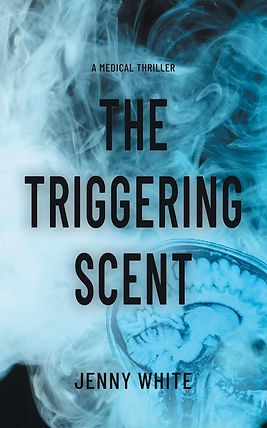
For readers seeking authentic, character-driven narratives exploring resilience and recovery, Jenny White's work offers grounded authenticity. Her debut novel, The Triggering Scent, draws on her background as a retired registered nurse and brain tumor survivor to deliver immersive medical drama rooted in real clinical experience and emotional truth. The Abbey Roberts RN series explores resilience, ethical dilemmas, and recovery complexities through suspenseful storytelling that honors both medical reality and human cost of trauma. If you've found yourself drawn to books about resilience after brain injury, Jenny White's fiction offers that same commitment to authentic, emotionally intelligent storytelling about healthcare, trauma, and survival.
Recovery Phase | Best Book Type | Recommended Titles | Why It Works |
Early (0-3 months) | Accessible memoirs | I'll Carry the Fork! | Validates experience, manageable reading |
Middle (3-12 months) | Science + emotional guides | The Brain That Changes Itself, To Root & To Rise | Explains recovery, addresses emotional work |
Late (12+ months) | Deeper emotional work | Brain Injury, Trauma, and Grief | Addresses long-term psychological healing |
Caregivers (any phase) | Caregiver-focused + survivor memoir | Living with Brain Injury, Where Is the Mango Princess? | Validates caregiver experience, builds empathy |
Frequently Asked Questions
How can reading help with brain injury recovery?
Reading provides multiple benefits for brain injury survivors. Books about resilience after brain injury offer validation and hope by sharing real stories of recovery. Memoirs help survivors understand they are not alone in their struggles with cognitive challenges, emotional changes, and identity shifts. Scientific books on neuroplasticity explain how the brain can rewire itself, fostering hope. Interactive workbooks engage the brain in active learning, supporting cognitive rehabilitation. For many survivors, reading becomes a therapeutic tool that strengthens attention, memory, and executive function while providing emotional support during the healing process.
What are the best books for understanding traumatic brain injury?
The best books combine personal narrative with practical guidance. Memoirs like 'I'll Carry the Fork!' and 'Over My Head' offer authentic survivor perspectives. Scientific works such as 'The Brain That Changes Itself' explain neuroplasticity and recovery mechanisms in accessible language. For emotional processing, 'Brain Injury, Trauma, and Grief' addresses the psychological wellness aspects often overlooked. Interactive workbooks like 'To Root & To Rise' help survivors navigate grief and identity changes. For caregivers, 'Living with Brain Injury: A Guide for Families' and 'Where Is the Mango Princess?' provide both practical strategies and emotional validation. The best choice depends on whether you need scientific understanding, emotional support, or practical caregiving advice.
Are there books written by brain injury survivors about their recovery?
Yes, several powerful memoirs are written by survivors themselves. 'I'll Carry the Fork!' by Kara Swanson shares her personal journey of recovery with honest insights about struggles and triumphs. 'Over My Head' by Claudia Osborn combines a doctor's medical knowledge with her personal experience of head injury and rebuilding her life. 'Where Is the Mango Princess?' is written from a caregiver's perspective but deeply explores the survivor's journey. These lived-experience narratives provide authenticity and hope that clinical resources cannot replicate, showing readers that resilience after brain injury is possible.
How does neuroplasticity relate to resilience after brain injury?
Neuroplasticity is the brain's ability to rewire itself and form new neural pathways in response to experience and activity. This scientific foundation directly supports resilience after brain injury because it demonstrates that recovery is not fixed or predetermined. Books like 'The Brain That Changes Itself' and 'The Brain's Way of Healing' explain how survivors can activate this natural healing capacity through targeted rehabilitation, movement, sensory stimulation, and cognitive exercises. Understanding neuroplasticity empowers survivors by showing that brain health improvements are achievable, which builds psychological wellness and motivation for long-term recovery efforts.
Buy now
This article was written using GrandRanker


Comments