



Writing Suspenseful Scenes for Beginners: A Step-by-Step Guide
Table of Contents
Writing Suspenseful Scenes for Beginners: A Step-by-Step Framework
What You'll Need Before You Start
How to Build Suspense in Writing: The Five-Part Scene Framework
Step 1: Establish the Goal and the Obstacle
Step 2: Raise the Stakes and Add a Ticking Clock
Step 3: Control What the Reader Knows
How to Start a Scene: Openings That Pull Readers In
Suspense Scene Examples: Annotated Before-and-After
Before: A Flat Scene
After: A Suspenseful Rewrite
How to End a Scene With a Cliffhanger (Without Cheating)
The Earned Cliffhanger Test
How Point of View Changes the Hook
The Quiet Ending (When Not to Hook)
A Revision Pass for Endings
Common Beginner Mistakes and How to Fix Them
Your Suspense Revision Checklist
Conclusion: Write the Scene Only You Can Write
Frequently Asked Questions
Last Updated: October 11, 2026
Writing Suspenseful Scenes for Beginners: A Step-by-Step Framework
Suspense is the feeling a reader gets when they want something to happen but fear it won't, and writing suspenseful scenes for beginners comes down to one skill: controlling what the reader knows and when they know it.
Here is the good news. You don't need a twist ending or a serial killer to write a tense scene.
Most beginner scenes fail for the same boring reason: nothing is at risk, so nothing feels urgent. Fix that and your scene works.
Below, we'll show you exactly how to build that pressure, step by step.
What You'll Need Before You Start
You need three things before you write a single suspenseful scene: a character with a clear goal, an obstacle that blocks it, and a consequence the reader understands.
Skip the fancy outline software. Grab a notebook and answer these questions first:
Who wants what, right now, in this scene?
What stops them from getting it?
What happens if they fail?
If you can't answer all three, you don't have a scene yet. You have a description.
For readers who love hospital drama, this is why a nurse racing to catch a medication error works so well. The goal is clear. The clock is real.
How to Build Suspense in Writing: The Five-Part Scene Framework
The five-part scene framework is a simple structure that builds tension from the first line to the last: goal, obstacle, stakes, information control, and a turn. Each part does one job, so you always know what to write next.
Here's how the pieces fit together:
Part | What It Does | Question to Answer |
Goal | Gives the character direction | What do they want? |
Obstacle | Creates conflict | What blocks them? |
Stakes | Creates urgency | Why does it matter? |
Information control | Creates uncertainty | What does the reader know? |
Turn | Creates the payoff | What changes at the end? |
Step 1: Establish the Goal and the Obstacle
State the character's goal in the first few lines, then put a wall in front of it.
Weak: "Maya walked into the ICU to check on her patient."
Strong: "Maya had ninety seconds to reach bed four before the night nurse noticed the wrong dosage was already running."
The second version gives you a goal (reach the bed), an obstacle (the nurse), and urgency (ninety seconds).
Step 2: Raise the Stakes and Add a Ticking Clock
Stakes are what the character loses if they fail. A ticking clock is the deadline that forces them to act now instead of later.
Ask yourself: what's the worst realistic outcome here? Then make it personal. A missed shift is annoying. A missed shift that costs someone their life is suspense.
Step 3: Control What the Reader Knows
Information control is the engine of suspense. Give the reader one piece of knowledge the character doesn't have, or one the character has that the reader doesn't. Either way, the gap creates tension.
Pro Tip The fastest way to add suspense to a flat scene is to let the reader know the danger before the character does. This is called dramatic irony, and it costs you nothing but a sentence.
How to Start a Scene: Openings That Pull Readers In
The best scene openings drop the reader into motion, not into explanation. Start mid-action, mid-argument, or mid-decision, and let the details catch up.
Writer Brandon McNulty
Three openings that work for beginners:
The countdown: "She had four minutes and no badge."
The wrong detail: "The chart said the patient was stable. The monitor disagreed."
The decision: "He could sign the form, or he could tell the truth."
Notice what's missing: weather, backstory, and throat-clearing. Save those for later, once the reader is hooked.
Suspense Scene Examples: Annotated Before-and-After
A suspenseful scene works when every line either raises a question or delays the answer. The best way to learn this is to see a weak scene and a strong one side by side.

Refining these details requires a keen eye for the procedural logic necessary to
write realistic crime scenes
that ground your narrative in authentic tension.
Before: A Flat Scene
Sarah walked into the hospital room. She checked the patient's vitals and wrote them down. Everything looked normal. She left the room and went to the nurses' station.
This scene has no goal, no obstacle, and no stakes. The reader has no reason to keep going.
After: A Suspenseful Rewrite
Sarah's hand hovered over the IV line. The numbers on the monitor were wrong. Not dangerously wrong. Just wrong enough that no one else would notice. She reached for the clamp. Behind her, the door clicked open. "You're not supposed to be in here," the night nurse said.
Same room. Same character. But now there's a goal (fix the line), an obstacle (the nurse), and a clock (the patient's condition). That's suspense.
How to End a Scene With a Cliffhanger (Without Cheating)
A cliffhanger works when it withholds an outcome the reader has already been made to care about. It fails when it invents a fake danger that vanishes on the next page. The difference is not the size of the hook, it is whether the reader believes the consequence is real.
The Earned Cliffhanger Test
Before you end a scene on a question, run this three-question test:
Did the scene resolve something? A cliffhanger is not the absence of an ending. The character should have achieved or lost something concrete, reached the room, missed the call, signed the form, and the new question should grow out of that result.
Is the danger consistent with what the reader already knows? If the reader has been told the building is empty, a sudden guard cannot appear. If the reader has been told the guard is on break, he can.
Would the reader care if the answer were boring? If the only possible answer is "nothing happened," the hook is fake. If the answer could go two or three ways and each one costs the character something, the hook is real.
If a scene fails question one, it is not a cliffhanger, it is an interruption. If it fails question two, it is a cheat. If it fails question three, it is noise.
How Point of View Changes the Hook
The kind of cliffhanger you can write depends on whose head the reader is in.
Limited third person (one character): the reader only knows what the character knows. The hook is usually a new perception, a sound, a face, a number on a screen, that the character has not yet interpreted.
First person: the hook can be a withheld thought. The narrator knows something and has not said it. This is powerful but easy to abuse; if the narrator withholds for no in-world reason, readers feel manipulated.
Omniscient or multi-POV: the hook can be dramatic irony, the reader sees the danger the character cannot. The tension comes from the gap, not from the surprise.
Pick the hook that matches your POV. A surprise reveal works in omniscient; it feels like cheating in tight first person.
The Quiet Ending (When Not to Hook)
Not every scene should end on a question. If every chapter closes on a cliffhanger, readers stop believing the stakes, they learn that the danger is always deferred. A scene can end on:
A decision the character makes that the reader knows is wrong.
A line of dialogue that reframes everything before it.
A small image that carries emotional weight without asking a question.
A quiet ending earns the next loud one. Use it when the scene has already delivered its tension and the reader needs a breath before the next climb.
Watch Out The most common beginner mistake is ending every scene on an unanswered question. Do that too often and readers stop believing your stakes. Sometimes a scene should end on a quiet, earned moment instead.
A Revision Pass for Endings
Read only the last two paragraphs of each scene in your draft. For each one, ask: what question does this leave open, and what did the scene resolve before it? If you cannot name both, rewrite the ending. If you can name both but the question is smaller than the resolution, the scene is ending too softly. If the question is bigger but the resolution is missing, the scene is ending too cheaply.
Common Beginner Mistakes and How to Fix Them
Most beginner suspense problems come from three habits: explaining too much, rushing the middle, and forgetting the reader. Fix the habit, and the scene fixes itself.
Over-explaining: Trust the reader. Cut the paragraph that tells us how scared she is; show her hands shaking instead.
Rushing the middle: Tension lives in the delay. Let the character try and fail before they succeed.
Forgetting the reader: Every scene should answer one question and raise another. If it does neither, cut it.
Your Suspense Revision Checklist
Run this checklist on every scene before you move on. It takes ten minutes and catches most of the problems that make scenes fall flat.
Does the scene open in motion, not in explanation?
Is the character's goal clear within the first few lines?
Is there a real obstacle blocking that goal?
Does the reader know what's at stake?
If you can check most of these, your scene is doing its job.
Conclusion: Write the Scene Only You Can Write
Suspense isn't a trick. It's a promise you make to the reader and keep, scene after scene. The writers who do it best are the ones who bring something true to the page.
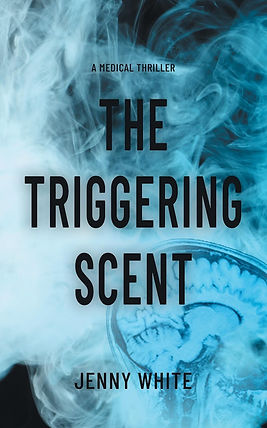
At Jenny White, that truth comes from a life spent in the ICU and a recovery that shaped every page. If you want to see these techniques in action, The Triggering Scent puts them to work in a hospital where every decision carries weight.
Frequently Asked Questions
How do you write a suspenseful scene as a beginner?
Start with a clear goal for your protagonist, then introduce an obstacle that blocks it. Raise the stakes by adding consequences and a time limit. Control what the reader knows versus what the character knows to create uncertainty. Keep sentences short during high-tension moments. End the scene with a revelation or a new problem that forces the reader to continue. Practice with the five-part framework in this guide until it becomes instinct.
How do you build tension in a scene without action?
Tension comes from anticipation, not action. Use sensory detail to ground the reader in the moment, then let internal conflict do the work. A character who hesitates before opening a door can be more suspenseful than a car chase. Withhold information strategically: let the reader sense something is wrong before the character does. Slow the pacing with longer sentences, then cut to short ones when the moment breaks. The contrast creates the tension.
How do you end a scene on a cliffhanger?
End with a revelation, a decision, or a new threat that changes the character's situation. Avoid fake cliffhangers that resolve immediately in the next scene. Instead, introduce a complication that genuinely raises the stakes. For example, a nurse who finally gets the test results discovers they belong to the wrong patient. The reader must turn the page to see how the character handles the new problem. Earn the cliffhanger by making the consequence real.
What makes a good suspense story?
A good suspense story balances character, stakes, and information control. Readers need to care about the protagonist's goal, understand what happens if they fail, and feel uncertain about the outcome. Pacing matters: alternate between slower, atmospheric moments and fast, tense ones. Foreshadowing and clues reward attentive readers. Most importantly, the suspense must come from the character's choices, not just external events. When readers see themselves in the protagonist's dilemma, the tension feels personal.
Suspense is a skill, not a talent, and it improves with every scene you revise. Jenny White writes medical thrillers that show these techniques in practice, built on authentic hospital detail and the resilience of a brain tumor survivor. The Triggering Scent delivers immersive storytelling, realistic medical drama, and ethical dilemmas that keep readers turning pages. Buy now and see how a suspenseful scene is done.
Buy now



Comments