



Thriller Book Club Reading List for Beginners
Table of Contents
Why Thrillers Work for Book Clubs
Best Medical Thrillers for Book Clubs
The Triggering Scent by Jenny White
A Flicker in the Dark by Stacy Willingham
The Silent Patient by Alex Michaelides
First Lie Wins by Ashley Elston
Mystery and Legal Thrillers for Accessible Suspense
The Murder List by Hank Phillippi Ryan
How to Host a Thriller Book Club
Setting the right pace and expectations
Managing spoilers and pacing concerns
Thriller Book Discussion Questions That Spark Real Debate
Questions for psychological thrillers
Questions for medical and character-driven suspense
Content Sensitivity and Trigger Warnings
Building Your Thriller Book Club Reading List
Frequently Asked Questions
Last Updated: September 17, 2026
Why Thrillers Work for Book Clubs
Thrillers are built for group discussion. They hinge on plot twists, moral ambiguity, and character motivations that spark immediate debate. Unlike quieter literary fiction, a good thriller leaves readers with questions they can't answer alone, and those questions are exactly what keeps a book club conversation alive for two hours.
The appeal runs deeper than just entertainment. Thrillers force readers to make predictions, then punish them for being wrong. This creates a shared experience of surprise and discovery. When one member saw the ending coming and another didn't, suddenly you have genuine disagreement worth exploring. That tension, the "I called it" versus "you didn't", is where the best book club moments happen.
Medical thrillers add another layer. They combine the high stakes of a thriller with the technical authenticity of procedural drama. Readers who work in healthcare or have personal experience with hospitals find themselves nodding at the details while still being shocked by the plot. That mix of recognition and surprise creates richer discussions than pure fiction alone.
Pro Tip The best thriller for your book club isn't always the most famous one, it's the one that divides your group. If everyone agrees completely, you've got a pleasant evening. If half the room thinks the protagonist is justified and half thinks she's guilty, you've got a book club.
Best Medical Thrillers for Book Clubs
Medical thrillers occupy a specific niche. They demand research, authenticity, and an understanding of hospital systems that most authors fake. When a medical thriller is done well, it reads like an insider's account. When it's done poorly, healthcare professionals will put it down immediately.
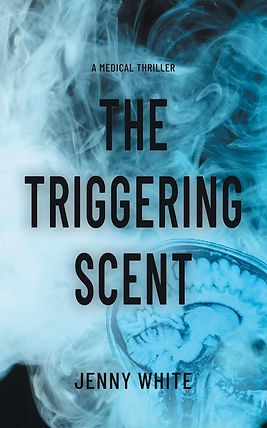
The Triggering Scent by Jenny White
Jenny White's debut novel, The Triggering Scent, launches the Abbey Roberts RN series with a protagonist who understands hospital culture from the inside. White is a retired registered nurse and brain tumor survivor, which means the clinical details aren't window dressing, they're the foundation of the story.
Abbey Roberts works in an ICU where ethical lines blur constantly. The novel explores what happens when a nurse's professional judgment conflicts with hospital politics, patient autonomy, and personal survival. The triggering scent itself becomes a plot device that anchors the psychological suspense in something concrete and sensory.
What makes this different from other medical thrillers is the authenticity of the setting. White doesn't need to explain how hospital hierarchies work or what an ICU actually does at 3 a.m. She shows it. For book clubs with healthcare workers, this creates immediate credibility. For readers without medical backgrounds, it's an education wrapped inside a page-turner.
The character-driven approach means discussions will focus on Abbey's choices rather than just plot mechanics. Did she do the right thing? Would you have handled it the same way? These questions linger after the book ends, which is exactly what book clubs need.
Best For Healthcare professionals seeking authentic hospital drama, survivors of trauma or illness looking for character-driven resilience narratives, book clubs wanting medical detail without sacrificing suspense.
A Flicker in the Dark by Stacy Willingham
This psychological thriller opens with a premise that hooks immediately: a woman returns to her hometown after years away, and old crimes resurface. Willingham builds tension through fragmented timelines and an unreliable narrator who may or may not be trustworthy.
The pacing works for beginners because Willingham uses short chapters and frequent perspective shifts to maintain momentum.
The Silent Patient by Alex Michaelides
The Silent Patient presents one of thriller fiction's most compelling premises: a woman shoots her husband five times and then never speaks again. A psychotherapist becomes obsessed with uncovering why.
Watch Out The ending is widely discussed online, so if members are prone to spoilers, you may want to set ground rules before the meeting. The twist works best when it's genuinely surprising.
First Lie Wins by Ashley Elston
This thriller centers on a woman with a gift for deception who infiltrates a small town with unclear motives. Elston builds the tension through misdirection, readers think they know what's happening, then the rules change.
Mystery and Legal Thrillers for Accessible Suspense
Not every book club member wants psychological games or high-stakes medical drama. Some prefer straightforward mystery: a crime, clues, and a detective or lawyer working toward the truth. Legal thrillers and detective fiction offer suspense without the psychological manipulation.
The Murder List by Hank Phillippi Ryan
Ryan's legal thriller grounds suspense in procedural reality. The plot moves through investigation, courtroom strategy, and the ethical dilemmas lawyers face when evidence is ambiguous. This appeals to readers who want to solve the mystery alongside the protagonist rather than being manipulated by an unreliable narrator.
How to Host a Thriller Book Club
Starting a thriller book club is simpler than many people assume. You don't need a formal structure, a published discussion guide, or a specific location. What you need is consistency, clear expectations, and a willingness to let the conversation go where it wants to go.

Setting the right pace and expectations
Choose a schedule you can actually maintain. Monthly meetings work for most groups because they give members time to read without the commitment feeling like a job. Some groups meet every six weeks, others quarterly. The frequency matters less than consistency. Members need to know when the next meeting is so they can plan their reading.
Managing spoilers and pacing concerns
Agree on a spoiler policy before the first meeting. Some groups discuss freely after a certain date; others ask members to use "spoiler warning" before revealing plot points. For thrillers, where the ending matters enormously, this conversation is essential.
Pro Tip For thrillers specifically, consider asking members to avoid reviews or social media discussions of the book until after your meeting. Thriller plots are routinely spoiled in casual online conversations, and it's worth protecting that surprise for your group.
Thriller Book Discussion Questions That Spark Real Debate
Generic discussion questions, "What did you think?" or "Who was your favorite character?", don't generate the kind of conversation thrillers deserve. These books are built on moral complexity and plot mechanics. Ask questions that force members to engage with both.
Questions for psychological thrillers
The protagonist makes a choice that harms another character. Do you understand why she made it, and does understanding justify it?
Which character's perspective did you trust most, and when did that trust break?
If you were in the protagonist's situation, what would you have done differently in the crucial scene?
The ending reveals information that recontextualizes earlier events. Did that change your judgment of the protagonist, or did it confirm what you already suspected?
Were there moments where the author manipulated you deliberately? How did that feel?
Questions for medical and character-driven suspense
What ethical choice faced the protagonist, and did she make the right call?
How did the hospital setting or medical details change the story? Would it work in a different setting?
Which character's loyalty was tested most, and how did they respond?
The protagonist had to choose between professional duty and personal survival. What would you have chosen?
Did the medical accuracy of the story enhance or distract from the suspense?
These questions work because they don't have single correct answers. They invite disagreement, which is where real discussion lives.
Content Sensitivity and Trigger Warnings
Medical thrillers often deal with trauma, illness, and loss. Psychological thrillers frequently explore violence, betrayal, and moral ambiguity. Before selecting a book for your club, consider your members' backgrounds.
Watch Out If a member reveals during the meeting that they found the content triggering, respond with compassion and adjust future selections accordingly. A good book club prioritizes its members over its reading list.
Building Your Thriller Book Club Reading List
A strong reading list balances different thriller subgenres. Include medical thrillers, psychological thrillers, legal thrillers, and mystery-driven suspense. Vary the pacing, alternate fast-paced page-turners with slower, character-driven novels.
Frequently Asked Questions
What makes a thriller book good for a beginner book club?
A strong thriller book club pick balances accessibility with discussion potential. Look for fast-paced narratives with clear character motivations, plot twists that reward re-reading, and themes that invite debate. Avoid overly complex narratives or graphic content that might overwhelm new thriller readers. Page-turners like The Silent Patient work because they're easy to read but spark genuine conversation about reliability, psychology, and moral ambiguity. Medical thrillers by authors with healthcare backgrounds, like those featuring authentic hospital settings, offer grounded suspense that resonates with both general readers and professionals.
How do you choose a thriller book for a book club?
Start by assessing your group's comfort level with dark themes, violence, and complex narratives. Consider the book's length and pacing, shorter, fast-paced thrillers work well for groups with limited reading time. Check whether the ending invites discussion or feels conclusive. Medical thrillers and psychological suspense tend to spark better conversations than action-heavy plots. Read reviews from book club communities to see which titles generated the most debate. Test the waters with a beginner-friendly pick like A Flicker in the Dark before moving to slower-burn or more intense thrillers.
Are there medical thrillers suitable for beginner book clubs?
Yes, medical thrillers offer excellent material for beginner book clubs when they prioritize character development and ethical dilemmas over graphic clinical detail. The Triggering Scent by Jenny White, written by a retired registered nurse and brain tumor survivor, delivers authentic hospital dynamics and emotional depth without sacrificing accessibility. These stories explore resilience and moral complexity in healthcare settings, making them relatable to both medical professionals and general readers. Medical thrillers appeal to book clubs because they ground suspense in real-world scenarios, creating discussion around ethics, trauma recovery, and the human side of healthcare, topics that resonate across diverse reading backgrounds.
What should you warn readers about before starting a thriller book club?
Always share content warnings before the group begins reading. Medical thrillers may include themes of trauma, recovery, or illness. Psychological thrillers often feature unreliable narrators, domestic violence, or mental health crises. Establish ground rules around spoilers, some members will finish faster than others. Discuss pacing expectations upfront: some thrillers are slow-burn while others demand rapid reading. For groups with cancer survivors or those recovering from trauma, consider how the book's themes might affect members personally. Being transparent about content sensitivity ensures everyone feels safe and respected, which strengthens group engagement and creates space for genuine discussion.
Buy now


Comments