



Best Medical Thrillers of All Time: 12 Gripping Picks
Updated: 4 days ago
Table of Contents
What Makes a Medical Thriller Truly Unputdownable?
The Classics That Defined Medical Suspense
Robin Cook's Coma: The Genre's Ground Zero
Michael Crichton's The Andromeda Strain: Science as a Weapon
Ken Follett's The Third Twin: Genetic Conspiracy Meets Corporate Greed
Tess Gerritsen's Harvest: The Surgeon's Moral Dilemma
The Legacy of the Physician-Author Era
Forensic and Pathogen Thrillers: When Science Gets Deadly
Realistic Hospital Drama Books That Get the Details Right
Medical Thrillers Written by Nurses: The Authentic Voice
Gripping Suspense Novels for Book Clubs: Discussion-Worthy Picks
How to Choose Your Next Medical Thriller
Surgical Thrillers: Precision, Pressure, and the Cost of a Steady Hand
Epidemiological and Outbreak Thrillers: The Invisible Enemy
Psychiatric Thrillers: The Mind as a Crime Scene
A Quick Reference by Specialty
Matching the Book to Your Tolerance for Technical Detail
Conclusion: Your Next Pulse-Pounding Read Awaits
Frequently Asked Questions
Last Updated: September 7, 2026
What Makes a Medical Thriller Truly Unputdownable?
A medical thriller is a suspense novel where the stakes are life itself, driven by clinical settings, biological threats, or ethical failures within healthcare. The best medical thrillers of all time combine pulse-pounding pacing with authentic details that make readers feel the tension of a code blue or the quiet dread of a misdiagnosis.
A medical thriller is distinct from general crime fiction because the threat often comes from within: a pharmaceutical conspiracy, a surgical error, or a diagnostic mystery that spirals into mortal danger. The genre works best when the author respects the reader's intelligence, weaving real medical technology and ethical dilemmas into the plot.

The Classics That Defined Medical Suspense
The genre emerged in the late 20th century when physician-authors realized that the high-stakes world of medicine contained all the elements of classic drama: life-or-death decisions, institutional secrecy, and the constant pressure of human fallibility. These foundational works established the tropes that modern authors still build upon, from rogue pathogens to corrupt hospital administration.
Robin Cook's Coma: The Genre's Ground Zero
When Coma hit shelves in 1977, it changed what readers expected from suspense fiction. The novel follows a medical student who notices an alarming pattern of healthy patients falling into irreversible comas after routine procedures, uncovering a sinister organ-harvesting scheme. Cook, an ophthalmologist turned full-time author, brought an insider's understanding of hospital hierarchies that made the conspiracy feel chillingly plausible. The book spent 44 weeks on the New York Times bestseller list and was adapted into a 1978 film starring Genevieve Bujold and Michael Douglas (nytimes.com). For readers new to the genre, Coma remains the essential starting point because it established the template: an ordinary medical professional stumbling onto extraordinary wrongdoing within the institutional walls they trust.
Michael Crichton's The Andromeda Strain: Science as a Weapon
While Cook focused on hospital interiors, Michael Crichton turned his attention outward to the threat of an extraterrestrial pathogen. Published in 1969 when Crichton was still a medical student at Harvard, The Andromeda Strain reads like a documentary of a crisis response team racing to contain a microorganism that kills within minutes of exposure (harvard.edu). What sets Crichton's work apart is its clinical detachment; the novel unfolds through lab reports, telemetry data, and autopsy findings, creating a forensic investigation that feels terrifyingly real. The book won the 1970 Edgar Award for Best Novel and was adapted into a 1971 film directed by Robert Wise. It is a bio-thriller in its purest form, less concerned with character than with the cold mechanics of scientific crisis management.
Ken Follett's The Third Twin: Genetic Conspiracy Meets Corporate Greed
Ken Follett, better known for historical epics like The Pillars of the Earth, delivered a medical thriller that tackles the ethics of genetic engineering decades before CRISPR made headlines. The Third Twin (1996) follows a researcher who discovers that two seemingly unrelated young men share identical DNA, a finding that points to a secret eugenics program run by a powerful biotechnology corporation. Follett's strength lies in making complex genetic science accessible while maintaining relentless pacing. For readers interested in the intersection of medical research and corporate malfeasance, this remains a prescient and gripping read.
Tess Gerritsen's Harvest: The Surgeon's Moral Dilemma
Before she created the Rizzoli & Isles franchise, Tess Gerritsen, a former internal medicine physician, wrote Harvest (1996), a novel that centers on a surgical resident who discovers that her hospital's transplant program is harvesting organs from living donors. Gerritsen's medical background gives the operating room scenes an authenticity that many thriller writers cannot match. Harvest won the 1997 Rita Award for Best Romantic Suspense and remains one of the most morally complex entries in the genre because it forces readers to ask what they would do in the protagonist's position (rwa.org).
The Legacy of the Physician-Author Era
The physician-author wave of the 1970s and 1980s, led by Cook, Crichton, and later Gerritsen, established a durable formula: take a real medical controversy, add an institutional cover-up, and place a morally grounded healthcare professional at the center of the investigation. This formula worked because it tapped into genuine public anxieties about medicine's growing power and opacity. The best of these novels still hold up today not because their technology is current but because their ethical questions remain unresolved.
Forensic and Pathogen Thrillers: When Science Gets Deadly
For readers drawn to the investigative side of medicine, forensic and pathogen thrillers center on the process of discovery: identifying an unknown contagion, tracing its origin, or using autopsy results to solve a murder. The tension comes less from the villain's identity than from the race against time before an outbreak becomes an epidemic.
Patricia Cornwell's Kay Scarpetta series exemplifies this approach, blending advanced forensic pathology with complex investigative procedures. The novel Rapid and Fatal, the 30th installment in the series, continues to deliver the detailed medical examination and character continuity that long-time readers crave. Similarly, Robin Cook's modern work Viral tackles contemporary fears around healthcare systems' vulnerability to biological threats, offering a fast-paced epidemic narrative that feels timely given recent global health concerns.
Realistic Hospital Drama Books That Get the Details Right
The most common complaint from healthcare professionals about medical fiction is the inaccuracy: unrealistic resuscitation scenes, impossibly clean operating rooms, and doctors who perform procedures outside their specialty. A realistic hospital drama book earns trust by getting the small details right.
Marschall Runge's Coded to Kill stands out here because the author writes from genuine clinical experience, creating believable medical scenarios grounded in real medical technology and ethics. For nurses and physicians who are tired of Hollywood nonsense, these authentic portrayals make the difference between an immersive read and one that gets tossed aside in frustration. action-packed science fiction.
Medical Thrillers Written by Nurses: The Authentic Voice
Physicians have dominated the medical thriller genre since its inception, but nurses bring a different and equally vital perspective. Nurses spend more continuous time at the bedside than any other healthcare professional, witnessing the quiet moments of decline, the family negotiations, and the ethical compromises that happen after the surgeon leaves the room. A medical thriller written by a nurse captures the emotional and relational core of healthcare that doctor-authored books often miss.
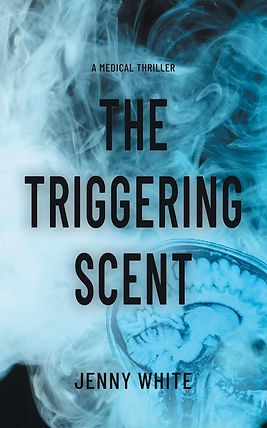
Jenny White, a retired registered nurse and brain tumor survivor, brings this perspective to her Abbey Roberts RN series. Her debut novel, The Triggering Scent, follows a nurse navigating the high-stakes world of hospital drama while confronting her own recovery. The clinical details are grounded in genuine nursing experience, and the story's focus on resilience and ethical dilemmas reflects the real moral weight that nurses carry daily. For readers who have spent time in hospitals, either as professionals or as patients, this authenticity transforms the reading experience from mere entertainment into something deeply resonant.
Gripping Suspense Novels for Book Clubs: Discussion-Worthy Picks
A medical thriller that sparks conversation needs more than a clever plot; it needs moral ambiguity and characters whose choices invite debate. Gripping suspense novels for book clubs succeed when readers finish the last page and immediately want to argue about whether the protagonist made the right call.
Deborah Blum's The Poisoner's Handbook offers a fascinating hybrid for clubs that enjoy nonfiction with thriller pacing. It chronicles the birth of forensic toxicology in the early 20th century, reading like a true crime narrative while delivering substantial historical and scientific depth. For fiction-focused clubs, books that center on a character's recovery journey, like The Triggering Scent, generate rich discussion about how people rebuild their lives after catastrophic illness.
How to Choose Your Next Medical Thriller
With decades of titles to choose from, the challenge is matching the book to your mood and interests. Most 'best of' lists lump every medical thriller into one undifferentiated pile, but the genre actually splits into distinct sub-genres defined by the medical specialty at their core.
Surgical Thrillers: Precision, Pressure, and the Cost of a Steady Hand
Surgical thrillers place readers inside the operating room, where the stakes are measured in millimeters and seconds. These novels depend on the author's ability to convey the physical and mental demands of surgery, the exhaustion of a 14-hour case, the split-second decision to clamp or cut, the terror of a complication that unfolds in real time. Robin Cook's Coma remains the definitive surgical thriller because it treats the OR as a place where institutional betrayal can hide in plain sight. Tess Gerritsen's Harvest similarly uses transplant surgery as its engine, showing how the pressure to procure organs can corrupt even the most principled surgeons.
Epidemiological and Outbreak Thrillers: The Invisible Enemy
Outbreak thrillers trade the confined space of the hospital for the global stage. The threat is a pathogen, engineered, mutated, or accidentally released, and the race is against time before containment fails. Michael Crichton's The Andromeda Strain set the template with its cold, documentary-style approach to crisis management. Richard Preston's The Hot Zone, while technically nonfiction, reads like a thriller and remains the gold standard for conveying the sheer terror of viral hemorrhagic fevers. These novels appeal to readers who want science-driven plots where the villain is not a person but a biological process.
Psychiatric Thrillers: The Mind as a Crime Scene
Psychiatric thrillers operate on a different axis of tension. Here, the medical mystery is not a pathogen or a surgical error but a diagnosis, or a misdiagnosis. These novels explore the boundaries between sanity and madness, memory and fabrication, and the ethical hazards of psychiatric treatment. Patrick McGrath's Asylum (1996) examines the destructive relationship between a psychiatrist's wife and one of his patients, using the psychiatric hospital as a pressure cooker for obsession and betrayal. Alex Michaelides's The Silent Patient (2019), though more psychological thriller than medical procedural, draws heavily on psychiatric concepts and has become a book club staple precisely because it invites debate about diagnosis, trauma, and the limits of therapeutic intervention.
A Quick Reference by Specialty
The table below breaks down the primary sub-genres by medical specialty, helping you match your reading mood to the right kind of tension.
Sub-genre | Medical Core | Core Focus | Best For | Example Direction |
Surgical thriller | Operating room, transplant, anesthesia | Institutional conspiracy, procedural precision | Readers who want visceral, high-stakes action | Robin Cook's early work, Tess Gerritsen |
Epidemiological/outbreak | Infectious disease, virology, public health | Containment, global spread, scientific crisis | Fans of science-driven plots and global stakes | Michael Crichton, Richard Preston |
Psychiatric thriller | Psychiatry, neurology, psychology | Diagnosis, memory, sanity, therapeutic ethics | Readers who love unreliable narrators and moral ambiguity | Patrick McGrath, Alex Michaelides |
Forensic investigation | Pathology, toxicology, autopsy | Evidence, procedure, crime-solving | Readers who love crime detail and procedural accuracy | Patricia Cornwell, Kathy Reichs |
Nurse-authored drama | Bedside care, ethics, recovery | Emotional realism, relational ethics | Healthcare professionals and patients | Jenny White's series |
Historical medical | Toxicology, early surgery, public health | Period detail, true crime, medical history | Nonfiction enthusiasts and history buffs | Deborah Blum |
Matching the Book to Your Tolerance for Technical Detail
A common mistake is assuming all medical thrillers are interchangeable. Readers fall on a spectrum when it comes to technical detail. Some want the science front and center, they enjoy learning about CRISPR, viral replication cycles, or the pharmacology of anesthetics. Others want just enough medical texture to make the story feel credible, without being slowed down by jargon. If you fall into the first camp, seek out authors with clinical or research backgrounds: Crichton, Cook, Gerritsen, and Kathy Reichs (a forensic anthropologist) all write with genuine expertise. If you fall into the second camp, look for thrillers where the medicine is a backdrop to character and moral conflict rather than the main event.
Pro Tip If you are new to the genre, start with a surgical or epidemiological thriller, they offer the clearest entry points because the stakes are immediately physical and the science is easier to visualize. Save psychiatric thrillers for when you are ready for slower burns and more ambiguous resolutions.
Conclusion: Your Next Pulse-Pounding Read Awaits
Finding the best medical thrillers of all time means knowing what you value: scientific accuracy, emotional authenticity, or sheer suspense. The genre has evolved from its physician-founder roots to include diverse voices, including nurses and survivors who bring a different kind of authority to the page. For readers seeking realistic medical drama grounded in genuine clinical experience, Jenny White's The Triggering Scent offers an immersive journey into the ethical and emotional realities of the ICU, written by someone who has lived them.
Frequently Asked Questions
What is the best medical thriller to start with?
For a first taste of the genre, Robin Cook's Coma is the essential starting point. It established the template for medical suspense with its high-stakes hospital setting and fearless protagonist. If you prefer a more modern, character-driven story with authentic nursing details, Jenny White's The Triggering Scent offers a fresh perspective. Both books deliver the gripping tension and ethical dilemmas that define the best medical thrillers.
Are there medical thrillers written by healthcare professionals?
Yes, and these often bring a level of clinical accuracy that other authors miss. Medical thrillers written by nurses or doctors, such as Marschall Runge's Coded to Kill or Jenny White's The Triggering Scent, ground their stories in the real pressures of hospital life. This authenticity makes the suspense more compelling because the medical procedures, ethical challenges, and team dynamics feel genuine rather than Hollywood inventions.
What makes a medical thriller different from a regular thriller?
The engine of a medical thriller is a threat rooted in medicine, science, or patient care. The plot often revolves around a diagnostic mystery, a pathogen, a pharmaceutical conspiracy, or a medical error. The suspense comes from the high-stakes race to solve the problem before more lives are lost, often within a hospital setting, which adds a layer of ethical tension and urgency you don't find in other subgenres.
What are good medical thrillers for book clubs to discuss?
Look for gripping suspense novels for book clubs that balance action with deeper themes. Books that explore medical ethics, such as The Triggering Scent, spark conversations about patient advocacy and resilience. The Andromeda Strain offers plenty to discuss about science, government response, and public health. Choosing a title with authentic medical details also gives group members a chance to debate the realism of the scenarios.
Buy now


Comments