



Popular Medical Mystery Book Series: A 2026 Reader's Guide
Updated: Sep 16
Table of Contents
Why Medical Mystery Series Keep Readers Hooked
The Best Medical Thrillers for Book Clubs
Medical Mystery Novels by Nurses: Authenticity You Can Feel
Books About Ethical Dilemmas in Medicine
Classic Medical Thrillers and the Physician-Authors Who Wrote Them
Epidemic, Pandemic, and Forensic Pathology Mysteries
Where to Start: Series Reading Order and What to Ignore
Conclusion
Frequently Asked Questions
Last Updated: September 15, 2026
Why Medical Mystery Series Keep Readers Hooked
Medical mystery series hold readers because they combine the intellectual puzzle of a whodunit with stakes that feel immediate and personal: the body itself. Readers who love a popular medical mystery book series are not just chasing a culprit, they are watching a diagnosis unfold under pressure. That blend of clinical precision and human frailty is what keeps the genre's fanbase so loyal.
The genre's strength is its built-in tension. A detective story asks who did it. A medical thriller asks who did it while a patient's life hangs on the next decision. That added layer of consequence is why readers return to these series chapter after chapter.
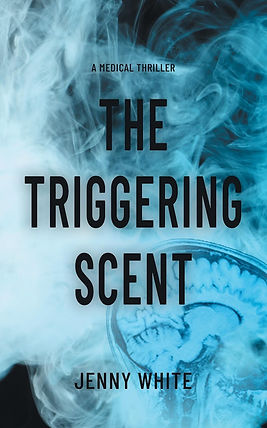
For readers who want that tension grounded in lived experience, Jenny White's Abbey Roberts RN series brings a retired registered nurse's eye to every hospital scene. The clinical details feel vetted because they are.
Below, we break down the popular medical mystery book series worth your shelf space, organized by sub-genre, so you can find the tone that fits your reading mood.
The Best Medical Thrillers for Book Clubs
The best medical thrillers for book clubs are the ones that spark disagreement, not just suspense. Ethical gray zones give a group something to argue about for an hour, and that is the real test of a book-club pick.
Look for titles where the "right" answer is genuinely contested. A physician who bends protocol to save a patient, a nurse who reports a colleague, a researcher who hides a result: these are the setups that generate real conversation. A book that resolves every dilemma cleanly tends to fall flat in discussion.
A few things to weigh when choosing for a group:
Does the book raise a question with no clean answer?
Is there a character the group will disagree about?
Does the medical detail invite readers to share their own experiences?
The Abbey Roberts RN series fits this brief well. Its focus on ethical dilemmas in a medical context gives book clubs a natural discussion spine, and the emotional weight keeps the conversation from staying purely academic.
Key Takeaway The strongest book-club medical thrillers are the ones where readers finish the last page still disagreeing about what the protagonist should have done.
Medical Mystery Novels by Nurses: Authenticity You Can Feel
Medical mystery novels by nurses carry a texture that physician-authored books often miss. Nurses sit at the bedside, not just the chart. They see the patient's fear, the family's exhaustion, and the small clinical signals that never make it into a formal note.
That vantage point changes the fiction. A nurse-author tends to write the hospital as a system of relationships, not just a series of procedures. The drama lives in the handoff report, the overnight shift, the moment a patient's color changes and someone has to decide whether to escalate.

The nurse-author tradition is not new. Mary Higgins Clark worked as a flight attendant before she wrote suspense, but the closer model is the registered nurse who turns shift work into plot. The reason the sub-genre works is mechanical: a nurse knows the escalation ladder. A patient's early warning score ticks up, the charge nurse pages the on-call physician, the physician is in another procedure, and the nurse has to decide whether to wait or act. That sequence, not the diagnosis itself, is where the suspense lives, and it is a sequence only someone who has worked the floor can write without hedging (Nurses implement early warning system to detect patient deterioration).
This is where an RN's background pays off. The clinical vocabulary is not decoration, it is the working language of the floor. Readers who work in healthcare tend to notice immediately when it rings false, and they tend to forgive a lot when it rings true. A common pattern in nurse-authored fiction is that the medicine is accurate but the institutional politics are even more accurate, the staffing ratios, the agency nurses, the bed manager who calls at 2 a.m. Those details are the ones healthcare readers cite when they recommend a book to a colleague.
Jenny White built the Abbey Roberts RN series on exactly this foundation, drawing on years as a registered nurse to keep the ICU dynamics honest. The series treats the handoff, the escalation, and the ethical pressure of a short-staffed unit as plot engines rather than background. For readers who want the nurse's-eye view rather than the physician's, that is the distinction that matters.
Key Takeaway Nurse-authored medical mysteries are not just physician thrillers with a different narrator. The escalation ladder, who notices, who pages, who decides, is the structural difference, and it is the detail healthcare readers check first.
Books About Ethical Dilemmas in Medicine
Books about ethical dilemmas in medicine work best when they refuse to hand the reader a verdict. Consent, end-of-life care, resource allocation, and truth-telling all resist tidy resolution, and that resistance is the point.
The genre's most memorable conflicts usually come down to competing goods rather than good versus evil. A clinician can be right and still cause harm. A hospital can follow policy and still fail a patient. Fiction that sits inside that discomfort is doing something a textbook cannot.
A useful way to categorize these books is by the type of dilemma at the center:
Dilemma Type | Core Question | Reader Takeaway |
Consent and autonomy | Who decides? | The gap between policy and person |
Resource allocation | Who gets care first? | Scarcity forces impossible choices |
Truth-telling | What does the patient need to know? | Honesty has a cost |
End-of-life | When does care become harm? | Comfort and cure can conflict |
For readers who want a novel that treats these questions with the weight they deserve, the Abbey Roberts RN series makes ethical tension the engine of the plot rather than a side note.
Classic Medical Thrillers and the Physician-Authors Who Wrote Them
Classic medical thrillers built the genre's reputation, and many of the best were written by physicians who knew the territory firsthand. A physician-author brings a specific authority: the vocabulary, the hierarchy, and the institutional pressure all arrive pre-loaded.
The physician-author tradition matters because it set reader expectations. Once audiences learned what authentic clinical detail felt like, they started demanding it from every book in the genre. That is a healthy pressure. It pushes writers to research, consult, and get the medicine right.
What most readers miss is that the physician's advantage is not just accuracy. It is pacing. A doctor knows which detail changes the outcome and which one is noise, and that instinct translates into tighter, more credible suspense.
For a broader view of how the genre evolved and which authors shaped it, the genre overview from a major literary reference source offers useful background. Readers who want to trace the physician-author lineage can also look to author and title records maintained by a national library catalog for a structured starting point.
Epidemic, Pandemic, and Forensic Pathology Mysteries
Epidemic and forensic pathology mysteries trade on a different kind of dread. Instead of a single victim, the threat scales up: a pathogen moving through a population, or a body that tells its story only under the autopsy light. These narratives often bridge the gap between clinical observation and the investigative rigor required for solving complex cold cases, where the silent evidence of the past finally finds its voice.
These two strands satisfy different reader appetites, and treating them as one category is the most common mistake in genre lists. The epidemic thriller is about systems: how a pathogen spreads, how institutions respond, how quickly a response can go wrong. The forensic pathology mystery is about evidence: the autopsy report, the toxicology result, the small physical detail that cracks the case. A reader who loves one does not automatically love the other, so it helps to sort them by what the protagonist actually does all day.
Epidemic and pandemic thrillers tend to follow an epidemiologist, a public health officer, or a clinician pulled into outbreak response. The plot engine is the exponential curve: one case becomes four, four becomes sixteen, and the protagonist is racing the math.
Pro Tip If you are choosing between the two strands, ask which tension you want: the systemic dread of a curve that will not flatten, or the intimate dread of a body that will not explain itself. They are different reading experiences, and most readers have a clear preference once they try both.
Where to Start: Series Reading Order and What to Ignore
Pro Tip If you are unsure whether a series must be read in order, check the author's own website rather than a retailer listing. Authors usually publish a clean reading order, and it settles the question in seconds.
Conclusion
Frequently Asked Questions
What are the best medical mystery book series to start reading?
Start with the Abbey Roberts RN series by Jenny White, which follows a nurse navigating hospital drama and ethical dilemmas. For classic medical mystery series, look to physician-authored works that blend accurate clinical detail with suspense. Each offers a different entry point depending on whether you want hospital realism, forensic investigation, or fast-paced thriller pacing.
What makes a medical thriller series authentic?
Authenticity comes from lived clinical experience. Authors who worked as nurses, physicians, or pathologists bring accurate hospital culture, realistic medical jargon, and genuine ethical tension to their stories. Jenny White, a retired registered nurse, writes from direct ICU experience, which shows in how she handles patient advocacy, diagnostic mystery, and the emotional weight of medical decisions. Readers who work in healthcare notice when hospital dynamics feel fake.
Are there medical mystery series written by actual healthcare professionals?
Yes. Several popular medical mystery series are written by physicians, nurses, and forensic pathologists. Jenny White is a retired registered nurse whose Abbey Roberts RN series draws on her hospital career. Other physician-authors bring similar clinical authority to their work. These books tend to handle medical procedure, patient safety, and malpractice themes with more accuracy than general thrillers, which matters to readers who want realism alongside suspense.
Where can I find medical mystery series available at local libraries?
Most public libraries carry popular medical mystery series in print, ebook, and audiobook formats. Check your library's online catalog for titles by physician-authors and nurse-authors. If a specific indie-published series is not on the shelf, many libraries accept purchase requests.
Buy now


Comments