



How to Research Medical Details for Fiction
Updated: 4 days ago
Table of Contents
Why Medical Accuracy Matters in Fiction
Start with the Right Medical Research Tools for Authors
Primary Sources: Journals and Textbooks
Patient Perspectives and Support Communities
Interviewing Doctors for Research: A Practical Approach
Finding the Right Professional
Structuring the Interview for Depth
The Legal and Ethical Boundaries You Must Respect
The Ethics of Using Real Patient Stories
Recording and Following Up
How to Research Medical Details for Fiction: Your Step-by-Step Workflow
Step 1: Define What Your Scene Requires
Step 2: Build a Scene-Specific Question List
Step 3: Log Your Findings
Avoiding Common Medical Mistakes in Fiction
The Most Frequent Errors by Category
The Medical Fact-Check Sheet: A Workflow for Authors and Editors
Building a Fact-Checking Habit
Balancing Technical Accuracy with Narrative Flow
Build Your Medical Research System
Frequently Asked Questions
Last Updated: September 5, 2026
Why Medical Accuracy Matters in Fiction
A single clinical error can shatter a reader's trust in an instant. For healthcare professionals reading your work, an incorrect medication name or a botched code-blue sequence signals that you didn't do the homework.
Readers of medical thrillers are a uniquely discerning audience. Many work in the field and will check your triage logic and ICU protocols with a practiced eye.
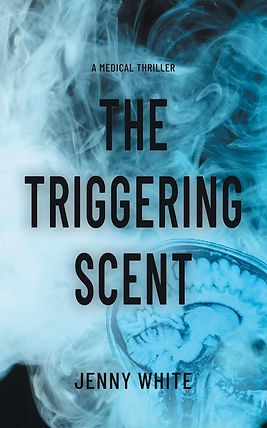
This guide from Jenny White, a retired registered nurse and the author of The Triggering Scent, walks you through a practical system for researching medical details that holds up under scrutiny. The goal isn't to make you a clinician. It's to give you a repeatable workflow that produces authentic, defensible medical content for your manuscript.
Start with the Right Medical Research Tools for Authors
The most common mistake new writers make is starting with a general internet search, which surfaces blog posts and forum threads of questionable reliability. Instead, build a toolkit of authoritative sources.
Primary sources come first. Peer-reviewed journals like The New England Journal of Medicine and The Lancet publish the latest evidence-based findings, while textbooks such as Harrison's Principles of Internal Medicine provide foundational knowledge.
Primary Sources: Journals and Textbooks
For surgical procedures, treatment protocols, and pharmacology, medical journals are your ground truth. Search PubMed, the free database maintained by the U.S. National Library of Medicine, for specific conditions or procedures. The PubMed's searchable database of peer-reviewed medical literature lets you filter by article type and publication date, making it easier to find relevant research on any medical topic.
Textbooks explain the reasoning behind protocols, helping you write characters who understand their decisions rather than merely recite facts. A good textbook walks you through the differential diagnosis process, showing how a clinician thinks when a patient presents with ambiguous symptoms.
Patient Perspectives and Support Communities
Medical journals tell you what happens clinically. Patient forums tell you what it feels like.
Online communities for specific conditions offer candid accounts of symptoms, treatment side effects, and recovery timelines. Reading these firsthand narratives helps you write dialogue and internal monologue that rings true. Many survivors describe sensations and fears that never appear in clinical literature.
Pro Tip Approach patient forums as a researcher, not a participant. Read widely to absorb the language patients use, but never quote someone's personal story verbatim in your fiction. Borrow the emotional truth, not the specifics. Check each community's rules about using member experiences in published work.
Interviewing Doctors for Research: A Practical Approach
A well-conducted interview with a medical professional can save you dozens of hours of reading. The key is preparation, but you must also navigate professional obligations and legal boundaries that most writing guides ignore.
Finding the Right Professional
Your first step is identifying who can actually answer your questions. A general practitioner cannot walk you through the nuances of a neurosurgical ICU; target specialists for procedural details. Professional associations like the Canadian Medical Association maintain public directories, and many clinicians are receptive to well-crafted queries.
Structuring the Interview for Depth
Before you reach out, write out your scene and identify the specific clinical moments requiring verification. Send your question list in advance so the clinician can prepare. A common pattern among successful authors is to ask for a "walk-through" rather than a Q&A session, asking the doctor to describe the procedure step by step, including sensory details.
The Legal and Ethical Boundaries You Must Respect
The guidelines on patient confidentiality from the Canadian Medical Association are worth reviewing so you know what a clinician cannot discuss with you, even hypothetically. In Canada, the Personal Information Protection and Electronic Documents Act (PIPEDA) and provincial health privacy laws like Ontario's Personal Health Information Protection Act (PHIPA) govern how patient information is handled. A clinician who shares identifiable patient details with you, even in a disguised form, could face professional discipline.
Watch Out Never ask a clinician to break patient confidentiality, even for a hypothetical scenario. Respecting these boundaries keeps your sources safe and your professional relationships intact. Frame questions around procedures and protocols, not specific patients. If a doctor begins to describe a "case I once had," gently redirect them to the general clinical pathway.
The Ethics of Using Real Patient Stories
A deeper ethical layer exists beyond what a clinician can share. If you interview patients directly or read their public accounts, you must consider the ethics of using their experiences. A patient who shares a harrowing ICU story on a public blog has not given you permission to transplant that narrative into your novel. Even with names changed, a recognizable sequence of events can be traced back to its source. The standard practice among medical writers is to borrow the emotional and physiological truth of an experience while constructing composite characters that do not mirror any single individual.
Recording and Following Up
Record the interview with explicit permission and take structured notes. After the session, send a thank-you note summarizing your key takeaways, giving the clinician a chance to correct misunderstandings. Many authors maintain a relationship with a "medical consultant" across multiple books, making future research faster. portraying realistic physicians.
How to Research Medical Details for Fiction: Your Step-by-Step Workflow
Researching medical details for fiction works best as a structured process, not a frantic scramble.

Step 1: Define What Your Scene Requires
Start by writing a rough draft of your scene without stopping to research, marking uncertain medical details with bracketed notes like [VERIFY: medication dose].
Most writers discover that a single scene requires only three to five specific medical facts. The problem comes when you try to research an entire medical specialty before writing a single chapter.
Step 2: Build a Scene-Specific Question List
Convert your bracketed notes into a structured question list, identifying which source type will answer each best: a surgical procedure question belongs in a textbook or journal, a symptom experience question in a patient forum, and a hospital policy question might require an interview.
Step 3: Log Your Findings
Maintain a research log as you work, recording the source, date, and a brief summary for each fact you verify. This log lets you find information quickly for continuity checks and provides a record of sources if an editor or fact-checker asks for verification.
Research Task | Time Estimate | Recommended Frequency |
Scene draft with placeholder notes | 30-45 minutes | Once per scene |
Question list creation | 15-20 minutes | Once per scene |
Journal and textbook research | 1-2 hours | As questions arise |
Patient forum review | 30-60 minutes | Per condition portrayed |
Research log update | 10-15 minutes | After each research session |
Avoiding Common Medical Mistakes in Fiction
Common medical mistakes in fiction tend to cluster around a few predictable errors. Knowing these pitfalls saves you from embarrassing corrections later, but awareness alone is not enough.
The Most Frequent Errors by Category
Timeframes are a frequent source of error. Recovery from surgery, symptom onset, and disease progression all operate on specific timelines that healthcare readers recognize immediately. Check the typical recovery timeline for any procedure you portray.
Medication errors are equally damaging. Giving a character the wrong drug for a condition, or describing an incorrect dose, signals carelessness. Always verify medication names, routes of administration, and typical dosages against a reliable formulary. The drug database maintained by Health Canada provides current, accurate information on medications approved for use in Canada. Note that Canadian drug names sometimes differ from American ones; acetaminophen is the common name here, not Tylenol, and epinephrine is preferred over adrenaline in clinical documentation.
Another common mistake involves the hierarchy and workflow of the clinical setting. A retired nurse will notice if a respiratory therapist performs a nursing task or if a resident oversteps an attending physician. In Canadian hospitals, the care team typically includes staff physicians, residents, medical students, registered nurses, licensed practical nurses, and allied health professionals, each with a defined scope of practice.
The Medical Fact-Check Sheet: A Workflow for Authors and Editors
A structured fact-checking workflow is the single most effective tool for eliminating errors. This template ensures every medical claim in your manuscript is verified against a reliable source.
Fact-Check Item | Verification Source | Status | Notes |
Medication name and dose | Health Canada Drug Product Database | ☐ | Confirm Canadian availability |
Procedure steps and sequence | Peer-reviewed journal or textbook | ☐ | List the specific source |
Recovery timeline | Hospital discharge guidelines or specialty society | ☐ | Note range, not single number |
Anatomical description | Medical imaging database or anatomy atlas | ☐ | Confirm structure names |
Clinical hierarchy and roles | Professional scope-of-practice documents | ☐ | Verify who performs the task |
Symptom presentation | Medical textbook or journal case report | ☐ | Check onset and progression |
Diagnostic test or lab value | Laboratory reference manual | ☐ | Confirm units and normal range |
Patient experience and language | Patient forum or support group | ☐ | Verify emotional authenticity |
Pro Tip Use this sheet during your drafting phase, not just at the end. When you write a scene with a medical detail, flag it with a bracketed note like [VERIFY: medication dose] and add it to your sheet immediately. This prevents the common pattern of researching everything except what your scene actually requires.
Building a Fact-Checking Habit
A common pattern among published medical fiction authors is to run a dedicated fact-checking pass after the second draft, reading the manuscript with your fact-check sheet in hand and verifying every flagged item. This pass typically takes 2-4 hours per 10,000 words. If you work with an editor, ask them to flag uncertain medical details rather than silently correcting them.
Balancing Technical Accuracy with Narrative Flow
Technical accuracy serves your story; it should never strangle it. The goal is to write medical details correct enough to satisfy a professional reader while remaining accessible to a general audience.
Your first draft should prioritize what the character experiences and feels; on revision, add the specific clinical details that ground the scene. A character who notices the exact rhythm of a ventilator or the precise sequence of a medication double-check reveals their expertise without exposition.
Medical terminology works the same way. Use it where it builds authenticity, then translate it through your character's perspective: a nurse thinks in clinical terms, while a layperson needs simpler language. Matching vocabulary to the point-of-view character solves most accessibility problems automatically.
Key Takeaway The most authentic [medical fiction](/post/nursing-career-in-medical-fiction-authentic-portrayals) shows expertise through observation and action, not through blocks of clinical explanation. Trust your reader to follow the scene. Use technical detail to reveal character, not to prove you did the research.
Build Your Medical Research System
Effective research is a system, not a single session. Once you've built your source list, established your workflow, and created your research log, the process becomes repeatable for every book.
The most important habit is consistency. Log every source you consult, even those you don't end up using; a discarded detail may become relevant later. A comprehensive log also protects you if a reader challenges a detail.
For authors who want to see this system in action, Jenny White's The Triggering Scent demonstrates how clinical accuracy and suspenseful storytelling reinforce each other. Drawing on her experience as a retired registered nurse and brain tumor survivor, White weaves authentic hospital details into her narrative.
Writing medical fiction that respects the profession and captivates the reader is a challenge, but one you can meet with the right preparation. Break the research process into manageable steps and build a reusable system: start with your scene, build your question list, and verify every detail against a reliable source.
Get started with Jenny White and experience how realistic medical drama, shaped by real nursing experience, creates stories that keep readers turning pages late into the night.
Frequently Asked Questions
How much medical detail is too much for a thriller?
Include only the details that raise stakes, reveal character, or drive the plot. A single accurate detail, such as the specific sound of a ventilator alarm or the weight of a crash cart, creates authenticity. Explaining an entire treatment protocol stalls pacing. If a passage reads like a textbook excerpt, cut it. Your goal is to make medical professionals nod in recognition, not to teach readers medicine.
Can I use medical textbooks for fiction research?
Yes, but use them strategically. Textbooks like Harrison's Principles of Internal Medicine provide accurate pathophysiology and terminology, yet they lack the sensory and emotional details that make scenes vivid. Combine textbook research with firsthand accounts from patient forums and interviews with healthcare professionals. This mix gives you clinical accuracy and the human experience your characters need.
How do I avoid common medical mistakes in fiction when writing about emergency medicine?
Focus on the sequence of care rather than dramatic shortcuts. In a real emergency department, triage happens first, and a trauma team works in a specific order: airway, breathing, circulation. Avoid having a doctor diagnose a rare condition instantly without tests. Use diagnostic tests and consults to build suspense. Research protocols like Advanced Cardiac Life Support to ground your scenes in reality.
What should I ask when interviewing doctors for research?
Ask about sensory details and emotional responses, not just procedures. Request specifics: what does the resuscitation bay smell like after a long shift, how do nurses communicate during a code, what happens to a patient's family in the waiting room. Ask what mistakes TV shows make most often. Doctors appreciate specific questions that show you respect their expertise and want authenticity.
Buy now
This article was written using GrandRanker


Comments