



ICU vs ER Nursing: Which Career Path Fits You
Last Updated: November 16, 2026
Quick Summary
ICU nursing means caring for one or two critically ill patients with continuous monitoring and life support over hours or days, while ER nursing means triaging and stabilizing four to six patients who move through fast. Choose ICU for depth and continuity, ER for variety and speed.
ICU ratios run 1:1 or 1:2; ER ratios stretch from 1:4 to 1:6.
ICU stress is steady and relationship-driven; ER stress is spiky and volume-driven.
The ICU career path builds toward CCRN certification and residencies with protected preceptorship time.
ICU schedules are more stable and self-scheduling works better than in the ER.
Shadow one shift in each unit and ask about ratios and orientation length before choosing.
Which critical care path fits you?
Jenny White writes authentic ICU medical thrillers drawn from real nursing experience.
Table of Contents
ICU Nursing vs Emergency Room Nursing: The Core Differences
Choosing between icu nursing vs emergency room nursing career path options comes down to one question: do you want to stabilize patients or sustain them? ICU nursing is the practice of caring for critically ill, medically fragile patients who need continuous monitoring and life support over hours or days. ER nursing is the practice of triaging, stabilizing, and moving patients through a fast-paced emergency department. The distinction shapes everything from your daily rhythm to how you process a hard shift.
Here's the short version: ICU nurses go deep with fewer patients. ER nurses go wide with constant turnover. Both demand critical thinking, both require RN licensure, and both will test your emotional resilience in ways nursing school only hints at.
Below, we break down duties, stress, career paths, and scheduling so you can pick with your eyes open.
ICU Nurse Duties: Continuous Monitoring and Meticulous Care
An ICU nurse manages a small number of critically ill patients, often one or two, with continuous monitoring and meticulous attention to changing vital signs. Typical responsibilities include:
Titrating vasopressors and sedatives under tight protocols
Managing mechanical ventilation and watching arterial line waveforms
Performing frequent patient assessments and updating care plans
Coordinating with the interdisciplinary team during rounds
Recognizing subtle deterioration before it becomes an emergency
The pace is deliberate, not slow. A common mistake new nurses make is assuming ICU work is calmer because there's less running. In practice, the vigilance is relentless. You're watching hemodynamic monitoring numbers shift by the minute and deciding whether to escalate. If you want to understand the equipment you'd handle daily, it helps to learn about the medical equipment found in a typical ICU.

Aggressive or confused patients are part of the job too, and having nursing strategies for aggressive ICU patients ready before you need them makes those moments safer.
ER Nurse Duties: Triage, Stabilization, and Rapid Decision-Making
An ER nurse assesses and prioritizes patients by acuity, then stabilizes them fast, often before a diagnosis exists. The workflow runs on triage, resuscitation, and rapid decision-making:
LifeBridge Health
Sorting patients by urgency the moment they arrive
Starting IV medications and drawing labs on unstable patients
Assisting with trauma resuscitation and life support
Coordinating admissions, transfers, and discharges
Communicating constantly with physicians and the interdisciplinary team
Patient volume is the defining pressure. You might carry four to six patients while a trauma call pulls you away mid-task. The skill that separates strong ER nurses is pattern recognition under noise: spotting the patient who looks fine but isn't. Stabilization is the goal; long-term care planning belongs to someone else.
Patient Acuity, Volume, and Nurse-to-Patient Ratios
Factor | ICU Nursing | ER Nursing |
Patient acuity | Consistently high, medically fragile | Mixed, spikes unpredictably |
Typical ratio | 1:1 or 1:2 | 1:4 to 1:6, varies widely |
Length of stay | Days to weeks | Hours |
Continuity of care | High, you know the whole story | Low, patients move through |
Workflow | Continuous monitoring | Fast-paced turnover |
ICU ratios stay tight because the patients are unstable and often on life support. ER ratios stretch with volume, and a busy night can push them further. Neither ratio is guaranteed; unit culture and staffing decide. Ask about actual ratios in an interview, not the policy number.
ICU vs ER Nursing Stress: Emotional Demands and Burnout
ICU vs ER nursing stress differs in texture, and the difference matters more than most job descriptions admit. ICU nurses carry long relationships with patients who may not recover, which builds cumulative grief and moral weight over days and weeks. ER nurses absorb volume, unpredictability, and the pressure of decisions made in seconds, often without ever learning how the story ended.
A concrete comparison of what each environment exposes you to:
Trauma exposure: ER nurses see sudden death, violence, and mass-casualty surges more often. ICU nurses see prolonged critical illness, family meetings, and withdrawal of life support.
Moral distress: Both specialties face it, but the shape differs. ER moral distress often comes from crowding, hallway care, and not having time to do everything. ICU moral distress often comes from continuing aggressive treatment that may not serve the patient, or from family conflict over goals of care.
Closure: ER nurses rarely get closure because patients move on. ICU nurses often get too much closure, sitting with families through the end.
Cumulative load: ER stress is spiky and volume-driven. ICU stress is steady and relationship-driven. Neither is lighter; they wear differently.
A common mistake is choosing a specialty by adrenaline alone. The nurses who last in ICU tend to be patient and detail-driven; the ones who thrive in ER usually handle chaos without losing focus. If you are weighing the emotional toll honestly, understanding the difference between moral distress and moral injury helps you name what you are feeling when a shift goes badly, and our honest verdict on whether ICU nursing is worth the stress is worth reading before you commit.
Recovery matters as much as resilience. Practical supports that make a difference include structured debriefing after critical events, peer support programs, employee assistance access, and protected time off. Ask during an interview whether the unit debriefs after codes and deaths, whether peer support is available, and how schedules protect recovery after a hard run of shifts. Those supports are what keep good nurses in critical care, and their absence is a warning sign worth taking seriously. Alongside those recovery supports, comfortable scrub tops for nurses can make long, demanding shifts feel a little more manageable.
ICU Nurse Career Path: Certification, Residencies, and Advancement
The ICU nurse career path usually starts with a structured orientation or residency, then builds toward specialty certification such as CCRN. Advancement routes include charge nurse, clinical educator, rapid response, and graduate study toward nurse practitioner or clinical nurse specialist roles.
New graduates should look for residencies with protected preceptorship time. If you're planning that route, our guide to essential skills for new critical care nurses includes a 90-day plan for the first months in critical care. ER nurses follow a similar arc, often adding trauma certification and triage training.
Shift Patterns, Scheduling, and Work-Life Impact
Most critical care units run 12-hour shifts, and both specialties rotate through days, nights, weekends, and statutory holidays. The practical difference is not the shift length but how predictable your schedule is and how often it changes at the last minute.
ICU scheduling tends to be more stable because assignments are built around a known patient load. Charge nurses can plan around a fixed roster of one or two patients per nurse, so self-scheduling often works and swaps are easier to arrange. ER scheduling bends to volume: a surge night, a late admission, or a staff call-out can extend a shift or pull you to another unit. A common pattern is that ER nurses see more last-minute schedule changes and more involuntary overtime, while ICU nurses see more predictable rotations but heavier on-call expectations in some units.
A side-by-side view of what to ask about:
Nights: Both specialties run night rotations. Ask whether nights are blocked (several in a row) or scattered, because scattered nights wreck sleep more than blocked ones.
Weekends and holidays: Most units use a rotation or a fair-share system. Ask how many weekends per four-week schedule you are expected to work and how holiday coverage is assigned.
Overtime: ER overtime tends to be driven by volume and surge; ICU overtime tends to be driven by staffing gaps and acuity. Ask whether overtime is voluntary or mandated and how much notice you get.
Self-scheduling: Common in ICU, less reliable in ER. Ask whether requests are honored and how far in advance the schedule is posted.
Float and pull: Ask how often staff are pulled to other units and whether there is a defined orientation before floating.
Watch out: a unit that posts a fair schedule on paper but routinely calls staff in on days off will erode your recovery time faster than the shift length itself. Ask current staff how often that happens before you accept.
Ask for the differential in writing rather than assuming it matches another hospital. The details that affect your life most are schedule predictability, notice for changes, and how fairly the rotation is shared, not the hourly rate alone.
Choosing Your Specialty: A Decision Framework for New Graduates
Use this framework rather than gut feel alone:
Choose ICU if you want depth, continuity, and technical mastery, and you can sit with slow-burning grief.
Choose ER if you want variety, speed, and quick wins, and you stay calm when the room gets loud.
Try both if you can: many hospitals support cross-training or float shifts.
Check the unit, not just the specialty: orientation quality and staffing decide your experience.
A practical transition plan for new graduates: shadow one shift in each unit, ask about ratios and orientation length, and pick the team that teaches well. Specialty is a starting point, not a life sentence; critical care skills transfer between both.
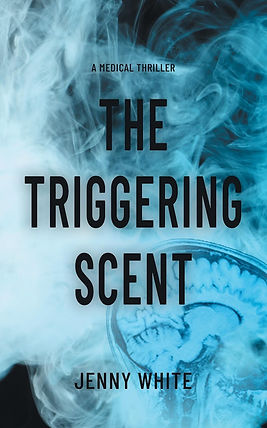
The hardest part isn't learning the drips or the triage tags. It's finding out which pressure you handle well. If you want to feel what these units are actually like before you commit, Jenny White's medical thrillers put you inside the ICU with clinical detail drawn from a career at the bedside. Start with The Triggering Scent, the first Abbey Roberts RN novel, and see the ethical dilemmas and resilience up close. Get started with Jenny White and read the hospital the way it really runs.
Frequently Asked Questions
What is the difference between ICU nursing and emergency room nursing?
ICU nursing focuses on continuous monitoring and meticulous care for critically ill patients who need ventilator support, vasopressors, or hemodynamic monitoring. ER nursing centers on triage, stabilization, and rapid decision-making for patients arriving with trauma or acute emergencies. ICU nurses typically care for one or two patients over longer shifts, while ER nurses manage a higher patient turnover and unpredictable volume. The core distinction is care goals: ICU nurses treat medically fragile patients over time, while ER nurses stabilize patients before they move to another unit.
Is ICU nursing harder than emergency room nursing?
Neither role is objectively harder; they demand different skills. ICU nursing requires deep clinical knowledge of life support, mechanical ventilation, and multiple drips, plus the patience for meticulous care over long periods. ER nursing demands fast-paced workflow, rapid assessment, and comfort with chaos and trauma. ICU vs ER nursing stress plays out differently: ICU nurses carry the weight of slow deteriorations, while ER nurses face constant volume and triage decisions. Your tolerance for routine precision versus unpredictability should guide the choice.
Can a new graduate nurse work in the ICU or emergency room?
Yes, but preparation matters. Many hospitals offer structured orientation or residency programs for new graduates entering critical care or emergency departments. Before applying, complete BLS and ACLS certification, and seek clinical placements in high-acuity settings. A practical transition plan includes shadowing shifts in both units, asking about nurse-to-patient ratios during orientation, and choosing a residency program with extended preceptorship.
Can you move from ER nursing to ICU nursing?
Yes, and the transition is common. ER nurses already bring strong assessment skills, rapid decision-making, and comfort with critically ill patients. The ICU nurse career path from ER typically requires orientation to continuous monitoring, ventilator management, vasopressors, and arterial line care. Many hospitals offer cross-training or internal transfer programs. Expect a learning curve around longer patient relationships and the slower, meticulous pace of ICU care. Specialty certification in critical care can strengthen your application and support career advancement.



Comments