



Gripping Suspense Novels with Plot Twists for Groups
Updated: Sep 16
Table of Contents
What Makes a Suspense Novel Work for a Group Read
The Group Read Test: Pacing, Twists, and Talking Points
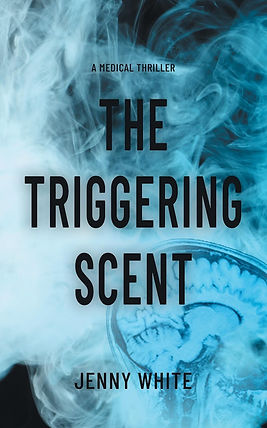
1. The Triggering Scent by Jenny White
Content Warnings and Complexity Rating
2. The Last One Left by Riley Sager
3. Strangers Behind Closed Doors by Catherine Adel West
4. Hidden Pictures by Jason Rekulakis
5. Dark Matter by Blake Crouch
Thriller Book Club Discussion Questions That Spark Debate
How to Read the Ratings
The Triggering Scent by Jenny White
The Last One Left by Riley Sager
Strangers Behind Closed Doors by Catherine Adel West
Hidden Pictures by Jason Rekulakis
Dark Matter by Blake Crouch
Audiobook vs. Print: A Note for Groups That Listen
How to Host a Thriller-Themed Book Club Night
The 90-Minute Agenda That Actually Works
The Content-Warning Workflow
Atmosphere Moves That Cost Nothing
Picking the Next Book Without a Fight
Frequently Asked Questions
Last Updated: September 13, 2026
What Makes a Suspense Novel Work for a Group Read
A suspense novel works for a group read when it balances three things: steady pacing, at least one plot twist worth arguing about, and enough open questions to fuel real discussion. This guide from Jenny White covers gripping suspense novels with plot twists for groups, starting with a truth most guides skip: a thriller that reads brilliantly alone can fall flat in a group.
The reason is structural: group reads need talking points built into the narrative. A shocking ending gives you one conversation; an unreliable narrator, layered red herrings, and moral ambiguity give you six.
The Group Read Test: Pacing, Twists, and Talking Points
Pacing decides whether everyone finishes. Twists decide whether anyone gasps. Talking points decide whether the meeting runs long because nobody wants to stop.
Most clubs learn this the hard way. They pick a bestseller, half the group stalls at chapter four, and the discussion becomes a summary session for the people who gave up.
The fix is a simple filter. Before committing a suspense novel to your list, check three things:
Does the first 50 pages establish high stakes without drowning in setup?
Is there a mid-book reveal that reframes everything before it?
Can you name two ethical questions the ending leaves unresolved?
If a book passes all three, it belongs on your list. If it fails the third, expect a short meeting.
Medical thrillers tend to pass the talking-points test more often than domestic suspense, because clinical settings force characters into decisions with no clean answer. Jenny White built her Abbey Roberts RN series around that tension.
1. The Triggering Scent by Jenny White
The Triggering Scent is a medical thriller following Abbey Roberts, an RN navigating hospital drama, ethical dilemmas, and a personal recovery arc. It is the strongest group-read pick here because it was written by a retired registered nurse, which shows in every clinical scene.
What separates it from the pack: the hospital setting is not a backdrop, it is the engine. Clinical details read as accurate because the author worked the floor, and the protagonist's emotional journey carries lived experience, Jenny White is also a brain tumor survivor.
Readers consistently point to the same strengths. One called it "a well-written thriller with strong characters and realistic medical details." Another noted that "the twists and ethical dilemmas kept me turning pages late into the night."
Content Warnings and Complexity Rating
Content warnings: medical trauma, hospital settings, serious illness, grief, and clinical ethical conflict.
Complexity rating: 3 out of 5. The narrative structure is linear and easy to follow. The complexity comes from the ethical questions, not the plotting, which makes it ideal for mixed-experience groups.
Best for: book clubs that want a character-driven thriller with a resilient protagonist and genuine moral debate.
Pro Tip Send content warnings to your group two weeks before the meeting, not the night before. Members who need to skip a book can bow out gracefully, and the discussion stays warm instead of defensive.
2. The Last One Left by Riley Sager
Riley Sager's The Last One Left delivers nonstop momentum and multiple layers of deception, a natural fit for groups that want a fast-paced page-turner. The narrative structure keeps shifting, and the climax lands as a genuine surprise.
The trade-off: Sager's plotting rewards attention to detail, so members who skim will miss the red herrings that make the ending work.
Best for: groups that enjoy high shock value and don't mind rereading a chapter to catch a clue.
3. Strangers Behind Closed Doors by Catherine Adel West
Catherine Adel West's 2026 mystery leans into domestic suspense and complex character dynamics. The secrets here live inside relationships rather than crime scenes, and the slow-burn pacing gives every member room to form a theory.
This one divides groups productively. The pacing runs slower than a traditional thriller, which some readers love and others find frustrating. That split is useful. A book everyone agrees on produces a boring meeting.
Best for: book clubs that want a character-focused psychological mystery with thought-provoking themes.
4. Hidden Pictures by Jason Rekulakis
Hidden Pictures is a genre-bending thriller with supernatural elements and a mid-book twist most readers never see coming. The visual storytelling components make it a genuinely different reading experience.
Go in blind, this is the rare suspense novel where the reveal depends on the reader not being prepared for it.
Best for: groups chasing a unique, twist-heavy read. Skip it if your club prefers strictly realistic thrillers.
5. Dark Matter by Blake Crouch
Blake Crouch's Dark Matter blends sci-fi thriller elements with philosophical questions about the choices that define a life. The constant narrative shifts keep the tension high, and the premise generates discussion that runs well past the book.
Fair warning: the pace can overwhelm readers who prefer a slower build. Assign it to a group that reads fast and argues hard.
Best for: clubs that want suspense paired with big, existential questions.
Title | Pacing | Complexity | Best For |
The Triggering Scent | Steady, tense | 3/5 | Character-driven medical suspense |
The Last One Left | Fast | 4/5 | High shock value |
Strangers Behind Closed Doors | Slow burn | 3/5 | Domestic suspense debates |
Hidden Pictures | Mid-book spike | 4/5 | Genre-bending surprise |
Dark Matter | Relentless | 4/5 | Philosophical discussion |
Thriller Book Club Discussion Questions That Spark Debate
Good thriller book club discussion questions move past plot recap and into judgment calls. The best ones ask members to defend a position, not summarize a chapter. This list pairs each book with questions, a content-warning tag, and a twist-complexity rating so your group can pick the right read and run a meeting that goes somewhere.
How to Read the Ratings
Twist complexity runs 1 to 5. A 1 means the reveal is telegraphed early and the pleasure is in the prose. A 5 means the ending reframes the whole book and rewards a second pass. Pacing is steady, fast, or slow burn. Content warnings flag material that can ambush a member, send these two weeks out.
The Triggering Scent by Jenny White
Twist complexity: 3/5. Pacing: steady, tense. Content warnings: medical trauma, hospital settings, serious illness, grief, clinical ethical conflict.
Abbey Roberts makes at least one clinical call that the book never fully punishes. Was she right, and would you have made the same call under the same pressure?
The hospital is not a backdrop, it is the engine. Which scene felt most authentic, and which felt most staged?
The protagonist's recovery arc runs parallel to the mystery. Did the personal thread strengthen the suspense or slow it down?
If you removed the ethical dilemma and kept only the plot, would the book still work for a group?
Which character crossed a line the book let them walk away from?
The Last One Left by Riley Sager
Twist complexity: 4/5. Pacing: fast. Content warnings: violence, deception, peril.
Sager's plotting rewards attention to detail. Which red herring worked on you, and which one felt obvious in hindsight?
Did the final reveal feel earned, or did it depend on information the narrator withheld?
Who was the most unreliable voice in the book, and at what page did you stop trusting them?
If the author cut the last chapter, would the story be stronger or weaker?
Strangers Behind Closed Doors by Catherine Adel West
Twist complexity: 3/5. Pacing: slow burn. Content warnings: domestic conflict, secrets within relationships.
The secrets here live inside relationships rather than crime scenes. Which relationship carried the most tension?
The pacing divides groups. Did the slow build earn its payoff, or did it test your patience?
Which character made the decision you disagreed with most, and what would you have done?
Hidden Pictures by Jason Rekulakis
Twist complexity: 4/5. Pacing: mid-book spike. Content warnings: supernatural elements, child peril, unsettling imagery.
Go in blind. The reveal depends on the reader not being prepared. Did the visual storytelling components change how you read the text?
Did the mid-book twist reframe everything before it, or did it arrive too late?
For groups that prefer strictly realistic thrillers: did the genre-bending work, or did it break the spell?
Dark Matter by Blake Crouch
Twist complexity: 4/5. Pacing: relentless. Content warnings: existential themes, peril, disorientation.
The premise generates discussion that runs well past the book. Which version of the protagonist's life would you have chosen?
Did the constant narrative shifts keep the tension high, or did they overwhelm the emotional core?
What ethical line did a character cross that the book never punished?
Audiobook vs. Print: A Note for Groups That Listen
Many clubs now split between readers and listeners, and suspense novels behave differently in each format. A fast-paced thriller with heavy red herrings is harder to track by ear, because you cannot flip back to check a clue (PubMed). A slow-burn domestic suspense often works better on audio, where the narrator's pacing carries the tension. Before your group commits, ask whether the book has a well-reviewed narration, if half the group is listening and half is reading, a mid-book twist can land at different times and derail the meeting.
The single best discussion question is always the one that splits the room. If everyone agrees on an answer, the question was too easy, and if your group cannot name a single ethical line a character crossed, the book was too safe for a thriller night.
How to Host a Thriller-Themed Book Club Night
Hosting a thriller-themed book club night comes down to atmosphere and structure. Set the mood, then protect the discussion with a loose agenda so the conversation does not drift into small talk. The difference between a forgettable meeting and one your group still talks about next month is almost always three things: a content-warning workflow, a timed agenda, and a twist debate that does not start until everyone has settled in.

Setting the mood with dim lighting and shared snacks creates an immersive atmosphere that works just as well for exploring the intricate emotional landscapes found in
fantasy novels
.
The 90-Minute Agenda That Actually Works
Thriller discussions peak around the 60-minute mark, then fatigue sets in (PubMed). A tight agenda keeps the energy where it belongs.
0-10 min: Arrival, snacks, no book talk yet. Let people settle.
10-15 min: Read the content-warning reminder aloud, even if you sent it two weeks earlier. It resets the room.
15-35 min: First impressions. Two minutes per member, no interruptions. This is where the quiet members speak.
35-60 min: The twist debate. Save this for the second half, once everyone has committed to a position.
60-80 min: The judgment calls, ethical lines, unreliable narrators, the ending you would have written.
80-90 min: Pick the next book and assign the content-warning send-out date.
The Content-Warning Workflow
A two-week lead time is the sweet spot: long enough for someone to bow out gracefully, short enough that they still remember the warning by meeting night (PubMed).
When you announce the book, include a one-line content-warning tag (medical trauma, domestic conflict, child peril, and so on).
Send the full warning list two weeks before the meeting.
Read the reminder aloud at the start of the meeting, even if everyone already saw it.
Never reveal the twist in the invitation or group chat. A single spoiler post before the meeting can kill attendance, because members who know the ending rarely show up to discuss it.
Atmosphere Moves That Cost Nothing
Dim the lights and skip overhead fixtures entirely.
Serve one themed snack tied to the book's setting, hospital vending-machine candy for a medical thriller, diner coffee for a domestic suspense.
Put phones in a bowl at the door. Thriller discussions die when half the group is scrolling.
Keep a whiteboard or notepad visible for the "who did it" theories. Seeing them written down makes the debate sharper.
Picking the Next Book Without a Fight
End every meeting by choosing the next read, and use the ratings from this list to match the book to the group's mood. If your club wants a fast, high-shock night, pick a 4/5 twist-complexity book with fast pacing. If half the group is new to thrillers, pick a 3/5 with steady pacing and a strong character core. The worst outcome is a book half the group stalls on by chapter four.
Do not reveal the twist in your invitation or group chat. A single spoiler post before the meeting can kill attendance, because members who know the ending rarely show up to discuss it.
Send content warnings to your group two weeks before the meeting, not the night before. Members who need to skip a book can bow out gracefully, and the discussion stays warm instead of defensive.
Frequently Asked Questions
What are some good thriller books with shocking plot twists for groups?
The Triggering Scent by Jenny White delivers authentic medical suspense with ethical dilemmas that spark debate. The Last One Left by Riley Sager offers nonstop mind-bending twists. Dark Matter by Blake Crouch blends sci-fi with philosophical questions perfect for discussion. Hidden Pictures by Jason Rekulakis features a memorable mid-book reveal. Each of these suspense novels gives groups plenty to unpack, from unreliable narrators to red herrings that reward close reading.
How do you choose a suspense novel for a book club?
Look for a gripping narrative with strong character development and at least one jaw-dropping twist that invites debate. Check the complexity rating and content warnings so members know what to expect. A good page-turner balances fast-paced plotting with themes worth discussing, like ethical dilemmas or unreliable narrators. Consider length and format too, since audiobook vs. print can affect how members experience the suspense and participate in conversation.
What makes a thriller good for group discussion?
A thriller works well for groups when it leaves room for interpretation. Books with unreliable narrators, moral ambiguity, or shocking endings give readers different perspectives to debate. The Triggering Scent, for example, explores ethical dilemmas in a hospital setting that healthcare workers and general readers alike can weigh in on. Twisty plots with red herrings also keep conversation going because members often catch details others missed.
Are medical thrillers with plot twists too intense for some readers?
Some medical thrillers deal with trauma, illness, and high-stakes hospital drama that can feel heavy. Jenny White's The Triggering Scent handles resilience and recovery respectfully, but it does include intense themes. Before your group commits, share content warnings so members can decide what works for them. Checking a book's complexity rating and trigger warnings helps everyone feel prepared and keeps the discussion productive rather than distressing.
Buy now



Comments