



Best Suspense Novels Adapted Into Movies
Last Updated: November 6, 2026
Quick Summary
The best suspense novels adapted into movies pair strong source material with films that preserve the dread, including The Silence of the Lambs, Gone Girl, The Girl on the Train, Christie's Death on the Nile and Murder on the Orient Express, Laura, The Big Sleep, The Firm, and Clear and Present Danger. Read the book first when you want the twist to land as designed, and watch first when you want to study adaptation craft.
Thomas Harris's novel and its 1991 film remain the standard for psychological crime adaptations.
Read Gone Girl first if you want the twist to land as designed.
Christie's closed-circle mysteries have been adapted repeatedly because the format is nearly indestructible.
The Firm film cut the novel's long middle section and moved the ending.
Clear and Present Danger rewards the longer commitment for maximum immersion.
Want suspense that gets the hospital right?
Jenny White writes medical thrillers from a career as a registered nurse and a survivor's perspective.
Table of Contents
Why Suspense Novels Make Such Gripping Films
Suspense novels are built on withheld information, and that structure translates to film better than almost any other genre. A novelist controls what the reader knows and when they know it. A filmmaker does the same thing with camera angles, sound design, and editing rhythm.
At Jenny White, we read suspense with a nurse's eye for detail and a survivor's eye for stakes. That shapes how we judge adaptations: not by how faithful they are, but by whether the dread survives the translation.
Below, we break down the best suspense novels adapted into movies, pairing each book with its film and explaining what each version does better.
Thriller Books Made Into Movies: The Essential Pairings
Thriller books made into movies form the backbone of this list. These are the pairings that defined how Hollywood treats suspense: tight plots, morally complicated protagonists, and endings that refuse to comfort.
The Silence of the Lambs: A Benchmark for Book-to-Screen Tension
Thomas Harris's novel and its 1991 film remain the standard against which every psychological crime adaptation gets measured. The book's procedural detail, the interviews, the institutional politics, gives the film its structure. The film's restraint gives the book a wider audience.
What most guides miss is how much the adaptation trusts silence. Long stretches pass with almost no score. That choice came from the source material's clinical calm, and it is why the film still feels unsettling decades later.
Gone Girl: The Modern Psychological Thriller Blueprint
Gillian Flynn's novel rewired what readers expect from a marriage thriller, and the 2014 adaptation proved the structure could survive the loss of the narrator's voice. The book's dual narration becomes visual misdirection on screen.
Read the book first if you want the twist to land as designed. Watch the film first if you want to study craft.
Psychological Thriller Books Adapted Into Movies That Get Inside Your Head
Psychological thriller books adapted into movies succeed or fail on one question: does the audience trust the person telling the story? When the answer is no, the adaptation has to find a visual equivalent for doubt.
The Girl on the Train: Unreliable Narration on Page and Screen
Paula Hawkins built her novel on a narrator whose memory cannot be trusted, and the film version has to show that instability rather than describe it. The result is a pairing worth studying for how point of view changes between formats.
Readers who finish this one often want more books built on the same trick. Our list of psychological suspense novels with unreliable narrators covers what to pick up next.
Mystery and Thriller Books Made Into Movies: Classic Detectives and Noir
Mystery and thriller books made into movies draw on a century of detective fiction, and the classics still hold up because the puzzles are structural, not decorative. This is also where the broad lists blur genres: a closed-circle Christie puzzle is a mystery, a Chandler novel is noir, and neither is suspense in the narrow sense. We include them here because their tension mechanics, withheld information, confined settings, a detective who sees what everyone else missed, are the same mechanics suspense writers still borrow.
Death on the Nile and Murder on the Orient Express: Christie's Enduring Appeal
Agatha Christie's closed-circle mysteries have been adapted repeatedly because the format is nearly indestructible.
The adaptation trade-off is consistent across versions. Christie's plots depend on a large cast of suspects, and film has to compress backstory into behavior. The 1974 Orient Express leans on a star ensemble and lets the interrogation scenes carry the runtime; the 2017 version spends more time on Poirot's backstory and visual scale. Readers who want the puzzle solved by logic should read first.
Laura and The Big Sleep: Noir Foundations
Vera Caspary's Laura (1943) became a 1944 Otto Preminger film that helped define noir on screen: a detective falls for the woman whose murder he is investigating, and the film turns that obsession into the engine of the plot.
The gap most lists skip is what adaptation actually changed. The Big Sleep is famous for a plot so tangled that even Chandler reportedly could not fully account for one of its murders; the film leans into atmosphere and chemistry rather than clean resolution. Laura tightens the novel's point of view into a more visual cat-and-mouse structure.
What to read and watch, and in what order
If you are new to the classics, start with the shorter novels, The Big Sleep and Laura are both quick reads, and watch the film immediately after so the adaptation choices are fresh. For Christie, read the book first if you want to solve the puzzle yourself; watch first if you want the reveal staged for you. Check content notes if you are sensitive to period-typical violence or depictions of institutional power.
Watch out: noir classics often carry attitudes and casting choices that have aged poorly, and a modern viewer may find the film's tone at odds with the book's.
Legal and Political Suspense: The Firm and Clear and Present Danger
John Grisham's The Firm (1991) and Tom Clancy's Clear and Present Danger (1989) show how procedural suspense works when the stakes are institutional rather than personal. Both novels spend pages on paperwork, jurisdiction, and chain of command, and both films compress that material into momentum. They also sit at the edge of the suspense label: these are legal and political thrillers, and we include them because the tension comes from the same source as suspense, information the reader has and the protagonist does not, or the reverse.
The Firm: The Bestseller That Became a Blueprint
The Firm follows a young lawyer who joins a Memphis firm and discovers the firm is not what it appears. The 1993 Sydney Pollack film, starring Tom Cruise, cut the novel's long middle section and moved the ending; Grisham's book spends far more time on the protagonist's legal maneuvering and the firm's internal culture.
A common pattern in legal-thriller adaptations is that the film keeps the premise and drops the procedure.
Clear and Present Danger: Institutional Suspense at Scale
Clancy's novel puts Jack Ryan inside a chain of command that is being used for purposes he did not authorize. The 1994 film, with Harrison Ford, compresses the novel's multiple plotlines and simplifies the political machinery. The book's length is the point: Clancy builds tension by showing how many people have to cooperate for something to go wrong, and how few of them understand the whole picture.
Readers who like institutional suspense should read the Clancy novel first if they want the full mechanism, and watch first if they want the shape of the story before committing to the page count.
How to choose, and what to check
For a solo reader who wants maximum immersion, Clear and Present Danger rewards the longer commitment. Check content notes for depictions of violence and institutional betrayal, and confirm availability through your library or ebook service before starting a long series entry.
Watch out: political thrillers from this era often reflect the foreign-policy assumptions of their moment, and a modern reader may find the framing dated even when the plotting still works.
Medical Suspense Novels: Where Clinical Detail Meets Page-Turning Dread
Medical suspense novels work because the setting already contains real stakes. A hospital is a place where small decisions carry permanent consequences, and readers who work in healthcare notice instantly when an author fakes it.

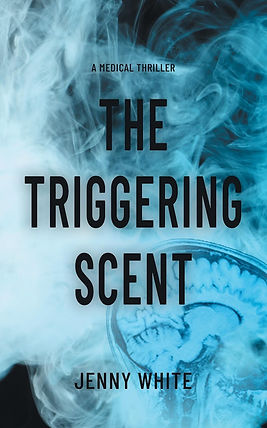
Jenny White's medical thrillers draw on a career as a retired registered nurse. The Triggering Scent opens the Abbey Roberts RN series and explores resilience and ethical dilemmas.
Readers who love medical suspense often ask what separates one author's hospital drama from another's.
How to Choose Your Next Book-to-Screen Pairing
Choosing a pairing comes down to one decision: do you want the book's interior voice or the film's controlled image first? Use this framework.
Your priority | Read first, then watch | Watch first, then read |
Maximum twist impact | Psychological thrillers with unreliable narrators | Straightforward procedurals |
Studying adaptation craft | Books with strong first-person voice | Books with heavy plot mechanics |
Time-limited schedule | Shorter novels | Films under two hours |
Group discussion | Books with ambiguous endings | Films with clear resolutions |
A few practical notes. Check content warnings before starting if you are sensitive to depictions of violence or institutional trauma. And if you want a curated shortlist rather than a browse, our roundup of suspense novels with surprise endings narrows the field, while our guide to psychological thrillers for book club discussions adds questions and hosting tips.
Start With The Triggering Scent
The best way to judge a book-to-screen pairing is to start with a book that earns its tension honestly.
Jenny White is a retired RN and brain tumor survivor who writes medical thrillers.
You can view The Triggering Scent and start the series today, or explore the full Abbey Roberts series to see the reading order across all four books.
Get started with Jenny White and read a medical thriller that respects both the medicine and the reader.
Suspense rewards readers who pay attention, and the pairings above reward it twice. Pick one book, watch its film, and note what changed. That comparison is where the real pleasure lives.
Frequently Asked Questions
What are the best suspense novels adapted into movies?
A strong starting list includes The Silence of the Lambs by Thomas Harris, Gone Girl by Gillian Flynn, The Girl on the Train by Paula Hawkins, and classic noir like Laura by Vera Caspary. Agatha Christie's Death on the Nile and Murder on the Orient Express also pair well with their film versions. For readers who prefer medical settings, Jenny White's The Triggering Scent offers authentic hospital suspense. Each pairing lets you compare how tension, twists, and character interiority translate from page to screen.
Should I read the book before watching its movie adaptation?
Reading first usually gives you the fullest experience of a suspense novel's interior tension, especially with psychological thrillers where unreliable narrators work differently on the page. Films can streamline plot and shift emphasis, so reading first lets you notice what the adaptation changes. If you want the twist to land fresh on screen, watch first, then read to see what the film left out. Either order works; just pick based on whether you value surprise or depth more.
Which psychological thriller books adapted into movies stay closest to the source?
Gone Girl is often cited as a faithful adaptation because the author, Gillian Flynn, wrote the screenplay herself, preserving the novel's dual narration and sharp tonal shifts. The Silence of the Lambs also keeps much of Thomas Harris's procedural detail and chilling dialogue. Adaptations vary widely, so check whether the original author was involved in the screenplay. Faithfulness is not always the goal, but it helps if you loved specific elements of the book and want them preserved on screen.
What makes medical suspense novels different from other thrillers?
Medical suspense novels ground their tension in clinical settings, ethical dilemmas, and the high-stakes decisions healthcare professionals face daily. Authors with clinical backgrounds, like Jenny White, a retired registered nurse, bring hospital settings drawn from professional experience. The suspense comes from both external threats and internal moral pressure, such as treatment choices, patient advocacy, and institutional politics. If you enjoy hospital dramas and want realistic detail alongside gripping plots, this subgenre is worth exploring.


Comments