



Medical Thriller Novels With Ethical Dilemmas: 10 Must-Read Books
Table of Contents
Why Medical Thriller Novels With Ethical Dilemmas Matter
The Intersection of Medicine and Suspense in Modern Fiction
Books Exploring Medical Ethics and Institutional Betrayal Coma by Robin Cook Harvest by Tess Gerritsen The Triggering Scent by Jenny White
Coma by Robin Cook
Harvest by Tess Gerritsen
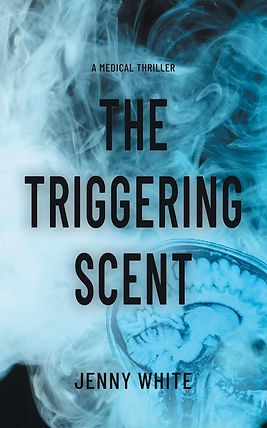
The Triggering Scent by Jenny White
Ethical Medical Experiments in Fiction: Where Science Crosses the Line High Society by Daniel Kalla The Goldilocks Genome by Elizabeth Reed Aden The Serpent's Embrace by John Hands
High Society by Daniel Kalla
The Goldilocks Genome by Elizabeth Reed Aden
The Serpent's Embrace by John Hands
Bioethics in Fiction: AI, Autonomy, and Patient Consent The Deepest Fake by Daniel Kalla Shadow in the Ward by Ari Gray The Silent Patient by Alex Michaelides
The Deepest Fake by Daniel Kalla
Shadow in the Ward by Ari Gray
The Silent Patient by Alex Michaelides
Medical Crime Thrillers and Moral Questions: Pandemic Ethics and Corruption Lost Immunity by Daniel Kalla
Lost Immunity by Daniel Kalla
The Physician-Protagonist: Who Uncovers the Truth
What Sets Authentic Medical Thriller Novels Apart From Generic Suspense
Last Updated: July 31, 2026
Why Medical Thriller Novels With Ethical Dilemmas Matter
Medical thriller novels blend suspense with profound questions about healthcare, consent, and institutional responsibility. These novels resonate because they hold a mirror to real healthcare struggles: diagnostic uncertainty, the pressure physicians face when profit conflicts with patient care, and the moral ambiguity of medical decision-making. What makes this genre compelling is its refusal to offer easy answers. When does innovation become experimentation? Who decides what a patient should know? What happens when the system itself becomes the villain?
The Abbey Roberts RN series by Jenny White exemplifies this approach, drawing on authentic clinical experience to explore the ethical gray zones where medicine and suspense intersect. Her work, built on years as a registered nurse and survival of a brain tumor, delivers the kind of realistic medical detail that separates genuine healthcare fiction from Hollywood dramatization.
Below, we'll show you exactly which medical thriller novels deserve your attention, and why each one matters beyond the page-turning plot.
The Intersection of Medicine and Suspense in Modern Fiction
The marriage of medical science and suspense fiction creates tension that generic thrillers cannot achieve. Robin Cook's 1977 novel Coma essentially created the template: a physician protagonist uncovers institutional horror within a system that should protect life. Cook, himself a physician, embedded real medical knowledge into the narrative. The conspiracy isn't fantastical; it exploits genuine vulnerabilities in how hospitals operate.

Modern medical thrillers have evolved beyond simple institutional corruption. Contemporary works by Daniel Kalla, a practicing emergency room physician, tackle modern bioethics questions: artificial intelligence replacing clinical judgment, vaccine hesitancy during pandemics, and psychedelic-assisted therapy blurring the line between treatment and experimentation. What separates authentic medical thrillers from generic suspense is precision. A cardiologist reading about a fictional heart attack can tell immediately whether the author understands pathophysiology or is faking it. This authenticity transforms a thriller from entertainment into something that lingers and changes how readers view their own healthcare.
Books Exploring Medical Ethics and Institutional Betrayal
Institutional betrayal, the violation of trust by the systems meant to protect us, forms the emotional core of the most powerful medical thrillers. These novels ask: What happens when the hospital itself becomes dangerous?
Coma by Robin Cook
Coma remains the foundational text for understanding how medical thrillers explore institutional ethics. Cook's protagonist discovers that healthy patients undergoing routine surgery are mysteriously falling into comas. The conspiracy exploits a genuine gap in hospital oversight: patients in comas become organ donors, and the financial incentive is clear. For readers new to the genre, Coma remains fast-paced, genuinely unsettling, and grounded in medical reality. The ethical questions it raises about patient vulnerability, institutional accountability, and the commercialization of medicine remain relevant decades later.
Harvest by Tess Gerritsen
Tess Gerritsen's Harvest shifts the ethical focus to organ transplantation. A surgeon discovers that organs destined for transplant may come from sources that should disqualify them ethically and legally. This novel excels because it explores the genuine tension within transplant medicine. Organs are desperately scarce. Patients die waiting. The pressure to find donor organs is immense. Gerritsen, a former nurse and physician, brings clinical credibility to the narrative. The surgical scenes feel authentic, and the bureaucratic obstacles that slow organ procurement feel real.
The Triggering Scent by Jenny White
Jenny White's debut novel launches the Abbey Roberts RN series with a protagonist whose perspective is often missing from medical thrillers: the registered nurse. Abbey Roberts works in high-stakes environments where she witnesses institutional failures, ethical compromises, and the gap between what protocols say should happen and what actually occurs.
The Triggering Scent draws its power from White's dual experience as a retired RN and a brain tumor survivor. She understands both the clinical realities of hospital work and the vulnerability of being a patient. This perspective creates authentic tension: Abbey sees ethical problems that physicians might overlook, yet she operates within hierarchies that constrain her ability to act. White's novel distinguishes itself by centering on the ethical dilemmas that nurses encounter daily: medication errors that almost happen, communication breakdowns that endanger patients, institutional pressures that compromise care.
Ethical Medical Experiments in Fiction: Where Science Crosses the Line
The boundary between legitimate medical research and unethical experimentation has always been permeable. Medical thriller novels exploring this territory ask fundamental questions about consent, oversight, and the human cost of scientific ambition.
High Society by Daniel Kalla
Daniel Kalla's High Society explores psychedelic-assisted therapy, where a protagonist's work with ketamine and MDMA in therapeutic contexts teeters between groundbreaking treatment and reckless human experimentation. This novel is particularly relevant in 2026, as psychedelic-assisted therapy moves closer to mainstream medical acceptance. Regulatory bodies are beginning to approve clinical trials for MDMA-assisted psychotherapy and psilocybin treatments. Kalla's novel captures the genuine ethical tension: these substances show promise for treating severe PTSD and depression, yet they carry real risks. The novel's power lies in its refusal to offer easy answers. The protagonist isn't a villain pursuing power or money, but a dedicated psychiatrist trying to help patients that conventional medicine has failed.
The Goldilocks Genome by Elizabeth Reed Aden
Elizabeth Reed Aden's 2024 award-winning novel The Goldilocks Genome centers on an epidemiologist investigating mysterious deaths linked to a new pharmaceutical intervention. The investigation uncovers a genetic detail that should never have been altered, a minor change in the research phase that cascades into catastrophe. This novel exemplifies how modern medical thrillers handle the question of scientific oversight. The conspiracy isn't malicious in origin; it emerges from incremental decisions, each one seemingly justified in isolation. Aden's background in science lends credibility to the technical detail, making the ethical failure more disturbing.
The Serpent's Embrace by John Hands
John Hands' The Serpent's Embrace takes the question of scientific overreach in a different direction, blending genetic research with the ancient human desire for immortality. Scientists pursuing genetic engineering to extend human lifespan confront both the scientific limits of their ambition and the ethical questions their work raises. This novel explores a deeper ethical terrain: the hubris of scientific ambition itself.
Novel | Primary Ethical Focus | Protagonist Type | Best For |
Coma | Institutional corruption | Physician | Readers new to medical thrillers |
Harvest | Organ trafficking and consent | Surgeon | Those interested in transplant ethics |
The Triggering Scent | Nursing ethics and institutional failure | Registered Nurse | Healthcare professionals; readers seeking authentic clinical detail |
High Society | Experimental psychedelic therapy | Psychiatrist | Readers interested in emerging medical technologies |
The Goldilocks Genome | Regulatory failure and genetic engineering | Epidemiologist | Those interested in how scientific oversight breaks down |
The Serpent's Embrace | Scientific overreach and human limits | Geneticist | Readers seeking philosophical depth |
Bioethics in Fiction: AI, Autonomy, and Patient Consent
The most contemporary medical thrillers grapple with questions that didn't exist a decade ago: What happens when artificial intelligence makes clinical decisions? How do we protect patient autonomy in a world of algorithmic medicine?
The Deepest Fake by Daniel Kalla
Daniel Kalla's The Deepest Fake takes artificial intelligence from abstract concern to visceral threat. The novel explores deepfakes, digitally manipulated audio and video, deployed within healthcare settings. Imagine a deepfake of a physician recommending a treatment they never suggested. Imagine an AI-generated voice calling a patient with false medical information. Kalla, writing as a practicing emergency physician, grounds the narrative in realistic clinical scenarios.
Watch Out The novel raises a specific concern: as healthcare increasingly relies on digital communication, the attack surface for deepfakes and misinformation expands. The ethical implications extend beyond individual deception to systemic erosion of trust.
Shadow in the Ward by Ari Gray
Ari Gray's Shadow in the Ward imagines a near-future hospital run almost entirely by artificial intelligence. A physician discovers that mysterious patient deaths correlate with AI decision-making. The novel asks: When we delegate clinical judgment to algorithms, what do we lose? Algorithms can reduce bias in some contexts and process data at scales human clinicians cannot. But they also obscure decision-making. A patient cannot appeal to an algorithm's conscience because it has none.
The Silent Patient by Alex Michaelides
While The Silent Patient is primarily a psychological thriller, it explores bioethical themes central to psychiatric medicine: patient autonomy, informed consent, and the ethics of therapeutic relationships. The novel explores the power imbalance inherent in psychiatric treatment and how a therapist with good intentions can rationalize boundary violations.
Medical Crime Thrillers and Moral Questions: Pandemic Ethics and Corruption
The COVID-19 pandemic transformed how medical thrillers explore questions of public health, institutional trust, and the ethics of pandemic response. Novels published in the post-pandemic era grapple with vaccine hesitancy, the politicization of medicine, and the tension between individual liberty and collective welfare.
Lost Immunity by Daniel Kalla
Daniel Kalla's Lost Immunity centers on a deadly bacterial outbreak during a global pandemic. A public health officer and a pharmaceutical company race to develop a vaccine while navigating vaccine hesitancy, misinformation, and geopolitical pressure. The novel's ethical complexity lies in its refusal to reduce vaccine hesitancy to simple ignorance or malice. Kalla explores the legitimate historical reasons some communities distrust medical institutions and shows how misinformation spreads through social networks.
Pro Tip Kalla's approach to pandemic ethics in fiction demonstrates a principle that separates authentic medical thrillers from propaganda: acknowledge the legitimate concerns of those who disagree, while still showing why the evidence supports a particular position. This approach respects the reader's intelligence and creates space for genuine moral reflection.
The Physician-Protagonist: Who Uncovers the Truth
A recurring pattern in medical thrillers is the physician-protagonist, a doctor who discovers institutional corruption and must decide whether to expose it despite the professional and personal costs. This archetype raises its own ethical questions: Why do physicians have the power to uncover institutional wrongdoing? What obligations do they have when they discover problems?
The physician-protagonist often occupies a privileged position within healthcare hierarchies. They have access to information, credibility with other professionals, and the medical knowledge to recognize problems that lay people might miss. Yet they're also embedded in systems that discourage whistleblowing.
Jenny White's approach in the Abbey Roberts series shifts this dynamic by centering a nurse-protagonist. Nurses occupy a different position in healthcare hierarchies, closer to patients, often with better visibility into systemic problems, yet with less institutional power to effect change.
What Sets Authentic Medical Thriller Novels Apart From Generic Suspense
The difference between a medical thriller that resonates and one that feels hollow comes down to authenticity. Not just accuracy of medical detail, though that matters. Authenticity in how the novel portrays the actual ethical dilemmas healthcare workers face. Generic suspense uses medicine as window dressing. Authentic medical thrillers do the opposite: the plot emerges from ethical dilemmas.
Robin Cook's Coma works because the conspiracy exploits genuine vulnerabilities in how hospitals operate. Tess Gerritsen's Harvest works because organ transplantation genuinely involves ethical tensions. Daniel Kalla's novels work because he writes from the perspective of someone who actually practices emergency medicine. Jenny White's The Triggering Scent succeeds because it centers on the ethical dilemmas nurses encounter.
The most important distinction: authentic medical thrillers respect their readers' intelligence. They assume readers can handle moral ambiguity. They don't reduce complex ethical questions to simple good-versus-evil narratives. They show how ordinary people, operating within flawed systems, make choices that have profound consequences. A common mistake in medical thrillers is portraying the villain as obviously evil. A more sophisticated approach shows how good intentions, institutional pressures, and incremental compromises create disaster.
This is why medical thrillers matter beyond entertainment. They help readers understand how institutional failures happen. They build empathy for healthcare workers navigating impossible situations. They raise questions about medical ethics that deserve serious reflection. For readers seeking medical thriller novels with genuine ethical depth, the key is to look for authors with medical credentials or healthcare experience.
If you're drawn to medical thriller novels with ethical dilemmas that challenge your assumptions about healthcare, trust, and institutional responsibility, Jenny White's work offers something increasingly rare: suspense grounded in authentic clinical experience. Her background as a retired registered nurse and brain tumor survivor brings credibility to both the medical detail and the emotional stakes. The Triggering Scent launches the Abbey Roberts RN series with precisely the kind of character-driven, ethically complex narrative that separates memorable thrillers from forgettable ones. Explore her work and discover how great medical fiction can change how you think about healthcare itself.
Frequently Asked Questions
What makes medical thriller novels with ethical dilemmas different from other suspense fiction?
Medical thriller novels with ethical dilemmas combine high-stakes clinical realism with moral complexity. Unlike generic thrillers, they ground suspense in authentic healthcare settings, diagnostic dilemmas, and bioethics questions, such as informed consent, patient autonomy, and institutional betrayal. Authors like Daniel Kalla (a practising ER physician) and Jenny White (a retired RN) embed genuine medical knowledge, making ethical conflicts feel urgent and personally resonant rather than contrived. Readers encounter real-world tensions: Should experimental treatments be pursued? Who profits from medical innovation? These questions linger after the final page.
How do books exploring medical ethics handle sensitive topics like human experimentation and pharmaceutical conspiracy?
Books exploring medical ethics navigate these themes by grounding them in plausible scenarios and character-driven dilemmas. For example, High Society explores psychedelic-assisted therapy, a real frontier in psychiatry, through a protagonist whose work teeters between breakthrough and unethical. The Goldilocks Genome examines genetic research errors with scientific accuracy. Rather than sensationalizing, these novels examine the incentive structures, institutional pressures, and personal ambitions that lead healthcare professionals and corporations to cross ethical lines. They ask: How does the medical industrial complex influence decision-making? What happens when profit motives override patient safety? This nuanced approach respects reader intelligence.
Are medical thriller novels accurate enough to trust their medical details?
Accuracy varies by author. Daniel Kalla, an emergency room physician, ensures his novels reflect current medical knowledge and real public health crises, Lost Immunity tackles vaccine hesitancy during a pandemic with epidemiological credibility. Jenny White, a retired registered nurse, grounds her Abbey Roberts RN series in authentic ICU dynamics and clinical decision-making. However, not all medical thrillers prioritize accuracy equally. The best approach: seek authors with verifiable healthcare credentials and peer-reviewed accuracy. Read reviews from healthcare professionals. Books by practising or retired clinicians tend to embed genuine procedural knowledge, diagnostic reasoning, and the emotional weight of life-or-death decisions in ways that generic thrillers cannot replicate.
Which medical thriller novel best explores bioethics in fiction for healthcare professionals?
The Triggering Scent by Jenny White stands out for healthcare professionals because it authentically portrays ICU nursing, ethical dilemmas, and clinical decision-making through the eyes of Abbey Roberts, a registered nurse. The novel respects the intelligence and moral complexity of healthcare workers rather than portraying them as Hollywood stereotypes. For those interested in bioethics in fiction more broadly, The Deepest Fake examines AI's role in diagnosis and end-of-life discussions, a timely concern for Canadian healthcare. Lost Immunity addresses vaccine hesitancy and pandemic ethics with nuance. These novels avoid 'trauma porn' while honestly depicting the moral weight of healthcare work, making them genuinely relevant to professionals navigating real ethical dilemmas daily.
This article was written using GrandRanker


Comments