



Is Reading Medical Thrillers for Realism Worth It?
Updated: Sep 16
Table of Contents
The Verdict: When Realism Makes or Breaks a Medical Thriller
What Clinical Accuracy Actually Adds to Suspense
Procedural Realism vs. Hollywood Medicine
Best Medical Thrillers with Clinical Accuracy
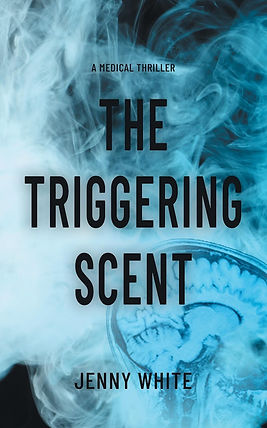
The Triggering Scent: A Nurse's Perspective
Gripping Suspense Novels for Book Clubs
The Uncanny Valley of Medical Fiction: When Accuracy Backfires
Where the Curve Turns Downward
The Emotional Cost of Getting It Right
A Reader's Checklist for Evaluating Medical Realism
The Realism Scorecard
Reading Your Score
How to Use It Without Ruining the Book
Frequently Asked Questions
Last Updated: September 11, 2026
The Verdict: When Realism Makes or Breaks a Medical Thriller
Is reading medical thrillers for realism worth it? For readers who work in healthcare or have lived through serious illness, usually yes, provided the author gets the details right. Clinical accuracy separates a genuinely tense medical thriller from a hospital drama that collapses under scrutiny. This guide from Jenny White examines when realism elevates suspense, when it backfires, and how to judge a book before you commit your evening to it.
Medical thrillers are suspense novels built around clinical settings, procedures, and ethical dilemmas, where the medicine drives the plot rather than decorating it. If the medicine is the engine, a stalled engine ruins the ride.
Here's the tension most reviews skip: realism is not a single dial you turn up. It's a set of trade-offs between procedural accuracy, narrative tension, and emotional truth. Get the balance wrong in either direction and you lose the reader, sometimes in the first chapter.
What Clinical Accuracy Actually Adds to Suspense
Accuracy adds consequence. When a writer gets triage, medication dosing, or escalation protocols right, the reader trusts that the stakes are real, and that trust is what makes suspense work.
A code blue lands harder when you understand what the team is racing against, and a diagnostic mystery grips tighter when clues follow real pathology rather than coincidence. Clinical realism turns a set piece into something the reader believes could happen on a ward they've walked through.
Key Takeaway Suspense depends on credible stakes. Readers forgive a lot, but they rarely forgive a hospital that behaves nothing like a hospital.
Procedural Realism vs. Hollywood Medicine
The gap between procedural realism and Hollywood medicine comes down to what the story needs versus what the setting would actually do. Television compresses timelines, invents dramatic interventions, and lets characters act outside their scope of practice.
In practice: a nurse practitioner ordering a test a physician would order, a defibrillator used on a flatline, or a same-day discharge after major surgery. Each shortcut buys pacing and costs credibility with anyone who has stood at a bedside.
What most guides miss is that readers don't need every detail correct, only the details that carry weight. A wrong drug name in a throwaway line is forgivable; at the climax it is not.
Best Medical Thrillers with Clinical Accuracy
The best medical thrillers with clinical accuracy share one trait: an author who has either worked in medicine or researched it well enough to sound like they have. Physician- and nurse-authors bring an instinct for what a shift actually feels like.
A few titles consistently earn praise on this front:
Coma by Robin Cook, the book that effectively launched the modern medical thriller, still holds up for its depiction of hospital hierarchy and medical student life.
The Andromeda Strain by Michael Crichton leans hard into scientific methodology and containment protocols, though the technical density puts some readers off.
Tess Gerritsen's Rizzoli & Isles series brings forensic pathology and medical evidence into a crime-solving frame, with strong recurring characters.
Michael Palmer's medical thrillers trade on clinical experience and hospital corruption, though the formula repeats across the bibliography.
Title | Author Background | Realism Strength | Best For |
Coma | Physician | Hospital hierarchy, ethics | Genre origins |
The Andromeda Strain | Physician | Scientific method, protocols | Science-heavy readers |
Rizzoli & Isles series | Physician | Forensic pathology | Crime plus medicine |
|
|
|
|

The Triggering Scent: A Nurse's Perspective
Jenny White's The Triggering Scent approaches clinical realism from the nursing side, which is rarer than you'd expect. Most medical thrillers are written from a physician's vantage point, where the drama sits with diagnosis and authority. Nursing shifts the camera.
The Abbey Roberts RN series follows a registered nurse through the ICU, where ethical dilemmas are immediate and procedural detail is lived rather than observed. Jenny White spent years as a registered nurse before writing fiction, and it shows in how the hospital functions as a workplace rather than a backdrop.
For readers who wonder whether the clinical details are vetted or just flavor, the answer here is structural: the nursing perspective makes triage, patient care, and escalation the plot, not the scenery. The Triggering Scent is available now, and it's the natural starting point if you want realism from inside the ward rather than above it.
Gripping Suspense Novels for Book Clubs
Gripping suspense novels for book clubs need two things: enough tension to keep everyone reading past the assigned chapter, and enough substance to argue about afterward. Medical thrillers are unusually well suited to both.
The ethical dilemmas do the heavy lifting. A book that asks whether a nurse should follow an order she believes is wrong gives a group something to disagree about for an hour, the difference between a pick that fizzles and one that runs long.
A few discussion-friendly angles to bring to your next meeting:
Where does professional loyalty end and patient advocacy begin?
How much does the author's own medical background change how you read the book?
Which procedural detail did you notice, and did it pull you out of the story or deepen it?
Does the ending respect the ethical question it raised, or resolve it too neatly?
Jenny White's work fits this format well because the resilience thread, drawn partly from her own experience as a brain tumor survivor, gives groups an emotional throughline to trace alongside the suspense. The tone stays grounded rather than exploitative.
The Uncanny Valley of Medical Fiction: When Accuracy Backfires
Accuracy can backfire, and the reason is psychological rather than technical. When a novel loads in clinical terminology without translating it into human stakes, readers disengage, an uncanny valley where the medicine is correct but the story feels hollow. The term borrows from robotics: a near-human face that is almost right reads as more disturbing than an obviously artificial one. A hospital that is 90 percent accurate makes the remaining 10 percent feel like a betrayal, while a book that never pretends to be a documentary gets a pass. action adventure books.
The failure mode is recognizable: a scene describes a procedure with flawless technical precision, yet nothing is at risk. The jargon does the work tension should. Readers who don't work in healthcare skim; readers who do wonder why the author bothered.
Watch Out Technical accuracy without emotional stakes reads as a textbook excerpt. If a scene can be removed without changing what any character wants or fears, the detail is decoration, not drama.
Where the Curve Turns Downward
The uncanny valley in medical fiction has three trigger points, each trading accuracy for something the reader actually came for.
The terminology wall. A page of untranslated acronyms and drug names forces the reader to choose between skimming and stopping. One unexplained term per scene is tolerable; three or more in a paragraph breaks immersion (PubMed). The fix is to let a character react to the term rather than define it, so the reader learns the stakes without a glossary.
The documentation detour. A writer over-corrects for realism and drains the pacing, spending three pages on charting, handoffs, and shift logistics. Authenticity is a means to an end. When it becomes the end, the thriller stops thrilling. The tell is a scene that advances the setting but not the plot.
The competence vacuum. The subtlest failure: a book gets every procedure right but gives the protagonist no agency inside the system, so accuracy becomes a cage. Healthcare workers recognize the feeling, it mirrors a real shift where the protocol is correct and the outcome is still bad. Channel that frustration into a character who pushes against it and accuracy becomes fuel; let the character simply endure it and accuracy becomes atmosphere.
The Emotional Cost of Getting It Right
Here is the angle most guides skip: realism does not just affect believability, it affects how much the reader feels. A clinically accurate scene of a patient deteriorating triggers a different response than a Hollywood version, because the reader who recognizes the sequence knows what comes next and dreads it. That anticipatory dread is the engine of the genre, and it only runs when the details are true enough to predict.
The trade-off is real. Readers who have lived through serious illness or worked in a hospital often report that accurate medical thrillers are harder to read, not easier: the realism that makes suspense credible also makes the anxiety personal. That is not a flaw, it is the price of the effect, and why the question of whether realism is worth it has a different answer for every reader.
The books that avoid the valley share a habit: they use clinical detail to raise a question, then let a character answer it under pressure. That is where accuracy earns its place, and where the reader's dread becomes the author's most reliable tool.
A Reader's Checklist for Evaluating Medical Realism
You can judge medical realism quickly if you know what to look for, but a flat checklist treats every error as equal. It isn't. The difference is whether a detail carries weight, and the way to measure that is to score the book on the details that actually move the plot.
Run these checks against the first fifty pages and you'll know whether the author is writing from knowledge or from television.
The Realism Scorecard
Score each item from 0 to 2, where 0 means it fails, 1 means it is mixed, and 2 means it holds up. The total tells you what kind of book you are holding.
Hierarchy (0-2): Who gives orders, and does anyone act outside their scope without consequence? A nurse practitioner ordering a test a physician would order is a 0 (peer-reviewed research). A clear chain with one deliberate, acknowledged breach is a 2.
Timelines (0-2): Are lab results, discharges, and recoveries plausible? Same-day discharges after major surgery and instant test results are red flags (medlineplus.gov). A compressed timeline the author acknowledges in the text is a 1, not a 0.
Ethical cost (0-2): Do the dilemmas have real consequences, or do they resolve conveniently? A dilemma that costs a character something they cannot get back is a 2.
Jargon handling (0-2): Is the terminology translated into stakes, or left as decoration? One unexplained term per scene is fine. A paragraph of acronyms with no human reaction is a 0.
Author grounding (0-2): Does the author have a clinical background, or a credible research process acknowledged in the notes? A physician or nurse author is a 2. A researched non-clinician with named sources is a 1.
Character behavior (0-2): Do the characters behave like people under pressure, or like plot devices in scrubs? Panic, denial, and gallows humor are all 2s. Flawless composure in a crisis is a 0.
Ending integrity (0-2): Does the ending respect the clinical reality the book established, or does it cheat to resolve? A deus ex machina that ignores the rules the book set is a 0.
Reading Your Score
Out of 14 possible points, the bands are useful rather than absolute.
11-14: The realism is doing its job. The book respects both the medicine and the reader, and the accuracy is load-bearing.
7-10: Mixed. The book gets the big things right and the small things wrong, which is usually enough for a reader who is not a clinician but may pull a healthcare worker out of the story.
4-6: Hollywood medicine. Fine if that is what you want, frustrating if it isn't. The suspense may still work, but it works despite the setting rather than because of it.
0-3: The setting is decoration. Read it as fantasy, not as a medical thriller.
How to Use It Without Ruining the Book
The point of the scorecard is not to grade every novel before you allow yourself to enjoy it, it is to diagnose your own reaction. If a book is pulling you out of the story and you cannot say why, run the seven checks and the answer usually appears. Most often it is the hierarchy or the timelines, the two areas where television habits are hardest to unlearn.
A useful habit is to score only the first fifty pages, then stop and read. If the book clears most of the checks early, the author has earned your trust, stop auditing and start reading. If it fails three or more, you are reading Hollywood medicine: fine if that is what you want, frustrating if it isn't.
Frequently Asked Questions
What makes a medical thriller feel realistic to readers?
Realism in medical thrillers comes from procedural accuracy, authentic medical jargon, and believable hospital dynamics. When an author gets the small details right, like how a code blue is called or how a nurse prioritizes triage, readers trust the story more. This trust lets them invest in the suspense without being pulled out of the narrative by obvious errors. Clinical realism also makes ethical dilemmas feel weightier because the consequences seem genuine rather than exaggerated for drama.
Do medical thrillers accurately portray the life of a registered nurse?
It varies widely. Some authors, especially those with clinical backgrounds, capture the real rhythms of nursing: the shift work, the emotional weight of patient care, and the constant balancing of protocol with compassion. Others lean into tropes that flatten nurses into background characters. Books written by retired nurses, like Jenny White's Abbey Roberts RN series, tend to offer a more grounded view because the author has lived the hierarchy, the exhaustion, and the ethical gray areas firsthand.
How do authors balance medical accuracy with suspense?
The best authors treat accuracy as a tool for tension, not a lecture. They use precise details to make a scene feel immediate, then let the suspense come from what the characters do under pressure. Too much technical explanation slows the pace; too little makes the stakes feel fake. The sweet spot is when a medical detail directly raises the stakes, like a drug interaction that turns a routine procedure into a crisis, so the reader learns something while staying on edge.
Are medical thrillers considered educational?
They can be, though that is not their primary purpose. Readers often pick up real terminology, a sense of how hospitals function, and insight into ethical debates like informed consent or end-of-life care. However, fiction takes liberties for narrative tension, so it should not be treated as a medical reference. The educational value is more about empathy and awareness than clinical instruction. If you want factual depth, pair a thriller with a nonfiction account for context.
Why is clinical accuracy important in medical fiction?
Clinical accuracy matters because it builds trust. When a reader with any healthcare knowledge spots a mistake, like a defibrillator used on a flatline or a nurse performing a surgeon's job without consequence, the story loses credibility. That break in immersion is hard to repair. Accurate details also honor the real experiences of healthcare workers and patients, making the suspense feel earned rather than manufactured. For authors writing from lived experience, accuracy is not a gimmick; it is the foundation of the story's emotional weight.
Buy now


Comments