




How to Prevent Falls During Brain Surgery Recovery
Table of Contents
Why Brain Surgery Recovery Raises Your Fall Risk
Balance, Dizziness, and Weakness After Craniotomy
Medications and Fatigue That Affect Stability
Step 1: Move Slowly When Changing Positions
Step 2: Get Out of Bed and Stand Safely
Step 3: Walking After Brain Surgery and Building Activity Gradually
A Staged Return-to-Mobility Plan
Mobility Aids: Walkers, Canes, and When to Use Them
Step 4: Home Safety After Brain Surgery: A Room-by-Room Checklist
Bedroom
Bathroom
Stairs
Kitchen
Hallways and Living Areas
Lighting, Rugs, Stairs, and Clear Walkways
Step 5: Caregiver Tips After Brain Surgery for Safe Assistance
Respect the Surgical Precautions First
Learn the Safe Transfer Technique
Gait Belt Basics
Walking Assistance
What Not to Do
Caregiver Self-Care
When to Call a Doctor After Brain Surgery
What to Do After a Fall or Near-Fall
Frequently Asked Questions
Last Updated: October 16, 2026
Why Brain Surgery Recovery Raises Your Fall Risk
Learning how to prevent falls during brain surgery recovery starts with understanding why the risk climbs.
This guide from Jenny White, a retired registered nurse and brain tumor survivor, rests on one truth: recovery is a process, not a switch.
Falls are among the most common setbacks after brain surgery. The reasons stack up:
Balance changes from swelling or surgical trauma
Dizziness when you stand or turn your head
Weakness in the legs and core
Most of these risks can be managed. Below are five steps, from slow position changes to a room-by-room home safety check.
Watch Out Do not test your balance by walking unaided "just to see." A single fall can undo weeks of healing and may require a return to hospital.
Balance, Dizziness, and Weakness After Craniotomy
Craniotomy opens part of the skull to reach the brain.
Dizziness is common in the first days and weeks, worst when you change position. Weakness follows, partly from time in bed.
The result is a body that feels unpredictable: legs respond slower, and the inner ear sends confusing signals. This is normal and temporary for most people.
Medications and Fatigue That Affect Stability
The medications that help you recover can also make you unsteady.
Fatigue is its own risk: when exhausted, you are less likely to lift your feet or grip a rail, and tired muscles give out faster.
Ask your care team: which of my medications can affect my balance? Then ask whether any can be taken at night to reduce daytime drowsiness.
Step 1: Move Slowly When Changing Positions
The single best habit for fall prevention is simple: move slowly. Your brain needs a few extra seconds to adjust blood flow when you change position. Rushing that adjustment is how dizziness turns into a fall.
Use this sequence every time you go from lying to standing:
Lie still for a moment after waking.
Roll onto your side with your knees bent.
Push up to a seated position using your arms.
Sit on the edge of the bed for 30 to 60 seconds.
Check how you feel before you stand.
Stand up slowly, using a support if needed.
If you feel lightheaded, sit back down, wait until it passes, then try again.
Pro Tip Count to thirty in your head before standing. Most dizziness after brain surgery passes within that window. Standing too soon is the most common cause of near-falls at home.
This slow approach also protects against sudden blood pressure drops, common in the days after surgery.
Step 2: Get Out of Bed and Stand Safely
Getting out of bed is where many falls happen, especially at night. A safe routine makes it automatic.
Keep these rules in mind:
Raise the head of the bed before you sit up.
Never lunge forward to grab something.
Plant both feet flat on the floor before standing.
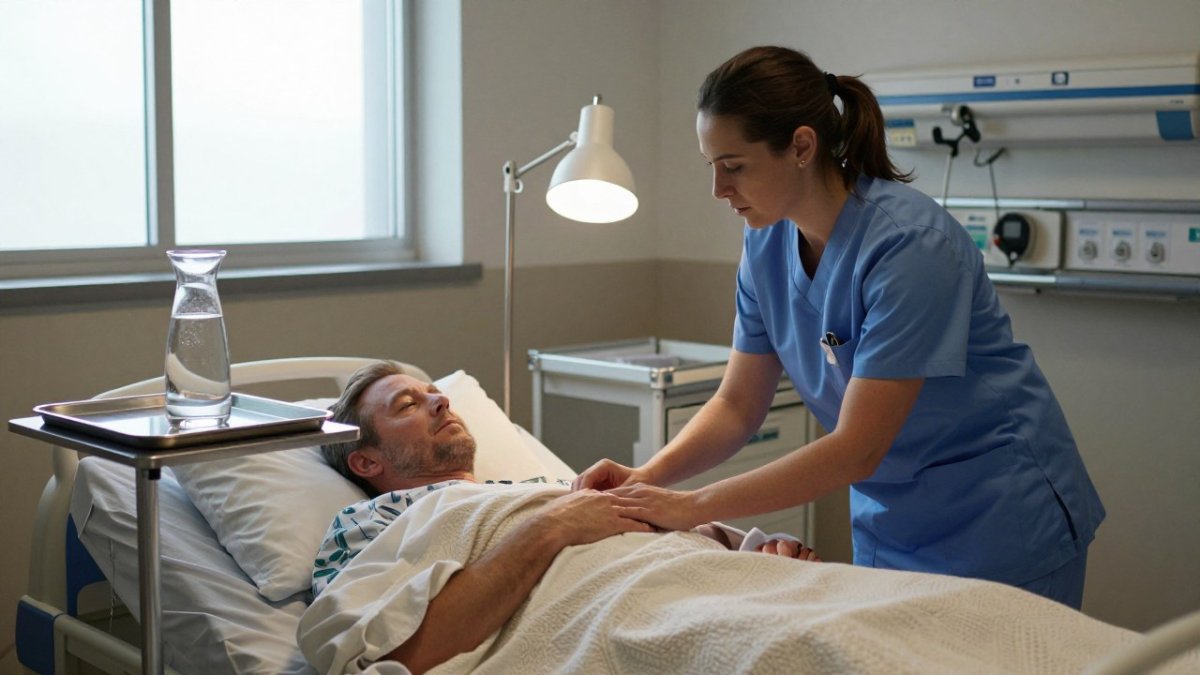
A bed rail or sturdy chair beside the bed gives you something to grip. If you feel unsteady the moment you stand, sit back down and call for help.
Nighttime is a high-risk window. You are tired, the room is dark, and your balance is at its worst.
Step 3: Walking After Brain Surgery and Building Activity Gradually
Walking after brain surgery is one of the best things you can do, but it must be staged: too much too soon causes fatigue and falls, too little causes weakness and stiffness.
Start small: a few steps to the bathroom counts, then a short walk down the hallway. Increase distance only when the current distance feels easy.
Watch for these signals to slow down:
Heavy legs or shaky knees
Shortness of breath
Dizziness or a spinning feeling
A Staged Return-to-Mobility Plan
Think of recovery in phases. Each builds on the last, and you only move forward when the current phase feels steady.
Phase | Focus | What It Looks Like |
1 | Bed mobility | Rolling, sitting up, sitting on the edge |
2 | Supported standing | Standing with a walker or helper nearby |
3 | Short walks | A few steps indoors, with support |
4 | Longer walks | Hallway or room-to-room, still supervised |
5 | Daily activity | Light chores, stairs with a rail, outings |
Move to the next phase when the current one feels comfortable for a few days. If you feel unsteady, step back.
Mobility Aids: Walkers, Canes, and When to Use Them
A walker is the safest choice early on, giving a wide base and something to lean on; a cane works later, once balance improves.
Use the aid exactly as your care team instructs. A common mistake is ditching the walker too early because it feels awkward.
Make sure any aid is the right height. Handles should sit at wrist level when your arms hang down.
Step 4: Home Safety After Brain Surgery: A Room-by-Room Checklist
Home safety after brain surgery means removing the hazards that turn a small stumble into a fall.
Walk through your home with a caregiver and fix the highest-risk items first. Do not do the work yourself if your care team has restricted bending, lifting, or exertion.

Bedroom
The bedroom is where you are most tired and most likely to move fast out of habit.
Place the bed against a wall or in a corner so you have a stable side to push against
Keep a sturdy chair or bed rail within reach for sitting up
Put a night light between the bed and the bathroom door
Bathroom
The bathroom combines water, hard surfaces, and frequent position changes. It is the highest-risk room in the house.
Install grab bars in the shower and beside the toilet. Suction-cup bars are not a substitute; they can pop off under load
Use a non-slip bath mat inside and outside the shower or tub
Add a shower chair and a hand-held shower head so you can sit while washing
Stairs
Stairs are where a single misstep has the highest consequences. If your care team has restricted stair use, follow that limit and sleep on the main floor.
Install a handrail on both sides if the staircase is wide enough
Check that existing handrails are firmly anchored, not loose
Mark the top and bottom steps with contrasting tape or a strip of bright paint
Kitchen
The kitchen is full of bending, reaching, and carrying, exactly the movements most restricted after brain surgery.
Move everyday dishes, mugs, and food to counter or waist height
Keep a sturdy stool or chair in the kitchen so you can sit for tasks
Avoid carrying hot liquids. Slide a mug along the counter or use a tray with a caregiver's help
Hallways and Living Areas
Clear walkways of cords, shoes, magazines, and clutter
Remove or tape down loose rugs and runners
Add night lights along the route from bedroom to bathroom
Lighting, Rugs, Stairs, and Clear Walkways
These four areas cause most indoor falls. Fix them first.
Add night lights in the bedroom, hallway, and bathroom
Remove or tape down loose rugs
Clear walkways of cords, shoes, and clutter
Pro Tip Do the walkthrough before you come home from hospital, not after. A caregiver can photograph each room and send the images to an occupational therapist, who can suggest specific equipment and layout changes. Many hospitals arrange a home safety assessment before discharge; ask whether one is available to you.
Key Takeaway The three highest-value changes are better lighting, grab bars, and removing loose rugs. Together they address the hazards behind most home falls after brain surgery. If you can only do three things, do these, and ask a caregiver to handle any task that requires bending, lifting, or reaching. ::: Securing these wet environments is essential to prevent bathroom falls, as the combination of slick surfaces and limited mobility poses a distinct risk during your recovery. Step 5: Caregiver Tips After Brain Surgery for Safe Assistance Caregiver tips after brain surgery come down to one principle: assist, don't rush. A calm presence often separates a safe transfer from a fall, but good intentions are not enough. Assisting someone after a craniotomy requires specific technique, because pulling on an arm or letting a person push too hard can cause harm even when the goal is safety. Respect the Surgical Precautions First Before helping with any movement, confirm the activity limits your surgeon set. Common restrictions include: No bending below the waist No lifting more than a light item, often around 5 to 10 pounds, though your care team will give you the exact limit No straining, including pushing hard during a transfer These limits exist because straining can raise pressure inside the head. If a transfer would require pushing, pulling, or bearing down, stop and find another way, or call your care team. Learn the Safe Transfer Technique A safe transfer uses the legs, not the back, and keeps the person close to your body. Ask your care team or a physiotherapist to demonstrate before you do it alone. Plan the move before you start. Decide where the person is going and clear the path. Position yourself on the weaker side, close to the person, with your feet shoulder-width apart. Use a gait belt if one has been provided. It gives you a safe handhold at the waist instead of pulling on an arm or shoulder. Bend your knees, keep your back straight, and tighten your core. Count out loud so you both move together. "One, two, three, stand." Let the person do what they can. Your job is to steady and guide, not to lift. Sit or stand fully before letting go, and check that the person feels steady. Gait Belt Basics A gait belt is a wide strap that buckles around the person's waist, over clothing, giving you a firm grip during transfers and walking. To use one: Buckle it snugly, with room for two fingers underneath Grip it from underneath with an upward palm, not from the top Never use it to lift the person off the ground If no gait belt is available, ask your care team whether one should be provided. Do not substitute a towel, scarf, or belt. Walking Assistance Walk beside the weaker side, not in front. Stay close enough that your shoulder is near the person's shoulder. Let the person set the pace. Rushing causes falls. What Not to Do Do not catch a falling person by the arms. Instead, guide them down to a safe surface if you can, and protect the head. Do not let the person use furniture as a walker. Furniture can slide or tip. Do not remove a mobility aid because the person seems steady. Steadiness can change hour to hour. Caregiver Self-Care Caregiving after brain surgery is physically and emotionally demanding. Protect your back with proper technique, ask for help with heavier transfers, and take breaks. A rested caregiver is a safer caregiver; if you are injured, the person you care for loses their main support. If the person you are caring for falls and you cannot get them up safely, do not try to lift them alone. Call for help. Attempting a solo lift is a common cause of caregiver injury and can worsen the patient's injuries.
Pro Tip Ask your care team whether a physiotherapist or occupational therapist can visit your home to assess transfers, recommend equipment, and train you in person. Hands-on training is far more effective than reading instructions.
When to Call a Doctor After Brain Surgery
Knowing when to call a doctor after brain surgery is as important as preventing falls. Some symptoms are normal recovery. Others need urgent attention.
Call your care team right away if you notice:
A headache that is sudden or much worse
New weakness, numbness, or trouble speaking
Confusion or trouble staying awake
What to Do After a Fall or Near-Fall
If a fall happens, stay calm and check for injury before moving. Do not jump up.
Stay still and take stock of how you feel.
Check for pain, bleeding, or a head injury.
Call for help if you cannot get up safely.
Report the fall to your care team, even if you feel fine.
A near-fall matters too. Tell your doctor so they can review your medications, balance, and home setup.
Frequently Asked Questions
How can I prevent falls after brain surgery?
Preventing falls starts with moving slowly when changing positions, using mobility aids as instructed, and keeping pathways clear at home. Get up in stages: sit on the edge of the bed, pause, then stand with support nearby. Wear supportive footwear, improve lighting in hallways and bathrooms, and remove tripping hazards like loose rugs. Ask your care team about physical or occupational therapy to build strength and balance safely during recovery.
When is it safe to walk alone after brain surgery?
Your surgeon or physiotherapist should clear you before walking unsupervised. Most people need assistance for the first days or weeks, depending on the type of surgery and how recovery is progressing. Start with short walks indoors while someone is nearby, then extend distance as balance and stamina improve. If you feel dizzy, weak, or unsteady, sit down and ask for help rather than pushing through.
What should caregivers do to help someone move safely after brain surgery?
Caregivers should walk beside the person on their weaker side, keep one hand ready to steady them, and clear the path ahead before each move. Encourage slow position changes and remind them to pause before standing. Keep a phone within reach, remove clutter, and install grab bars in the bathroom. If a fall happens, do not rush to lift them; check for injury and call for medical advice if needed.
When should balance problems after brain surgery be reported to a healthcare professional?
Report new or worsening balance problems, dizziness, severe headache, confusion, weakness on one side, vision changes, or repeated near-falls to your surgeon or nurse right away. These can signal complications such as bleeding, swelling, or medication side effects that need prompt review. Do not wait for a scheduled follow-up if symptoms are getting worse or interfering with daily activities.
Buy now


Comments