



How to Analyze Suspense Pacing in Book Clubs
Updated: Sep 16
Table of Contents
Why Suspense Pacing Deserves Its Own Book Club Discussion
Elements of Suspense in Fiction Every Book Club Should Spot
The Dramatic Question and Stakes
Foreshadowing and Narrative Speed
How to Identify Pacing Issues in a Novel as a Group
A Five-Point Pacing Checklist for Readers
Book Club Discussion Questions for Thrillers That Spark Real Debate
The Three-Round Framework
The Question Bank, Organized by Analytical Purpose
Facilitation Notes for the Moderator
A Printable Rubric for Your Group
Genre-Specific Pacing Expectations: Medical Thrillers vs. Domestic Suspense
How to Calibrate Your Group's Expectations Before You Judge
Where Subgenres Overlap, and Where They Don't
A Quick Genre-Fit Score for Your Group
Visualizing Pacing: Mapping Tension Across a Story Timeline
Conclusion: Turning Pacing Analysis into Your Book Club's Secret Weapon
Frequently Asked Questions
Last Updated: September 14, 2026
Why Suspense Pacing Deserves Its Own Book Club Discussion
Most book clubs discuss what happened, not how. That gap is where how to analyze suspense pacing in book clubs becomes a useful skill.
Suspense pacing is the deliberate control of how quickly information, tension, and resolution unfold. It's the invisible architecture that makes you read one more chapter at midnight, or abandon a book at page 80. Jenny White, a retired registered nurse and author of the Abbey Roberts RN medical thriller series, has seen this from both sides.
Most guides treat pacing as a writer's problem. But readers feel pacing intuitively and rarely have language for it. Giving your book club that language turns a one-hour chat into a conversation that goes somewhere.
Below, we'll show you exactly how to spot the elements of suspense in fiction, run a structured discussion, and map tension across a timeline.
Elements of Suspense in Fiction Every Book Club Should Spot
Suspense in fiction rests on two beams: the dramatic question and the management of narrative speed.
The Dramatic Question and Stakes
The dramatic question is the central uncertainty that keeps a reader turning pages. Will the surgeon catch the error before the patient codes?
Stakes determine whether anyone cares about the answer. Low stakes produce a shrug; high stakes with no clear question produce confusion.
Ask each member to write the book's dramatic question in one sentence. If answers diverge wildly, the author either buried the question or never committed to one, both pacing problems.
Foreshadowing and Narrative Speed
Foreshadowing controls narrative speed by giving readers information ahead of the characters. A dropped detail about a faulty IV pump means every subsequent scene in that room carries extra weight.
Pro Tip Try a "plant and payoff" tracking exercise. Have members flag every early detail that later matters. Groups are often surprised by how many plants they missed on a first read, and how much faster the book feels once those setups are visible.
How to Identify Pacing Issues in a Novel as a Group
Pacing issues surface as boredom, confusion, or exhaustion. Each points to a different structural cause, and naming it turns a vague complaint into a useful discussion point.
A Five-Point Pacing Checklist for Readers
Run this checklist before your meeting, then compare notes. Disagreement here is productive.
Chapter endings: Does each chapter close with a question, a shift, or a resolution? Chapters that end flat drain momentum.
Scene length: Do action scenes run shorter than reflective ones? If a chase takes three pages and a conversation takes thirty, the rhythm is inverted.
Time jumps: Are flashbacks clearly anchored? Unmarked time manipulation is the most common source of reader confusion.
Breather placement: Do moments of calm arrive after intensity, or during it? Breather scenes belong in the valleys, not mid-climb.
Midpoint shift: Does something change direction around the middle? A story that maintains identical intensity for 300 pages has no arc, only volume (writersunion.ca).
Watch Out Don't confuse "slow" with "badly paced." A deliberately quiet chapter can be the strongest pacing move in the book. The question is always whether the slowdown is doing structural work or just filling space.
Book Club Discussion Questions for Thrillers That Spark Real Debate
Most lists of book club discussion questions for thrillers stop at the questions themselves. A question is only as good as the structure around it, and suspense pacing is where a free-for-all collapses into plot summary within ten minutes.
The Three-Round Framework
Run your pacing discussion in three rounds, each with a different job. The order matters.
Round 1, Individual recall (5 minutes, silent). Every member writes the three fastest and three slowest chapters. No discussion yet, so the loudest reader can't anchor everyone else's memory.
Round 2, Pair comparison (10 minutes). Members compare lists in pairs. The goal isn't agreement but divergence, the raw material for group discussion.
Round 3, Full-group mapping (20-30 minutes). The group builds a shared tension curve on a whiteboard, plotting each member's scores and averaging them. The resulting shape becomes the object of discussion, not the book itself, a structured analysis session rather than a series of opinions.
The Question Bank, Organized by Analytical Purpose
Use these questions inside Round 3, grouped by what they surface.
Questions about the dramatic question:
Where exactly did the book's dramatic question become clear to you? Was it page 10 or page 100?
Did the question change at any point, or did it stay stable while the stakes escalated?
If you had to state the question in one sentence, would your sentence match your partner's?
Questions about speed and scene construction:
Which chapter felt fastest? What specifically made it move, sentence length, scene breaks, dialogue density, or something else?
Which chapter felt slowest? Was the slowness doing structural work, or was it filling space?
Did action scenes run shorter than reflective ones? If not, what effect did the inversion create?
Questions about the midpoint and the arc:
What changed direction around the middle of the book? If nothing did, how did the book sustain momentum without a shift?
Did the stakes escalate, or did they stay flat while the danger increased?
If you could cut 30 pages, which ones would go, and would cutting them break anything?
Questions about the twist and recontextualization:
How did the author handle the twist? Did it recontextualize earlier scenes or just surprise you?
On a second read, which early scenes would feel different? (Members who have reread can answer; others can speculate.)
Did the twist change the pacing retroactively, that is, did earlier slow sections suddenly feel necessary?
Questions about character and momentum:
Which character's motivation drove the momentum most? Was it the protagonist, the antagonist, or someone else?
Did any character's subplot slow the main line? Was that slowdown earned?
Facilitation Notes for the Moderator
The moderator's job is keeping the group out of plot summary. Three phrases help:
"That's a plot point, what did it do to the pacing?"
"Where on the curve would you put that?"
"Who had a different score for that chapter?"
The last question is the most valuable. When two members score the same chapter a 3 and an 8, the group has found a genuine analytical disagreement, almost always about genre expectations, reading speed, or tolerance for ambiguity. Naming which one turns it into insight.
Watch Out Don't let the group treat the averaged curve as objective truth. It is a conversation tool, not a verdict. A flat average can hide a polarized group, and a spiky average can hide consensus. Always ask whether the spread matters more than the mean.
A Printable Rubric for Your Group
For a repeatable tool, build a one-page rubric with these columns: chapter number, individual score (1-10), group average, and a one-line note on what drove the score. Over several books, the group develops a shared vocabulary for pacing that makes every discussion faster and more precise.
The cut-30-pages question tends to produce the most honest conversation. Members who loved the book often name different pages than members who struggled, revealing how differently readers experience the same pacing. The rubric captures that difference instead of smoothing it over.
Genre-Specific Pacing Expectations: Medical Thrillers vs. Domestic Suspense
Pacing expectations shift by subgenre, and judging one by another's rules produces bad analysis. A medical thriller can open at full intensity because the setting supplies immediate stakes; domestic suspense needs a slower build because the tension is psychological. The mistake most groups make is applying one internal stopwatch to every book. Genre conventions dictate how quickly a narrative must accelerate, a principle that becomes especially complex when evaluating supernatural thriller recommendations where the pacing must balance otherworldly dread against human vulnerability.
Subgenre | Typical Opening Speed | Tension Source | Common Pacing Pitfall |
Medical thriller | Fast, in-scene | Clinical urgency, time pressure | Exhaustion from unrelenting intensity |
Domestic suspense | Slow build | Relational unease, secrets | Sagging middle before the reveal |
Legal thriller | Moderate, procedural | Institutional stakes | Procedural detail slowing momentum |
Psychological thriller | Variable | Unreliable narration | Confusion mistaken for suspense |
Police procedural | Steady, episodic | Investigation rhythm, false leads | Case-of-the-week flatness |
Gothic suspense | Slow, atmospheric | Dread, setting, inheritance | Atmosphere substituting for plot movement |
How to Calibrate Your Group's Expectations Before You Judge
The table only becomes useful once your group agrees on a calibration step. Before the meeting, have each member answer three questions in writing:
What genre contract did the cover and first chapter promise? A book that opens with a body in a canal has promised a different pace than one that opens with a marriage unraveling over dinner.
Where did the book meet that contract, and where did it break it? A domestic suspense novel that suddenly sprints in chapter four is not necessarily badly paced, it may be deliberately violating its own contract to unsettle you.
Did the pacing serve the tension source, or fight it? A legal thriller that races through courtroom procedure loses the institutional dread that makes the subgenre work. A medical thriller that lingers too long in reflection loses the clock.
Often the member who disliked the book is applying the wrong genre lens. Naming the lens out loud, before anyone defends or attacks the pacing, defuses most of the argument and redirects it toward structure.
Pro Tip Try a "genre swap" thought experiment. Ask the group: what would change if this same plot were written as a different subgenre? A domestic suspense novel rewritten as a police procedural would need the investigation to start earlier. A medical thriller rewritten as gothic suspense would need the hospital to become a character. The exercise exposes which pacing choices are load-bearing and which are just convention.
Where Subgenres Overlap, and Where They Don't
Two rules hold across every suspense subgenre. First, the dramatic question must be legible within the first fifty pages, however slow the build. Second, each act must raise the cost of the answer. A domestic suspense novel can spend a hundred pages on relational unease, but the reader still needs to know the question being asked.
What changes by subgenre is the ratio of information to atmosphere. Medical and legal thrillers front-load information so the reader understands the stakes; domestic, psychological, and gothic suspense front-load atmosphere so the reader feels the stakes before they can be named. A group that recognizes this ratio discusses pacing with far more precision.
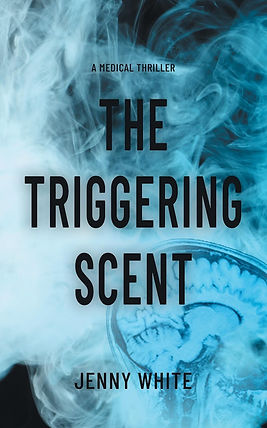
This is where a book like Jenny White's The Triggering Scent rewards closer reading. The novel draws on White's background as a registered nurse, so the hospital environment carries authentic clinical texture rather than generic corridor-and-code-blue shorthand. Readers who work in healthcare notice that difference immediately, and it changes how the group evaluates the pacing, because the clinical detail does tension work, not just scene-setting.
A Quick Genre-Fit Score for Your Group
Before the meeting, ask each member to rate the book on three axes from 1 to 5:
Contract clarity: How quickly did you understand what kind of book you were reading?
Tension-source fit: Did the pacing match the source of tension (physical, psychological, institutional, atmospheric)?
Escalation: Did each act raise the cost, or did the book plateau?
Compare scores. High contract clarity with low escalation is usually a pacing problem. Low contract clarity with high escalation is usually a genre-blend problem, the author is mixing subgenres and the group hasn't agreed on a lens. Both are productive discussions, just different ones.
Visualizing Pacing: Mapping Tension Across a Story Timeline
Mapping tension turns an abstract discussion into something your group can see. Draw a horizontal line for the story timeline, then plot perceived intensity from 1 to 10 at each chapter or major scene.

Assign one member to plot the group's averaged scores. A healthy suspense curve rises in waves, each peak higher than the last and each valley shorter. A flat line means the author never varied intensity; a single spike at the end means the book coasted until the climax.
For a deeper look at how narrative structure shapes reader response, the Writers' Union of Canada resources on craft and storytelling offers practical context on how professional authors think about tension and structure.
Once your group has a visual, members start pointing at specific chapters instead of speaking in generalities.
Conclusion: Turning Pacing Analysis into Your Book Club's Secret Weapon
The hardest part of any book club is moving past plot summary into genuine analysis. Pacing gives you a framework every member can engage with, regardless of craft knowledge.
If your group wants a title that rewards close reading, Jenny White's medical thrillers are built for it. The Triggering Scent pairs an authentic hospital setting with a resilient protagonist, and the ethical dilemmas in the Abbey Roberts RN series give your group real material to argue about. Readers consistently mention being hooked from the first chapter and staying up late for the twists.
Get started with Jenny White and give your book club a suspense novel worth mapping.
Frequently Asked Questions
How does pacing build suspense in a thriller novel?
Pacing controls how quickly information reaches the reader. Short sentences and rapid scene cuts accelerate tension, while longer descriptive passages give readers a breather. When a writer alternates between these speeds, suspense builds because the reader never settles into a predictable rhythm. In a book club, try tracking where chapters speed up and where they slow down. You will often find that the most suspenseful moments come right after a calm section, when the shift catches everyone off guard.
What are the four elements of suspense we should look for?
Most suspense fiction relies on four building blocks: a dramatic question that goes unanswered, stakes that matter to the character, a ticking clock or time pressure, and information gaps the reader wants filled. When your group discusses a thriller, ask which of these four is doing the heavy lifting in each chapter. You may find that one element carries the first half while another takes over later. Identifying the shift keeps the conversation focused and gives quieter members a concrete framework to join in.
How do you identify pacing issues in a book club discussion?
Start by asking everyone to mark the chapter where they first felt bored or tempted to skim. Compare those chapters. If multiple people flagged the same section, that is likely a genuine pacing issue, not just personal taste. Then look at what happens in that section: is it a breather scene that runs too long, a subplot that stalls the main dramatic question, or a flashback that interrupts momentum? Naming the specific cause turns vague complaints into useful analysis your group can apply to the next book.
What makes a medical thriller's pacing effective?
Medical thrillers work best when clinical detail and personal stakes alternate. A tense ICU scene followed by a quieter moment of reflection gives readers time to absorb what just happened before the next crisis. Authors with real healthcare experience often get this rhythm right because they know how hospital shifts actually feel: long stretches of monitoring broken by sudden emergencies. When your club reads one, pay attention to how the author uses procedure and dialogue to control speed, not just plot twists.
Buy now



Comments